Medieval soldiers were the foundation of European warfare throughout the Middle Ages. Their roles, weapons, training, and battlefield tactics evolved dramatically across the centuries, reflecting changes in military technology, political authority, and the growing sophistication of medieval armies. From lightly equipped foot soldiers to elite men-at-arms clad in plate armor, medieval soldiers shaped the outcomes of sieges, open-field battles, and territorial conflicts. Understanding who these warriors were—and how they fought—offers valuable insight into both medieval warfare and daily life in a world defined by constant military tension.

⚔️ Click to Reveal: Key Facts About Medieval Soldiers
📜What Types of Soldiers Made Up a Medieval Army? ▼
Overview
Medieval armies included a wide range of troop types, from lightly equipped infantry to elite armored warriors.Key Types
- Foot Soldiers – basic infantry core
- Longbowmen – rapid-fire ranged specialists
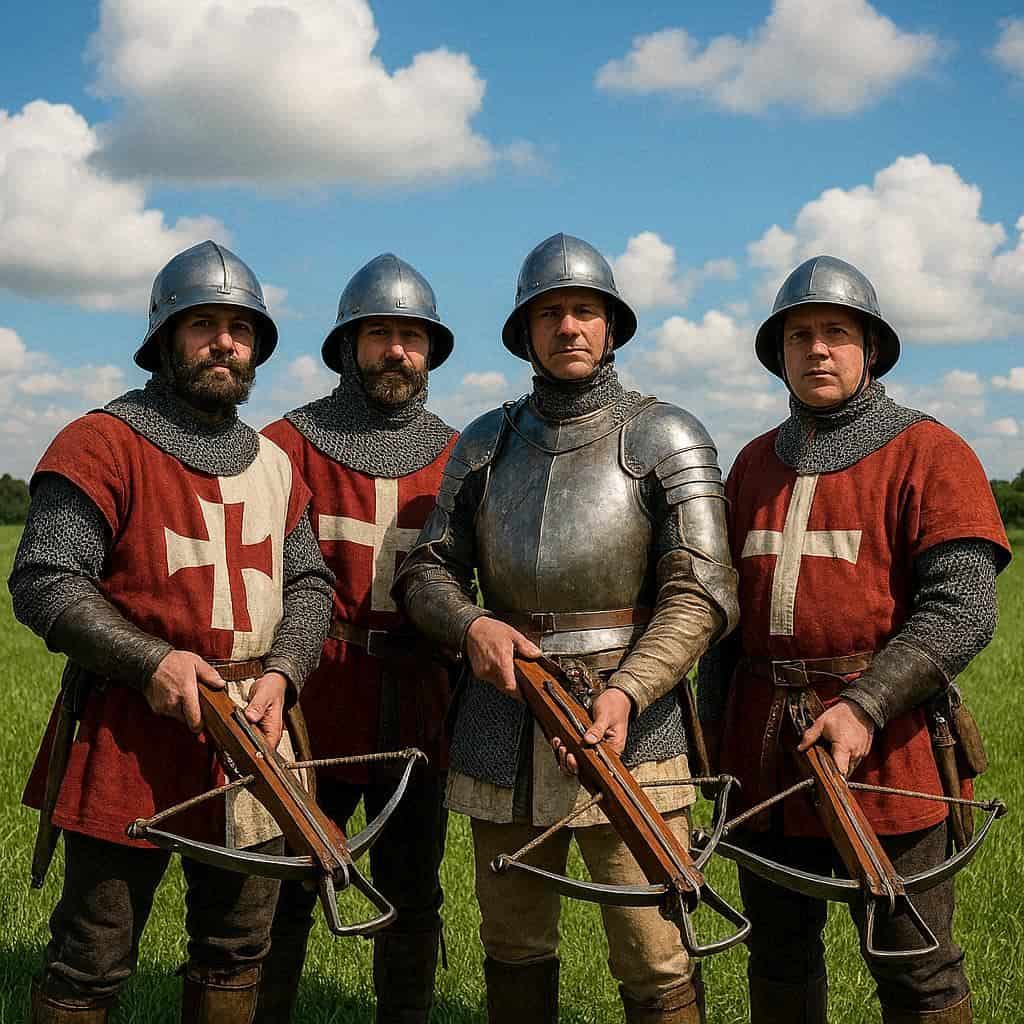
- Crossbowmen – accurate armor-piercing shooters
- Halberdiers – versatile polearm infantry
- Pikemen – vital anti-cavalry troops
- Men-at-Arms – heavily armored elite fighters
🏹How Did Archers and Crossbowmen Differ? ▼
Longbowmen
- Fired 6–10 arrows per minute
- Used tall yew bows as high as the archer
- Highly trained from youth
- Key victories at Crécy & Agincourt
Crossbowmen
- Fired 2–3 bolts per minute
- Powerful armor-piercing bolts
- Could be trained quickly
- Often protected by large pavise shields
🛡️What Weapons Did Medieval Infantry Use? ▼
Melee Weapons
- Swords
- Axes
- Maces & War Hammers
- Daggers
Polearms
- Halberds
- Pikes
- Bills & Glaives
- Spears
🪙Did Medieval Armies Use Mercenaries? ▼
Mercenary Forces
Mercenaries became increasingly common in the Late Middle Ages as warfare expanded and rulers needed larger, more professional armies.Notable Mercenaries
- Swiss Pikemen – feared for deadly spear formations
- Italian Condottieri – elite captains for hire
- Landsknechts – German mercenaries with flamboyant style and immense skill
Who Were Medieval Soldiers?
Medieval armies were not made up of one type of fighter. Instead, they included a wide range of specialized troops, each playing a role in the larger military system. Over time, armies expanded from small feudal levies to increasingly professional forces funded by kings, nobles, and wealthy city-states.
Main categories of medieval soldiers included:
- Foot Soldiers (Infantry)
- Longbowmen
- Crossbowmen
- Halberdiers and Polearm Infantry
- Pikemen
- Men-at-Arms (heavily armored elite soldiers)
- Mercenaries such as Swiss Pikemen, Italian Condottieri, and Landsknechts
Each type of soldier brought different strengths to the battlefield, contributing to the increasingly complex tactical landscape of late-medieval warfare.

Key Infantry Weapons Used by Medieval Soldiers
Medieval infantry relied on a wide selection of weapons designed for different combat roles. These tools evolved alongside improvements in armor, shield design, and battlefield organization.
Close-Combat Weapons
- Swords – versatile, reliable, and widely used by both common soldiers and professionals.
- Axes – capable of delivering devastating blows against shields and helmets.
- Maces & Hammers – designed to crush armor and disable opponents through blunt force.
- Daggers – essential backup weapons for grappling or finishing an opponent.
Polearms & Heavy Infantry Weapons
Polearms became increasingly common from the 13th century onward due to their reach and low cost.
Common examples include:
- Spears
- Bills
- Halberds
- Glaives
- Pikes
The halberd—a combination of an axe blade, spear point, and hook—was especially popular in the 14th and 15th centuries. It allowed infantrymen to attack cavalry, pull mounted knights from horseback, or smash through armor.

Long-Range Infantry: Archers & Crossbowmen
Ranged soldiers played a crucial role in medieval warfare. Their ability to weaken enemy formations before close combat significantly shaped military strategy.
Longbowmen
English and Welsh longbowmen are widely regarded as some of the most effective medieval soldiers. Their iconic yew longbows, often over six feet tall, could shoot arrows at impressive speed and range.
Key strengths of longbowmen:
- Fired 6–10 arrows per minute, far faster than crossbowmen
- Effective range of up to 300 yards
- Used armor-piercing bodkin arrows
- Highly trained from childhood
- Dominated major battles of the Hundred Years’ War
Famous victories:
- Battle of Crécy (1346)
- Battle of Poitiers (1356)
- Battle of Agincourt (1415)
These battles demonstrated the power of coordinated volleys, disciplined formations, and the longbow’s superior rate of fire.

Crossbowmen
Crossbowmen were vital soldiers across Europe from the 12th to 16th centuries. Their weapons were easier to use than longbows, required less physical strength, and were deadly at long distances.
Strengths of crossbowmen:
- Extremely accurate
- Could penetrate armor at long range
- Required less lifetime training
- Often protected by large pavise shields
- Fired powerful bolts capable of stopping mounted knights
Elite groups, such as the Genoese Crossbowmen, were renowned for their discipline and effectiveness.
Halberdiers: Versatile and Deadly Infantry
Halberdiers were foot soldiers armed with halberds—polearms combining an axe, spear point, and hook. They thrived in the 14th and 15th centuries, especially in Central Europe.
Why halberdiers mattered:
- Effective against both cavalry and infantry
- Could break formations and pull riders from horses
- Cheap and easy to produce
- Dangerous in tight formations
Swiss and German halberdiers became some of the most feared infantry in Europe.

Mercenary Soldiers: Professionals for Hire
By the late Middle Ages, many states relied on professional mercenaries, who fought for pay rather than feudal obligation. These troops often had superior training, discipline, and battlefield coordination.
Major groups included:
- Swiss Pikemen – famous for devastating pike formations
- Italian Condottieri – elite captains leading professional companies
- German Landsknechts – flamboyant infantry skilled with pikes and zweihänder swords
Mercenary armies became essential for kingdoms lacking sufficient trained troops, and they significantly influenced late-medieval military strategy.
Medieval soldiers were far more diverse, skilled, and strategically important than modern myths suggest. From the disciplined longbowmen who reshaped European warfare to the heavily armed men-at-arms who dominated close combat, each type of soldier contributed to a rich and evolving military tradition. As warfare advanced, armies expanded, new weapons emerged, and professional mercenaries transformed the battlefield. Together, these warriors defined the conflicts, politics, and power struggles of the medieval world.
❓ Frequently Asked Questions About Medieval Soldiers
Were all medieval soldiers trained professionals?
Not at all. Early medieval armies relied heavily on peasants and local levies with little training. Professional, full-time soldiers became more common only in the later Middle Ages.
What was the difference between a foot soldier and a man-at-arms?
Foot soldiers formed the bulk of the infantry, often lightly armed. Men-at-arms were elite, heavily armored warriors—either mounted or on foot—trained for intense close combat.
Why were longbowmen so effective in battle?
They fired 10–12 arrows per minute, far more than crossbowmen, and used bodkin-tipped arrows capable of penetrating armor. Their training typically began in childhood.
Did medieval armies use mercenaries?
Yes. By the 14th and 15th centuries, rulers increasingly hired professional mercenary companies such as Swiss pikemen, Italian condottieri, and German Landsknechts.
How large were medieval armies?
Sizes varied widely. Early armies might gather only a few thousand men, while late-medieval conflicts—like the Hundred Years’ War—sometimes fielded forces of 10,000–30,000 soldiers.
What role did archers and crossbowmen play in warfare?
Archers provided rapid, high-volume fire, while crossbowmen delivered powerful, armor-piercing bolts often from behind pavise shields. Both were vital in sieges and open battles.
🧠 Medieval Soldiers Knowledge Quiz
📜 Glossary of Medieval Soldier Terms
Foot Soldier
Basic infantry forming the main body of medieval armies, equipped with simple weapons.
Man-at-Arms
Heavily armored, elite professional warrior trained for close combat.
Longbowman
Expert archer using a tall yew longbow capable of rapid, powerful firing.
Crossbowman
Soldier using a powerful crossbow with armor-piercing bolts, often shielded by a pavise.
Halberdier
Infantryman armed with a halberd—a polearm combining axe blade, spike, and hook.
Pikeman
Soldier wielding a long pike for anti-cavalry formations and defensive lines.
Mercenary
Professional soldier hired for pay, not bound by loyalty to a lord or kingdom.
Pavise Shield
A tall shield used by crossbowmen to take cover while reloading under fire.
Bodkin Arrow
A narrow armor-piercing arrowhead used by longbowmen against plate armor.