The medieval military played a decisive role in shaping the political, social, and territorial landscape of Europe. From elite armored knights to disciplined infantry formations, armies evolved in response to changing technologies, tactics, and the needs of expanding kingdoms. Warfare was not random brutality—it was deeply connected to feudal obligation, territorial ambition, and major conflicts such as the Crusades and the Hundred Years’ War.
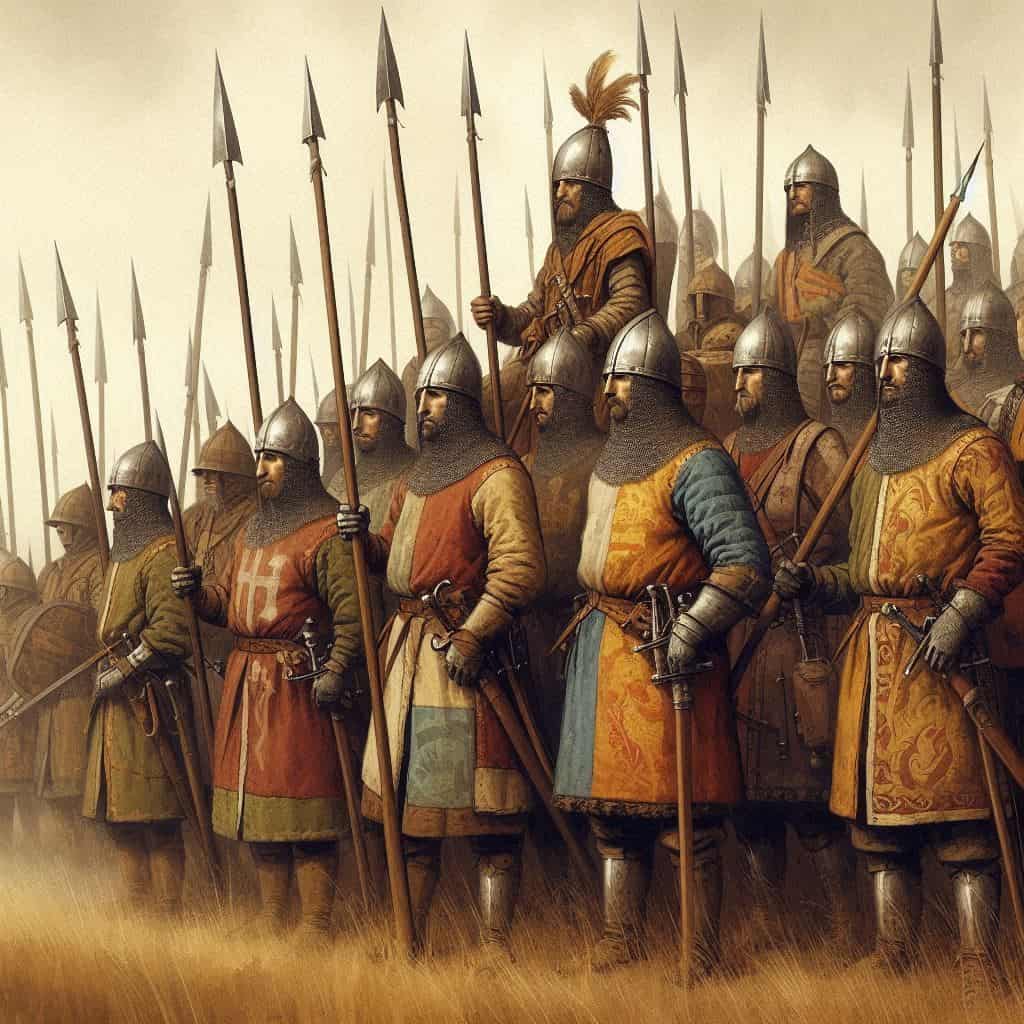
As innovations such as the longbow, crossbow, halberd, and early gunpowder weapons emerged, medieval forces became increasingly specialized and effective. Understanding how different types of soldiers were trained, armed, and organized reveals how medieval rulers gained—and lost—power across the continent.
⚔ Medieval Military: Soldiers, Weapons & Warfare – Click to Reveal Summary
The medieval military shaped European politics, borders, and power structures. Armies were built on feudal obligations, elite cavalry, and increasingly professional infantry. Key innovations—such as the longbow, crossbow, and halberd—transformed how battles were fought and how rulers defended their realms.
Medieval armies relied on a diverse mix of specialized troops, including:
- Longbowmen – High-rate, long-range archers
- Crossbowmen – Accurate, armored missile troops
- Halberdiers – Close-combat polearm infantry
- Men-at-Arms – Elite armored cavalry and infantry
- Pikemen – Defensive formations with long pikes
Each soldier type played a distinct battlefield role essential to medieval strategy.
Battlefield effectiveness was shaped by evolving weapons such as:
- The Longbow – Fast-firing, armor-piercing arrows
- The Crossbow – Powerful, easy-to-learn ranged weapon
- The Halberd – Axe-spear hybrid for stopping cavalry
- Pikes – Long spears for defensive infantry blocks
- Early Gunpowder Arms – The first firearms and cannons
These innovations contributed to the decline of traditional knightly warfare.
Medieval warfare relied on cooperation between different troop types:
- Archers weakened enemy lines before impact
- Pikemen held defensive positions
- Halberdiers engaged armored opponents
- Men-at-Arms delivered decisive shock attacks
Together, these units created adaptable armies capable of siege warfare, open-field battles, and territorial defense.
By the late 15th century, improvements in armor, recruitment, mercenary forces, and early gunpowder weapons pushed Europe toward early-modern warfare. Cavalry dominance declined, infantry became professionalized, and formations evolved into the armies of the Renaissance.
Longbowmen – Elite Archers of Medieval England
The English and Welsh longbowmen were some of the most feared soldiers of the Middle Ages. Their devastating volleys shaped landmark victories such as:
- Crécy (1346)
- Poitiers (1356)
- Agincourt (1415)
At Crécy alone, historians estimate 7,000–15,000 longbowmen fired hundreds of thousands of arrows—possibly over 500,000 bodkin-tipped shafts.
Mastering the longbow required years of training. Skilled archers could fire 8–12 arrows per minute, reaching ranges up to 300 yards. The longbow’s enormous draw weight—often 150–200 lbs—allowed arrows to penetrate chainmail and even plate armor under the right conditions.
The longbow became one of the defining weapons of the late medieval battlefield, reducing the dominance of heavily armored cavalry.

Crossbowmen – Deadly Ranged Soldiers in Medieval Warfare
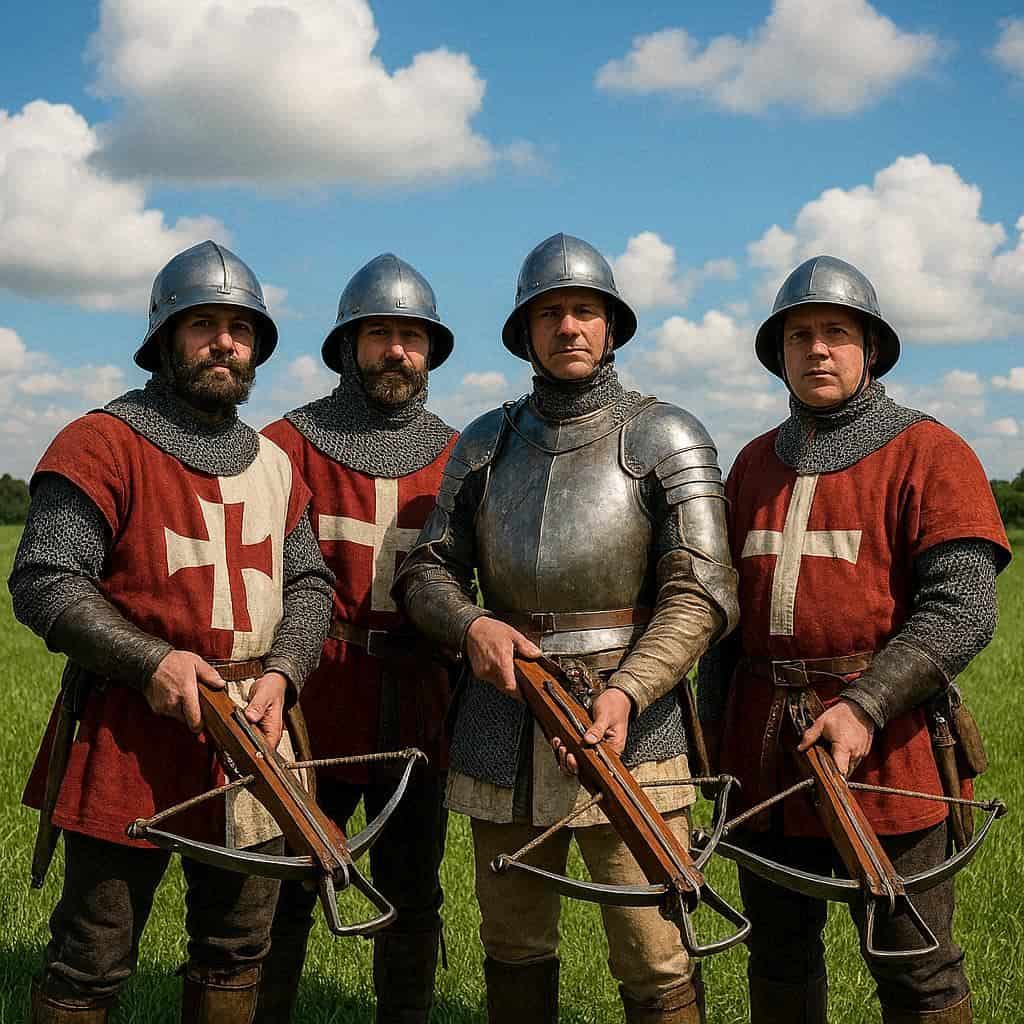
Medieval crossbowmen operated one of the most powerful and accurate ranged weapons of the era. The crossbow required far less lifetime training than the longbow, making it ideal for rapid recruitment and urban militias.
The Genoese Crossbowmen
Among the most feared were the Genoese crossbowmen, elite Italian mercenaries renowned for precision and discipline. They often fought behind large pavise shields, allowing them to reload safely during prolonged engagements.
Crossbow bolts could pierce armor at 350–400 yards, making the weapon devastating in:
- Sieges
- Defensive lines
- City warfare
- Naval battles
Crossbowmen remained essential from the 12th to 15th centuries and significantly reshaped infantry-based warfare.
Halberdiers – Versatile Polearm Infantry of the Late Middle Ages
Halberdiers fought with the halberd—a polearm combining an axe blade, spear point, and hook. This weapon allowed infantry to:
- Pull mounted knights from horseback
- Deliver heavy chopping strikes
- Pierce armor
- Counter cavalry charges
By the 14th and 15th centuries, halberdiers became core units in Swiss and German armies, where their disciplined formations won decisive victories. Their low cost and high effectiveness made them indispensable in late-medieval warfare.

Men-at-Arms – Heavily Armoured Professional Warriors
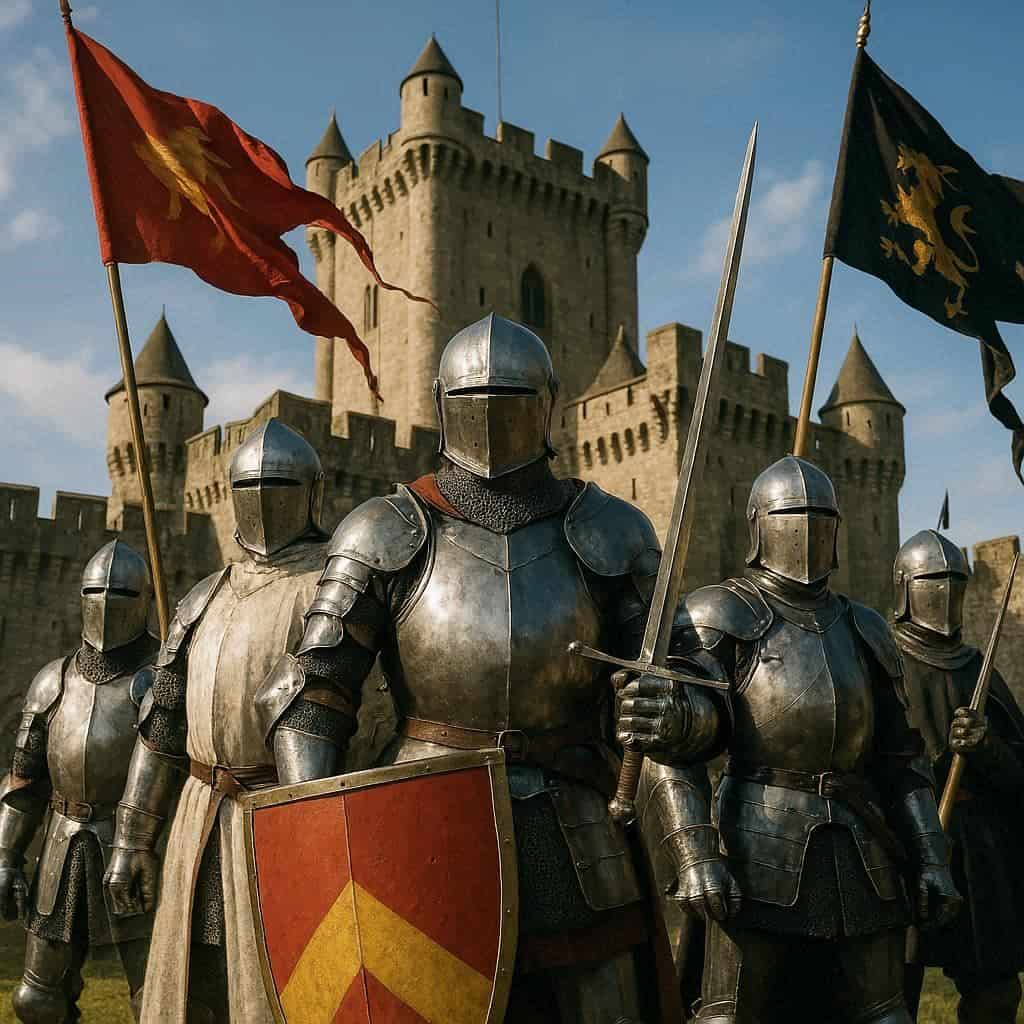
Men-at-arms were elite, heavily armored soldiers who served on horseback or as dismounted heavy infantry. Although many were knights, large numbers were highly skilled non-noble professionals.
Their typical equipment included:
- Full plate armor
- Lances
- Swords and maces
- Shields
Men-at-arms performed the most dangerous battlefield roles—shock charges, break-through attacks, and holding key positions. By the 15th century, many served as paid professionals or mercenaries, central to conflicts such as the Hundred Years’ War.
⚔️ What Were Men-at-Arms?
Men-at-arms were fully trained, heavily armoured professional soldiers who formed the core elite fighting force of medieval armies. They are often confused with knights, so here is the key distinction:
- All knights were men-at-arms (because they were trained, armoured warriors).
- But not all men-at-arms were knights — many were skilled non-nobles serving as elite soldiers.
Their job was to fight in the heaviest armour available, either on horseback or on foot, using weapons such as lances, swords, maces, and shields. Men-at-arms were expected to stand in the most dangerous part of the battle, lead charges, and break enemy formations.
By the 14th–15th centuries, many men-at-arms became paid professionals or mercenaries, serving not only kings and nobles but also wealthy captains and city-states.
In simple terms:
Men-at-arms were the strongest, best-trained, best-armoured soldiers of the medieval battlefield —
the elite heavy troops who fought at the heart of every major conflict.
Pikemen – Defensive Infantry with Long Spear Formations
Pikemen wielded pikes up to 15–20 feet long. Their tightly packed formations created an intimidating spear wall capable of stopping cavalry charges and controlling battlefield movement.
By planting their pikes at angles, pikemen were able to:
- Halt mounted knights
- Protect missile troops
- Dominate open-field engagements
- Break enemy infantry formations
Their disciplined ranks made them one of the most effective infantry types of the late medieval period.

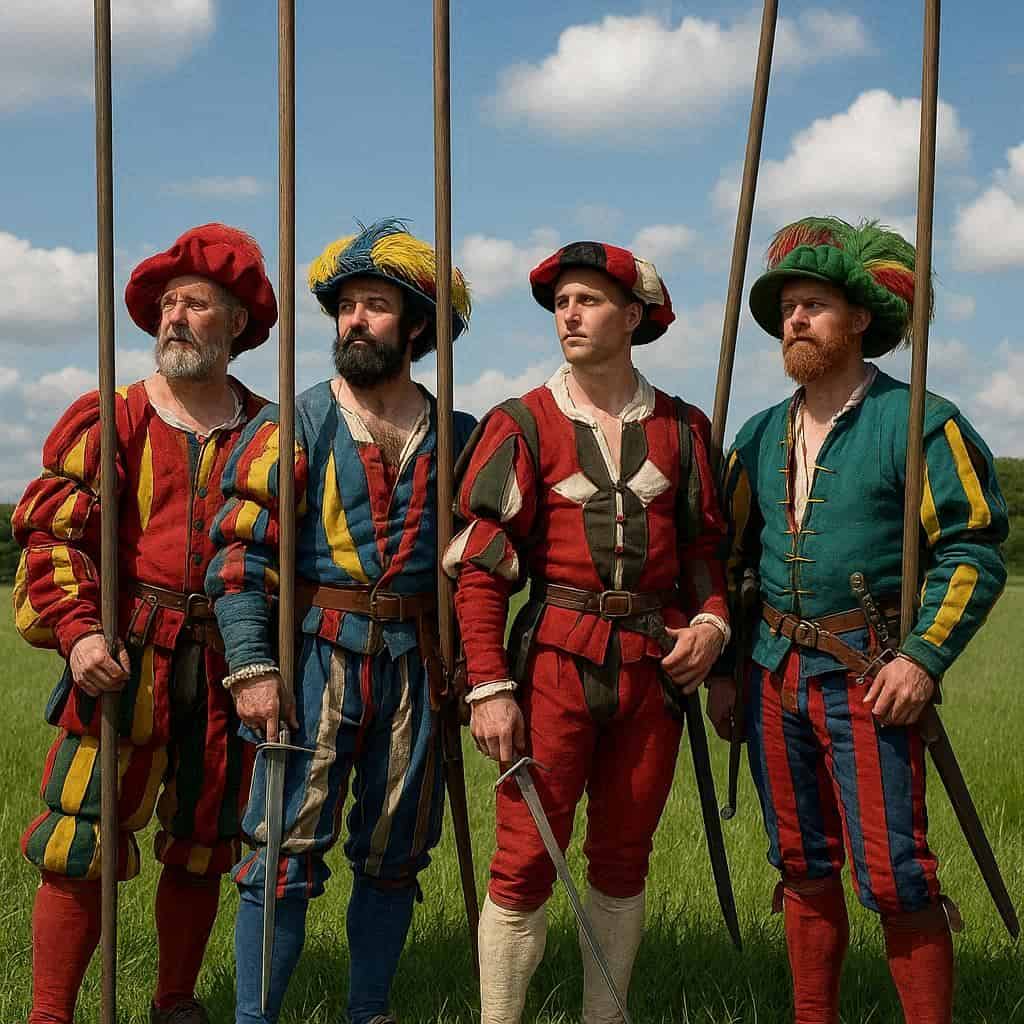
⚠ Transitional Forces: Landsknechts (NOT Medieval, but Renaissance)
The Landsknechts emerged in the late 15th century, after the medieval period had ended. These flamboyantly dressed German mercenaries wielded:
- Pikes
- Zweihänder greatswords
- Early firearms
They belonged to the Renaissance military era, not the Middle Ages. However, they were heavily influenced by late-medieval pike warfare and became dominant in 16th-century battles.
⚔️ Medieval Military Roles – Click & Reveal
Cavalry archers were elite mounted warriors trained to shoot accurately while riding at high speed. Their exceptional mobility made them ideal for:
- Hit-and-run attacks
- Harassment of enemy formations
- Scouting and reconnaissance
- Rapid flanking maneuvers
They were most famously used by the Mongols, Hungarians, and various steppe cultures, but also appeared in Western European armies.
A Vintenar was a mid-level military officer in medieval England responsible for commanding twenty infantrymen. These soldiers were often freemen conscripted or hired during wartime.
Responsibilities included:
- Maintaining discipline and training
- Organizing troop formations
- Ensuring equipment readiness
- Serving as the link between common soldiers and higher command
Vintenars played an essential role in the local militia system and early English military organization.
Men-at-arms were heavily armored elite soldiers who formed the core of medieval cavalry forces. Although all knights were men-at-arms, not all men-at-arms were knights.
They served as:
- Shock cavalry capable of breaking enemy lines
- Heavy infantry when dismounted
- Feudal retainers bound to lords
- Professional mercenaries in paid service
Their equipment included lances, swords, shields, and later full plate armour, making them among the most formidable warriors of the Middle Ages.
Foot soldiers—or infantry—made up the majority of medieval armies. They ranged from lightly armed levies to well-trained specialists such as:
- Longbowmen
- Crossbowmen
- Pikemen
- Billmen and spearmen
These soldiers performed crucial battlefield roles, including:
- Holding defensive lines
- Supporting cavalry attacks
- Scaling or defending castle walls
- Absorbing the heaviest fighting during prolonged engagements
Though many came from the lower classes, experienced infantrymen could gain status, wages, and sometimes land.
How Medieval Soldiers Worked Together in Battle
Armies of the Middle Ages were not chaotic mobs—they were structured, disciplined, and increasingly professional. Each type of soldier contributed to a coordinated system:
- Longbowmen weakened or scattered enemy forces
- Crossbowmen defended positions and sieged fortifications
- Pikemen held the line and countered cavalry
- Halberdiers broke through armored opponents in close combat
- Men-at-arms executed decisive charges and heavy assaults
By the late Middle Ages, improvements in recruitment, armor design, tactics, and early gunpowder technology transformed armies into proto-modern military forces.
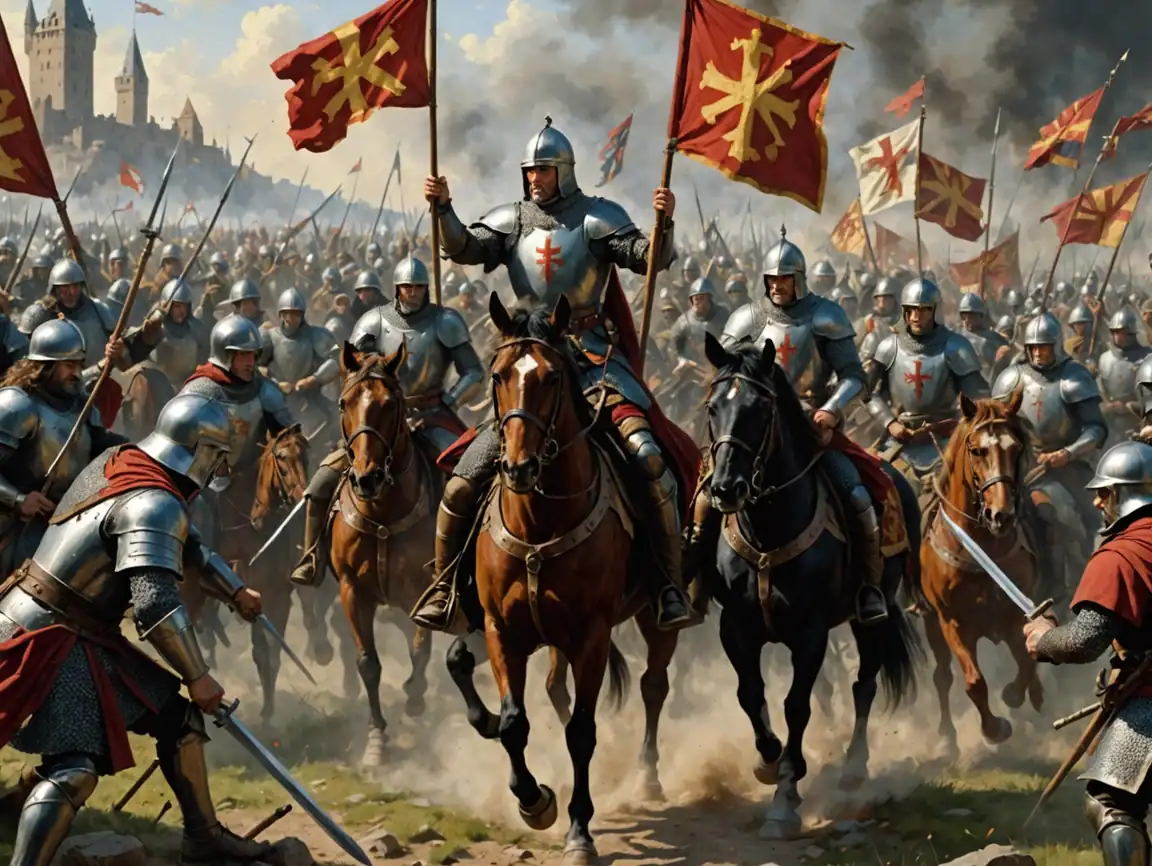
The Evolution of Medieval Warfare
The medieval military was far more sophisticated than the stereotypes of knights and castles suggest. A combination of:
- Feudal loyalty
- Advancing technology
- Professional specialization
- Strategic innovation
shaped how wars were fought from the 11th to 15th centuries.
Understanding the distinct roles of medieval soldiers provides valuable insight into how kingdoms were defended, how battles were won, and how medieval warfare laid the foundation for the modern armies that followed.
❓ Medieval Military – Frequently Asked Questions
What were the main types of medieval soldiers?
The core soldier types included longbowmen, crossbowmen, halberdiers, pikemen, and men-at-arms. Each played a distinct tactical role in ranged combat, close combat, or heavy shock fighting.
Were medieval armies large?
Army sizes varied widely. Early medieval armies could be a few hundred men, while late-medieval conflicts like the Hundred Years’ War involved armies of several thousand to tens of thousands.
Did medieval soldiers receive professional training?
Yes. Elite troops such as longbowmen and men-at-arms trained extensively. Archers often practiced from childhood, while men-at-arms trained in weapons, riding, and battlefield tactics.
What was the biggest change in medieval warfare?
The introduction of gunpowder weapons, improved infantry formations, and professional standing armies gradually reduced the dominance of the knight and transformed the nature of battle.
Were Landsknechts medieval soldiers?
No. Landsknechts emerged in the late 15th–16th centuries, making them Renaissance rather than medieval. They should not be included among traditional medieval soldier types.
🛡️ Medieval Military Quiz – How Much Do You Know?
- Which soldier could fire the most arrows in one minute?
A) Crossbowman B) Longbowman C) Pikeman - Which weapon combined an axe blade, spear point, and hook?
A) Halberd B) Pike C) Billhook - Who formed the elite heavy troops of medieval armies?
A) Vintenars B) Men-at-Arms C) Militia Levies - Which ranged weapon required lifelong training?
A) Longbow B) Crossbow C) Sling - True or False: Landsknechts were medieval soldiers.
Answer Key:
1) B • 2) A • 3) B • 4) A • 5) False
⏳ Timeline of Medieval Warfare & Military Development
📜 Medieval Military Glossary
Arbalest: A powerful type of medieval crossbow used from the 12th century onward.
Bodkin Arrow: A narrow, hardened-steel arrowhead designed to penetrate armor.
Feudal Levy: Ordinary men required to serve in the army as part of feudal duty.
Halberd: A polearm combining an axe, spear, and hook, used for stopping cavalry and armored soldiers.
Men-at-Arms: Heavily armored professional soldiers—elite heavy cavalry or infantry—distinct from knights.
Pike: A long spear (up to 20 ft) used in dense infantry formations for defensive walls.
Retainer: A soldier or follower who served a noble or lord in exchange for land, payment, or protection.
Volley Fire: The coordinated mass release of arrows or bolts by ranged infantry.