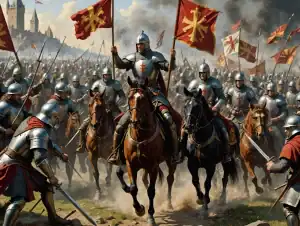
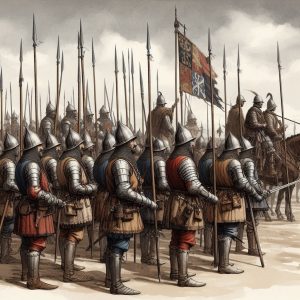
The cataphract was one of the most iconic and feared warriors of the ancient and early medieval world — a heavily armored cavalryman whose power lay in both protection and shock impact. From the Achaemenid Persians to the Byzantine Empire, cataphracts shaped the way warfare was fought across centuries.
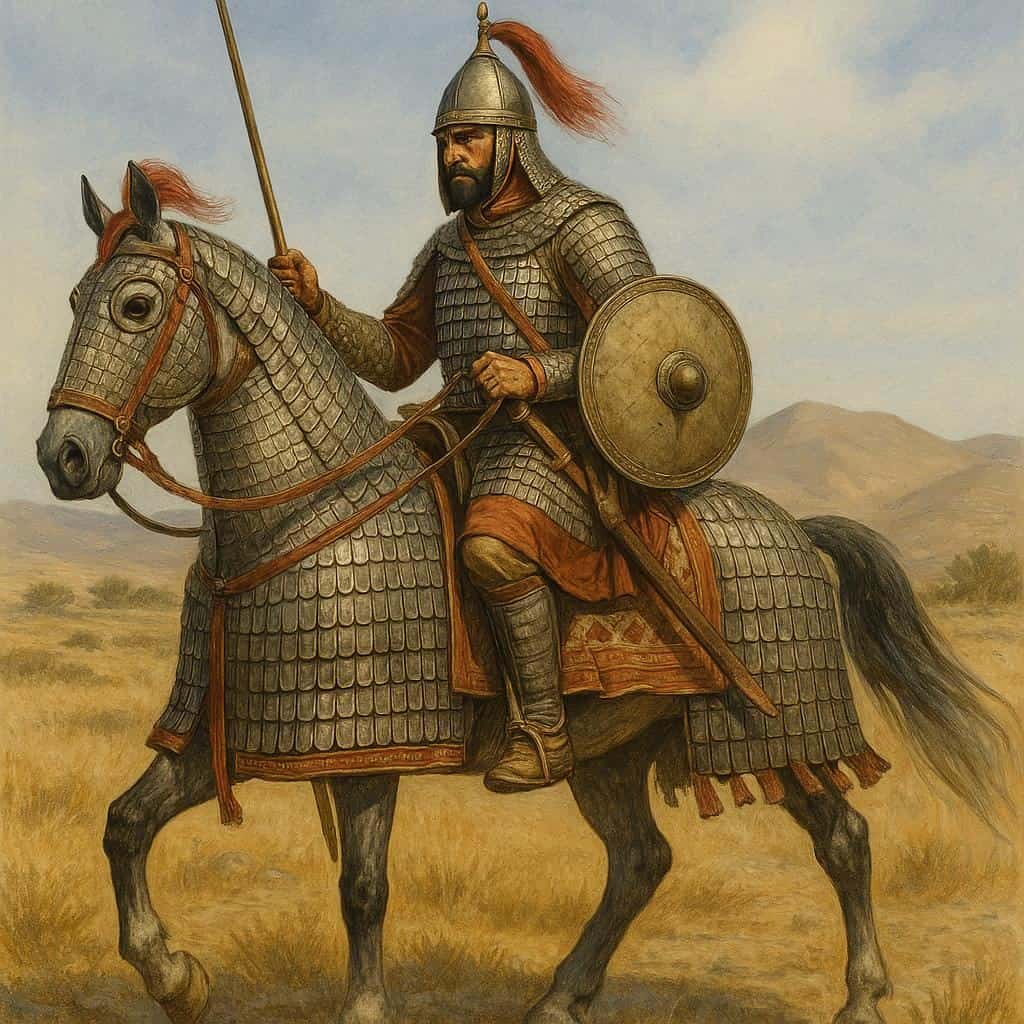
The term cataphract comes from the Greek word kataphraktos, meaning “fully armored” or “covered all over.” These elite soldiers and their horses were clad in scale or lamellar armor, turning them into near-invincible iron fortresses on horseback. Their devastating charges could break through enemy formations, and their disciplined tactics inspired later forms of medieval heavy cavalry — including the European knight.
🏛️ Origins of the Cataphract
The origins of the cataphract can be traced to the ancient Persian and Central Asian empires. While the Assyrians and Achaemenid Persians used armored riders as early as the 6th century BC, it was the Parthians (247 BC – 224 AD) who developed the fully armored cataphract into an organized military force.
The word katafraktos was first used by the Greeks to describe these warriors — both rider and horse encased in armor — symbolizing unmatched power on the battlefield.
Later, the Sassanid Persians (224–651 AD) perfected the design and tactics, combining cataphracts with horse archers to create a deadly combination of speed and force.
This model of warfare deeply influenced neighboring empires — especially the Romans and later the Byzantines, who adopted cataphracts as the backbone of their cavalry for several centuries.
⚙️ Armor and Weapons: Engineering the Perfect Warhorse
The cataphract’s armor was its defining feature — both beautiful and terrifying. Each warrior wore scale or lamellar armor made of overlapping metal plates, often of iron or bronze, stitched onto leather or fabric backing. The armor extended to the horse, covering its neck, chest, and flanks.
A full set of armor could weigh up to 40 kilograms (88 pounds), giving the rider near-total protection against arrows, swords, and spears. The dazzling metal plates were sometimes engraved with patterns, painted, or inscribed with religious symbols, marking the cataphract’s elite status.
Their weaponry was as formidable as their armor:
- Kontos (long lance) — a two-handed spear used to smash enemy lines
- Sword or mace — for brutal close combat
- Composite bow — carried by some units for ranged attacks
To control such massive weight in battle, cataphracts used high-backed saddles and specialized tack that kept them firmly seated during high-impact charges.
⚔️ Role in Battle: The Shock and Awe of Ancient Warfare
The cataphract charge was one of the most feared sights on the battlefield. Entire enemy lines could crumble beneath the weight and momentum of these armored riders and their horses.
In offensive roles, cataphracts were used as shock troops — advancing in formation and using the sheer power of their kontos lances to shatter infantry ranks. Once the line broke, they would wheel around and strike again, spreading chaos and panic.
In defensive roles, their armor and discipline made them nearly impenetrable, holding positions even when heavily outnumbered. This made them the elite core of ancient Persian, Parthian, and Byzantine armies.
One of the most famous examples of cataphract tactics occurred during the Battle of Carrhae (53 BC), when Parthian cataphracts and horse archers destroyed a much larger Roman army — demonstrating the devastating effectiveness of heavy cavalry supported by ranged units.
🏰 Cataphracts in the Byzantine Empire
The Byzantine Empire inherited the concept of the cataphract from Rome and transformed it into a key military institution. By the 6th century AD, Byzantine cataphracts were organized into elite regiments known as the “Tagmata.”
They were trained not only for brute strength but also for discipline and strategy. Byzantine military manuals such as the Strategikon of Maurice (6th century) described how cataphracts combined shock charges, feigned retreats, and missile fire to outmaneuver enemies.
Byzantine cataphracts represented the pinnacle of heavy cavalry in the early Middle Ages — inspiring later European knights in both form and function.
⚔️ Decline and Legacy
By the late Middle Ages, the age of the cataphract began to fade. The introduction of crossbows, longbows, and eventually firearms made heavy armor less practical. Horses and riders, once nearly invincible, became vulnerable to bullets and armor-piercing arrows.
However, the legacy of the cataphract lived on. The concept of elite, armored cavalry directly influenced the rise of medieval knights in Europe. Knights inherited not only the armor and symbolism of the cataphract but also their ideals of valor, discipline, and prestige.
Today, historians recognize the cataphract as one of history’s most enduring symbols of military innovation and elite warrior culture.
🕊️ Conclusion
The cataphract stood at the crossroads of ancient and medieval warfare — a masterpiece of engineering, courage, and discipline. From Persia to Byzantium, these armored horsemen dominated battlefields for nearly a millennium.
Their influence continued long after their decline, echoing through the shining armor of medieval knights and the honor codes of mounted warriors around the world.
They were not just soldiers; they were symbols of power, prestige, and the relentless evolution of warfare.
⚔️ Frequently Asked Questions about the Cataphract
What was a cataphract?
A cataphract was a heavily armored cavalryman used in ancient and early medieval warfare. Both the rider and horse were covered in metal armor, making them powerful shock troops capable of breaking enemy formations.
Where did the cataphract originate?
The cataphract originated in the **ancient Persian and Central Asian empires**, particularly among the **Parthians and Sassanids**, and was later adopted by the **Romans** and **Byzantines**.
What kind of armor did cataphracts wear?
Cataphracts wore full suits of **lamellar or scale armor**, made of iron or bronze plates sewn to leather or cloth. Their horses were also armored, giving them protection from head to flank.
What weapons did cataphracts use?
Their main weapon was the kontos — a long two-handed lance used for devastating cavalry charges. They also carried **swords, maces**, and sometimes **composite bows** for ranged attacks.
How did the Byzantines use cataphracts?
The **Byzantine Empire** perfected cataphract tactics between the 6th and 10th centuries. They used them in disciplined formations known as **tagmata**, combining shock charges with support from archers and infantry.
Why did cataphracts decline?
The rise of **firearms and crossbows** in the late Middle Ages made heavy armor less effective. Cataphracts became obsolete as bullets and long-range weapons could penetrate even their thick metal plating.
Did cataphracts influence medieval knights?
Yes. The concept of the **heavily armored elite cavalryman** inspired the development of **European knights**, who shared similar armor, prestige, and battlefield roles.
🧠 Test Your Knowledge: The Cataphract Cavalry
📚 Further Reading & Resources
- Encyclopedia Britannica – Cataphract
Concise overview of the origins, equipment, and tactical use of cataphracts in ancient and Byzantine armies. - Medievalists.net – The Byzantine Cataphract
Explores the role of cataphracts in Byzantine military history and their evolution over the centuries. - Warfare History Network – The Byzantine Cataphract
A detailed analysis of how Byzantine heavy cavalry tactics influenced medieval European warfare. - World History Encyclopedia – Cataphract
Historical background and images of ancient cataphract armor, weapons, and military strategy.
Cataphract Warrior Timeline
4th century BCE
The Achaemenid Empire of Persia begins using heavily armored cavalry in battle, known as the “Clibanarii”.
1st century CE
The Roman Empire begins to incorporate heavily armored cavalry, known as “cataphracts”, into their army, likely influenced by the Parthian Empire.
3rd century CE
The Sassanid Empire of Persia develops their own form of heavily armored cavalry, known as “Kust-i-Nihanz” or “New Immortals”.
6th century CE
The Byzantine Empire fully adopts the use of the cataphract, using them as shock troops in battle.
7th century CE
The Islamic conquests of the Middle East and North Africa bring an end to the Sassanid and Byzantine Empires, reducing the use of the cataphract in warfare.
11th century CE
The Seljuk Turks and other steppe peoples incorporate heavily armored cavalry, similar to the cataphract, into their armies.
12th century CE
The Crusades bring European knights into contact with the heavily armored cavalry of the Middle East, inspiring the development of European knights in full plate armor.
13th-14th centuries CE
Mongol armies incorporate heavily armored cavalry into their armies, known as the “Keshikten” or “bodyguard”.
16th century CE
The use of firearms in battle reduces the effectiveness of heavily armored cavalry, leading to the decline of the cataphract and similar types of troops.