Joan of Arc (1412–1431) — also known as “The Maid of Orléans” — remains one of the most extraordinary figures of the medieval world. Born into a humble peasant family in Domrémy, she rose from obscurity to become the symbol of French resistance during the Hundred Years’ War. Guided, she believed, by divine visions, Joan inspired French forces at their lowest point, lifted the Siege of Orléans, helped secure the coronation of Charles VII, and became a national heroine whose legacy endures nearly six centuries later.

Executed at the age of nineteen, she was later vindicated, celebrated, and canonized as Saint Joan of Arc in 1920. Her life remains one of the most dramatic and influential episodes in medieval history.
⚔️ Click-to-Reveal: Essential Facts About Joan of Arc
Her Visions & Early Life
Joan reported visions from Saint Michael, Saint Catherine, and Saint Margaret beginning around age 13—messages telling her to save France and support Charles VII.
Turning the Tide at Orléans
At only seventeen, Joan helped lift the Siege of Orléans in 1429, ending months of English dominance and dramatically boosting French morale.
Coronation of Charles VII
Joan personally escorted Charles VII through enemy territory to Reims, where he was crowned king on July 17, 1429—fulfilling a major part of her divine mission.
Capture & Trial
Captured at Compiègne in 1430, Joan was sold to the English and subjected to a politically motivated heresy trial led by Bishop Pierre Cauchon.
Martyrdom
Joan was executed at the stake in Rouen on May 30, 1431 at age nineteen. She cried the name of Jesus as she died.
Later Rehabilitation
A retrial in 1456 cleared her of all charges, and the Church canonized her as a saint in 1920, confirming her place as a French national heroine.
France Before Joan: A Kingdom in Crisis
When Joan appeared on the political and military stage, France was losing the Hundred Years’ War. The English, supported by their Burgundian allies, had:
- seized vast territories in northern France
- inflicted devastating defeats on the French armies
- placed their own claimant on the French throne
- surrounded the dauphin Charles, leaving him powerless
By 1429, France was on the verge of collapse. Cities fell one after another, morale was crumbling, and many believed the French cause was doomed.
Into this darkest moment stepped a teenage girl claiming to be sent by God.

⭐ Why Joan of Arc Became a Medieval Legend
Joan of Arc’s rise from an illiterate peasant girl to the spiritual leader of France is one of the most extraordinary stories in medieval history. Guided by divine visions and armed with unshakable faith, she inspired French troops, lifted the Siege of Orléans (1429), and paved the way for the coronation of Charles VII.
- Led French forces at just seventeen years old
- Transformed the morale of a nearly defeated kingdom
- Sustained a serious neck wound yet returned to battle
- Captured, tried for heresy, and executed at nineteen
- Declared innocent in 1456 and canonized in 1920
Her bravery, piety, and tragic martyrdom transformed her into a symbol of national unity, divine mission, and resistance—an enduring icon whose legacy still shapes French identity and medieval studies today.
Visions and the Calling of a Peasant Girl
Joan of Arc later testified that at the age of 13, she experienced her first divine vision, hearing the voices of Saint Michael, Saint Catherine, and Saint Margaret. These voices commanded her to:
- support the rightful king, Charles VII
- drive the English out of France
- help restore French sovereignty
In 1429, she predicted the outcome of military events — including the French defeat at the Battle of the Herrings (Rouvray) — with uncanny accuracy. Her confidence persuaded the captain at Vaucouleurs, who finally agreed to escort her to Charles VII.
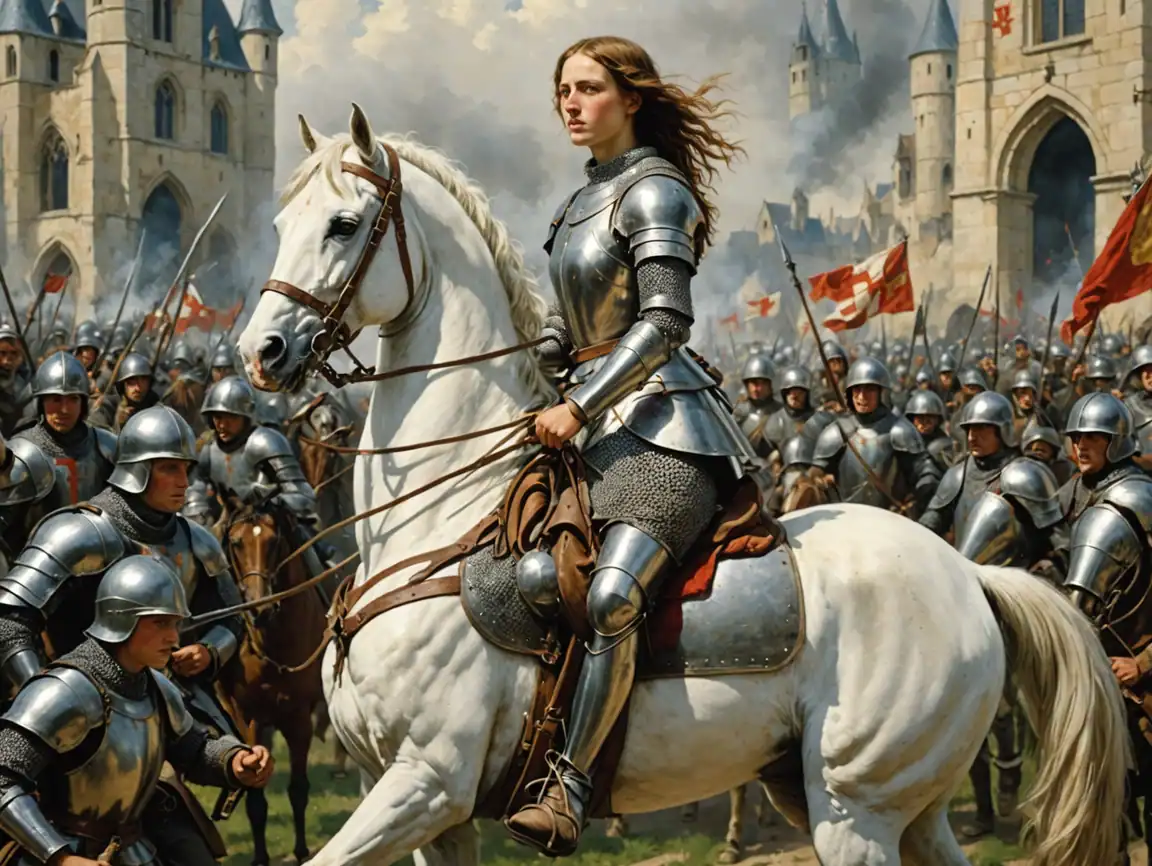
⭐ DID YOU KNOW? — Joan of Arc’s Visions ⭐
Joan of Arc reported that her first divine visions came at the age of 13. She claimed that Saint Michael, Saint Catherine, and Saint Margaret appeared to her, urging her to support the French cause during the Hundred Years’ War. These visions shaped her destiny and convinced many that she was chosen by God.
Meeting Charles VII: A Turning Point
Joan arrived at the French court in Chinon, dressed in men’s clothing for safety on the road. Despite skepticism from nobles and clergy, she impressed Charles VII with her conviction, courage, and knowledge of things she could not have known.
After a theological examination at Poitiers, she was granted armor, a banner, and permission to accompany France’s battered army to Orléans, the most crucial city under siege.

⭐ DID YOU KNOW? — Meeting Charles VII ⭐
When Joan of Arc first arrived at the court of Charles VII, he disguised himself among his courtiers to test her. To everyone’s astonishment, Joan walked straight past the nobles and bowed to the real king without hesitation — a moment that shocked the entire court and strengthened her claim of divine guidance.
The Siege of Orléans: Joan’s First Triumph
By the time Joan reached Orléans in April 1429, the city had been besieged for five months. French morale was collapsing. Her arrival, however, sparked what chroniclers described as an instant transformation in both soldiers and citizens.
During the following weeks:
- Joan led charges at the front lines
- inspired garrison troops with fiery speeches
- pushed for bold attacks on English positions
- survived an arrow wound to the neck
- carried her banner into battle rather than a sword
By May 1429, French forces captured one English fortification after another. The English retreated, and the siege was lifted — a miraculous reversal credited widely to Joan.
This victory earned her the title “The Maid of Orléans” and changed the course of the war.

March to Reims and the Coronation of Charles VII
After Orléans, Joan urged an immediate march to Reims, the traditional coronation site of French kings — even though it lay deep in enemy territory. Her strategy proved brilliant.
Over the next two months, the French army:
- liberated key towns across the Loire
- defeated major English contingents, including forces under Sir John Fastolf
- advanced steadily toward Reims
On 17 July 1429, Charles VII was crowned King of France in Reims Cathedral, with Joan standing proudly at his side. It was the moment her visions had promised.

Capture and Trial
In May 1430, while defending Compiègne, Joan was captured by Burgundian forces. She attempted escape twice but was eventually sold to the English for a large ransom.
Her enemies conducted a politically motivated trial led by Bishop Pierre Cauchon, a strong English ally. The charges included:
- heresy
- witchcraft
- wearing men’s clothing
Despite harsh imprisonment, threats, and psychological pressure, Joan defended herself with remarkable intelligence and composure. Her recorded testimony remains one of the most extraordinary documents of the Middle Ages.
On 30 May 1431, Joan was condemned and burned at the stake in Rouen. Witnesses reported she cried “Jesus!” as she died. She was nineteen years old.
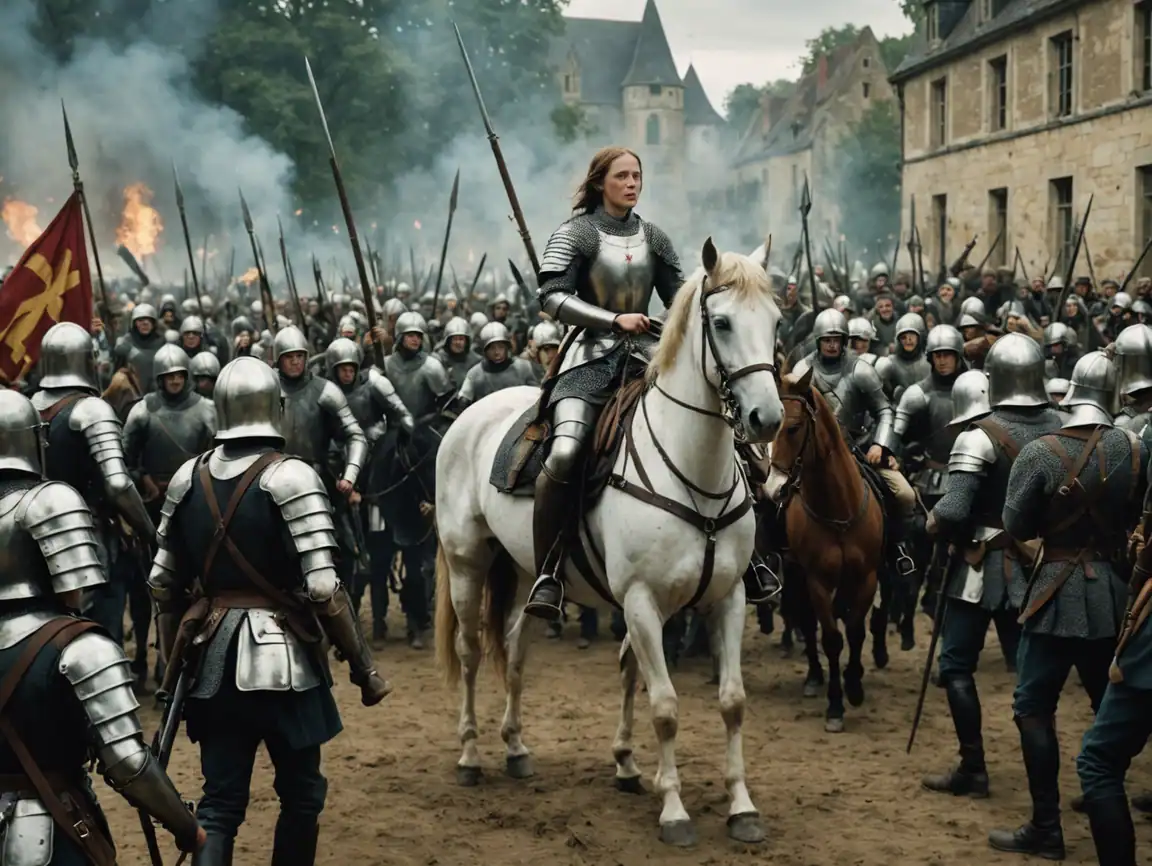
Legacy, Rehabilitation, and Canonization
In 1456, a posthumous retrial ordered by Charles VII declared her innocent, describing her execution as a judicial murder.
Over the centuries, Joan became:
- a symbol of French nationalism
- a representation of courage, purity, and divine mission
- an inspirational image during wars and political upheaval
- a revered figure in world literature and art
In 1920, the Catholic Church canonized her as Saint Joan of Arc.
Today, she stands as one of history’s most enduring icons.

Closing Summary
Joan of Arc’s life is a remarkable testament to faith, determination, and the power of conviction. Rising from a peasant background, she transformed the course of the Hundred Years’ War, revived a dying nation, and became a global symbol of inspiration. Her courage under fire, dignity during trial, and unwavering belief in her mission secured her place as one of the greatest heroines of the medieval world.
❓ Joan of Arc – Frequently Asked Questions
Who was Joan of Arc?
Joan of Arc was a French peasant girl who believed she was chosen by God to help save France during the Hundred Years’ War. Her leadership helped turn the tide in favor of Charles VII.
How old was Joan of Arc when she led troops?
Joan was only seventeen when she commanded French forces at Orléans — an extraordinary achievement for her age.
Did Joan of Arc fight in battles?
Joan never killed anyone. She carried her banner instead of a sword, serving as a spiritual leader and morale figure on the battlefield.
Why was Joan of Arc executed?
Joan was captured by Burgundians, sold to the English, and accused of heresy. Her trial was politically motivated, and she was unjustly executed in 1431.
Was Joan ever declared innocent?
Yes. In 1456, a retrial ordered by Charles VII cleared her of all charges. In 1920, she was canonized as Saint Joan of Arc.
⚔️ Test Your Knowledge: Joan of Arc Quiz
📜 Joan of Arc – Glossary of Key Terms
A long conflict between England and France (1337–1453), during which Joan of Arc emerged as a decisive figure supporting the French cause.
Joan claimed to receive divine messages from saints such as Saint Michael, Saint Catherine, and Saint Margaret — guiding her mission to save France.
The decisive 1429 battle where Joan helped lift the English siege, marking a major turning point in the war.
The French king whom Joan supported; she was instrumental in ensuring his coronation at Reims Cathedral.
French allies of England who captured Joan in 1430 and sold her to the English for trial.
The religious crime Joan was falsely charged with. Her trial was entirely political and later declared invalid.
The process by which Joan of Arc was officially declared a saint in 1920, nearly 500 years after her execution.
📚 References & Useful Links
Explore more about Joan of Arc, also known as The Maid of Orléans, through these trusted historical and educational resources. Each provides detailed insight into her life, faith, and military achievements during the Hundred Years’ War.
- Encyclopaedia Britannica – Joan of Arc – A comprehensive biography detailing her early life, visions, trial, and canonization.
- History.com – Joan of Arc – Overview of her rise to leadership and role in turning the tide of the Hundred Years’ War.
- Joan of Arc Archive (jeanne-darc.info) – A specialized archive offering historical documents, letters, and trial transcripts.
- Medieval Chronicles – Joan of Arc – An illustrated overview of Joan’s life for general readers and students of medieval history.
These resources offer deeper insight into the extraordinary life of Joan of Arc — France’s saint, warrior, and enduring symbol of courage and faith.