Medieval music formed a central part of life in medieval Europe, shaping religion, entertainment, and social identity from the 5th to the 15th century. From solemn church chants to lively secular songs, medieval music reflected the beliefs, emotions, and daily experiences of medieval society. Influenced by Christian worship, courtly culture, and contact with the Islamic world, medieval musical traditions laid the foundations of Western music as we know it today.
This hub page introduces the key forms of medieval music, the instruments used to perform it, and the musicians and composers who shaped its evolution. Each topic is explored in greater detail in dedicated articles linked throughout this section.

Medieval Musical Instruments
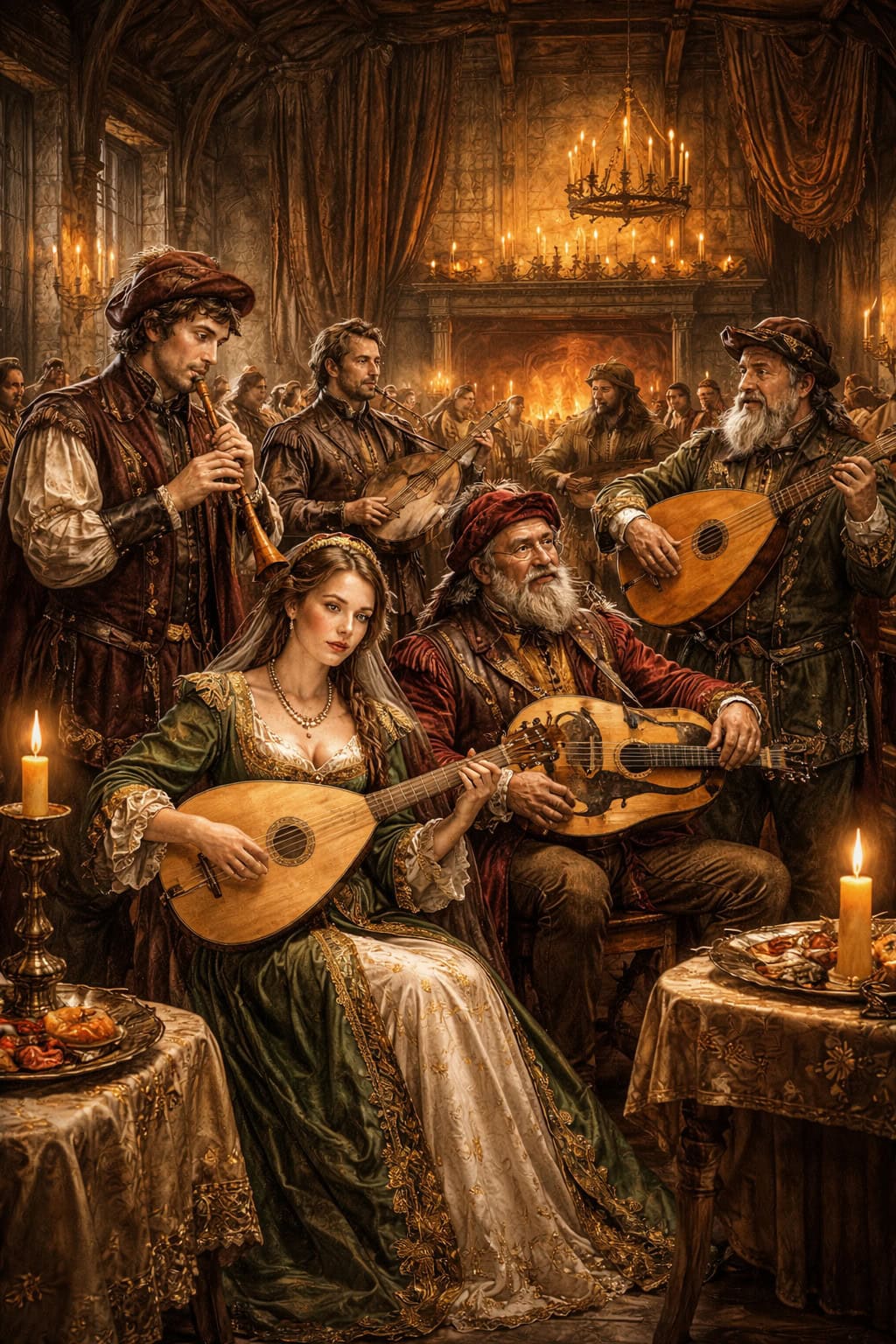
Medieval musical instruments varied widely depending on region, social class, and purpose. Instruments were commonly divided into wind instruments, string instruments, and percussion, and were used in both secular and courtly settings.
Popular medieval instruments included:
- Flutes and recorders, usually made of wood rather than metal
- Gemshorns, wind instruments made from animal horn
- String instruments such as the harp, psaltery, gittern, and mandore
- Dulcimers, which emerged later as metal string technology improved
These instruments were played by minstrels, troubadours, and court musicians, and were especially prominent in noble courts, festivals, and celebrations.
🎵 Types of Medieval Music
Medieval music generally falls into two main categories: sacred music and secular music. Each played a distinct role in medieval society and reflected different cultural, religious, and social traditions.
⛪ Sacred Medieval Music
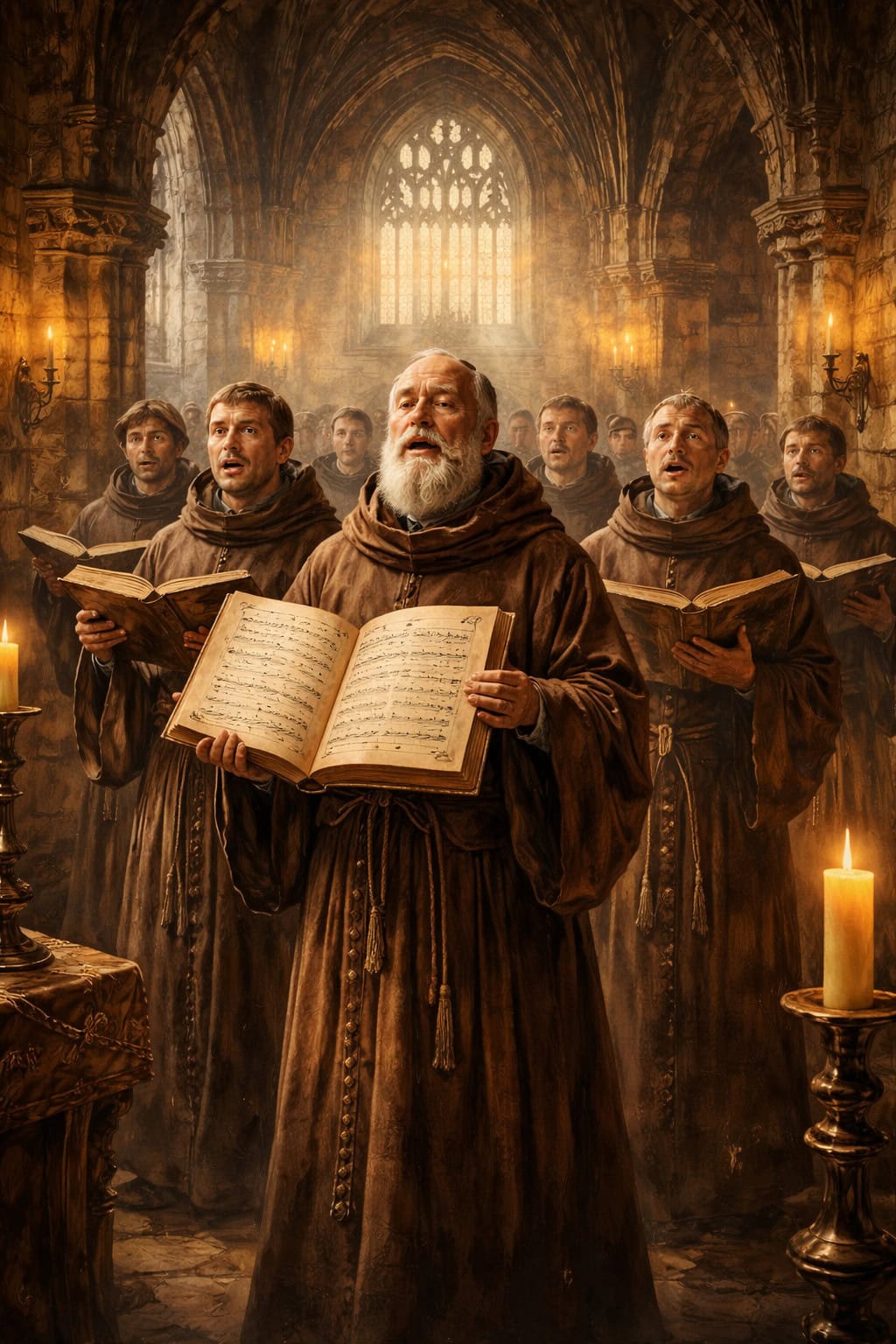
Sacred music dominated early medieval culture and was closely tied to the Christian Church. The most important and widespread form was Gregorian chant, a style of monophonic, unaccompanied vocal music used in religious worship.
These chants were written using neumes, an early system of musical notation that indicated pitch but not precise rhythm, allowing melodies to be passed down accurately across generations.
Sacred medieval music emphasized:
- Spiritual reflection and devotion
- Religious instruction through sung scripture
- Unity of worship across Christian communities
Musical instruments were typically banned in church services, as Church authorities believed that pure, unaccompanied voices were more suitable for worship and less likely to distract from prayer.
Secular Medieval Music
Secular medieval music flourished outside the church and focused on love, heroic deeds, satire, and daily life. This music was often performed by travelling musicians who moved between towns and noble households.
Common secular forms included:
- Ballads
- Dance music (line dances and circle dances)
- Courtly love songs
Secular music became increasingly popular during the High and Late Middle Ages, eventually rivaling sacred traditions.
🎶 Early Medieval Music (5th–10th Century)
Early medieval music was heavily shaped by the Christian Church. During this era, older Roman musical traditions were absorbed into Christian worship and gradually standardized. Under Pope Gregory I (traditionally associated with this process), the most famous style to emerge was Gregorian chant.
Key characteristics of early medieval music
- Monophonic vocal lines (single melodic line)
- No instrumental accompaniment in most church contexts
- Strong religious focus tied to worship and liturgy
- Primarily oral transmission before widespread written notation
Late Medieval Music (11th–15th Century)
During the late Middle Ages, medieval music grew more complex. Musicians began experimenting with polyphony, where multiple independent vocal lines were sung simultaneously.
Developments included:
- Two-, three-, and four-part polyphonic music
- Increased rhythmic complexity
- Growth of secular compositions alongside sacred works
These advances eventually led toward the Renaissance, marking a shift away from purely medieval styles.
Popular Medieval Music Forms
While it is impossible to identify a single “most popular” medieval music style, two forms dominated:
- Gregorian chant in religious settings
- Secular songs performed by professional musicians
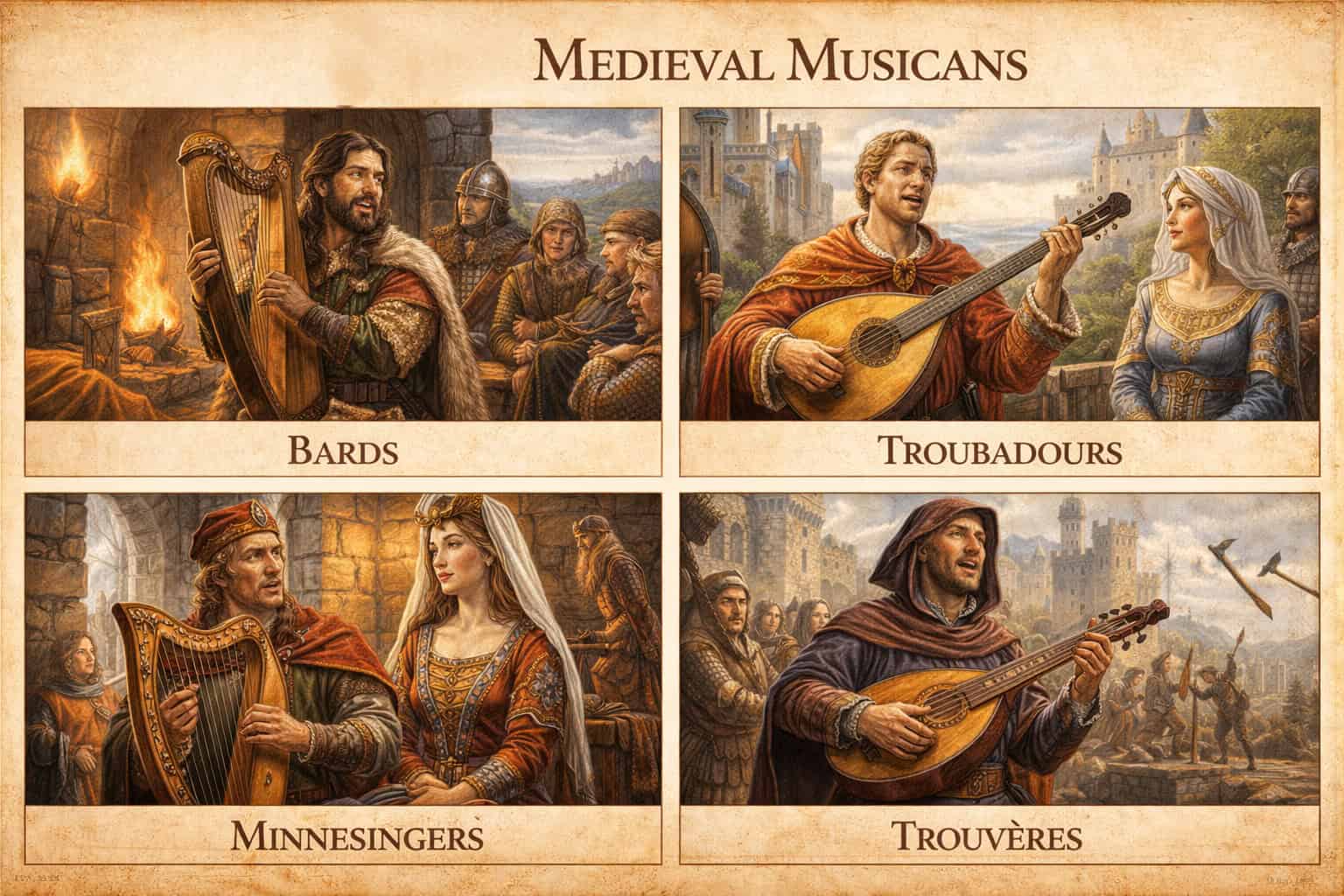
As literacy and travel increased, secular music spread rapidly across Europe, especially through troubadours in southern France and trouvères in the north.
🎼 Famous Medieval Musicians and Composers
Several individuals played key roles in shaping medieval music. Their work helped define both sacred music traditions and the growth of secular music across Europe.
Hildegard of Bingen
German abbess and composer known for visionary sacred works and influential liturgical writing.
Moniot d’Arras
Composer linked to courtly love songs and religious music within the trouvère tradition.
Adam de la Halle
Early pioneer of secular music and one of the best-known figures in medieval musical theatre.
Guillaume de Machaut
Highly influential poet-composer whose work shaped late medieval music and European court culture.
Pérotin
Major figure in early polyphonic music, associated with the Notre Dame school of composition.
Medieval Music Facts
- The harp was a favorite instrument of many troubadours
- Psalteries sit between a harp and a lyre in design
- Troubadours were travelling musicians, while trouvères were often of noble birth
- Waits were town-employed musicians who also served as night watchmen
- Medieval music helped preserve oral history, legends, and moral lessons
The Decline of Medieval Music
By the late Middle Ages, musical styles became increasingly complex. The style known as Ars subtilior introduced intricate rhythms and notation, signaling a shift away from medieval simplicity.
As Europe moved toward the Renaissance, composers sought new inspiration from classical antiquity, leading to dramatic changes in musical theory, structure, and expression. These changes marked the gradual end of medieval music and the beginning of a new artistic era.
Medieval Music: A Lasting Legacy
Although medieval music belongs to the past, its influence remains deeply embedded in Western musical tradition. From religious chant to courtly song, medieval music shaped how sound, structure, and storytelling evolved across centuries.
This hub serves as a gateway to deeper exploration of medieval instruments, musicians, chants, and secular traditions, each explored in greater detail in the articles linked throughout this section.
❓ Medieval Music – Frequently Asked Questions
What time period does medieval music cover?
Medieval music spans roughly from the 5th to the 15th centuries, covering the early, high, and late Middle Ages, before the emergence of Renaissance music.
What are the main types of medieval music?
The two main categories are sacred music, used in Christian worship, and secular music, which included songs of love, history, and everyday life performed outside the church.
What is Gregorian chant?
Gregorian chant is a form of monophonic, unaccompanied sacred singing that became the foundation of medieval church music and was written using early notation called neumes.
Who performed secular medieval music?
Troubadours, trouvères, and minstrels performed secular medieval music, often traveling between courts and towns to entertain audiences with songs and instrumental pieces.