
The English Longbow: Yew as the Wood of Choice
The English longbow, one of the most iconic weapons of medieval warfare, was most often crafted from yew, prized for its unique combination of strength, flexibility, and resilience. The heartwood of yew provided excellent compression strength, while the sapwood handled tension, allowing the bow to store and release tremendous energy when drawn. This natural synergy made yew ideal for the powerful draw weights required in battle. While yew was preferred, bowyers also occasionally used ash, elm, or hazel in times of scarcity, though these alternatives generally lacked the durability of yew.
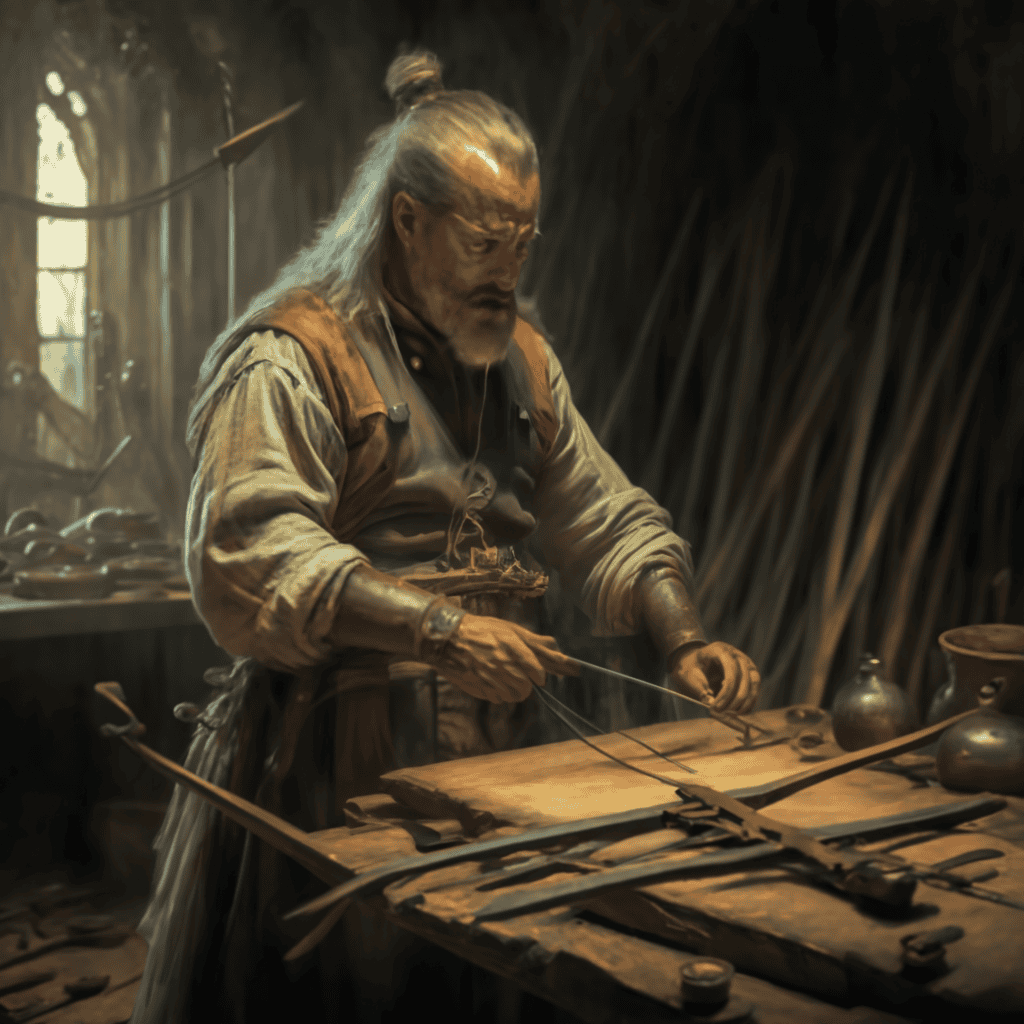
The Expertise of Bowyers
Creating a longbow was far more than carpentry—it required an intricate understanding of timber selection, bow geometry, and tillering. Tillering involved carefully shaping and bending the bow’s limbs to ensure even stress distribution and smooth flexing. A poorly made bow could break under tension, endangering the archer and compromising military effectiveness. This made bowyers highly respected craftsmen, combining technical skill with practical experience.
Tools and Workshop Techniques
Medieval bowyers relied on a range of specialized tools, including drawknives, spokeshaves, rasps, and planes, to shape and smooth the bow. Simple jigs, molds, and clamps helped maintain precise curves and symmetry. Bowyers also had to monitor grain orientation, moisture content, and temperature, as improper handling could cause warping or cracks. Their workshops were often carefully organized to allow drying, seasoning, and shaping to occur under optimal conditions.
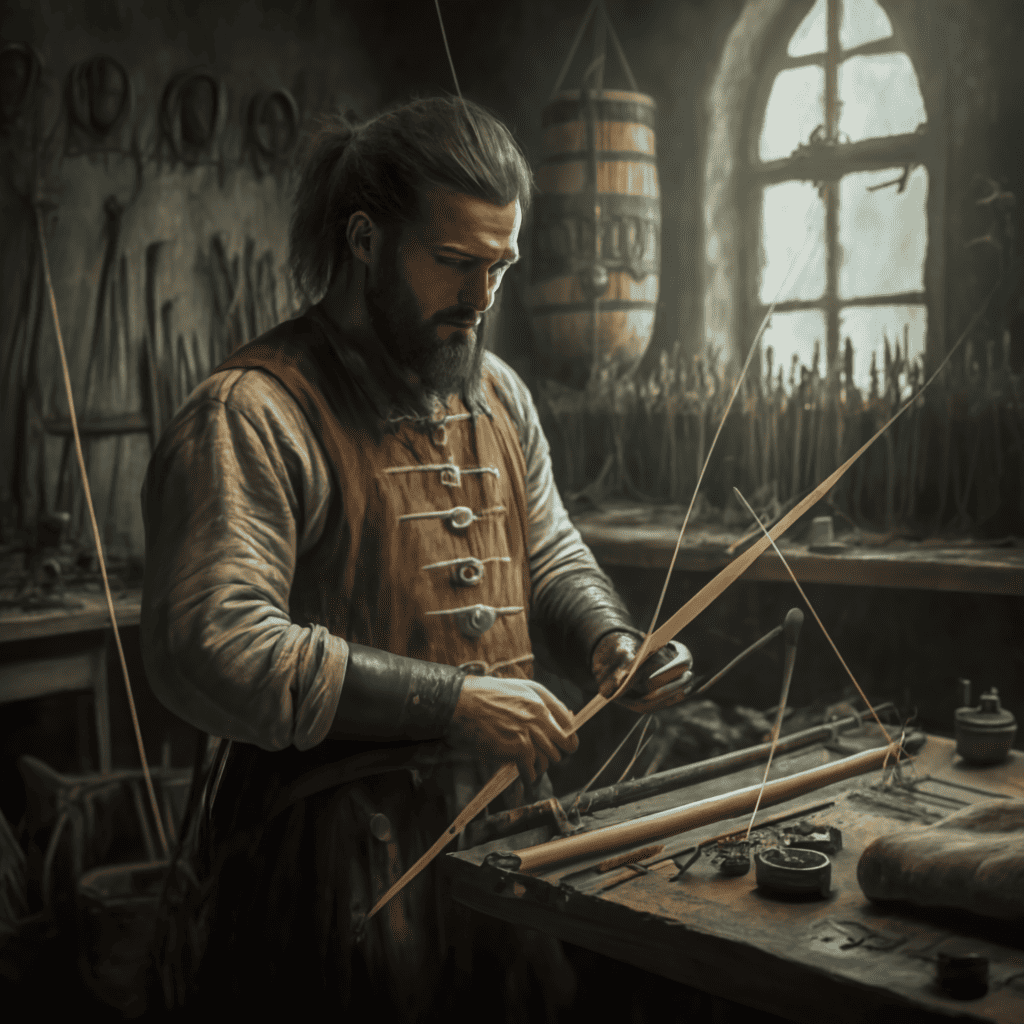
Seasoning and Preparing Yew
Seasoning yew was essential to prevent warping and improve the bow’s elasticity and durability. Some staves were ready for use within a year, while premium-quality staves required several years of careful drying and curing. Experienced bowyers understood how to balance the wood’s natural properties with the demands of longbow warfare, ensuring each weapon was ready for the battlefield.
Bowyers and the Military
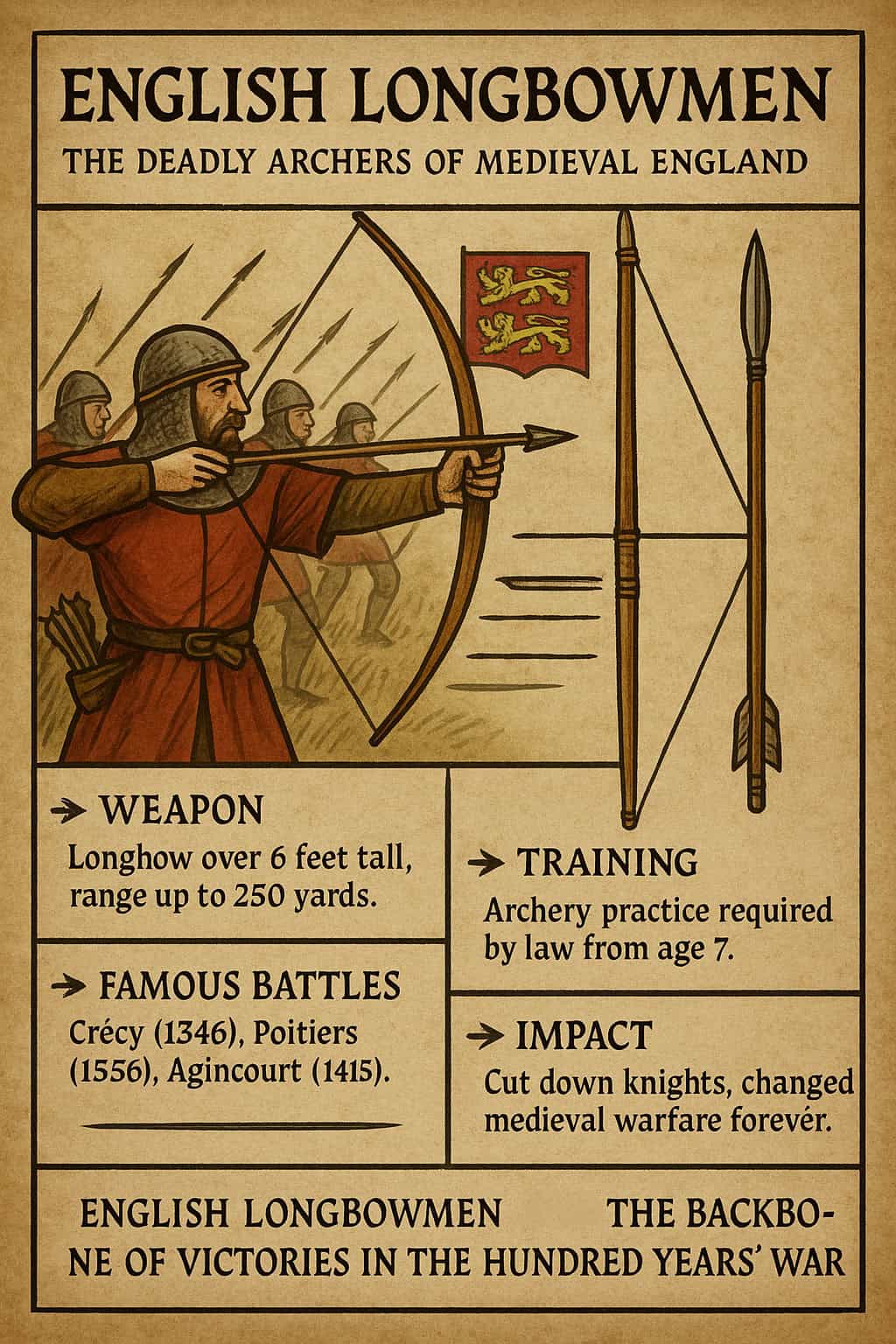
The longbow was both a precision weapon and a work of art. Bowyers worked meticulously to achieve the ideal draw weight, balancing power and control so archers could fire accurately over long distances. Standard lengths were typically around 6 feet, matching the height and reach of the average archer. Although some bows were customized for elite soldiers, most were made to standardized measurements, allowing for mass production in preparation for army campaigns.
Bowstrings and Collaboration
While some bowyers crafted their own bowstrings, this task was often handled by fletchers or other specialized craftsmen. Bowstrings were made from hemp, linen, or animal sinew, carefully twisted and waxed to match the bow’s tension. A mismatch could drastically reduce performance or cause the bow to fail, so collaboration between bowyer and string maker was vital.
Decorative and Practical Features
Although functionality was paramount, some bowyers added simple carvings, markings, or initials to identify the maker or owner. These subtle details served as a signature of craftsmanship, and in some cases, enhanced the bow’s aesthetic appeal. However, decoration was always secondary to performance, especially in weapons intended for war.
The Longbow in Warfare
Skilled bowyers supplied longbows that became central to English military strategy, particularly during the Hundred Years’ War. Battles like Crécy (1346), Poitiers (1356), and Agincourt (1415) showcased the devastating effectiveness of massed archers firing thousands of bodkin-tipped arrows. While the longbow was a critical weapon, it was part of a broader tactical system, which included cavalry, infantry, and fortifications.

Legacy of Medieval Bowyers
Medieval bowyers were more than craftsmen; they were essential contributors to military success. Their deep understanding of wood properties, tension, and geometry allowed them to create longbows that were both durable and powerful. By blending artistry, science, and practical skill, bowyers helped shape medieval warfare, leaving a legacy that influenced weapon-making techniques for centuries.

Observing Bowyers at Work | Traditional Archery
Archery and Renaissance Fairs
Archery and Renaissance fairs often feature craftsmen and bowyers who demonstrate their skills and sell their creations. These events can be a great opportunity to see bowyers at work and interact with them.
Archery Workshops and Classes
Some archery schools or traditional archery clubs offer workshops and classes where you can learn about bow making and see bowyers in action. Check with local archery organizations or search online for nearby opportunities.
Historical Reenactment Events
Historical reenactment events, particularly those focused on medieval or ancient history, may include demonstrations of traditional bow making. These events aim for historical accuracy, so you can witness the craftsmanship involved.
Museums and Cultural Centers
Certain museums and cultural centers with exhibits related to archery, medieval history, or indigenous cultures may occasionally host demonstrations by bowyers or feature videos of the craft.
Craft Fairs and Artisan Markets
Some craft fairs and artisan markets feature traditional artisans, including bowyers, who showcase their craft and sell their creations. Look for local events that emphasize traditional craftsmanship.
Online Videos and Tutorials
While not a direct in-person experience, you can also find numerous online videos and tutorials that showcase bowyers at work. These videos often provide insights into the process of crafting bows.
Archery Supply Stores
Some specialty archery supply stores may have workshops or events where bowyers demonstrate their skills or offer educational sessions on bow making.
To find specific events or workshops in your area, consider reaching out to local archery clubs, historical reenactment groups, or traditional craft organizations. Additionally, you can search online for upcoming events and demonstrations related to bow making and traditional archery in your region.
🏹 Frequently Asked Questions: Medieval Bowyer
What is a medieval bowyer?
A medieval bowyer was a skilled craftsman who made bows, especially longbows, for warfare and hunting, often working closely with fletchers who made arrows.
Which wood was most commonly used for longbows?
Yew was the preferred wood due to its strength and flexibility, though ash, elm, and hickory were also used when yew was unavailable.
How were bowyers trained?
Bowyers underwent long apprenticeships under experienced craftsmen, learning timber selection, tillering, shaping, and bowstring construction.
What tools did medieval bowyers use?
Bowyers used drawknives, rasps, spokeshaves, chisels, toothing planes, scrapers, and racks to shape, bend, and smooth bows.
What role did bowyers play in battles?
Bowyers provided essential longbows for armies. Skilled longbowmen using these weapons were decisive in battles like Agincourt (1415) and Crécy (1346).
🏹 Medieval Bowyer Quiz
🏹 Medieval Bowyer Glossary
Bowyer
A craftsman who specialized in making bows, especially longbows, for warfare and hunting.
Fletcher
A maker of arrows, often working alongside bowyers to supply complete archery equipment.
Tillering
The process of shaping a bow’s limbs to ensure even bending and proper tension for shooting.
Longbow
A tall, powerful bow, usually around 6 feet, used by medieval English archers in battle.
Drawknife
A hand tool used by bowyers to shave and shape wood for the bow limbs.
📜 Resources & Historical References
The following sources were consulted to ensure historical accuracy and depth for the article Medieval Bowyer: The Skilled Craftsman Behind the Longbow. These references include scholarly research on bow-making, medieval warfare, and craftsmanship:
These sources were cross-referenced to provide accurate information on bow-making techniques, materials, training, and the role of bowyers in medieval warfare. All content aligns with historical research and archaeological evidence.


