Medieval games played a central role in everyday life across the Middle Ages, providing recreation, strengthening communities, and sometimes even serving as military training. From violent knightly tournaments to strategic board games played in castle halls, entertainment reflected the structure and values of medieval society itself.
Although many games lacked standardized rules, they were far from primitive. In fact, several popular medieval sports and leisure activities evolved into modern games still played today.
What Were Medieval Games?
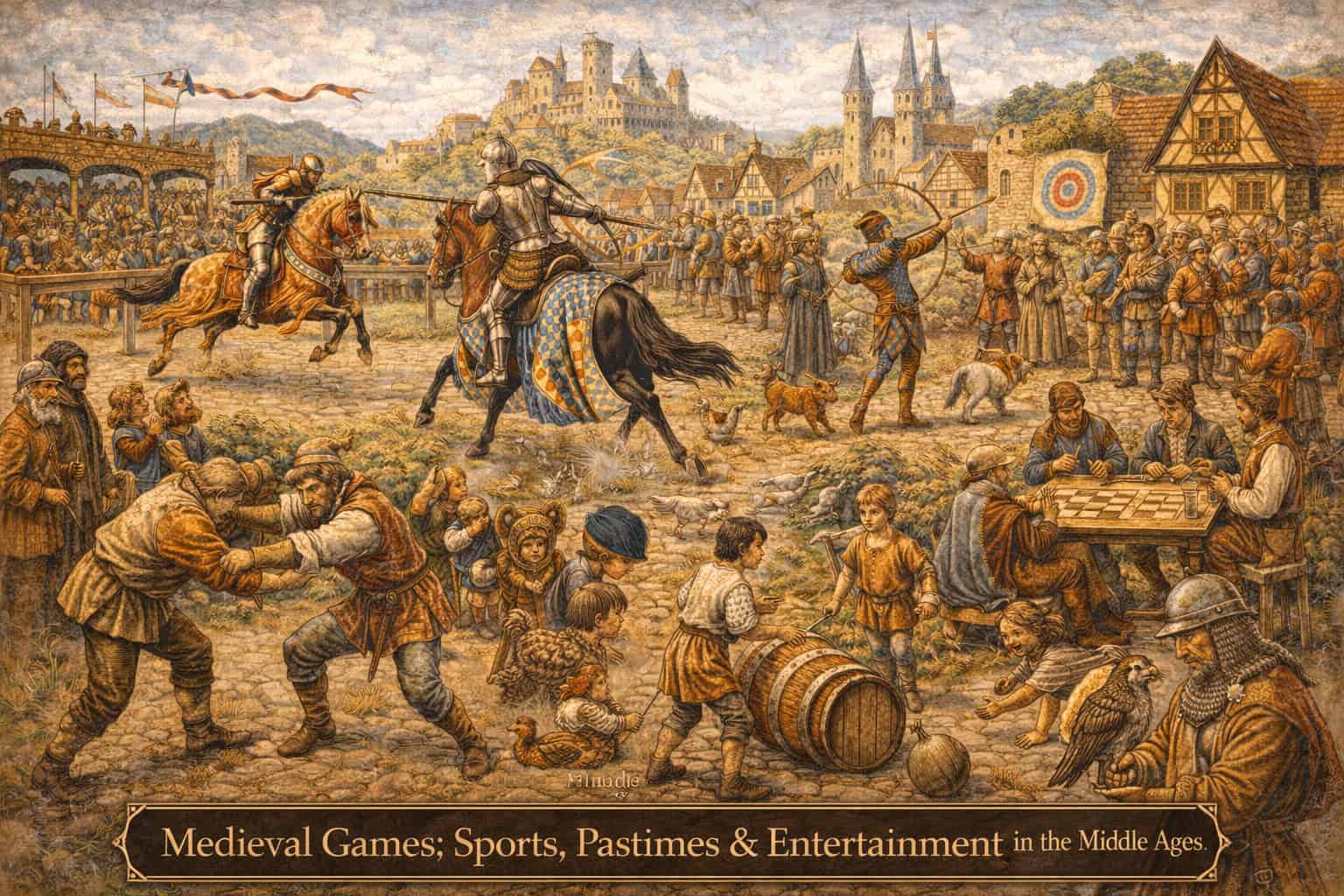
Medieval games were the sports, competitions, and recreational activities played throughout the Middle Ages. They ranged from elite contests such as jousting, tournaments, and falconry to village pastimes like stoolball, wrestling, and early forms of football. Indoors, people enjoyed strategy games including chess, backgammon, and alquerque. These activities provided entertainment, reinforced social bonds, and in many cases influenced the development of modern sports.
Why Games Mattered in Medieval Society
Life in the medieval period was often physically demanding and structured around agricultural cycles, religious observances, and feudal obligations. Games offered an essential escape from routine while reinforcing social bonds.
Festivals such as Christmas, Easter, and local saint days frequently featured competitions, contests, and communal celebrations. Markets and fairs also became important centers of recreation, blending trade with entertainment.
For the nobility, games often demonstrated status and martial readiness. For peasants, they provided rare opportunities for relaxation and community gathering.
Explore Medieval Games
Navigate through the major sports, pastimes, and recreational traditions of the medieval world.
Popular Outdoor Medieval Games
Outdoor activities were among the most visible forms of medieval entertainment, ranging from organized noble pursuits to rough village contests.
Some of the most common included:
- Hunting — both a survival skill and an elite sport
- Archery — encouraged in many kingdoms for military preparedness
- Wrestling — widely practiced across social classes
- Horse racing — a test of breeding and prestige
- Skittles — an early form of bowling
- Colf — considered a precursor to modern golf
- Shinty — an ancestor of hockey
- Gameball — a chaotic early version of football
- Stoolball — often viewed as an early relative of cricket or rounders
- Horseshoes — a popular accuracy game
These activities could be surprisingly dangerous. With few formal regulations, injuries were common, and some contests blurred the line between sport and combat.
Jousting and Knightly Tournaments
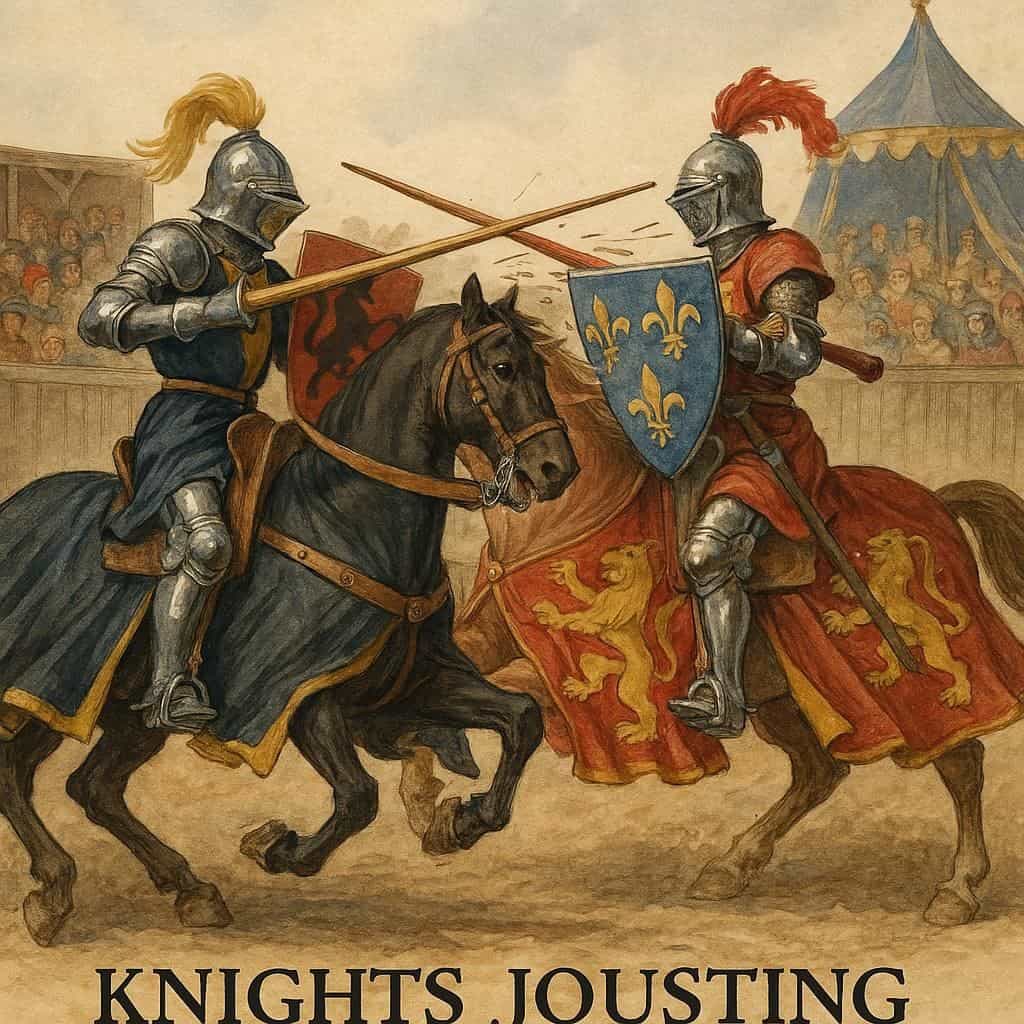
Few activities symbolize medieval sport more vividly than the joust.
In a typical joust, two armored knights charged toward each other on horseback with blunted lances, aiming to unseat their opponent. Victory brought prestige, prizes, and sometimes political favor.
Even more dramatic were tournaments, particularly the mêlée — large-scale mock battles involving teams of knights. Early versions were notoriously brutal and occasionally fatal.
Beyond spectacle, these contests served practical purposes:
- training warriors for real combat
- strengthening alliances
- displaying noble wealth
- reinforcing ideals of chivalry
Royal courts frequently sponsored tournaments, turning them into major social events attended by nobles and commoners alike.
Indoor Medieval Games
While many medieval pastimes took place outdoors, indoor games provided entertainment during harsh weather, religious holidays, and long winter evenings. These activities encouraged strategic thinking, patience, and social interaction.
Chess became one of the most respected games of the Middle Ages, particularly among the nobility. It was valued not only as entertainment but also as a reflection of medieval society, symbolizing hierarchy, warfare, and political strategy.
Backgammon and similar race games were also widely played, combining luck and skill through the roll of dice. Gambling sometimes accompanied these games, prompting occasional regulation by authorities.
Another influential game was alquerque, a tactical board game believed to have helped inspire modern checkers. Players captured opposing pieces through calculated movement, making foresight essential.
Dice games using knucklebones remained popular across social classes due to their simplicity and portability. Meanwhile, more intellectual players gravitated toward Rithmomachia, often called “The Philosopher’s Game,” which blended arithmetic with strategy.
Together, indoor medieval games demonstrate that recreation in the Middle Ages was not solely physical — it also engaged the mind, reinforcing logic, planning, and competitive spirit.
Games of the Nobility
Certain activities were closely tied to royalty and aristocratic life.
Hunting
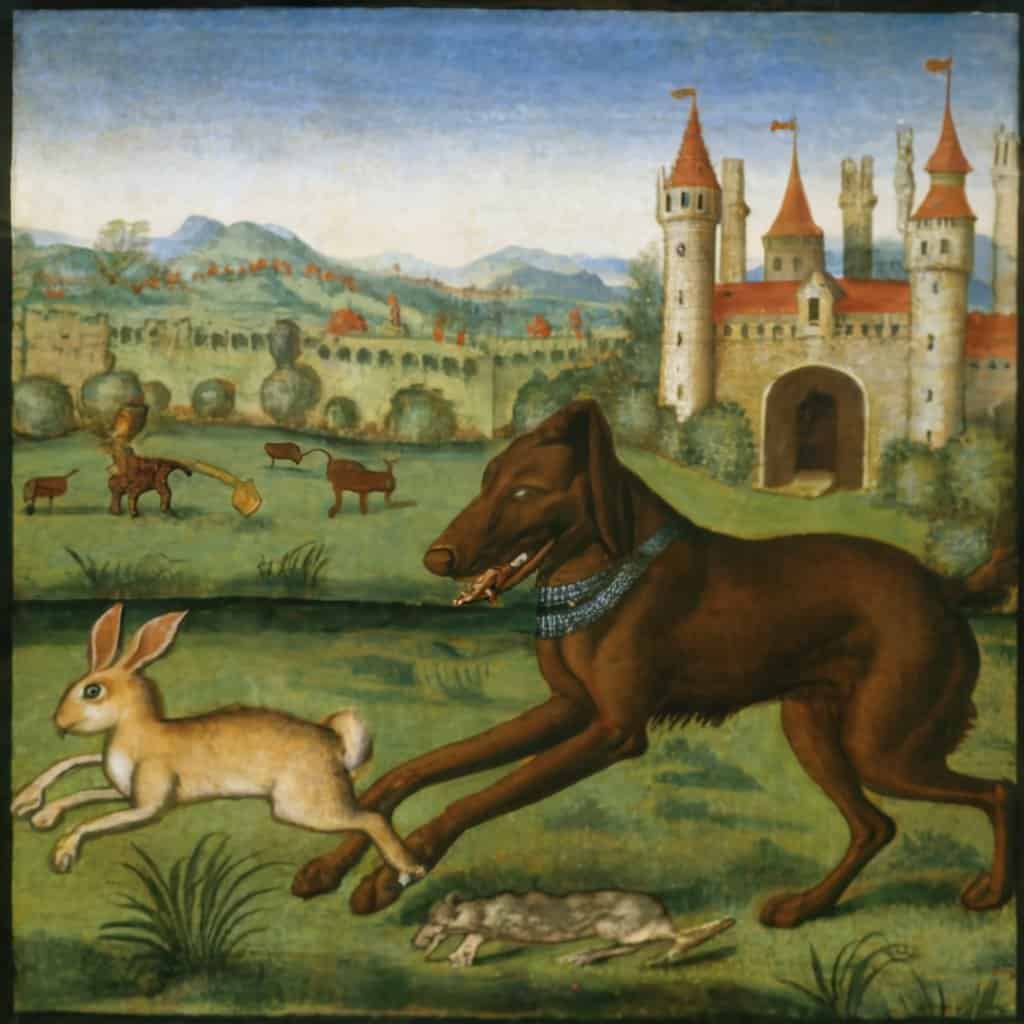
Elite hunts were highly ritualized and required vast tracts of land, making them inaccessible to most peasants. Nobles hunted deer, boar, and other large animals using trained dogs.
Falconry
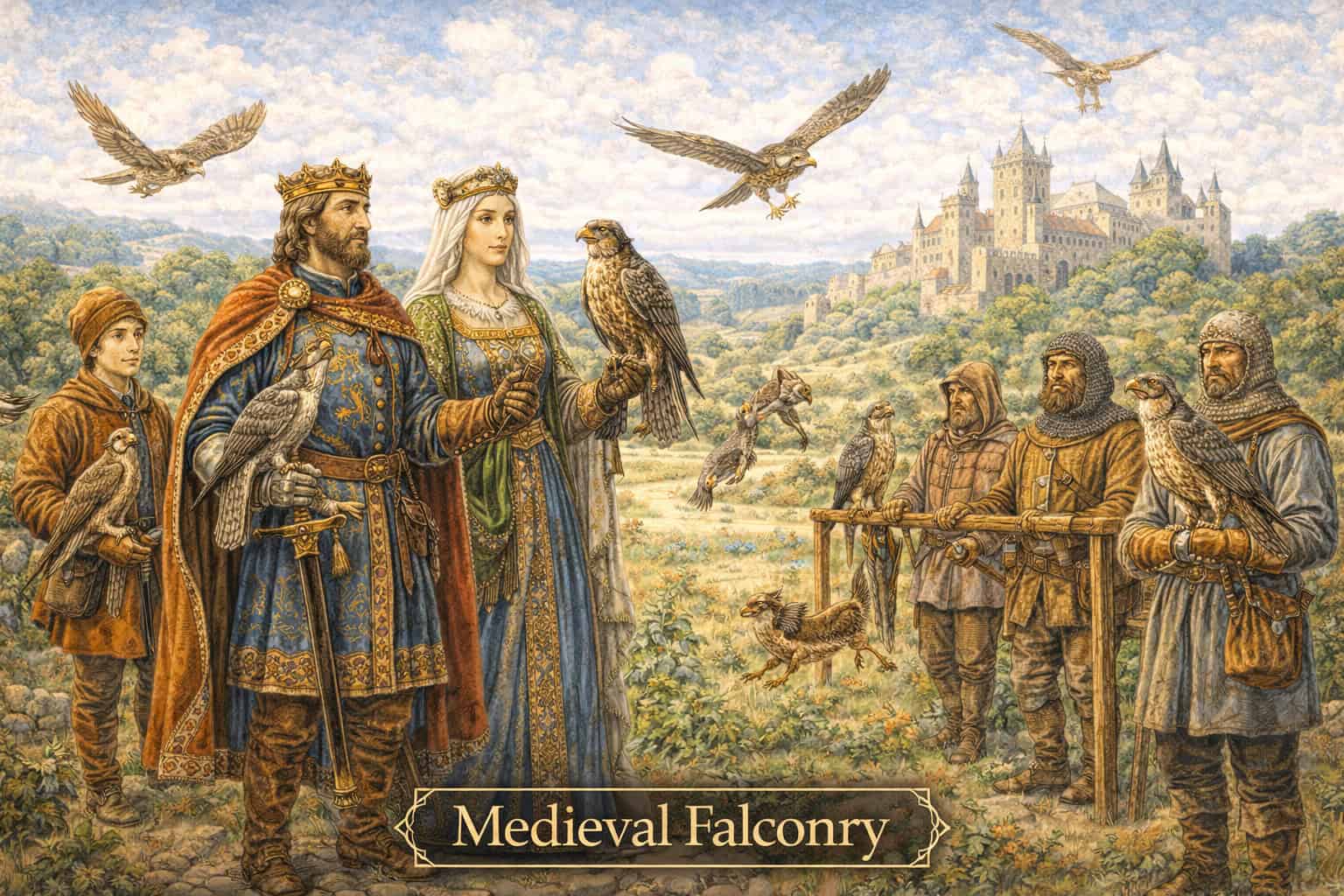
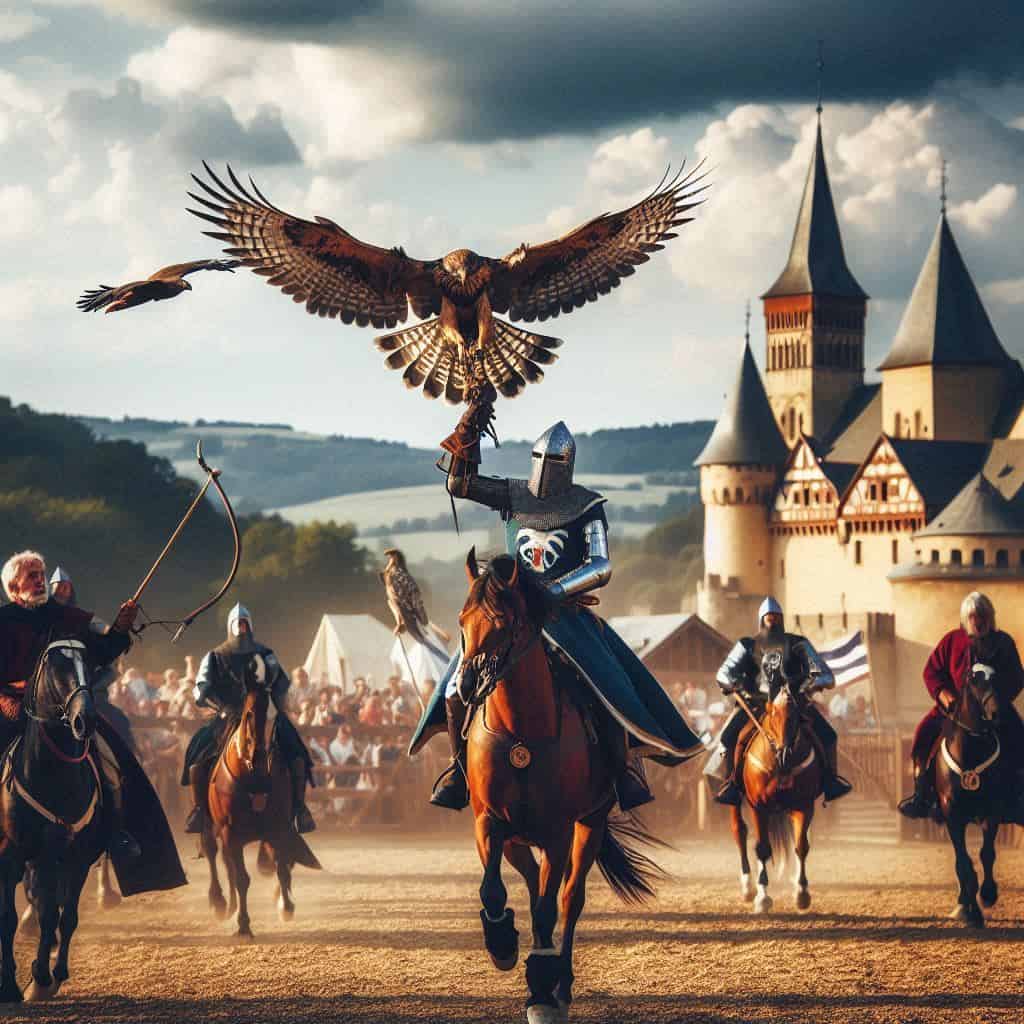
Perhaps the most prestigious medieval sport, falconry involved training birds of prey to hunt. Owning a falcon symbolized wealth and refinement, and strict social rules sometimes dictated which birds individuals could possess.
Notably, noblewomen often participated in hunting and falconry — a rarity in medieval athletics.
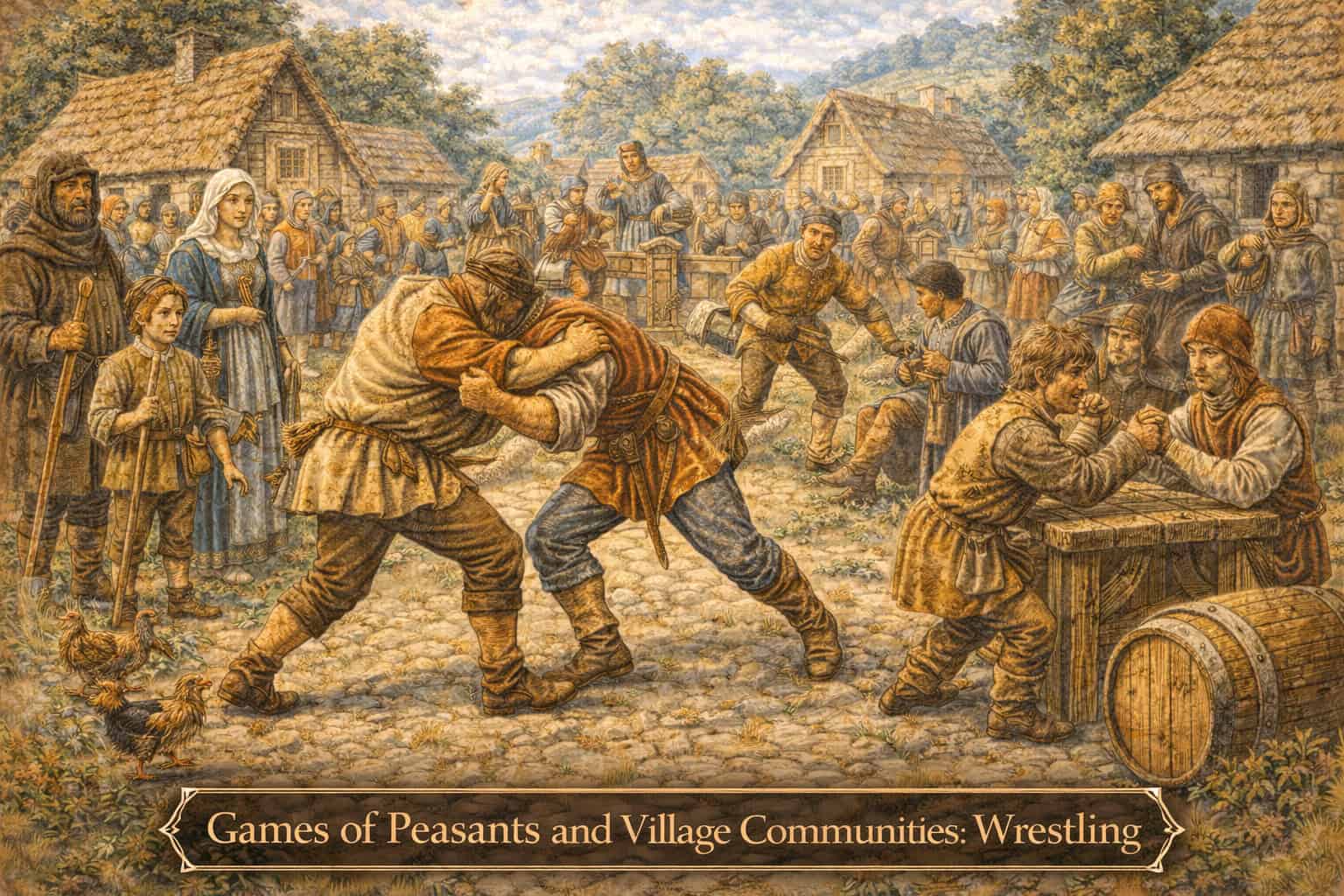
Games of Peasants and Village Communities
While peasants lacked aristocratic resources, their games were often more creative and communal.
Village entertainment frequently included:
- ball games
- throwing contests
- wrestling matches
- running races
- folk football
- tavern gambling
- early card games such as Ruff and Piquet
Children played simpler games like tag and hide-and-seek, proving that some forms of play are nearly universal across history.
Many historians believe that the physical nature of peasant labor influenced their games, favoring strength, endurance, and teamwork.
Medieval Festivals and Competitive Play
Large gatherings expanded the role of games beyond simple recreation.
Fairs and carnivals introduced:
- prize competitions
- traveling performers
- mock combats
- athletic challenges
- betting games
These events blurred class boundaries, allowing nobles and peasants to witness the same spectacles — even if they participated differently.
Violence, Risk, and the Reality of Medieval Sports
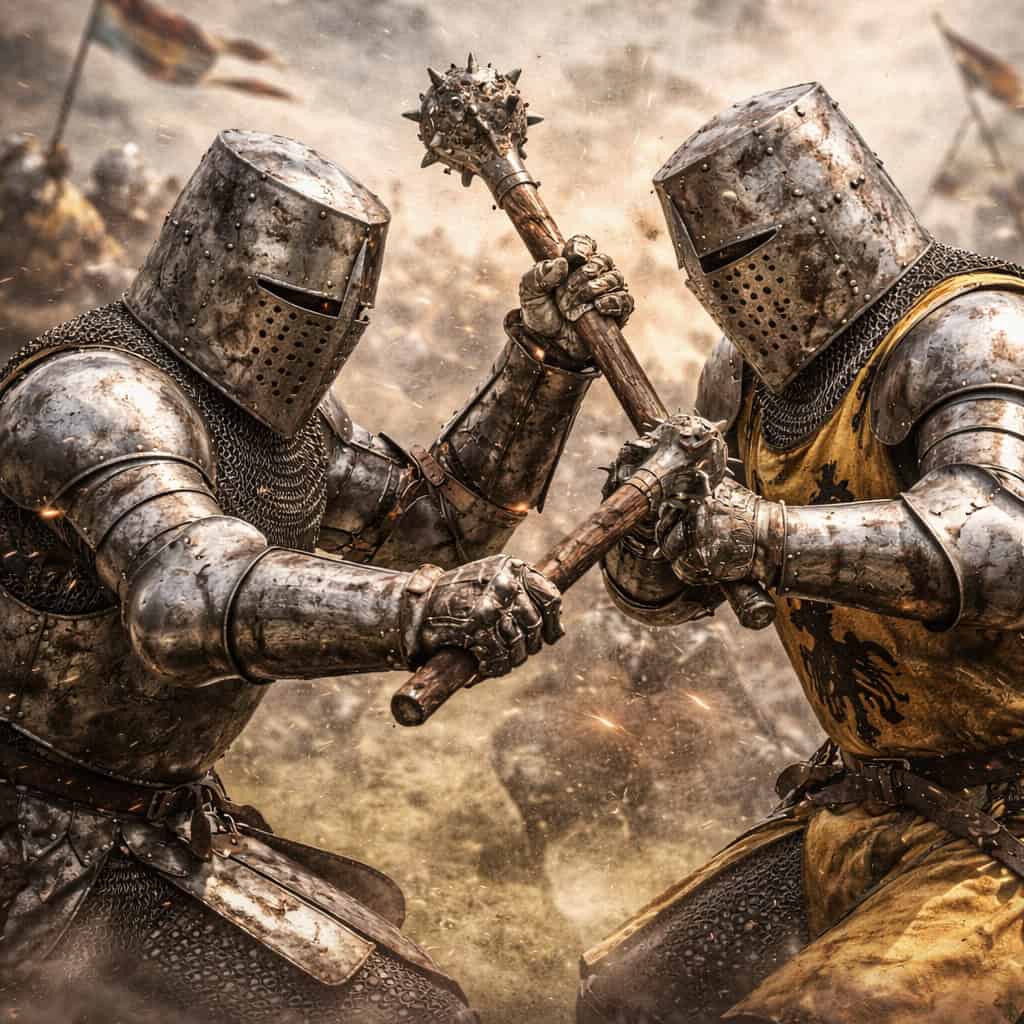
Modern audiences sometimes romanticize medieval games, but many were genuinely hazardous.
There were:
- few standardized rules
- limited protective equipment
- minimal medical knowledge
Even tournaments intended as practice could turn deadly.
Yet this danger reflected a society accustomed to warfare and physical hardship. Games often prepared participants for real-world conflict rather than shielding them from it.
Lasting Influence of Medieval Games
The legacy of medieval pastimes remains visible today.
Several modern sports trace conceptual roots to medieval activities:
- football
- golf
- bowling
- hockey
- equestrian sports
- competitive archery
Meanwhile, board games like chess continue to thrive worldwide.
More broadly, the medieval approach to recreation — blending competition, community, and spectacle — helped shape the evolution of organized sport in Europe.
Entertainment in a Demanding World
Medieval games were far more than simple diversions. They reflected social hierarchy, reinforced cultural values, and offered moments of excitement in an otherwise demanding era.
Whether through the thunder of charging knights, the quiet tension of a chess match, or the laughter of villagers at a festival, play formed an essential part of life in the Middle Ages.
Despite centuries of change, the human desire for competition, strategy, and shared entertainment remains remarkably unchanged.
Medieval Games FAQ
What were the most popular medieval games?
Popular medieval games included jousting, tournaments, archery contests, wrestling, stoolball, chess, backgammon, and hunting. These activities were enjoyed across different social classes.
Did medieval games have rules?
Some games, especially tournaments and archery competitions, followed structured rules. However, many village games were informal and varied by region, often becoming rough or dangerous.
What games did medieval nobles play?
Nobles favored prestigious activities such as falconry, hunting, jousting, and chess. These pastimes reinforced social status and military skill.
What games did peasants play?
Peasants typically played physical outdoor games including ball sports, wrestling, horseshoes, and throwing contests. Tavern gambling with dice and cards was also common.
Were medieval tournaments dangerous?
Yes. Early tournaments—especially mêlées—could be extremely violent. Although some weapons were blunted, serious injuries and deaths were not uncommon.
Did medieval games influence modern sports?
Many did. Early football-style games, skittles (bowling), stoolball (related to cricket), and colf (an ancestor of golf) all contributed to modern sporting traditions.
Glossary of Medieval Games
A mounted contest where two knights charged with lances attempting to unseat one another.
A large martial competition that tested combat skill, often involving teams of armored knights.
The noble practice of hunting with trained birds of prey such as falcons or hawks.
A medieval bat-and-ball game widely considered an early relative of cricket.
A strategic board game that likely influenced the later development of checkers.
A dice-style game played by tossing small bones and catching them in patterns.
Known as “The Philosopher’s Game,” it combined mathematics with tactical gameplay.
An early form of tournament featuring group combat that was often chaotic and dangerous.