The Black Death, also known as the Bubonic Plague, devastated Europe in the 14th century, killing millions of people in towns and cities. Amid this crisis, plague doctors emerged as specialized medical practitioners whose roles were as much about record-keeping and public health as attempting treatments. While their methods were often ineffective by modern standards, their distinctive costumes and practices have become iconic symbols of medieval medicine.

Who Were Plague Doctors?
A plague doctor was a medical professional employed during outbreaks of the Bubonic Plague. Unlike full-time physicians or surgeons, plague doctors often worked part-time or on an ad-hoc basis, responding to towns or cities during severe epidemics. Their primary responsibilities were to care for plague victims, document deaths, and attempt treatments based on medieval medical knowledge.
Training and Background
Most plague doctors had no formal medical education. Many were:
- Failed physicians or surgeons
- Self-taught individuals from other trades
- Former academics or clerks seeking work during the epidemic
Because there was no official school for plague doctors, their knowledge and competence varied greatly. Some were considered effective caregivers, while others were viewed as charlatans.
Roles and Responsibilities
Plague doctors had a wide range of responsibilities:
- Treating victims of the Bubonic Plague
- Maintaining records of plague-related deaths for public health purposes
- Advising families on how to care for the sick or handle funerals
- Performing autopsies in some cases to study the disease
They were considered municipal workers, often hired directly by towns and cities, and were expected to treat both the rich and poor.
Methods and Treatments
Plague doctors used treatments based on medieval medical theory, including:
- Bloodletting using leeches or incisions
- Application of herbs, onions, or chopped snakes to buboes (swollen lymph nodes)
- Quarantine advice to limit the spread of disease
Unfortunately, these methods were mostly ineffective, and survival often depended on luck rather than medical intervention.
Costumes and Protective Gear
One of the most iconic features of plague doctors was their distinctive costume:
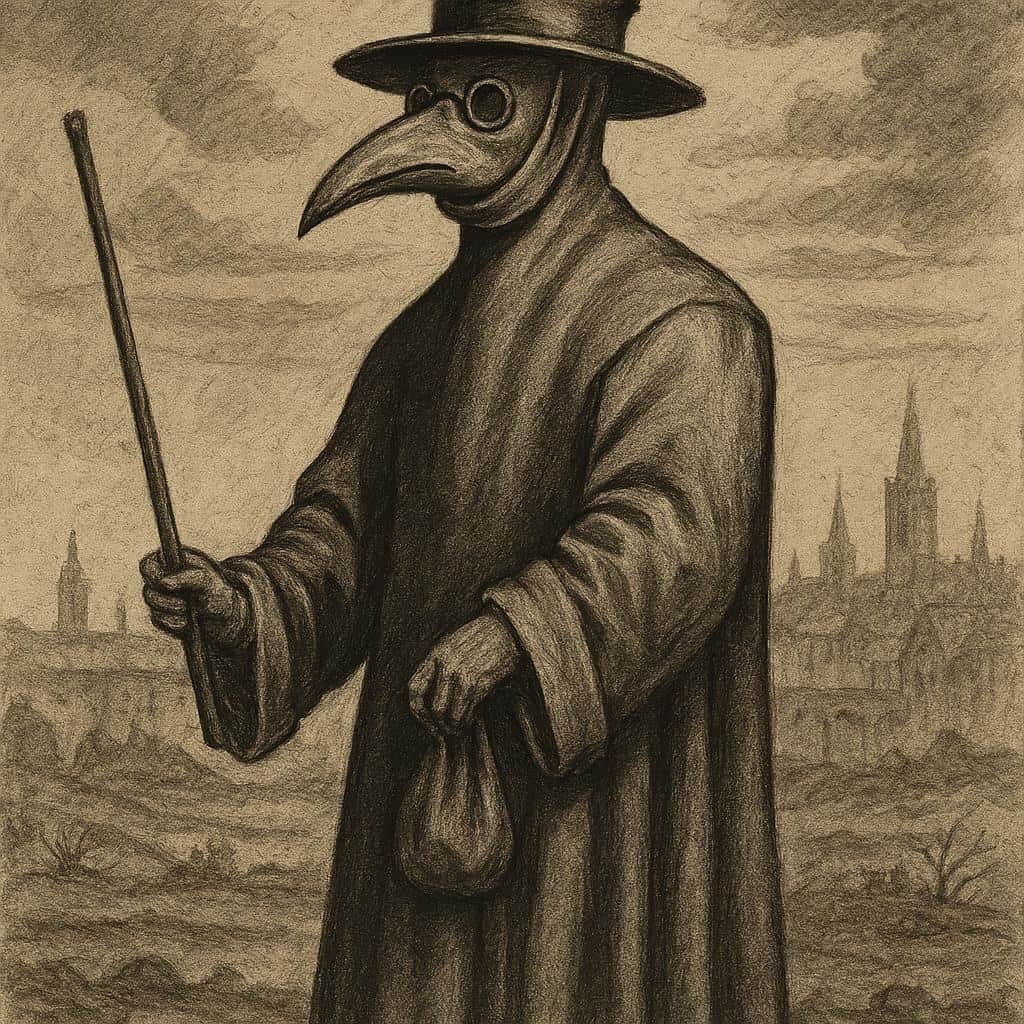
- Long black cloak to prevent contact with contaminated air
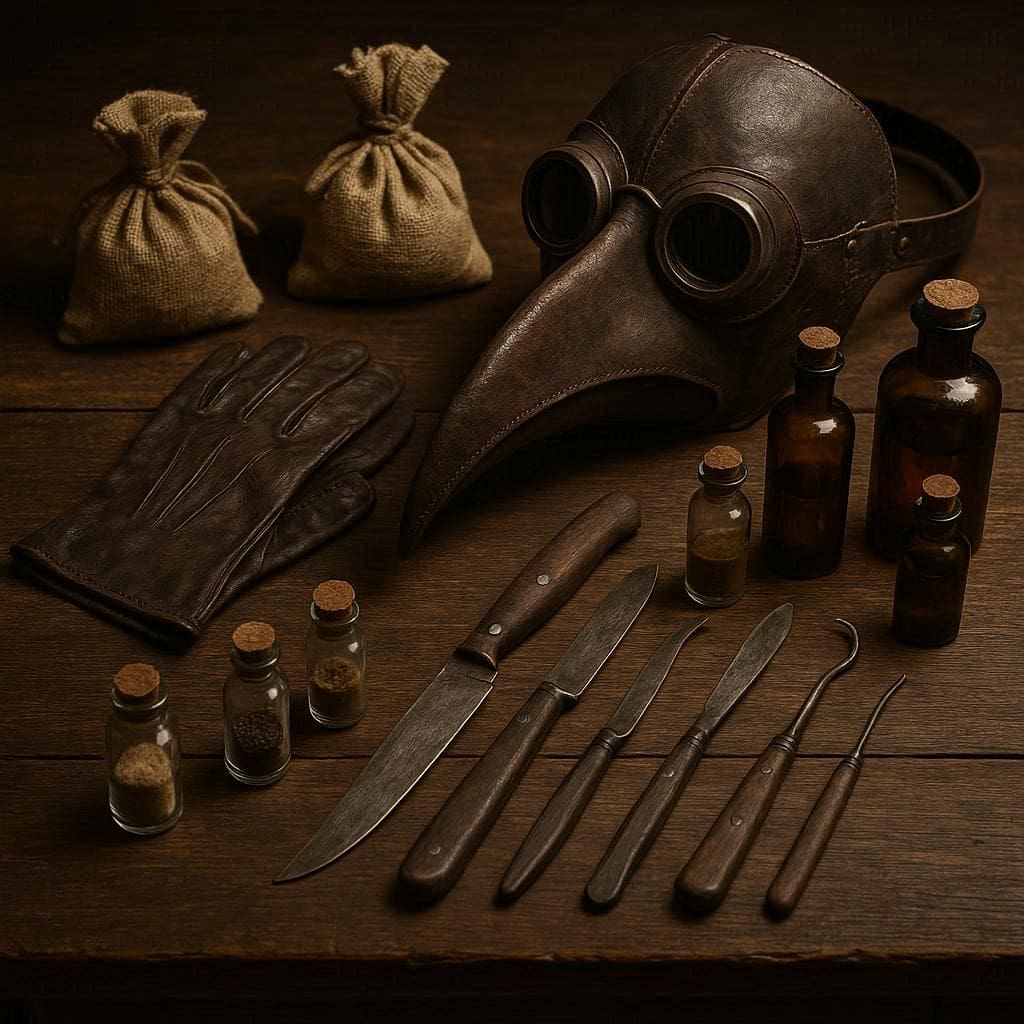
- Beak-shaped mask filled with aromatic herbs, designed to filter “miasma” or bad air
- Wide-brimmed hat to denote professional status
- Gloves, boots, and a cane to avoid direct contact with patients
These outfits were intended to protect the doctor while maintaining a professional appearance.
Employment and Payment
Plague doctors were typically hired temporarily by towns and cities during outbreaks. Their work was hazardous, and pay was commensurate with the risk. Some doctors also sold herbal remedies or concoctions, although these were generally ineffective.
Interaction with Society
Plague doctors occupied a unique social role:
- They were both respected and feared, as they were directly associated with death and disease
- Often employed to witness wills during outbreaks
- Provided advice to families on how to care for the sick and handle funerals
Despite their fearsome reputation, they were vital in maintaining some order and documentation during widespread epidemics.
Legacy of Plague Doctors
Plague doctors remain a lasting symbol of medieval medicine. While their treatments were largely ineffective, their presence:
- Helped track the scale of pandemics
- Provided basic care to the ill
- Influenced popular culture, inspiring depictions in art, literature, and modern media
Their costumes, particularly the beaked masks, are among the most recognizable images from the Black Death era.
Famous Myths and Misconceptions
- Plague doctors could cure the disease – false; they mostly provided comfort or documentation.
- All doctors wore beaked masks – only in later centuries and in specific regions.
- They were all charlatans – some were competent caregivers, despite limited medical knowledge.
Plague Doctor Tools and Instruments
- Bloodletting tools: leeches, knives, and cupping vessels
- Herbal poultices: onions, herbs, and vinegar-soaked cloths
- Observation instruments: notebooks and sticks for examining patients without direct contact
Impact on Public Health
Plague doctors were an early attempt at organized public health, recording deaths and advising towns on containment strategies. Their documentation provides valuable historical insight into the scale and spread of the Black Death.
Conclusion
The plague doctors of the 14th century were more than just eccentric figures in long black cloaks—they were part of a medieval society grappling with one of the deadliest pandemics in history. Their methods may have been primitive, but their role in care, documentation, and public health left a lasting legacy that continues to fascinate historians and the public alike.
❓ Plague Doctor FAQ
Who was a Plague Doctor?
A Plague Doctor was a medical practitioner specifically employed to treat victims of the Bubonic Plague in medieval Europe. They often had no formal training and were hired on an ad-hoc basis by towns and cities.
What did Plague Doctors wear?
They wore long cloaks and the iconic beak-shaped mask filled with aromatic herbs to protect against the supposed “miasma” or bad air thought to spread the plague.
What treatments did they use?
Plague Doctors relied on bloodletting, herbal remedies, poultices, and other methods, but most were ineffective. They also recorded deaths and sometimes witnessed wills.
Were Plague Doctors effective?
They had very low success rates. Many were considered charlatans, but they played an important role in public record-keeping and managing epidemics.
📝 Plague Doctor Quiz
📖 Glossary of Terms
Bubonic Plague
The infectious disease caused by the bacterium Yersinia pestis, spread by fleas on rats, responsible for the Black Death in the 14th century.
Buboes
Swollen, inflamed lymph nodes caused by the plague, often appearing in the armpit, groin, or neck.
Miasma
An incorrect medieval theory that diseases were caused by "bad air" or noxious fumes.
Quarantine
The practice of isolating people suspected of carrying contagious diseases to prevent spread.
Plague Doctor Mask
The beak-shaped mask worn by plague doctors, often filled with herbs to protect against "miasma".