Medieval diseases shaped everyday life across Europe, influencing fear, religion, medicine, and social structure. With no understanding of germs or bacteria, medieval people faced illness with limited medical knowledge and few effective treatments. Epidemics such as the Black Death devastated entire regions, while common infections like dysentery, tuberculosis, and smallpox were constant threats in towns and villages alike.

Poor sanitation, contaminated water, overcrowded housing, and malnutrition allowed disease to spread rapidly throughout the Middle Ages.

☠️ Plague & Epidemic Diseases
Plague outbreaks were the deadliest medieval diseases, spreading rapidly along trade routes.
- Black Death
- Bubonic plague
- Pneumonic plague
- Septicemic plague
🩺 Skin Diseases & Parasites
Skin conditions were common due to poor hygiene and parasite infestations.
- Leprosy
- Lice infestations
- Flea-borne infections
- Chronic sores and rashes
🚰 Waterborne & Digestive Diseases
Contaminated water caused widespread intestinal illnesses.
- Dysentery
- Typhoid fever
- Severe diarrhea
- Food poisoning
🤒 Viral & Childhood Diseases
Highly contagious viral diseases spread rapidly in medieval towns.
- Smallpox
- Measles
- Chickenpox
🫁 Respiratory Diseases
Respiratory infections thrived in cold, smoke-filled homes.
- Influenza
- Whooping cough
- Diphtheria
- Tuberculosis (consumption)
🥬 Nutritional Deficiency Diseases
Malnutrition caused long-term deficiency illnesses.
- Scurvy (vitamin C deficiency)
- Anemia
- General malnutrition
Common Causes of Medieval Disease
Disease in the Middle Ages was not random. It was closely tied to daily living conditions.
Medieval illnesses were often caused by:
- Poor hygiene and limited access to clean water
- Malnutrition and vitamin deficiencies
- Close contact with animals and parasites
- Overcrowded towns and trade routes
- Lack of medical understanding
Most medieval people believed disease was caused by imbalanced bodily humors, bad air (miasma), or divine punishment, rather than infection.
🩺 Skin Diseases and Parasites
Skin conditions were widespread in medieval society, especially among peasants and the urban poor, where overcrowding and limited hygiene were common.
Lice, fleas, and bedbugs thrived in wool clothing, straw bedding, and poorly ventilated homes. These parasites often caused:
- Chronic itching and open sores
- Skin infections
- Secondary illnesses caused by scratching and exposed wounds
Bathing practices varied by region and social class, but regular washing was difficult due to the need to carry water by hand and heat it manually.
Nutritional Diseases: Scurvy
Scurvy resulted from a lack of vitamin C and primarily affected the poor, sailors, and people during famines.
Symptoms included:
- Bleeding gums
- Loose teeth
- Weakness and joint pain
Fresh fruits and vegetables were often unavailable or unaffordable, particularly during winter months.

Waterborne and Digestive Illnesses
Diseases of the digestive system were extremely common due to contaminated water and spoiled food.
These included:
- Dysentery
- Typhoid fever
- Severe diarrheal illnesses
Human and animal waste frequently polluted wells and rivers. Although medieval people often blamed raw fruits and vegetables, the true cause was bacterial contamination.
Childhood and Viral Diseases
Highly contagious viral diseases spread easily through medieval populations.
Common illnesses included:
- Measles
- Smallpox
- Chickenpox
These diseases caused high fevers, rashes, scarring, and in many cases death—especially among children. Survivors of smallpox were often permanently disfigured.
🫁 Respiratory Diseases
Respiratory infections were another major cause of death during the Middle Ages, particularly among the young and elderly.
Diseases such as:
- Influenza
- Whooping cough
- Diphtheria
spread quickly between towns through trade routes and religious pilgrimages. Cold, poorly ventilated homes filled with smoke from open hearths severely worsened lung conditions.
Leprosy in Medieval Society
Leprosy was one of the most feared medieval diseases, not only for its physical effects but for its social consequences.
Leprosy affected:
- Skin
- Nerves
- Eyes
- Extremities
Victims often suffered loss of fingers, toes, and facial features. Although medieval people believed leprosy to be highly contagious, modern research shows transmission was limited.
Those diagnosed were frequently sent to leper houses (leprosaria) and forced to live in isolation. Lepers sometimes carried bells or clappers to warn others of their presence. Care of lepers was often overseen by the Church.

The Black Death
The Black Death was the deadliest disease outbreak of the Middle Ages.
Between 1346 and 1353, it is estimated that:
- 30–50% of Europe’s population died
- 75–200 million people worldwide perished
The disease spread along trade routes, arriving in Europe via Mediterranean ports. Fleas carrying the bacterium Yersinia pestis infected humans through bites.

Types of Plague
The Black Death occurred in three main forms:
- Bubonic plague – swollen lymph nodes (buboes), fever, weakness
- Septicemic plague – blood infection causing rapid death
- Pneumonic plague – lung infection spread through coughing
Mortality was extremely high, and survival was rare without modern treatment.
🙏 Medieval Beliefs About Disease
Without scientific explanations, medieval people often turned to religion, tradition, and inherited medical theories to explain illness.
Many believed disease was caused by:
- God’s punishment for sin
- Corrupted air (commonly known as miasma)
- Astrological events and planetary alignments
In response, communities organised public prayers, religious processions, and acts of penance in hopes of divine forgiveness and protection from further illness.
Medieval Medical Treatments
Medieval medicine was based on the theory of the four humors:
- Blood
- Phlegm
- Black bile
- Yellow bile
Doctors believed illness resulted from imbalance.
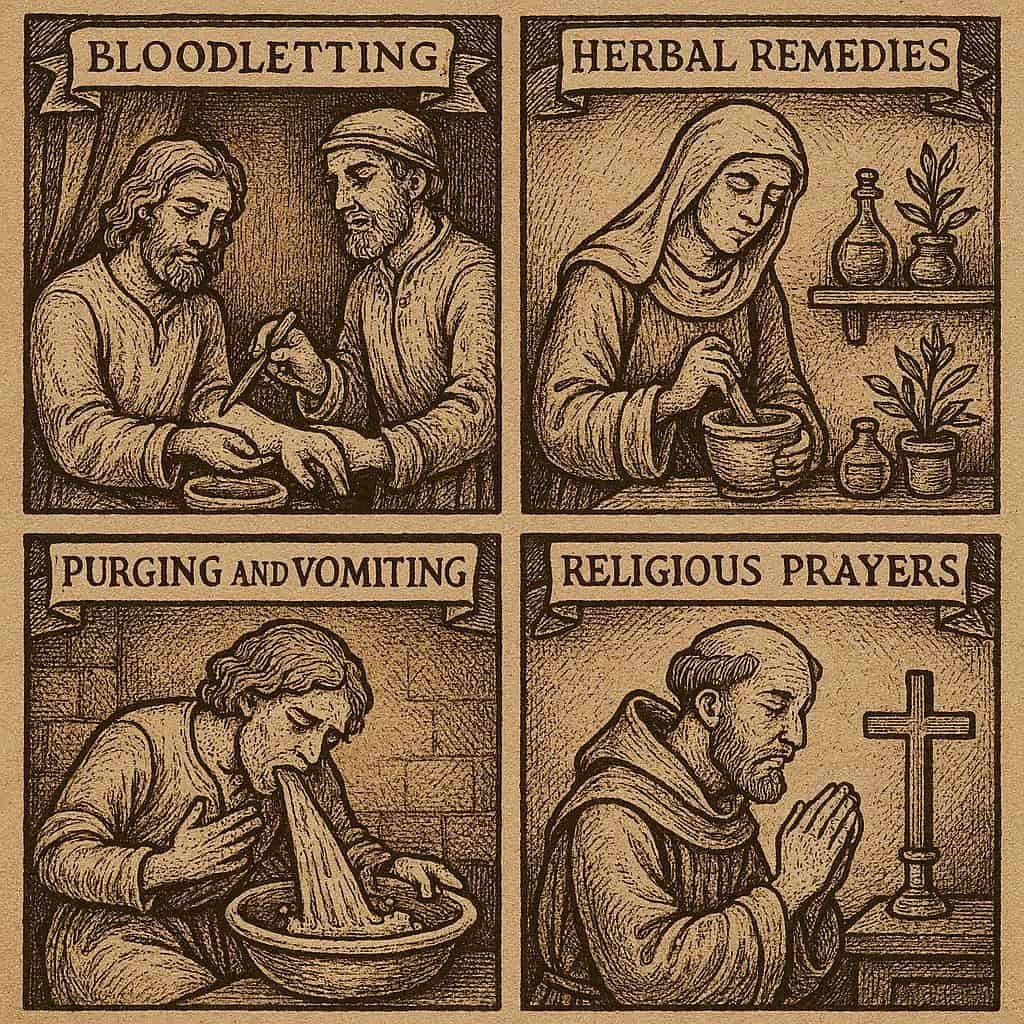
Common treatments included:
- Bloodletting
- Herbal remedies
- Purging and vomiting
- Religious prayers
Herbal medicine relied on the “doctrine of signatures,” where plants resembling body parts were thought to cure related illnesses.
Summary: Disease in the Middle Ages
Disease was a constant presence in medieval life. Poor sanitation, limited nutrition, and lack of medical knowledge allowed illnesses to flourish. While minor infections were common, catastrophic outbreaks like the Black Death reshaped European society forever.
Despite ineffective treatments, medieval responses to disease laid early foundations for public health, quarantine, and medical observation that would later shape modern medicine.
❓ Medieval Diseases – Frequently Asked Questions
What were the most common medieval diseases?
Common illnesses included the Black Death, dysentery, leprosy, smallpox, measles, and tuberculosis. Risk was highest in crowded towns and during famine years.
Why did disease spread so quickly in the Middle Ages?
Disease spread through contaminated water, poor sanitation, overcrowding, parasites, and constant movement along trade routes and pilgrim roads. People did not understand bacteria or infection.
How did medieval people explain illness?
Many believed illness came from God’s punishment, bad air (miasma), or imbalance in the four humors. These beliefs shaped both medical treatments and religious responses.
What treatments were used for medieval diseases?
Treatments often included herbal remedies, dietary changes, bloodletting, purging, and prayer. Some towns also used early forms of quarantine during outbreaks.
What was the deadliest medieval disease?
The Black Death (1346–1353) was the deadliest outbreak, killing an estimated 30–50% of Europe’s population in many regions.
How were people with leprosy treated in medieval society?
People diagnosed with leprosy were often sent to leper houses (leprosaria) and separated from daily life, though many received care through charitable and religious institutions.
🧠 Medieval Diseases Knowledge Quiz
📜 Glossary of Medieval Disease & Medicine Terms
Bubo
A swollen lymph node, often appearing in the groin, neck, or armpit during bubonic plague.
Four Humors
A medieval medical theory claiming health depended on balancing blood, phlegm, black bile, and yellow bile.
Leprosarium
A leper house where people diagnosed with leprosy were housed and often isolated from wider society.
Miasma
The belief that disease spread through corrupted air or foul smells rather than infection.
Purging
A treatment intended to expel harmful substances through vomiting or laxatives to “restore balance.”
Quarantine
A practice of isolating people or ships to prevent the spread of plague, especially in port cities.
Yersinia pestis
The bacterium responsible for the plague, typically transmitted by fleas from rodents to humans.
Bloodletting
A common medieval treatment where blood was removed to correct an imbalance of the humors.