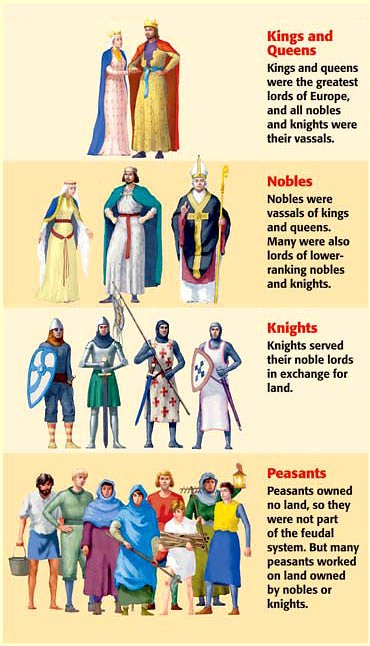
The feudal system was the dominant social, political, and economic structure of medieval Europe, based on land ownership and loyalty. At the top stood the king, who granted large areas of land to nobles and lords in exchange for military service and allegiance. These lords, in turn, provided land to vassals and knights, who pledged loyalty and protection. At the bottom of the hierarchy were peasants and serfs, who worked the land and supported the system through labor and taxes. The feudal hierarchy created a tightly bound society where everyone’s status and duties were predetermined, reinforcing the power of the nobility and shaping daily life across the medieval world.
It was a system that had served him well in Northern France and helped him to consolidate power and gain immense wealth.
The Feudal system bought the loyalty of Barons in return for land, it was a promise of land in return for the services they could provide to the king such as armies, military personnel, and weaponry.

King William promised French Barons who helped him defeat the English in the Battle of Hastings large holdings of land in England and this was organized through the development of an English Feudal system.

Feudalism is a grouping of legal and military customs, prevalent in medieval Europe, which flourished between the 9th and 15th centuries, or any similar grouping of legal and military customs.
King William *English Feudalism
William the conqueror was a very intelligent king and one of his first acts after winning the battle of Hastings in 1066, was to create a new feudal system in England that required all land in the country to be handed over to him.
King William created the Domesday book which was a detailed record of everything people owned in England.

This was a rotten deal for the main Anglo-Saxon medieval population of England, who had never lived under a Feudal system before.

King William created the Feudal system for his own gain, his role was to organize and plan the system with help from well-placed loyal Barons, and he had to decide who he should put in places of power to keep the Feudal system in place, The Feudal system would help the King become wealthier and consolidate his power over England.
Feudal System Key Points
- A lord in medieval times was either a king or a powerful nobleman
- Lords along with the Church owned all medieval land
- A lord gave away land to those who served him “Vassals”
- under the feudal systems, rules Vassals followed the lord and fought in battles for the Lord
- Vassals also collected taxes from the medieval people who lived on the lord’s land
- People who worked on the lord’s land and paid taxes were given protection by Vassals
- Feudalism developed as an idea as early as the 700s
- Under the Franks Feudalism was a form of contract developed by European elites
- The Feudal contract laid down rules and laws that had to be obeyed
- The Feudal contract allowed power to be wielded across districts dominated by castles

Barons *Tenants in chief made the Feudal System Work
To make this new Feudal system work in England king William needed people in places of power who he could trust, the French Barons that he already knew and people that he felt he could influence were put in places of power, he must have been very persuasive as he even made some Anglo-Saxon Barons part of the Feudal system.


Feudal system – Peasants
At the bottom of the Feudal system were poor people who were known collectively as peasants commonly serfs and Villeins they worked the land and had to pay rent to the Barons for the use of the land on which they could grow food for their families and villages people. Peasants could also fight for the barons as military men in some situations.


It was also part of the feudal system deal that peasants had to work a few days a week tending to the Lord’s land as well as their own, if that wasn’t enough peasants were also required to work additionally at harvest time and other busy times of the year.
Sometimes they would be given the option of making a larger financial payment instead of doing the extra work.

Feudalism in France
Feudalism in England mirrored that of northern France where it originated, this kind of feudal system gave people at the top of the feudal pyramid more wealth and power than those below.
The king was at the top of this system, and next came important high-ranking nobles such as Dukes, then lower-ranking nobles and knights, at the bottom of the hierarchy were the workers such as serfs who commonly worked in the fields of the local lord’s manor estate.

Feudal System – Towns
The King would also give charters and privileges to towns that also provided soldiers in times of war place soldiers to the King.
Feudal system – Soldier Knights Armies
Feudalism was basically a new type of land ownership that put the ownership of all land in the hands of a small group of people, one of the main reasons for this feudal system was to have soldiers and armies ready for battles, the armies were provided to the King by the noble landowners.

Knights for example could be required to fight for 40 days in a calendar year in return they would commonly receive land as payment for their provision of future service.

However if the battle lasted more than 40 days the system would hit trouble, to get around this kings started to pay Barons what was called “shield money” which meant that they only had to pay for soldiers as and when they were required.
Feudal System Summary
The Feudal system was good for king William and the Barons as it made them very wealthy and powerful, however, the Anglo-Saxon medieval people were now slaves to this new system and they were not happy about this situation, there were some revolts against the Feudal system that William the Conqueror brought to England, but this French Duke was very clever and had a good system in place that would keep him in power and stop any rebellions.
King William I ‘William the Conqueror’ built a complex system of Castles throughout Britain which helped him to dominate the Kingdom.

🏰 Frequently Asked Questions: The Feudal System
What was the feudal system?
The **feudal system** was a **social, political, and economic structure** in medieval Europe where land was exchanged for **loyalty, military service, and labor**, creating a strict hierarchy from king to peasants.
Who was at the top of the feudal hierarchy?
The **king** sat at the top, granting land to **nobles and lords** in exchange for **allegiance and military support**.
What role did nobles and lords play?
Nobles and lords managed the land given by the king, provided **military support**, and distributed portions to **vassals and knights** in exchange for loyalty and service.
Who were the vassals and knights?
**Vassals and knights** were granted land by lords and nobles in exchange for **military service**, protection of the estate, and loyalty within the feudal hierarchy.
What was the role of peasants and serfs?
**Peasants and serfs** worked the land, providing food and labor, paying taxes, and supporting the **economic and social structure** of feudal society.
How did the feudal system shape medieval society?
It created a **tightly bound hierarchy** where each class had specific duties and obligations, reinforcing **noble power**, regulating land ownership, and defining daily life for everyone.
Did the feudal system exist everywhere in Europe?
While the feudal system was widespread, it varied by region. In some areas, **local customs, laws, and geography** influenced how feudal relationships were structured.