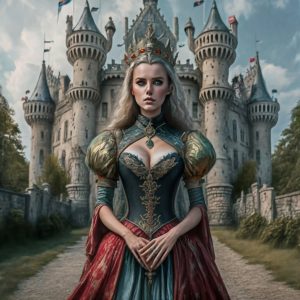
The Iron Wolf legend is a foundational myth tied to the origins of Vilnius, the historic capital of the Grand Duchy of Lithuania. According to this medieval legend, the story begins with Grand Duke Gediminas, who ruled in the early 14th century. After a day of hunting in the forests near the Vilnia and Neris rivers, Gediminas set up camp and fell asleep. That night, he dreamt of a massive iron wolf standing atop a hill, howling with the strength of a hundred wolves.
Perplexed, Gediminas consulted his pagan priest, Krivis Lizdeika, who interpreted the dream. He explained that the iron wolf symbolized a mighty and unassailable city that would be built on that very hill and whose fame would spread across the world. Inspired by this vision, Gediminas ordered the construction of a city on the site. This city became Vilnius, officially established in the early 1320s, and it later flourished as the political, cultural, and spiritual heart of the Grand Duchy of Lithuania.
The Iron Wolf legend remains a powerful symbol in Lithuanian folklore, representing strength, national identity, and the mystical roots of the Lithuanian capital.
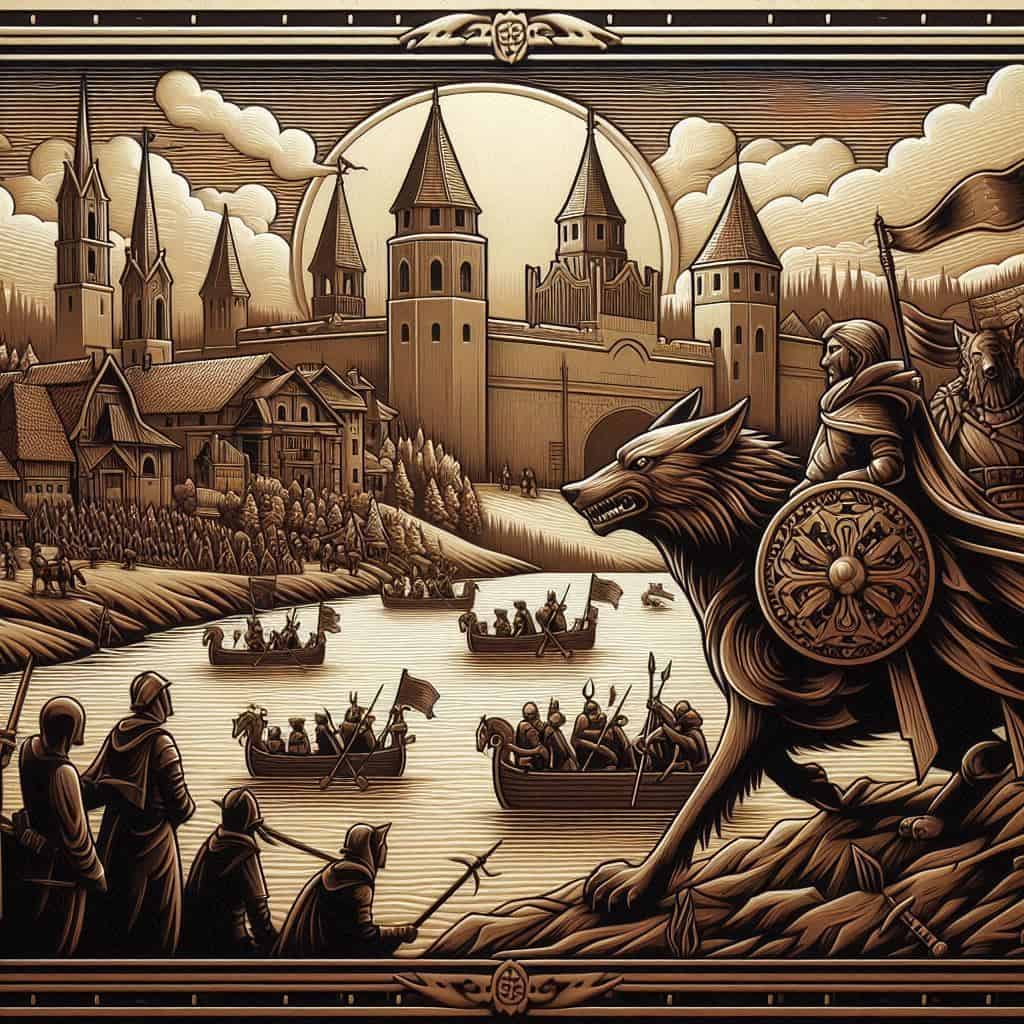
The Hunt
The Grand Duke Gediminas lived from 1275 to 1341. He is credited with laying the foundations of the state of Lithuania. As per the iron wolf legend, one day Gediminas was on a hunting trip. During the hunt, Gediminas was successful in killing an aurochs, or European bison, on the top of a hill.
The precise location of the hunt was in the forests spread across the Sventaragis valley, close to the spot where Vilnia River enters the Neris River. After concluding the hunt, Gediminas and the rest of the hunting party decided to make camp.
The Dream
Once the camp had been set up, Gediminas slept. During his sleep, he had an unusual dream. Gediminas dreamt that he saw an iron wolf standing on top of a hill. This was the same hill where he had hunted a bison the previous day.
This iron wolf stood at the hill and howled loudly with its head raised towards the moon. The howl of the wolf was as loud as the howl of a hundred wolves. When Gediminas woke up, he understood that he had had an unusual dream. So he decided to consult the pagan priest Lizdeika about it.
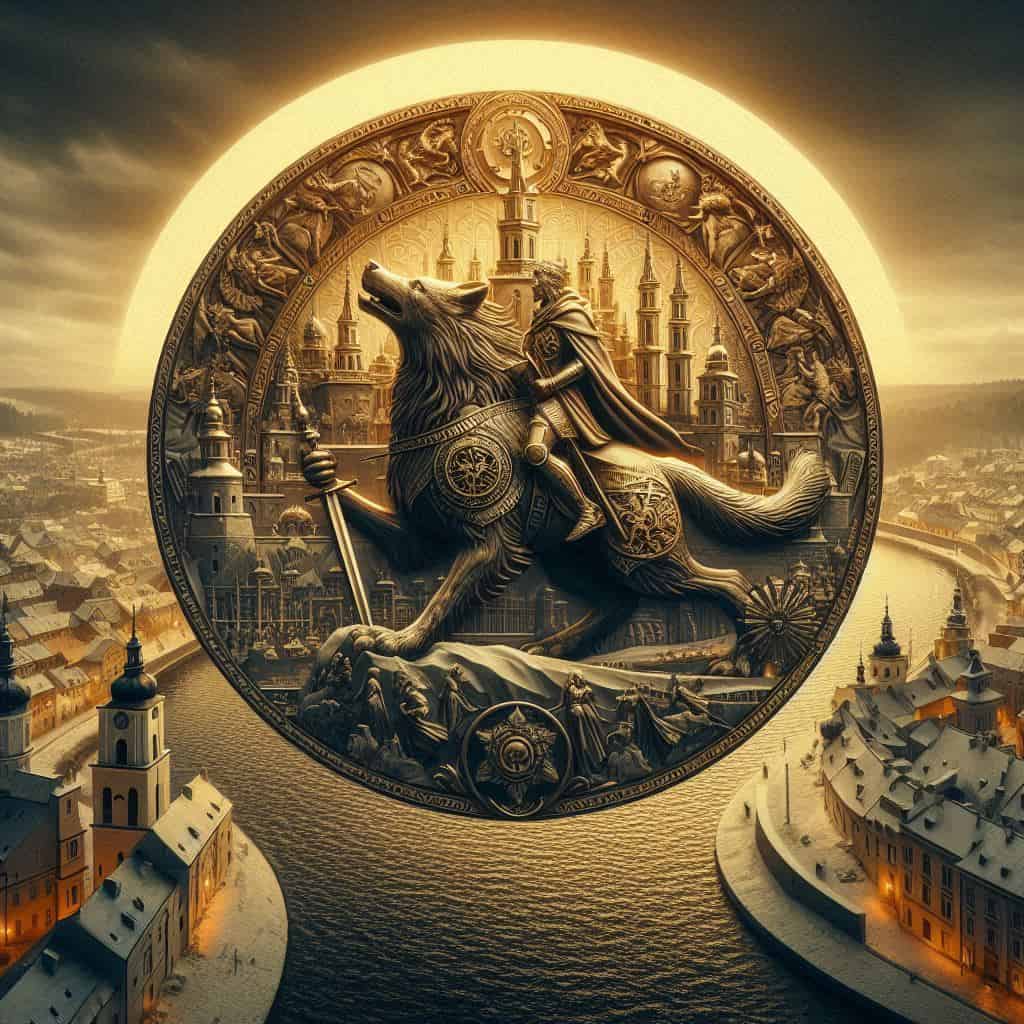
The Interpretation
The pagan priest interpreted the dream for the Grand Duke. He told Gediminas that the wolf was the embodiment of a city and a castle. The location of the wolf on the top of the hill was an indication of the precise spot where the Grand Duke should build this city and the castle.
The loud howling of the wolf also indicated the future glory and fame of the city that Gediminas would build. According to the pagan priest, the reputation of this city would spread far and wide, reaching distant lands.
The Reality
As per the legend, Gediminas believed in the interpretation presented by the pagan priest. He immediately started work to build the city and the castle at the top of the hill. The castle was located exactly on the hill while the city spread around it. Gediminas named the city ‘Vilnius’ after the name of River Vilnia. The city indeed grew in fame, glory, and size. Over time, it became the heart of the Grand Duchy of Lithuania.
The city commanded an excellent strategic position and it also faced several attacks for this reason. Enemies of the Duchy such as the Teutonic Order sought to wrest control of the city and besieged it several times. However, Vilnius was able to withstand most of these attempts and remained a vital stronghold of the Lithuanian state for several centuries.
Historical Mentions
The earliest mentions of the city of Vilnius in written sources date back to the 14th century.
Specifically, the first of these mentions is dated to 1323 when the Grand Duke Gediminas sent letters to several German cities. In these letters, Gediminas cited the city as Vilna. Based on these letters, the city residents today celebrate the exact date of ‘January 25, 1323’ as the day when the city was founded.