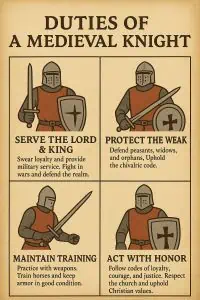
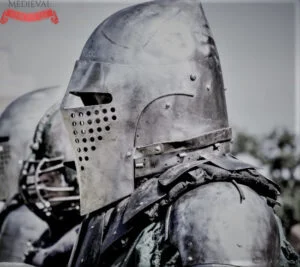
The romanticized image of medieval knights often conjures visions of gallant warriors, clad in shining armor, championing the cause of the oppressed, and defending the weak in adherence to the chivalric code. Yet the reality of medieval knightly life and combat was far more complex and often brutal. Knights were not only elite soldiers but also members of a rigid feudal hierarchy, bound by duty, loyalty, and political obligations. Their days were filled with intense training, grueling tournaments, and deadly battles, where injuries and death were constant threats. Understanding the truth behind knightly warfare, armor, and feudal responsibilities reveals a stark contrast between the legendary tales of honor and the harsh, sometimes violent realities of the Middle Ages.

Knights were trained to be effective warriors, and their tactics and techniques were often savage and ruthless.
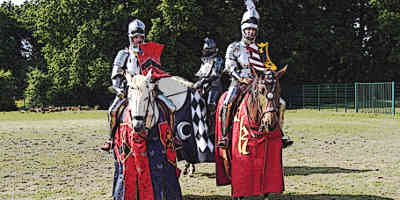
One of the most notable aspects of medieval knightly combat was the use of heavy weapons such as maces and war hammers. These weapons were capable of causing devastating injuries, and their use often meant that a single blow could incapacitate or kill an opponent.
The aim of these weapons was to exploit the weaknesses in armor, particularly the gaps between armor plates, which could be targeted to inflict fatal injuries.

In addition to heavy weapons, knights were also trained to use a variety of other weapons and tactics to achieve victory in combat. One of the most effective tactics was the surprise attack.
Knights were trained to launch sudden, unexpected attacks against their opponents, catching them off guard and taking advantage of any weaknesses in their defenses.

Another common tactic was the use of ambushes. Knights would lie in wait for their opponents, often in wooded or otherwise secluded areas, and then attack them by surprise.
This was a particularly effective tactic in the context of guerrilla warfare, where knights could use their superior armour and weaponry to launch quick, surprise attacks against enemy forces.

While medieval chivalry and knighthood are often romanticized in popular culture, the reality of knightly combat was often brutal and gruesome.
The Brutal Realities That Knights Faced in Battle
Close combat
Knights typically fought in close combat, using swords, maces, and other weapons to attack their opponents at close range. This meant that battles were often bloody and violent, with knights grappling with each other and attempting to deliver fatal blows.
Armor and weapons
While knights wore armor for protection, this also meant that they were weighed down by heavy metal and often struggled to move quickly on the battlefield. They also had to contend with the weight and balance of their weapons, such as longswords and battle-axes.
Gruesome injuries
Because of the nature of close combat, knights often suffered gruesome injuries in battle. This could include losing limbs, being impaled by weapons, or even having their eyes gouged out by a dagger or sword.
Disease and infection
In addition to the physical dangers of battle, knights also had to contend with the risk of disease and infection. Wounds were often left untreated, and knights would be forced to continue fighting even if they were injured or ill.
Psychological trauma
Finally, the constant violence and brutality of medieval warfare could take a toll on knights’ mental health. Witnessing or participating in horrific acts of violence could lead to psychological trauma and other long-term effects.
The use of these tactics and techniques was not always in line with the ideals of chivalry. Knights were supposed to be honorable and to fight with integrity, but in practice, the realities of combat often made this impossible. Knights would do whatever it took to win, and the brutality of their tactics could be shocking
Conclusion
The psychological toll of this kind of combat on knights is often overlooked. The constant exposure to violence and the need to remain vigilant and prepared for combat at all times could have had a significant impact on their mental health.
Even if PTSD-like symptoms were not recognized at the time, it is likely that many knights suffered from anxiety, depression, and other psychological problems as a result of their experiences.

The darker side of chivalry is something that is often overlooked in popular culture. We tend to focus on the noble and heroic aspects of the medieval knightly class, rather than the more brutal realities of their combat techniques.
But by exploring this darker side of chivalry, we gain a deeper understanding of the realities of life as a medieval knight. It also reminds us that the image of the gallant hero is often more complicated than we realize.

5 Good Books About the Dark Side of Chivalry
“Medieval Warfare: A History” by Maurice Keen
This book offers a comprehensive overview of medieval warfare, including the role of knights and their tactics on the battlefield.
“The Knight in History” by Frances Gies
This book explores the social and cultural history of knights, including their role in warfare and the realities of chivalric violence.
“The Chivalry Myth” by Richard Kaeuper
This book examines the romanticized image of chivalry and argues that it was often used as a justification for violence and aggression.
“Knights at Tournament” by Christopher Gravett
This book offers a detailed look at the tournament culture of medieval knights, including the violent nature of these events.
“The Violence of the Medieval World” by Christopher Tyerman
This book examines the role of violence in medieval society, including the role of knights in warfare and the social norms that justified violence.
⚔️ Frequently Asked Questions: Medieval Knights
What was the chivalric code?
The chivalric code was a set of rules and ideals guiding knights in the **Middle Ages**, emphasizing **honor, loyalty, bravery, and protection of the weak**.
What weapons did medieval knights use?
Knights used a variety of weapons including **swords, lances, maces, and longbows**, often tailored to their combat style and battlefield strategy.
What was a knight’s armor made of?
**Medieval knight armor** evolved from chainmail to full plate armor, made from steel and leather, designed to **protect against swords, arrows, and blunt weapons**.
How did one become a knight?
Typically, a boy began as a **page**, then became a **squire** training under a knight, and finally was **dubbed a knight** after proving skill, bravery, and loyalty.
Were knights always noble?
Most knights were members of the **noble class**, but some were rewarded with knighthood for exceptional service or military skill, regardless of birth.
What role did knights play in medieval battles?
Knights were elite warriors, often leading charges, protecting leaders, and serving as **shock troops** in battle due to their training, armor, and mounted combat skills.
Did knights live up to their romantic image?
While legends emphasize **honor and heroism**, many knights engaged in **brutal combat, feuds, and political intrigue**, reflecting a harsher medieval reality.