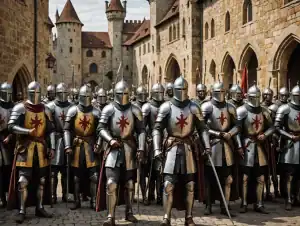
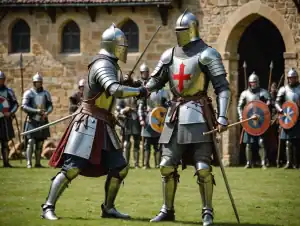
Heraldry was the formal system of symbols and visual identification used by medieval knights and noble families across Europe. Emerging in the 12th century, it developed into a highly regulated tradition of coats of arms, colors, crests, and mottos that represented lineage, loyalty, rank, and personal achievement.
In an age when armor concealed a knight’s face and battlefield confusion was common, heraldry provided instant recognition. It was both a practical military tool and a powerful symbol of family honor and noble legitimacy.
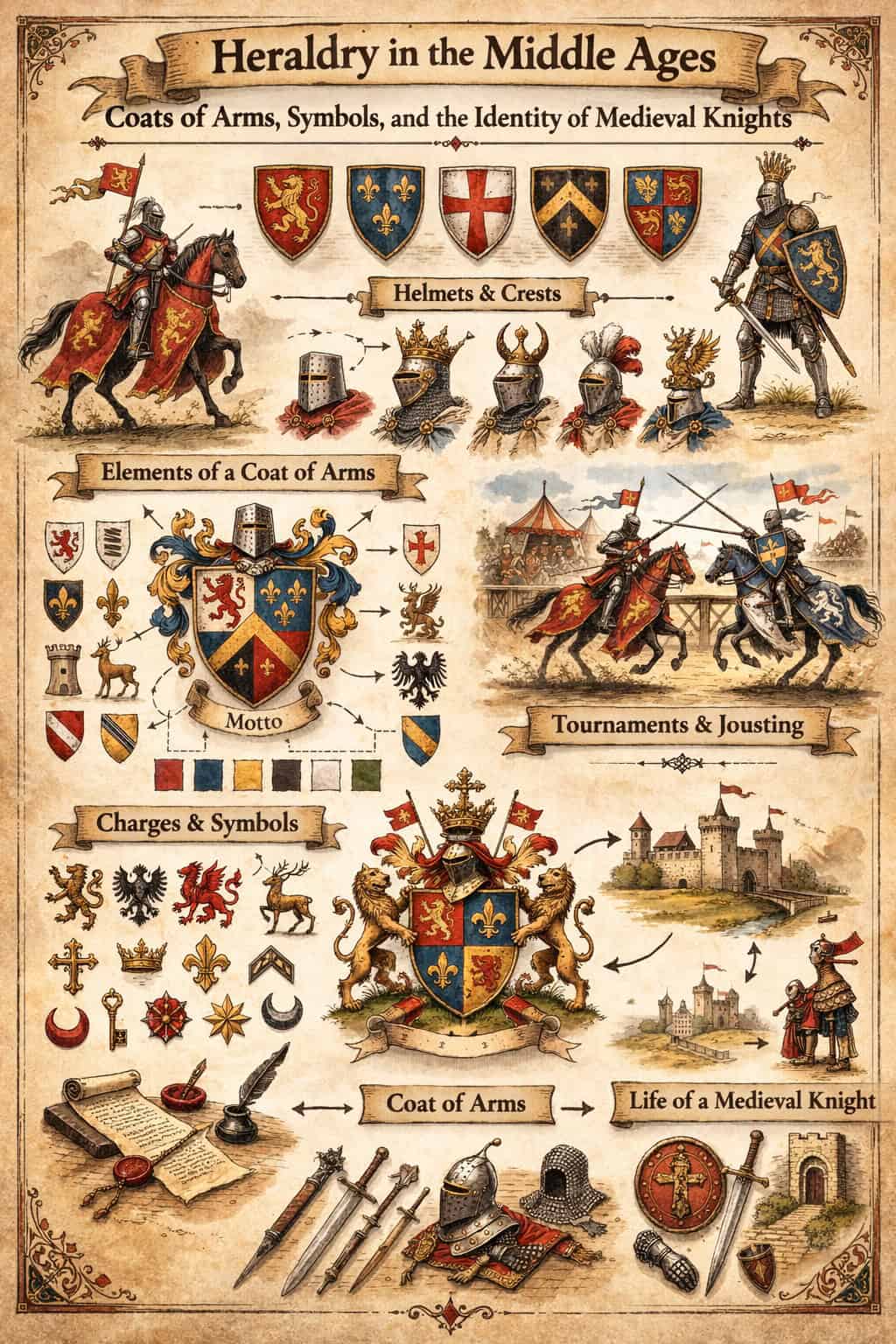
Medieval heraldry was the formal system of coats of arms, symbols, and colors used by medieval knights and noble families to display identity, lineage, and allegiance. Emerging in the 12th century, heraldry followed strict design rules known as tincture and was regulated by professional heralds. These symbols appeared on shields, banners, armor, and horse trappings, allowing knights to be recognized in battle and tournaments across Europe.
More than decoration, heraldry represented family honor, legal authority, and noble legitimacy throughout the Middle Ages.
The Origins of Heraldry
Heraldry began to develop in Western Europe during the High Middle Ages, particularly around the time of the Crusades. As armor became more protective — especially with the adoption of enclosed helmets — it became difficult to distinguish one knight from another in combat or tournaments.
To solve this problem, knights began painting distinctive designs on their shields, wearing colored surcoats over armor, and displaying emblems on banners and horse coverings. These identifying marks gradually became hereditary and evolved into formal coats of arms.
By the 13th century, heraldry had become an established and regulated system throughout much of Europe.
What Is a Coat of Arms?
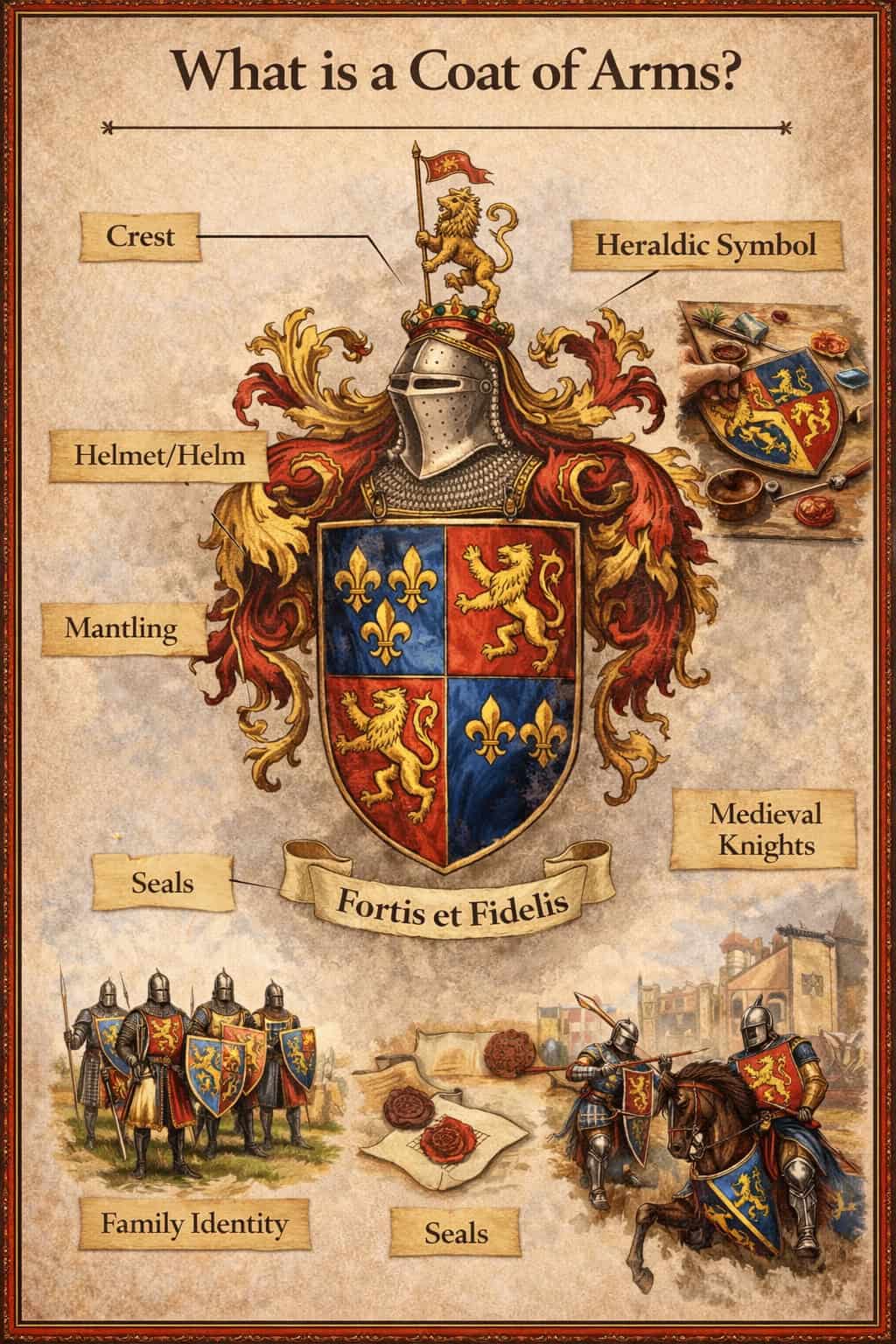
A coat of arms is the central design of a heraldic achievement. Though often used interchangeably with heraldry itself, a coat of arms refers specifically to the shield design.
A full heraldic achievement could include:
- Shield – The primary surface bearing the design.
- Charges – Symbols such as lions, eagles, crosses, or other figures placed on the shield.
- Ordinaries – Geometric shapes like bends, chevrons, or crosses.
- Crest – A decorative figure worn on top of the helmet, often repeating shield symbolism.
- Motto – A phrase expressing family values or aspirations.
- Supporters – Figures placed on either side of the shield (usually reserved for high nobility).
Each element had meaning and was carefully chosen.
Heraldic Colors and the Rule of Tincture
Heraldry followed strict design principles, especially regarding color. The system of color was known as tincture.
Metals
- Gold (Or)
- Silver (Argent)
Colors
- Red (Gules)
- Blue (Azure)
- Green (Vert)
- Black (Sable)
- Purple (Purpure)
Rule of Tincture: Metal should not be placed on metal, and color should not be placed on color.
This ensured strong visual contrast so shields remained clearly visible from a distance.
While popular tradition assigns meanings such as bravery to red or loyalty to blue, these symbolic associations were not universally fixed in medieval practice and evolved over time.
Heraldry and Family Honor
Heraldry quickly became more than battlefield identification. It represented family reputation, social status, and inherited honor.
Coats of arms were passed from father to son, often with small modifications to indicate cadet branches of a family. Displaying one’s arms publicly carried responsibility. A knight’s conduct in battle or tournament reflected directly upon his lineage.
To disgrace one’s arms was to disgrace one’s family.
The Role of Heralds
As the number of noble families increased, so did the complexity of managing coats of arms. This led to the rise of professional officers known as heralds.
Responsibilities of Heralds
- Recording coats of arms
- Ensuring uniqueness of designs
- Announcing participants at tournaments
- Identifying combatants in battle
- Managing matters of heraldic law
Heraldic Authority
In England, heraldic authority eventually became centralized under institutions such as the College of Arms. Similar systems existed in France and the Holy Roman Empire, where heraldry was regulated and formally documented.
Heraldry was not random decoration. It was regulated, recorded, and legally protected.
Heraldry on the Battlefield
On the battlefield, heraldry served a practical purpose:
- Shields bore bold, recognizable symbols.
- Surcoats displayed family colors.
- Banners identified leaders.
- Horse trappings repeated the knight’s arms.
This allowed soldiers to rally around their lord and enabled commanders to recognize notable fighters.
Heraldry could also affect ransom value. Capturing a knight of prominent lineage was financially valuable, and identifying him correctly was essential.
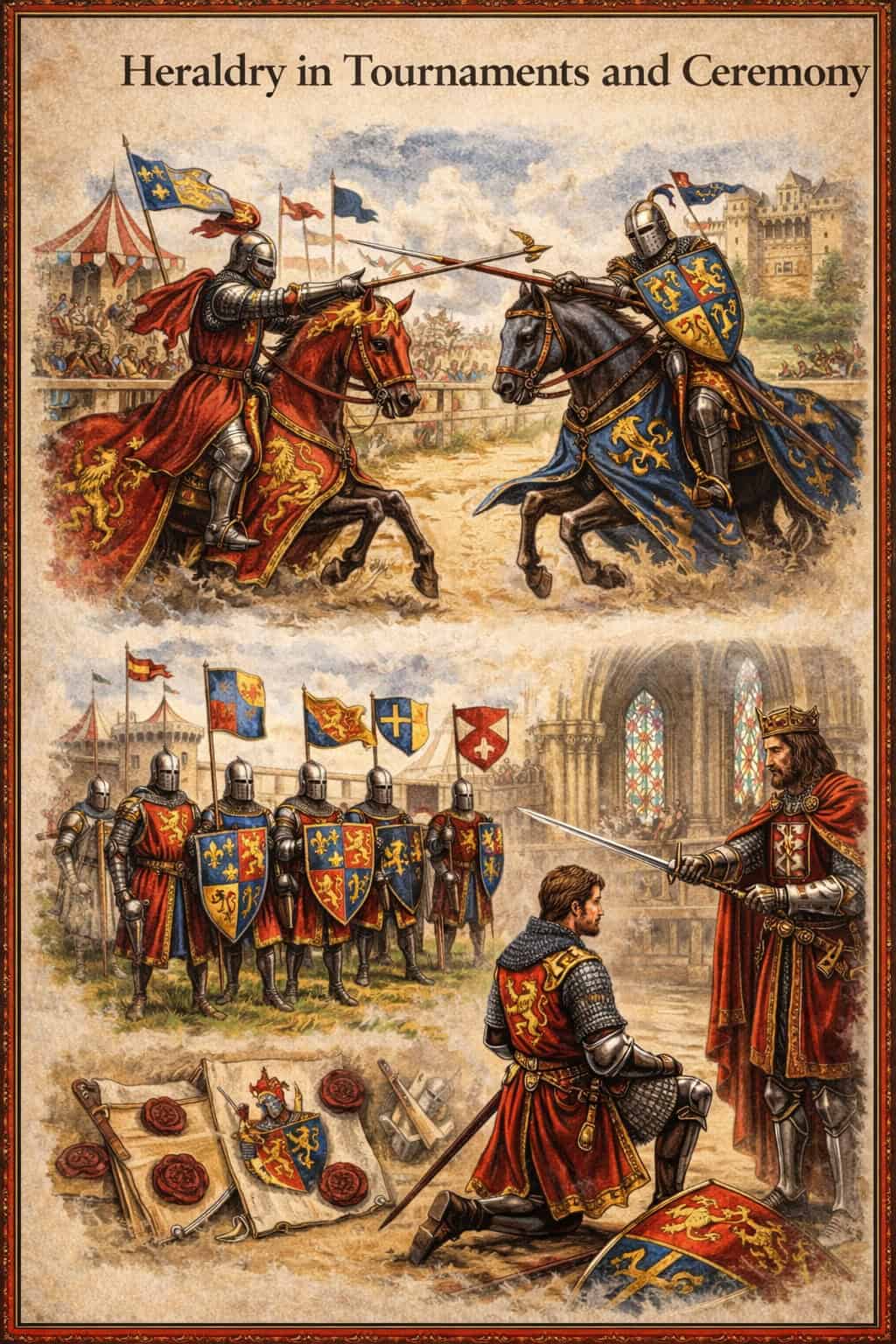
Heraldry in Tournaments and Ceremony
In tournaments, heraldry became even more elaborate. Knights displayed brightly colored surcoats and decorative crests atop their helmets. These crests, often sculpted in wood, leather, or metal, were primarily ceremonial rather than practical for combat.
Jousting fields were vibrant displays of color and symbolism, reinforcing noble identity and lineage before large audiences.
Over time, elaborate crests became less common in real warfare due to practicality, but they remained central in ceremonial pageantry.
Heraldry Through Marriage
Marriage between noble families often required heraldic adaptation.
When two prominent houses united, their arms could be combined through a process called marshalling. One common method was quartering, where different sections of the shield displayed the arms of both families.
This visual merging symbolized political alliances, inheritance claims, and dynastic continuity.
Tracking such changes made the herald’s role even more complex.
Heraldry Beyond Knights
Although closely associated with knights, heraldry was not limited to them.
Royal families, cities, guilds, and ecclesiastical authorities also adopted coats of arms. Over time, heraldry spread across Europe and became a widespread marker of institutional identity.
Many modern national emblems and municipal seals trace their origins to medieval heraldic traditions.
The Lasting Legacy of Heraldry
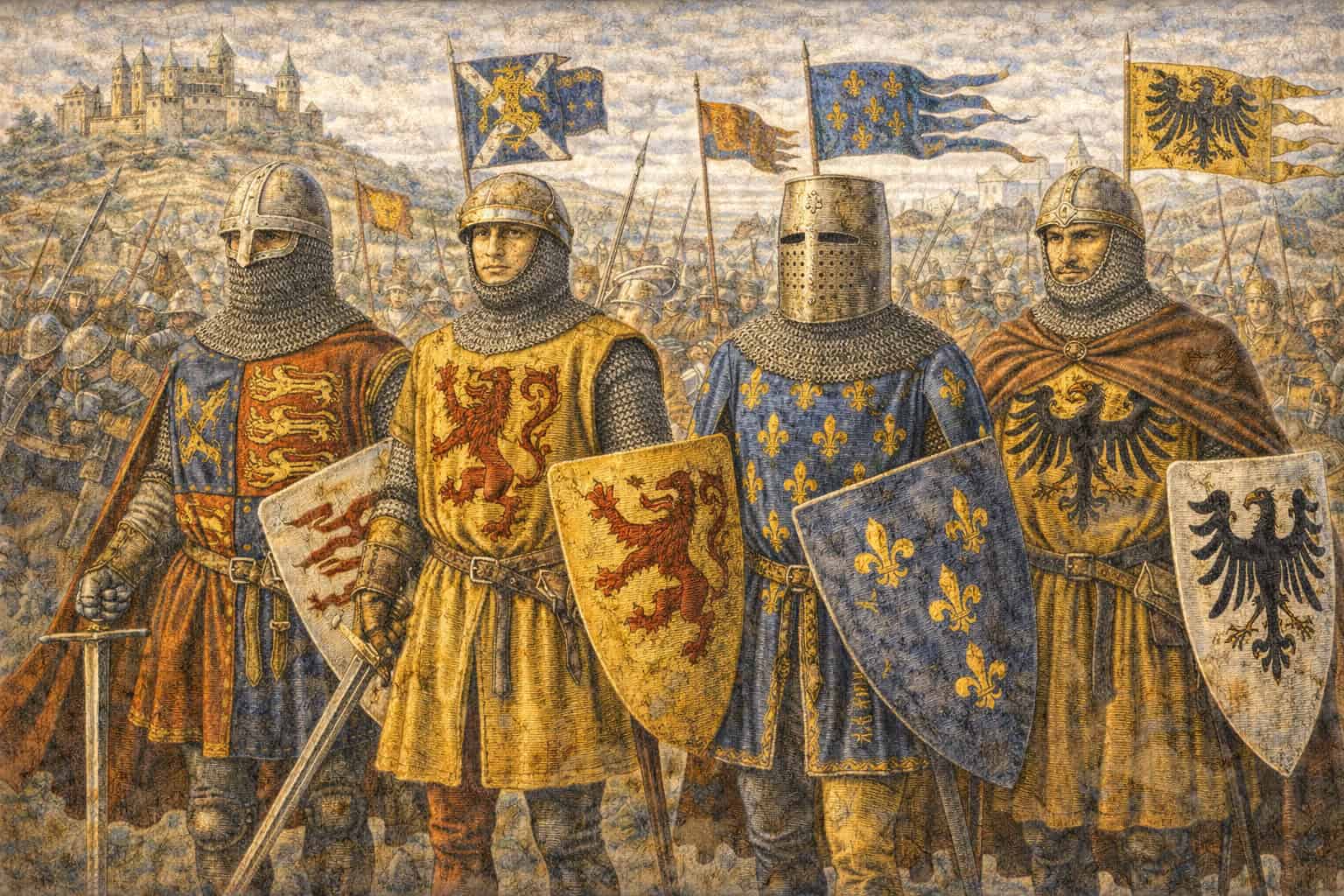
Heraldry remains one of the most recognizable features of medieval culture. It shaped the visual identity of European nobility for centuries and continues to influence modern symbols of authority and tradition.
Today, coats of arms survive in:
- National emblems
- Military insignia
- University seals
- Ceremonial institutions
What began as a practical battlefield solution evolved into one of the most enduring symbolic systems of the Middle Ages.
Frequently Asked Questions About Medieval Heraldry
What is medieval heraldry?
Medieval heraldry was a formal system of coats of arms, symbols, and colors used to identify knights and noble families in battle, tournaments, and official records.
Why were coats of arms important?
Coats of arms allowed knights to display family lineage, loyalty, and status while ensuring recognition on the battlefield.
What is the Rule of Tincture?
The Rule of Tincture states that metal should not be placed on metal and color should not be placed on color, ensuring strong visual contrast.
Who were heralds?
Heralds were officials responsible for recording and regulating coats of arms and ensuring designs were unique and legally protected.
Did only knights use heraldry?
No. Royal families, nobles, cities, and institutions also adopted heraldic symbols.
Test Your Knowledge: Medieval Heraldry Quiz
Heraldry Glossary
Blazon – The formal written description of a coat of arms using specific heraldic terminology.
Charge – A symbol or figure placed on a shield, such as a lion, cross, or eagle.
Crest – A decorative figure worn on top of a knight’s helmet, often repeating shield symbolism.
Herald – An official responsible for recording and regulating coats of arms.
Marshal (Marshalling) – The process of combining two coats of arms, often through marriage.
Ordinary – A basic geometric shape used in heraldry, such as a bend, chevron, or cross.
Tincture – The system of colors and metals used in heraldic design.
Rule of Tincture – The heraldic rule preventing metal on metal and color on color.