The Green Knight is one of the most fascinating figures in Arthurian legend, best known from the 14th-century Middle English poem Sir Gawain and the Green Knight, written by the anonymous Pearl Poet. He also appears in later versions such as The Greene Knight, each exploring themes of chivalry, nature, and supernatural challenge.

⚔️ The Green Knight in Arthurian Legend
In Sir Gawain and the Green Knight, the mysterious Green Knight rides into King Arthur’s court at Camelot during a New Year’s feast. Towering, green-skinned, and unarmed, he proposes the famous “beheading game”: any knight may strike him with his own axe, provided the challenger receives a return blow one year later. Sir Gawain, Arthur’s nephew, accepts and beheads him—only for the Green Knight to calmly pick up his head and remind Gawain to keep the appointment a year hence.
Unlike some later retellings that place him among Arthur’s household, in the original poem the Green Knight is an outsider who arrives to test the court’s honor.
🌿 Why “Green”?
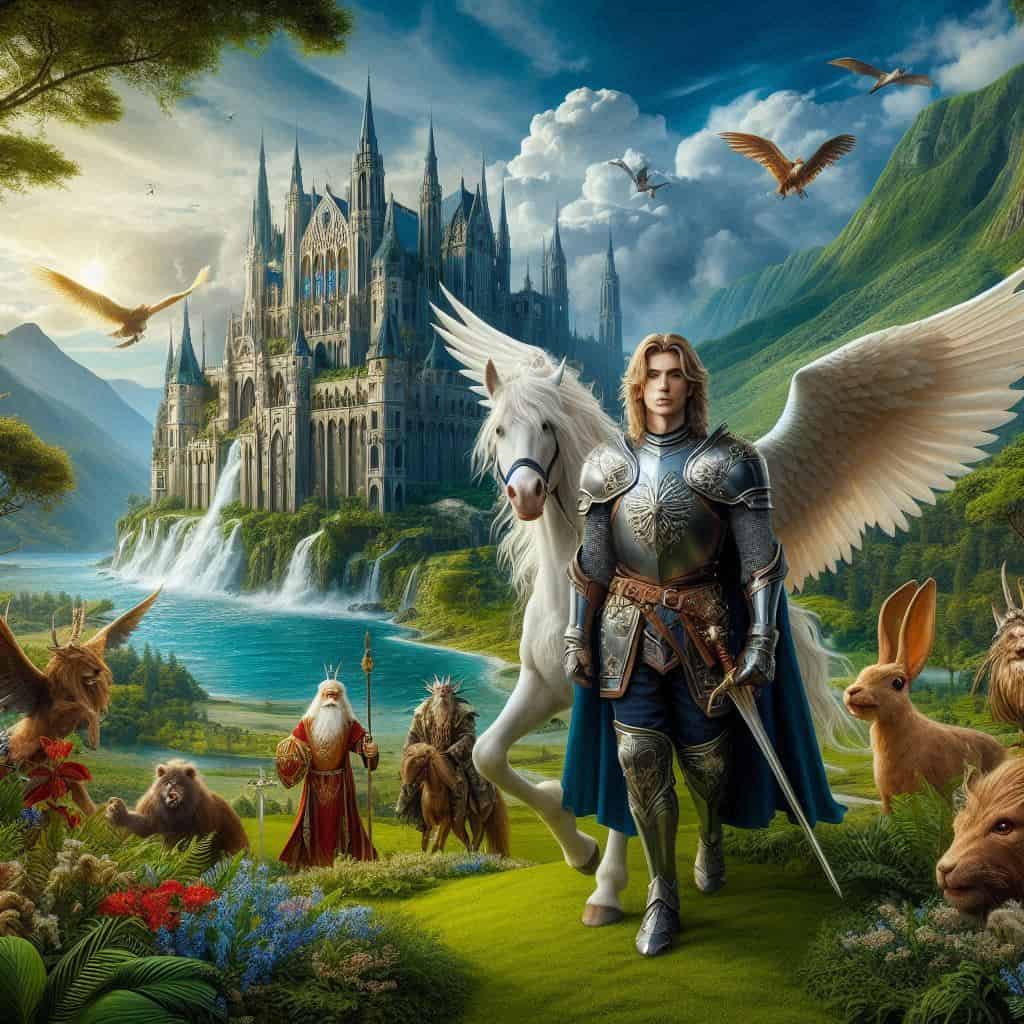
The Green Knight’s color is his most striking trait: skin, hair, and clothing all green. Scholars debate its meaning:
- Nature & renewal — a force of the natural world and seasonal cycles.
- Pagan/Celtic echoes — akin to the “Green Man” motif in medieval art.
- Christian testing — a moral trial of truth and humility.
- Life, death, rebirth — tied to winter’s death and spring’s return.
J.R.R. Tolkien, who translated the poem, called the Green Knight “the most difficult character” to interpret.
💡 Did You Know? The Green Knight’s bright emerald color may have been inspired by the ancient “Green Man” carvings found in medieval churches — symbols of rebirth and nature’s eternal cycle.
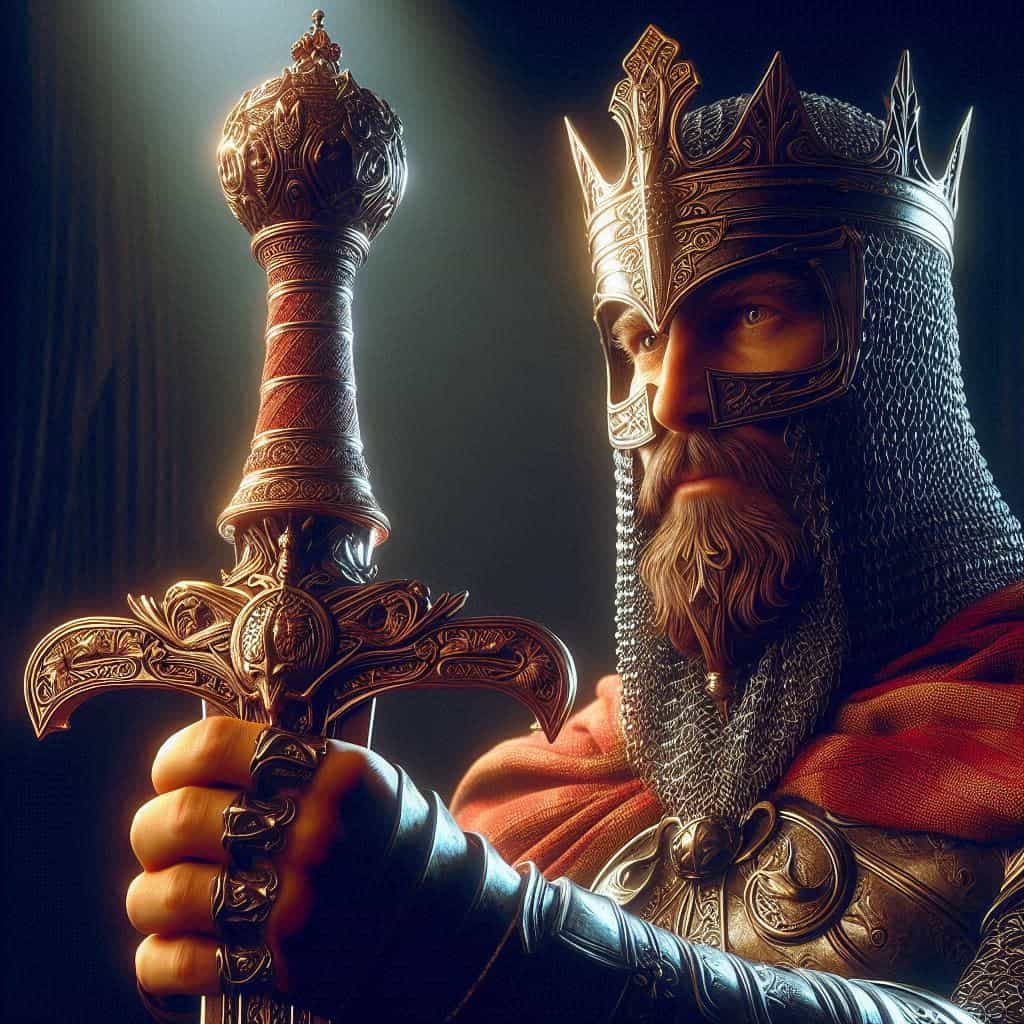
🛡️ The Green Knight’s True Identity
In the poem, the Green Knight is revealed to be Bertilak (Bercilak) de Hautdesert, transformed by Morgan le Fay to test the court and alarm Queen Guinevere. In later retellings such as The Greene Knight, he appears as Bredbeddle, with a more romantic, moral tone.
📜 Historical & Literary Background
- Date: Late 14th century (c. 1375–1400)
- Author: Anonymous (Pearl/Gawain Poet)
- Language: Middle English (Northwest Midlands dialect)
- Manuscript: Cotton Nero A.x (with Pearl, Patience, Cleanness)
The Green Knight does not appear in earlier core sources or in Malory’s Le Morte d’Arthur; his legend is distinct to the Gawain tradition and later echoes.
💡 Did You Know? The entire poem Sir Gawain and the Green Knight survives in only one manuscript — the same that contains Pearl, Patience, and Cleanness — preserved today in the British Library.
🧩 Fact or Fiction?
The Green Knight is a fictional, allegorical figure. His supernatural survival of beheading marks him as mythic, yet the story’s themes—honor, temptation, humility—reflect the ethical ideals of medieval knighthood.
🏰 Legacy & Influence
The character continues to inspire modern culture—from Tolkien’s translation to the 2021 film The Green Knight—because he poses timeless questions about truth, courage, and the cost of honor.
🏁 Conclusion
The Green Knight endures as an enigmatic emblem of challenge and renewal. Whether read as a nature spirit, a moral examiner, or a bridge between pagan and Christian symbolism, his legend still asks: what does it truly mean to be honorable?
💡 Did You Know? In some retellings, the Green Knight isn’t slain at all — instead, he forgives Sir Gawain, praising his courage and honesty, making the story one of redemption rather than tragedy.
🧠 Quick Summary
| Origin | 14th-century Sir Gawain and the Green Knight |
|---|---|
| Identity | Bertilak de Hautdesert (by Morgan le Fay’s magic) |
| Color Symbolism | Nature, rebirth, pagan echoes, Christian testing |
| Role | Tests Gawain via the “beheading game” |
| Nature | Legendary, allegorical—not historical |
| Related Works | The Greene Knight; echoes in later ballads |
📚 Further Reading & Resources
- Project Gutenberg – “Sir Gawain and the Green Knight” (public-domain text)
- University of Michigan Library – Digital Collection: “Sir Gawain and the Green Knight” (Middle English text & manuscript images)
- Luminarium – “Sir Gawain and the Green Knight” (modern English translation & commentary)
- Poetry Foundation – “Sir Gawain and the Green Knight” (introduction, excerpt, themes)
- British Library Blog – “Sir Gawain and the Green Knight Online” (on the manuscript of the poem)
🟢 Frequently Asked Questions about The Green Knight
Who is the Green Knight?
The Green Knight is a mysterious figure from the 14th-century poem Sir Gawain and the Green Knight. He challenges Sir Gawain in a beheading game that tests Gawain’s honor and courage.
What is the origin of the Green Knight legend?
The legend originates from the Middle English poem written by the anonymous Pearl Poet around the late 14th century. It’s part of the broader Arthurian tradition of chivalric tales.
Why is the Green Knight green?
His green color symbolizes nature, rebirth, and the supernatural. Some scholars also see it as a link to Celtic mythology or the “Green Man” motif found in medieval art.
What is the meaning of the beheading game?
The beheading game represents a test of honor, bravery, and truth. Gawain’s willingness to face his fate reflects the ideals of medieval chivalry and moral courage.
Who transforms the Green Knight?
In the poem, the Green Knight is revealed to be Bertilak de Hautdesert, transformed by Morgan le Fay to test King Arthur’s court and frighten Queen Guinevere.
Does the Green Knight appear in other stories?
Yes. He appears in The Greene Knight (a simplified retelling) and other later adaptations, including modern films and literary works inspired by the Gawain legend.
What lesson does the Green Knight teach?
The Green Knight’s challenge teaches that true honor comes from integrity and humility, not perfection. Gawain’s admission of weakness makes him more human and virtuous.