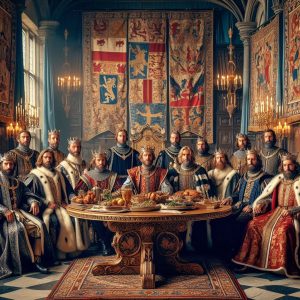
The medieval period was filled with powerful kings and queens, but some rulers stood out for their eccentric behaviors and unusual reigns. From bizarre personal habits to shocking political decisions, these monarchs defied convention and left a lasting impression on history. This article explores 5 eccentric medieval rulers whose stories are so strange, you might find them hard to believe—but their impact on their kingdoms was very real.

In fact, some of the most fascinating figures from this era were those who lived life on their own terms, regardless of social norms.
In this article, we’ll explore the lives of five of the most eccentric rulers of the medieval period, from a king who refused to bathe to a queen who dressed like a man.
King Louis XI of France
Louis XI was known for his cunning and ruthless tactics in politics, but he was also incredibly eccentric. He was obsessed with astrology and would often consult with astrologers before making important decisions.
“Louis XI was one of the most original and effective rulers of late medieval Europe, a master of diplomacy and statecraft who left an indelible mark on French history.”
Philippe Contamine, French historian and specialist in medieval history.
Louis also had a deep fear of poison, and would only eat food prepared by trusted chefs. But perhaps the most bizarre aspect of his personality was his aversion to bathing. It’s said that he only bathed three times in his entire life!

Queen Christina of Sweden
Queen Christina was a trailblazer in many ways. She was one of the most educated women of her time, and had a passion for art and science. But what really set her apart was her unconventional lifestyle.

Christina was known for dressing like a man, and even held masquerade balls where she and her guests would dress in men’s clothing. She also had numerous affairs with both men and women, which was highly scandalous for a queen at the time.
“Queen Christina of Sweden was a complex and fascinating figure, whose unconventional behavior challenged the norms of her time. Despite her short reign, she left a lasting legacy as a patron of the arts and sciences, and a trailblazer for women in positions of power.”
Veronica Buckley, British historian and author of the biography “Christina, Queen of Sweden: The Restless Life of a European Eccentric”.
Emperor Frederick II of the Holy Roman Empire
Frederick II was a complex and enigmatic figure. He was an accomplished scholar and patron of the arts, but he was also known for his bizarre behavior.
For example, he once ordered a group of knights to dress as animals and perform for his entertainment.

“Frederick II was one of the most remarkable figures of the Middle Ages, a man of learning, culture, and political vision who brought a new style of rule to Europe.He remains an enigmatic and controversial figure, but there can be no doubt that his reign had a profound impact on the history of Italy, Germany, and the wider Mediterranean world.”
David Abulafia, British historian and author of “Frederick II: A Medieval Emperor”.
King John of England
King John is perhaps best known for his role in the signing of the Magna Carta, but he was also a deeply flawed and eccentric ruler.

He was known for his explosive temper and erratic behavior, and had a tendency to fly into fits of rage at the slightest provocation. He also had a notorious sweet tooth, and would eat enormous quantities of sugary foods, which only exacerbated his already poor health.
“John was a complex and contradictory figure, whose reign was marked by both achievement and failure. He was a skilled administrator and military leader, but also a ruthless and unpopular king who faced frequent rebellions and diplomatic setbacks. His legacy remains a matter of debate among historians, but there is no doubt that he played a pivotal role in the development of English law and governance.”
W.L. Warren, British historian and author of “King John”.
Queen Isabella of Spain
Isabella is perhaps best known for her sponsorship of Christopher Columbus’ voyages, which led to the discovery of the New World. But she was also a highly eccentric ruler.
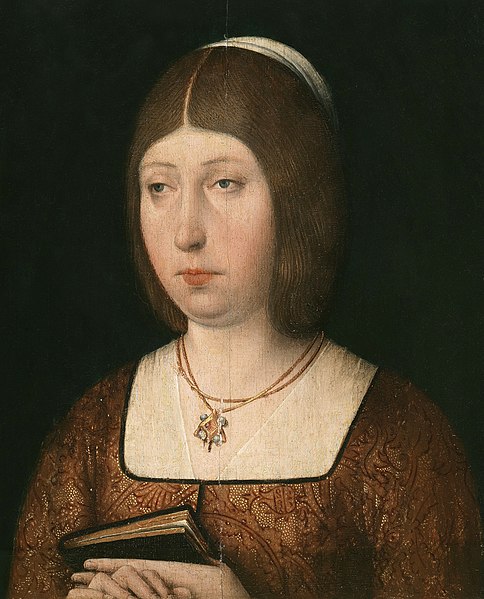
Isabella was deeply religious, and would often engage in self-flagellation as a form of penance. She also had a fascination with astrology, and would consult with astrologers before making important decisions.
“Queen Isabella of Spain was one of the most important and influential monarchs of the late medieval and early modern periods. Her reign was marked by political, cultural, and religious achievements, including the unification of Spain, the patronage of the arts, and the establishment of the Spanish Inquisition.
Despite controversy and criticism, she remains a fascinating and significant figure in European history.”
Peggy K. Liss, American historian and author of “Isabel the Queen: Life and Times”.
Summary
These five rulers may have been eccentric, but they were also fascinating figures who left their mark on history. Whether it was their obsession with astrology, their penchant for cross-dressing, or their explosive tempers, they remind us that the medieval period was a time of great complexity and contradiction.
5 Great Books on the Subject of Eccentric Rulers in Medieval Times
“The Eccentric Tradition: American Diplomacy in the Far East” by David McKean
This book examines the lives and legacies of several eccentric rulers in medieval and early modern Asia, including Emperor Norton I of the United States.
“Catherine the Great: Portrait of a Woman” by Robert K. Massie
This biography of Catherine the Great, the 18th-century Empress of Russia, explores her life and reign, including her unconventional personal relationships and patronage of the arts.
“The Mad King: The Life and Times of Ludwig II of Bavaria” by Greg King
This book tells the story of Ludwig II, the eccentric King of Bavaria who was known for his lavish spending on palaces and his reclusive lifestyle.
“The Plantagenets: The Warrior Kings and Queens Who Made England” by Dan Jones
This history of the Plantagenet dynasty in England includes profiles of several eccentric rulers, including Henry II and Richard the Lionheart.
“The Sultan’s Shadow: One Family’s Rule at the Crossroads of East and West” by Christiane Bird
This book tells the story of the Ottoman Empire through the lives of the eccentric and colorful members of the Koprulu family, who served as grand viziers to several sultans.
📜 Frequently Asked Questions
What makes a ruler “eccentric” in the medieval context?
Eccentric rulers often displayed **unusual habits, unpredictable behavior, or extreme personal quirks** that set them apart from typical monarchs.
Were eccentric rulers less effective?
Not always. Some **eccentric rulers** were highly capable, using their unusual approaches to **strengthen their kingdoms or enforce authority**.
Can you give an example of a bizarre habit of a medieval ruler?
Many rulers had strange habits, such as **keeping exotic animals**, **dressing in unusual ways**, or implementing **odd laws or rituals**.
Did eccentric behavior affect politics?
Yes, eccentricity could influence **court dynamics, diplomatic relations**, and even **military strategies**, sometimes positively and sometimes negatively.
Are these rulers remembered in history?
Absolutely. Their **strange behaviors, decisions, and legacies** often make them some of the most memorable figures of the medieval period.