Medieval England was shaped by a long line of powerful and controversial rulers whose decisions influenced politics, warfare, law, and society for centuries. From conquest and civil war to legal reform and dynastic change, medieval kingship defined the structure of English rule between the 11th and 15th centuries.
This hub introduces the most important medieval kings of England, explaining who they were, how they ruled, and why their reigns still matter today. Each ruler listed here links to a dedicated child page exploring their life and legacy in greater detail.

Medieval Kings of England — Dynasty Timeline
Medieval England was ruled by a succession of royal dynasties, each shaping the crown through conquest, reform, and civil war.
-
House of Wessex (c. 871–1066)
Unified early England under rulers such as Alfred the Great and Æthelstan. -
Norman Dynasty (1066–1154)
Began with William the Conqueror after the Norman Conquest, transforming English governance and land ownership. -
Plantagenet Dynasty (1154–1399)
A powerful royal house including Henry II, Richard the Lionheart, and Edward I, marked by expansion and reform. -
House of Lancaster (1399–1461)
A Plantagenet branch whose reign saw internal conflict and weakening royal authority. -
House of York (1461–1485)
The rival Plantagenet branch during the Wars of the Roses, ending with Richard III. -
Tudor Dynasty (1485 onward)
Began with Henry VII after the Battle of Bosworth, marking the transition from medieval to early modern England.
Richard the Lionheart (r. 1189–1199)
Richard I, known as Richard the Lionheart, is one of the most famous medieval English kings, largely due to his role in the Third Crusade. Although crowned king of England, Richard spent very little time ruling the country itself, focusing instead on warfare in the eastern Mediterranean and continental Europe.
Renowned for his military leadership, Richard fought against Saladin, the Muslim ruler of Jerusalem. While he failed to retake the city, he secured a truce that allowed Christian pilgrims access to holy sites. His reign strengthened the myth of the warrior king, even as England was governed in his absence.

William the Conqueror (r. 1066–1087)
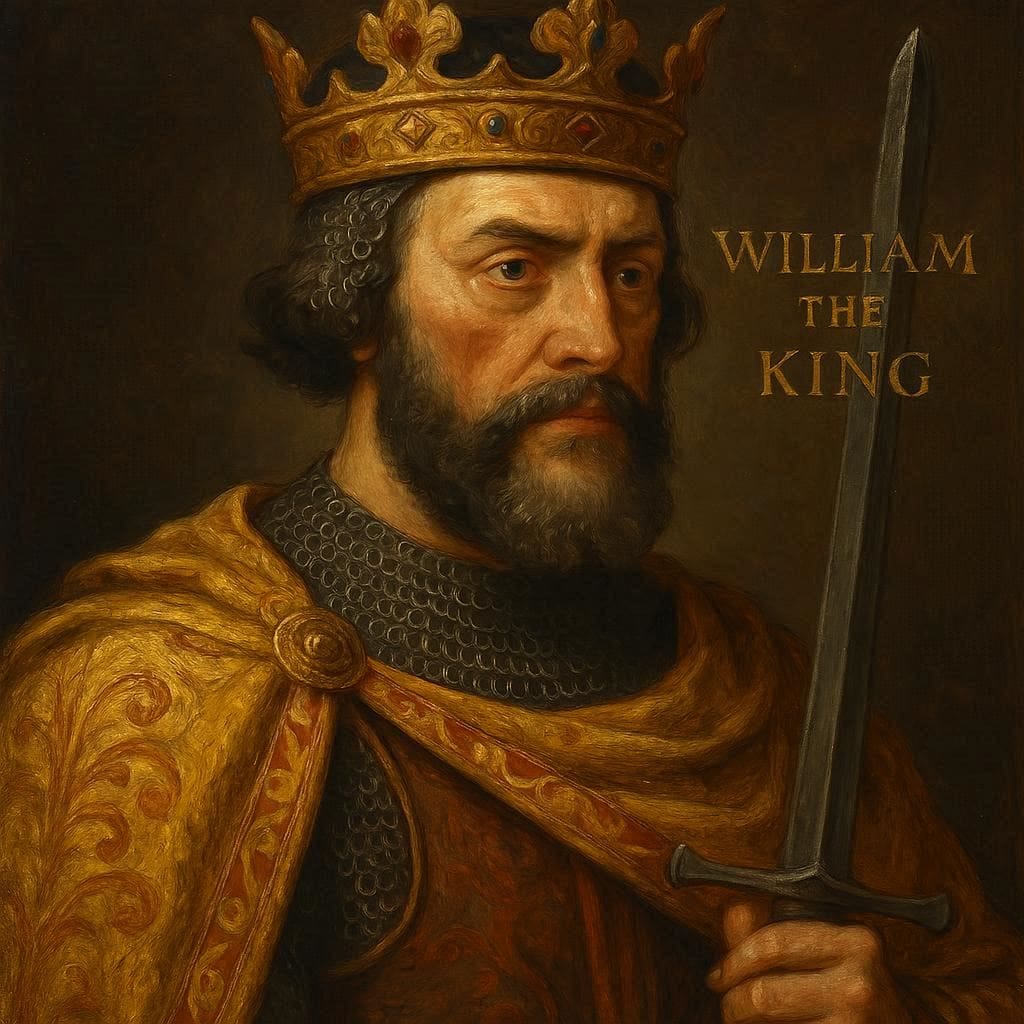
William the Conqueror transformed English history through the Norman Conquest of 1066. After defeating King Harold II at the Battle of Hastings, William ended Anglo-Saxon rule and established Norman control over England.
His reign introduced sweeping changes, including the expansion of castle-building, the restructuring of land ownership under the feudal system, and the commissioning of the Domesday Book. William’s rule laid the foundations of medieval English monarchy and permanently altered England’s ruling elite.
King John (r. 1199–1216)
King John, brother of Richard the Lionheart, is remembered as one of England’s most unpopular medieval rulers. His reign was marked by military failure, heavy taxation, and conflict with the nobility.
In 1215, mounting rebellion forced John to seal the Magna Carta, a document that limited royal authority and established that the king was subject to the law. Although John later attempted to overturn it, the Magna Carta became a cornerstone of constitutional government in England.

Edward I (r. 1272–1307)
Known as Edward Longshanks, Edward I expanded royal authority through conquest and legal reform. He successfully subdued Wales, incorporating it into the English crown, and launched prolonged campaigns in Scotland.
Edward also strengthened royal administration, reformed taxation, and developed England’s legal system. However, his reign was also marked by harsh policies, including the expulsion of Jews from England in 1290, highlighting the darker aspects of medieval kingship.
Edward IV (r. 1461–1470, 1471–1483)
Edward IV ruled during the Wars of the Roses, a dynastic conflict between the Houses of York and Lancaster. A strong military leader, Edward seized the throne after defeating Henry VI, lost it briefly, then regained power through force.
His reign restored stability after years of civil war and strengthened the authority of the Yorkist monarchy. Edward’s rule marked a turning point in the late medieval struggle for the English crown.
Richard III (r. 1483–1485)
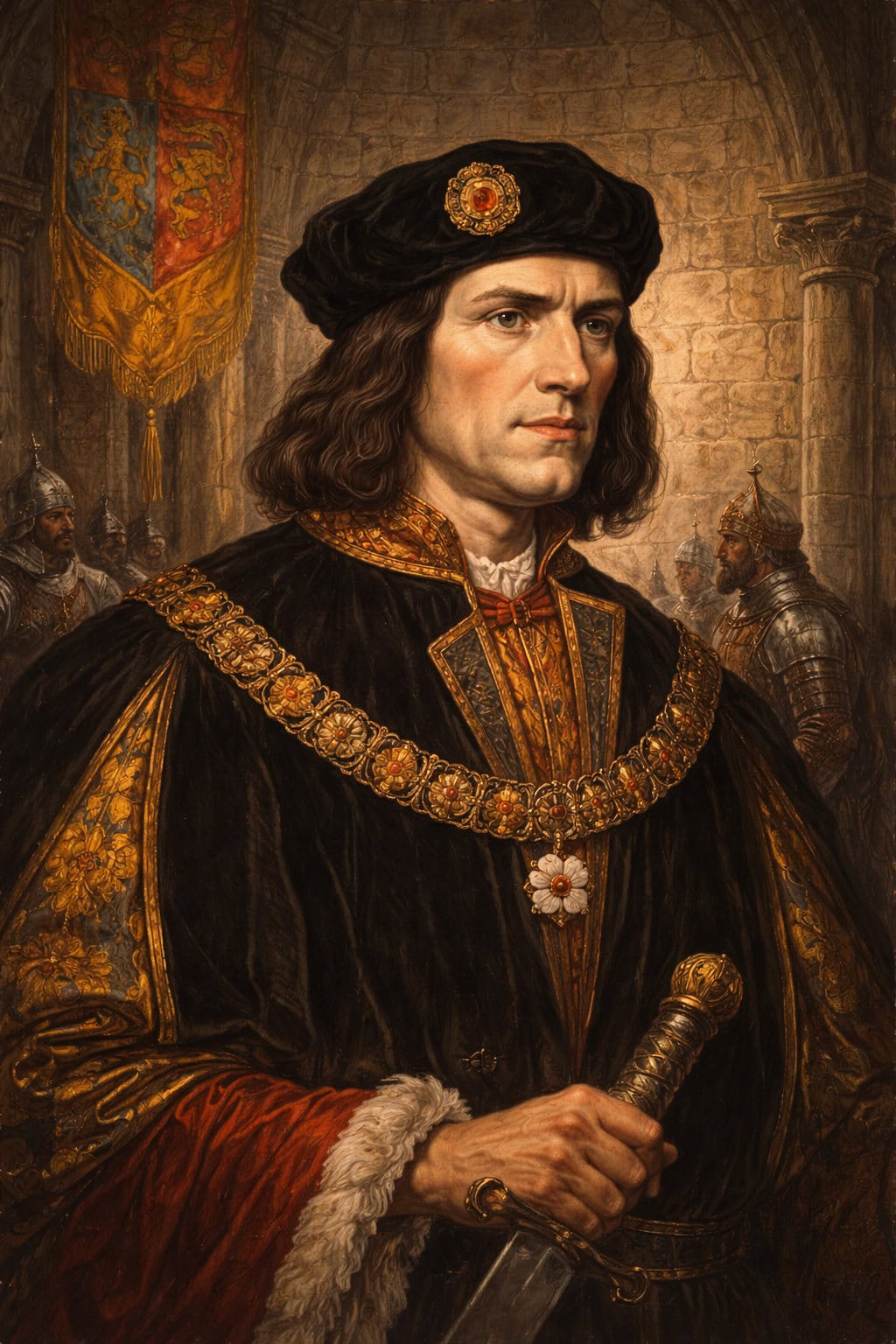
Richard III, the last king of the House of York, reigned for only two years. His rise to power followed the death of his brother Edward IV, after which Richard took the throne amid controversy surrounding the disappearance of the Princes in the Tower.
Richard was killed at the Battle of Bosworth Field, ending the Wars of the Roses and the Plantagenet dynasty. His death cleared the way for Henry Tudor and the beginning of Tudor England.
What Was a Medieval King?
A medieval king ruled by divine right, governed through the feudal system, and relied on the loyalty of nobles, knights, and church leaders. Kings were responsible for law, justice, warfare, and the protection of the realm, but their power was often challenged by barons, rival claimants, and the Church.

Why Medieval Kings Still Matter
The reigns of medieval kings of England shaped the nation’s legal system, monarchy, and political identity. Concepts such as limited royal power, hereditary rule, and constitutional authority all emerged from conflicts between kings and their subjects during the Middle Ages.
This hub serves as a gateway to detailed biographies, battles, dynasties, and defining moments that shaped medieval England.
Who was the first medieval king of England?
Æthelstan is often considered the first king of a unified England, reigning from 924 to 939, though medieval kingship became firmly established after the Norman Conquest of 1066.
Which medieval king signed the Magna Carta?
King John sealed the Magna Carta in 1215, limiting royal authority and laying the groundwork for constitutional government.
Did medieval kings have absolute power?
No. Medieval kings relied on nobles, the Church, and councils. Their authority was frequently challenged through rebellion, law, and political negotiation.
When did medieval kingship end in England?
Medieval kingship effectively ended in 1485 with the death of Richard III and the rise of the Tudor dynasty.