Diet, Class, Culture, and Cuisine in the Middle Ages
Medieval food provides a revealing insight into daily life, social hierarchy, and cultural values during the Middle Ages (c. 500–1500). What people ate depended heavily on social class, geography, season, and religious custom. While popular imagination often portrays medieval diets as crude or unhealthy, the reality was far more complex and varied.
From the humble peasant’s pot of pottage to the lavish banquets of kings and nobles, food in medieval Europe was not only sustenance but also a powerful symbol of status, wealth, and authority. Over time, influences from conquest, trade, and religion transformed medieval cuisine, particularly after the Norman Conquest and the expansion of long-distance trade routes.
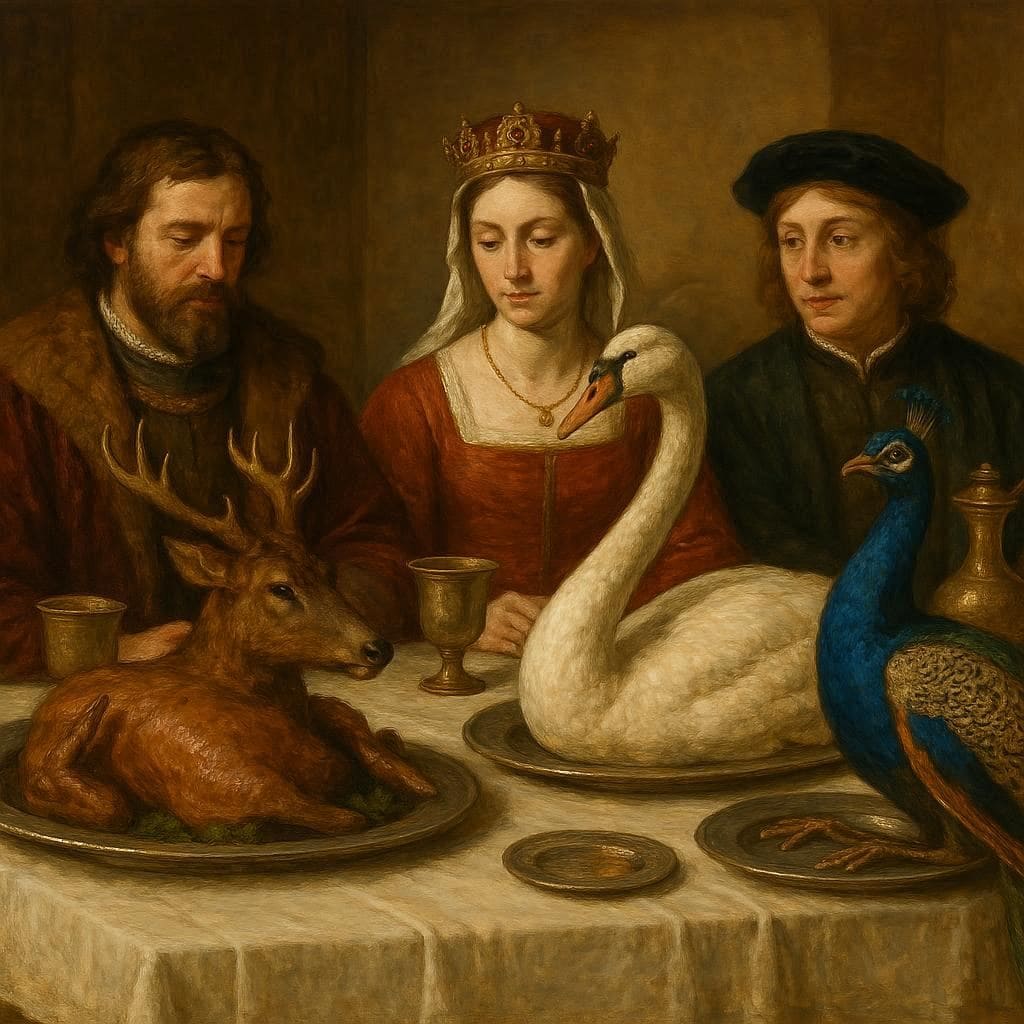
🍲 Click to Reveal: Medieval Food by Social Class
Peasant Food
Peasants lived on simple diets of dark bread, pottage, vegetables, legumes, and dairy products, with meat eaten only rarely.
Serfs & Manor Workers
Serfs depended on manor estates for food, eating what they grew themselves and preserving surplus through salting and drying.
Townsfolk & Merchants
Town dwellers enjoyed more variety, including baked bread, fish, meat, and imported foods purchased from markets.
Monks & Clergy
Monastic diets were regulated by religious rules, often excluding meat and relying on fish, vegetables, bread, and ale.
Knightly Diet
Knights consumed hearty meals of meat, bread, cheese, and wine to sustain them for training, hunting, and warfare.
Noble Cuisine
Nobles ate refined dishes such as venison, poultry, white bread, rich sauces, pastries, and imported spices.
Royal Banquets
Royal feasts featured extravagant dishes, rare meats, elaborate presentations, and theatrical displays of wealth.
Food as Status
In medieval society, food clearly reflected social rank — what you ate showed who you were and where you stood.
Food and Social Class in the Middle Ages
Medieval society was rigidly hierarchical, and food reflected this structure clearly. What a person ate was often determined by law, custom, and access to land.
Peasants and Serfs
Peasants formed the majority of the medieval population and lived largely on what they could grow themselves.
Typical peasant foods included:
- Dark bread made from rye or barley
- Pottage (a thick stew of grains, vegetables, and legumes)
- Beans, peas, and lentils
- Seasonal vegetables
- Occasional fish or dairy products
Meat was rare and usually eaten only on feast days.

Townspeople and Craftsmen
Urban populations had greater access to markets and trade.
Their diets often included:
- Better-quality bread
- Cheese, eggs, and fish
- Some fresh meat
- Imported goods when affordable
Guilds and towns regulated food quality, especially bread and ale.
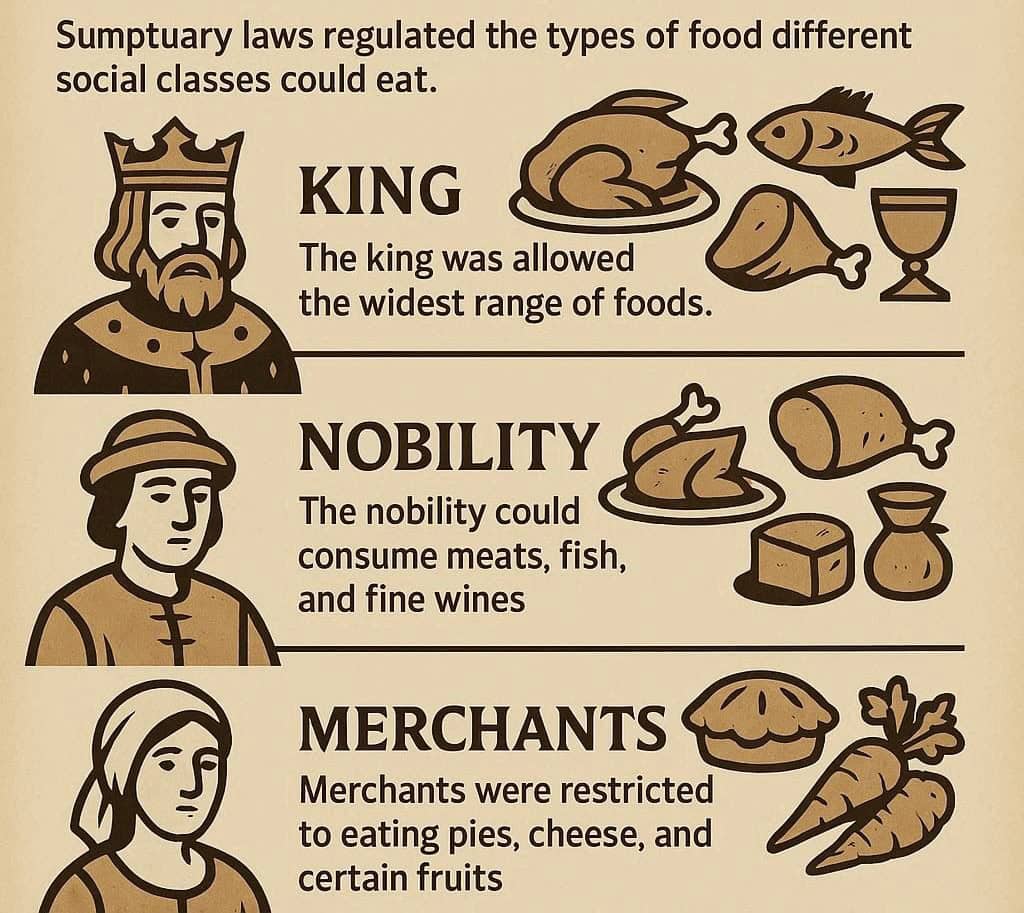
👑 Nobility and Royalty
The upper classes of medieval society enjoyed abundant and highly varied diets, carefully designed to impress guests and reinforce their wealth, power, and status.
Common foods eaten by nobles and royalty included:
- Venison, beef, pork, lamb, and poultry
- Fresh river and sea fish
- White bread made from refined wheat
- Rich sauces, pies, and pastries
- Imported spices such as pepper, cinnamon, and saffron
Medieval noble meals were not just about nourishment — they were theatrical displays of wealth and authority, often served during lavish feasts and ceremonial banquets.
Knights and Military Households
Knights ate similarly to nobles but with an emphasis on hearty, protein-rich food.
Their diets often featured:
- Beef and mutton
- Game from hunting
- Bread, cheese, and ale
- Wine when available
Food was essential to sustaining warriors during campaigns.
Common Medieval Foods
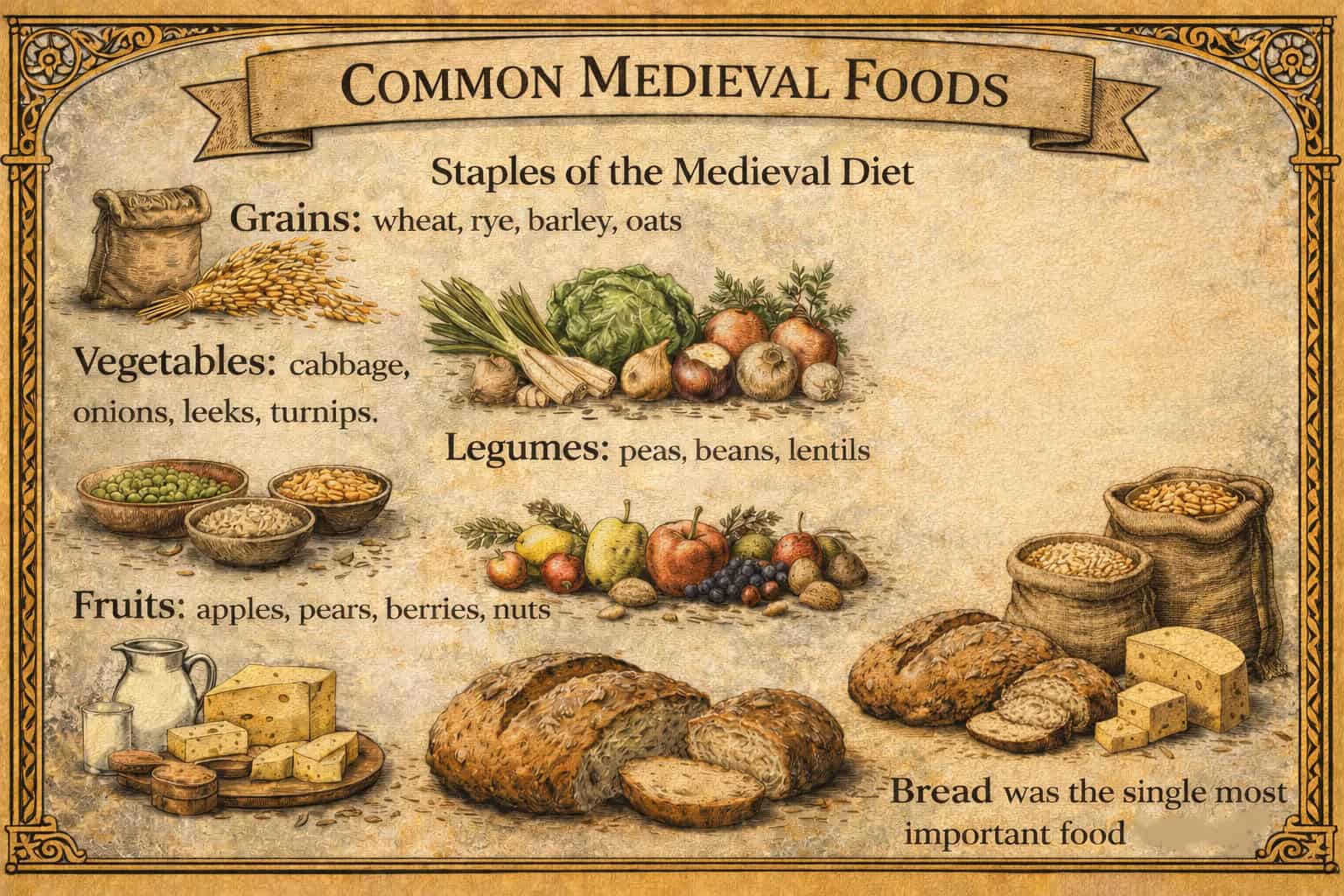
Despite class differences, certain foods formed the backbone of medieval diets.
Staples of the Medieval Diet
- Grains: wheat, rye, barley, oats
- Vegetables: cabbage, onions, leeks, turnips
- Legumes: peas, beans, lentils
- Fruits: apples, pears, berries, nuts
- Dairy: milk, butter, cheese, whey
Bread was the single most important food across all classes.
Cooking and Food Preparation
Medieval kitchens relied on open hearths and simple tools. Cooking methods varied by wealth and setting.
Common methods included:
- Boiling and stewing
- Roasting on spits
- Baking in communal ovens
- Frying in animal fat
Food was often cooked in large quantities to last several days.
Preserving Food in the Middle Ages
Without refrigeration, preservation was essential, especially for winter survival.
Common preservation techniques:
- Salting and brining
- Drying and smoking
- Pickling
- Fermentation
These methods often made food salty, which encouraged the use of herbs and spices to improve flavor.

Spices, Flavor, and Trade
Spices were among the most valuable commodities of the medieval world. Contrary to popular myth, they were not used to hide spoiled meat but to demonstrate wealth and sophistication.
Highly prized spices included:
- Pepper
- Cinnamon
- Ginger
- Cloves
- Nutmeg
Spice use expanded greatly from the 13th century onward, driven by trade with the East.
Medieval Drinks
Clean drinking water was not always reliable, so fermented beverages were common.
Popular medieval drinks:
- Ale (consumed daily by all classes)
- Mead (made from honey)
- Wine (especially among nobles and clergy)
Even children often drank weak ale as a safer alternative to water.

Feasts and Banquets
Banquets were central to medieval elite culture and served political as well as social purposes.
Features of medieval feasts:
- Multiple courses served simultaneously
- Elaborate presentation
- Rare and exotic meats
- Entertainment alongside dining
Feasts reinforced hierarchy and displayed lordly power.
Medieval Recipes and Cookbooks
By the late Middle Ages, cooking had become increasingly sophisticated. Recipes were recorded and passed down among elite households.
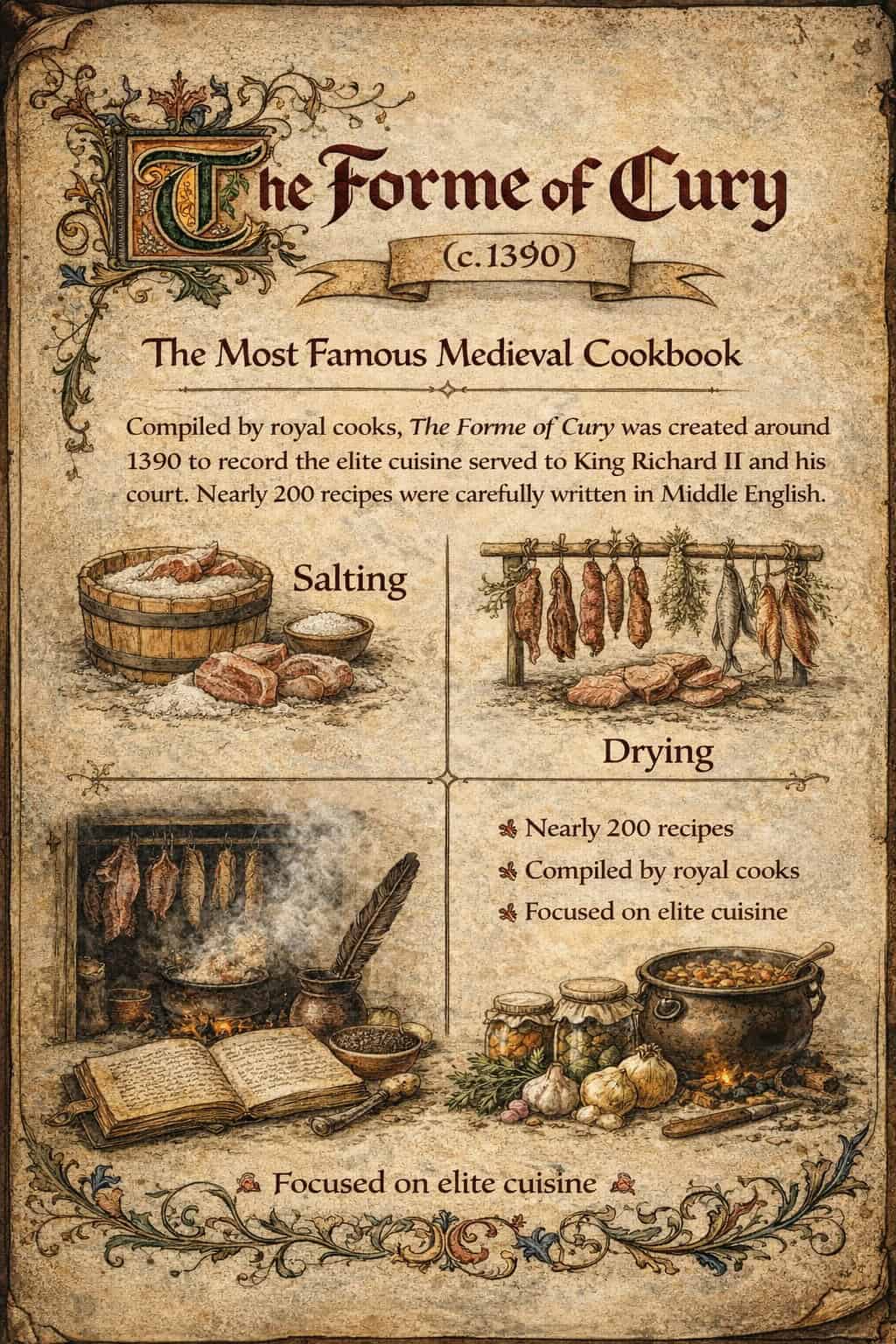
The most famous medieval cookbook:
- The Forme of Cury (c. 1390)
- Nearly 200 recipes
- Compiled by royal cooks
- Focused on elite cuisine
These manuscripts preserve invaluable insight into medieval tastes and techniques.
Why Medieval Food Matters
Medieval food tells the story of:
- Social inequality
- Agricultural innovation
- Trade and globalization
- Cultural exchange
- Daily survival
Far from being crude or monotonous, medieval cuisine evolved continuously and laid the foundations for many modern European food traditions.
Explore More Medieval Food Topics
This hub connects to detailed articles on:
- Medieval peasant food
- Medieval banquets and feasts
- Medieval drinks and brewing
- Food preservation methods
- Medieval recipes and cookbooks
❓ Medieval Food – Frequently Asked Questions
What did medieval peasants eat?
Peasants mainly ate bread made from rye or barley, pottage (a thick stew of grains and vegetables), dairy products, and occasionally fish.
What foods were reserved for nobles?
Nobles enjoyed fresh meat, white bread, fish, rich sauces, pastries, sugar, and imported spices such as saffron and cinnamon.
Did medieval people eat vegetables?
Yes. Vegetables such as cabbage, onions, peas, beans, and leeks were common, especially among the lower classes.
Why was meat preserved with salt?
Without refrigeration, salting and curing were essential to preserve meat for winter months.
What was pottage?
Pottage was a staple medieval dish — a slow-cooked stew made from grains, vegetables, and whatever meat or fish was available.
Did medieval people drink water?
Water was often unsafe, so ale, mead, and wine were commonly consumed instead.
What is The Forme of Cury?
A royal English cookbook written in 1390, containing nearly 200 medieval recipes.
🧠 Medieval Food Quiz
📘 Medieval Food Glossary
A thick medieval stew made from grains and vegetables.
A self-sufficient estate producing food for its inhabitants.
A royal department storing expensive spices.
Refined wheat bread eaten by nobles.
A common medieval drink safer than water.
A large feast displaying wealth and power.
A 1390 medieval cookbook by royal chefs.
A preservation method for meat and fish.