Wales is often described as the castle capital of the world, with more than 600 medieval castles and fortifications spread across its dramatic landscape. Many of these strongholds were built during periods of conquest, rebellion, and political control, leaving behind one of the densest concentrations of castles in Europe.
In this guide to the Top 10 Castles in Wales, we explore the country’s most famous and historically significant fortresses. From the imposing Edwardian castles of North Wales to earlier Norman strongholds and later noble residences, each site reflects the turbulent medieval history of Wales.
These castles were more than military structures. They functioned as royal residences, administrative centres, symbols of authority, and instruments of control during centuries of conflict between Welsh princes and English kings.

Why Wales Has So Many Castles
The earliest castles in Wales date to the Norman invasion of the late 11th century, when motte-and-bailey fortifications were constructed to secure newly conquered territory. Later, during the 13th century, King Edward I of England built an extensive network of massive stone castles to subdue Wales permanently.
This campaign produced some of the most advanced medieval military architecture in Europe, particularly the concentric castles of North Wales.
🏰 Click to Reveal: Understanding Medieval Castles in Wales
Norman Castles
Early Norman castles in Wales were typically motte-and-bailey structures built quickly after the 11th-century invasion to secure newly conquered territory.
Welsh-Princely Castles
Native Welsh rulers constructed castles such as Carreg Cennen, often using dramatic landscapes for defence rather than massive walls.
Edwardian Castles
Built by Edward I during the 13th-century conquest, these castles—such as Conwy and Caernarfon—represent the height of medieval military engineering.
Concentric Castle Design
Concentric castles feature multiple defensive rings of walls, allowing defenders to retreat while maintaining strong protection, as seen at Beaumaris and Caerphilly.
Castles as Symbols of Power
Beyond defence, medieval castles in Wales acted as administrative centres and visual symbols of royal authority over conquered lands.
Life Inside a Castle
Castles housed not only soldiers but also nobles, servants, and administrators, functioning as self-contained communities during times of peace and war.
1. Abergavenny Castle (Ruins)
Originally built shortly after the Norman invasion, Abergavenny Castle began as a motte-and-bailey fortress in the late 11th century. Positioned strategically on the Welsh Marches, it became a frequent point of conflict between Norman lords and Welsh rulers.
The castle changed hands several times during the 12th century and suffered heavy damage during later conflicts, including the English Civil War. Today, its surviving keep houses a museum and remains open to visitors.
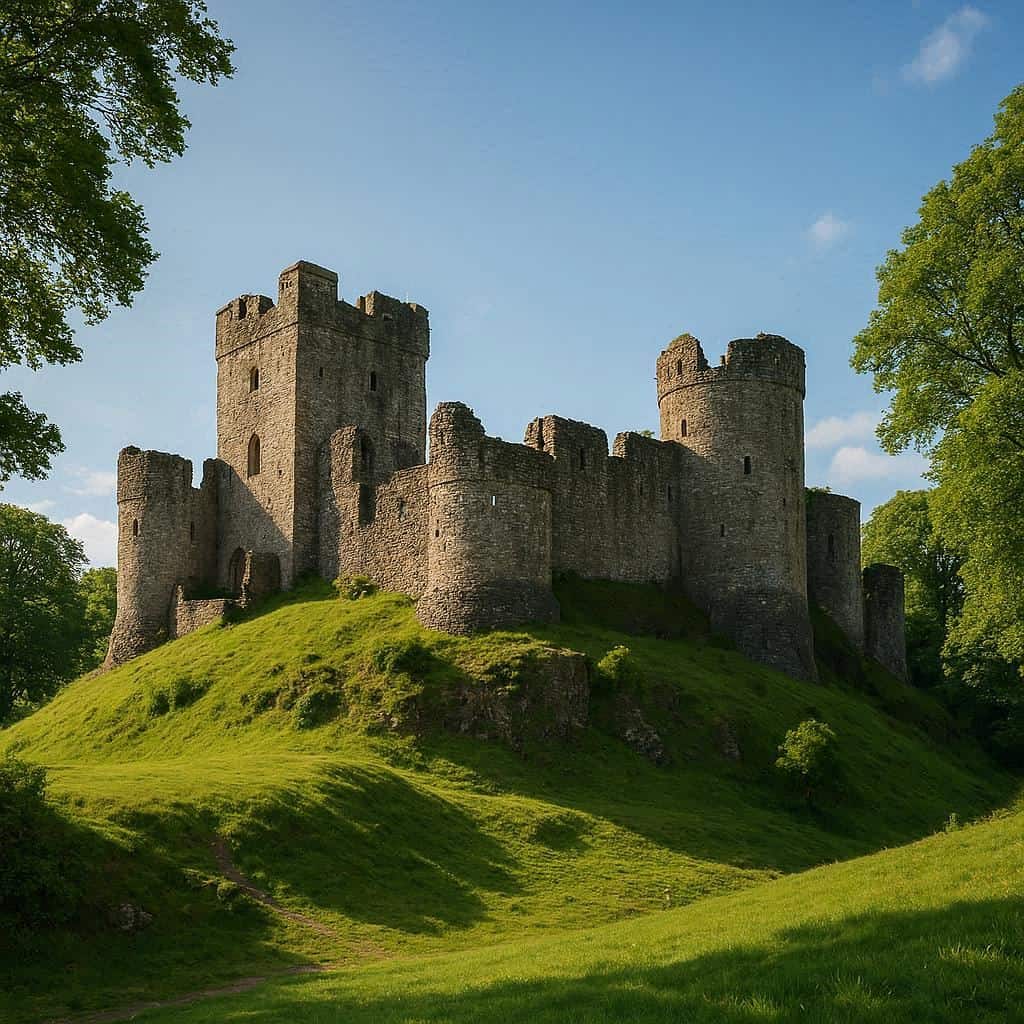
🏰 Abergavenny Castle – Key Medieval Features
- Originally built as a Norman motte-and-bailey castle in the late 11th century
- Frequently contested between Welsh lords and Norman nobles
- Stone keep remains dominant within the town centre
- Later adapted into a museum preserving regional history
2. Beaumaris Castle
Constructed in 1295 under King Edward I, Beaumaris Castle represents the most technically advanced example of concentric castle design in Britain. Although never fully completed, it was intended to be the ultimate symbol of royal authority in North Wales.
Despite brief periods of rebellion and later involvement in the English Civil War, Beaumaris remains exceptionally well preserved and is a UNESCO World Heritage Site.
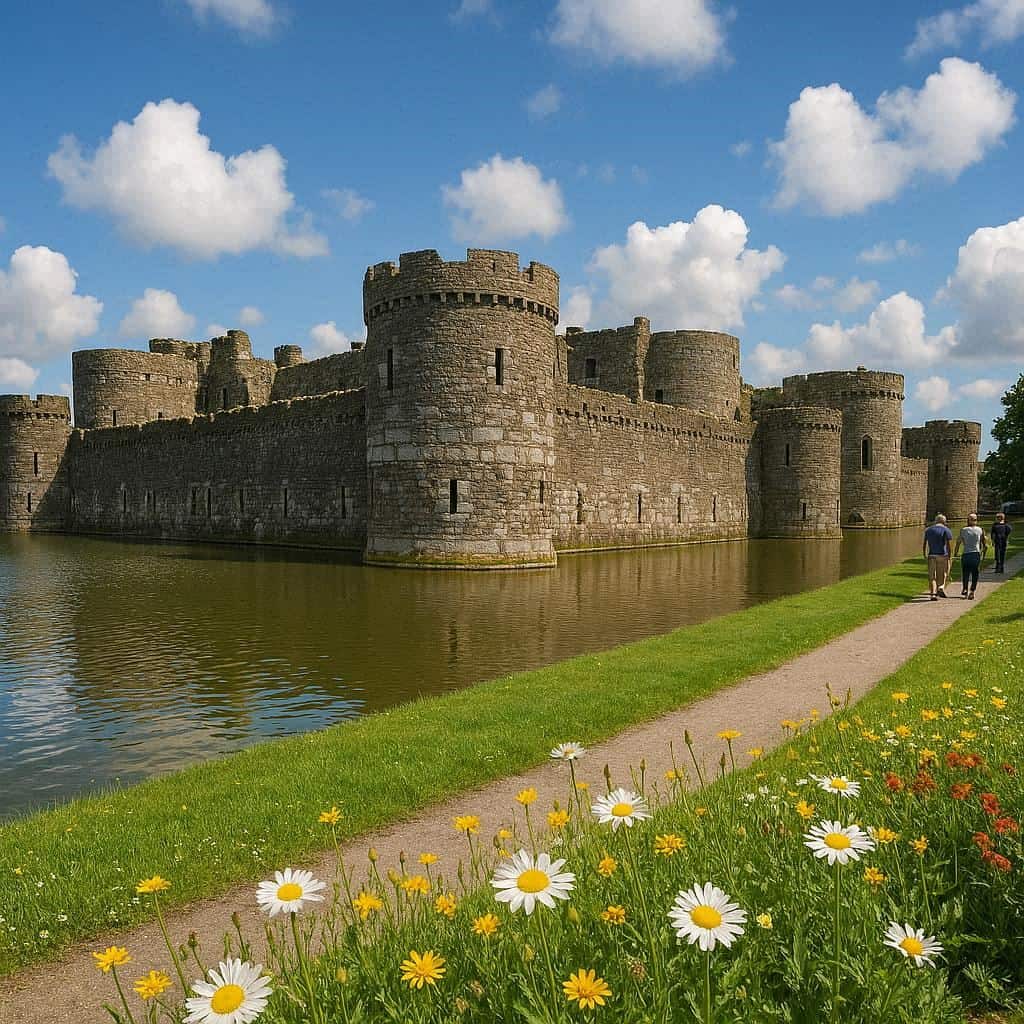
🏰 Beaumaris Castle – Key Medieval Features
- Considered the most technically perfect concentric castle in Britain
- Commissioned by King Edward I in 1295
- Designed by James of St George, Edward’s master architect
- Never fully completed due to financial and political constraints
3. Carreg Cennen Castle
Perched dramatically on a limestone cliff, Carreg Cennen Castle was originally built by Welsh lords in the 12th century before falling into English hands in the 13th century.
The castle was rebuilt in stone and later damaged during the Wars of the Roses. Though now a ruin, its striking location and surviving structures make it one of the most atmospheric castles in Wales.
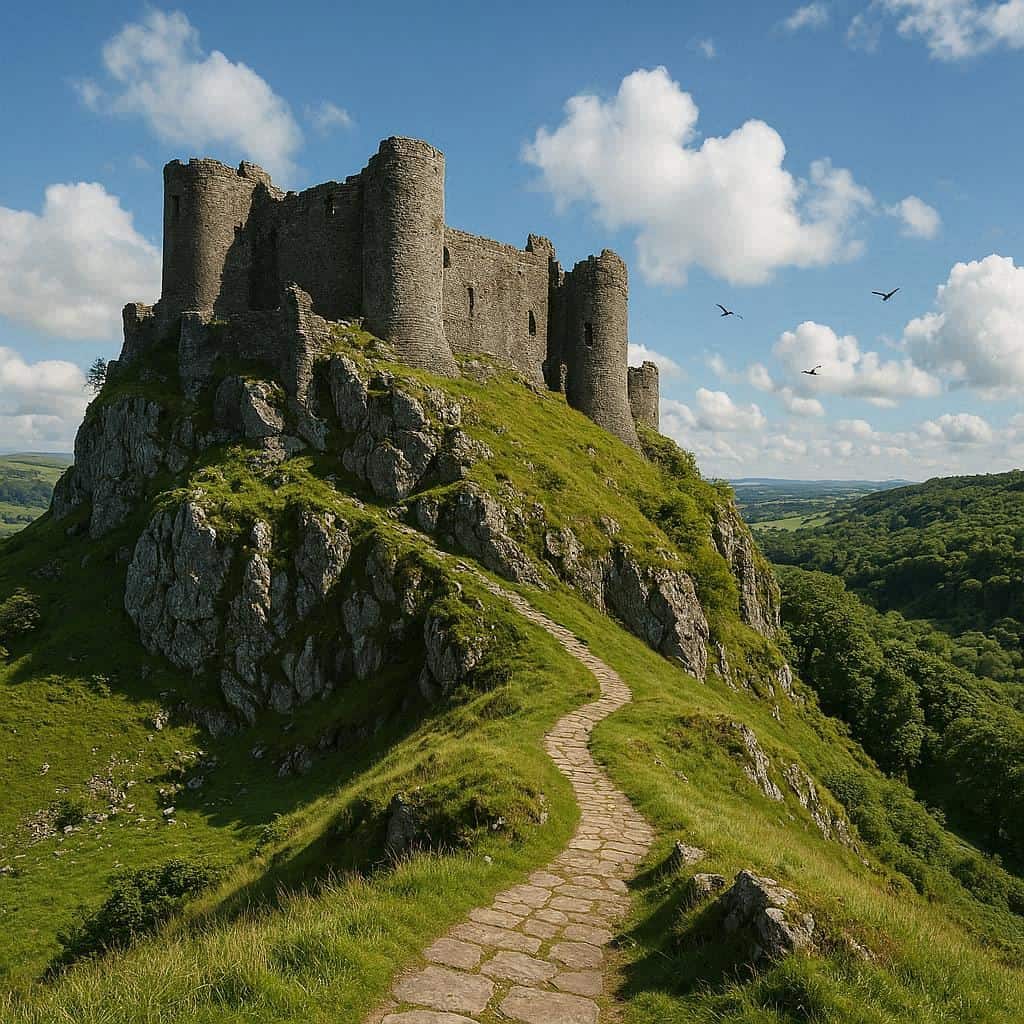
🏰 Carreg Cennen Castle – Key Medieval Features
- Dramatically situated atop a limestone cliff overlooking the Tywi Valley
- Originally built by Welsh lords in the 12th century
- Later captured and expanded by English forces under Edward I
- Features a unique natural cave entrance used as an escape route
- Strengthened with stone curtain walls and gatehouse in the 13th century
- Partially destroyed during the Wars of the Roses, leaving dramatic ruins
4. Cardiff Castle
The site of Cardiff Castle has been fortified since Roman times, but its medieval history began with the Norman conquest, when a large stone keep was constructed.
Throughout the Middle Ages, the castle served as a key defensive position. In the 19th century, it was transformed into an elaborate Gothic Revival residence, resulting in one of the most visually distinctive castles in Wales today.
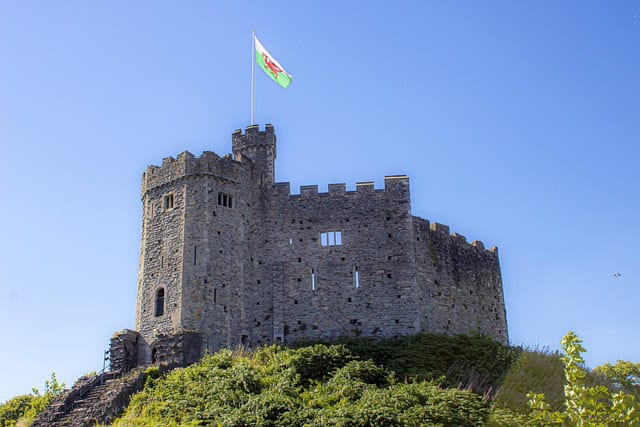
🏰 Cardiff Castle – Key Medieval Features
- Built on the site of a former Roman fort, later reused by the Normans
- Prominent Norman motte-and-bailey keep constructed in the late 11th century
- Served as a major defensive stronghold controlling the River Taff
- Expanded and reinforced throughout the High Middle Ages
- Later transformed into an elaborate Gothic Revival residence in the 19th century
- One of the best-preserved and most visited castles in Wales
5. Pembroke Castle
Founded in 1093 by Norman forces, Pembroke Castle is among the largest and best-preserved castles in southern Wales. Its massive keep and defensive walls made it a formidable stronghold.
Pembroke is historically significant as the birthplace of King Henry VII, founder of the Tudor dynasty. Restored in the 19th century, it remains one of Wales’s most popular medieval sites.

🏰 Pembroke Castle – Key Medieval Features
- Birthplace of King Henry VII, founder of the Tudor dynasty
- Massive round Norman keep dominates the castle
- Strategic location controlling key routes in south-west Wales
- Exceptionally well preserved compared to many medieval castles
6. Caerphilly Castle
Built in the late 13th century, Caerphilly Castle is the largest castle in Wales and the second largest in Britain. Its innovative concentric design, extensive water defences, and massive walls made it extremely difficult to capture.
Although damaged during later conflicts, the castle’s scale and engineering remain impressive, and it is now a major tourist attraction.

🏰 Caerphilly Castle – Key Medieval Features
- One of the largest castles in Europe
- Famous for its concentric defensive design
- Extensive use of artificial lakes and moats for defence
- Built by Gilbert de Clare during conflicts with Welsh princes
7. Conwy Castle
Completed between 1283 and 1287, Conwy Castle stands as one of Edward I’s finest fortresses. Built on a rocky outcrop overlooking the Conwy Estuary, it features eight massive towers, curtain walls, and fortified gates.
Remarkably well preserved, Conwy Castle forms part of a UNESCO-listed group known as the Castles and Town Walls of King Edward in Gwynedd.

🏰 Conwy Castle – Key Medieval Features
- Part of Edward I’s Iron Ring fortifications
- Features eight massive stone towers and two gatehouses
- Strategically positioned overlooking the Conwy Estuary
- One of the best-preserved 13th-century castles in Europe
8. Caernarfon Castle
Caernarfon Castle was designed not only as a fortress but as a powerful political symbol. Its polygonal towers and banded masonry drew inspiration from imperial Roman architecture.
Construction began in 1283, and the castle later became associated with the title Prince of Wales, reinforcing English dominance over the region.
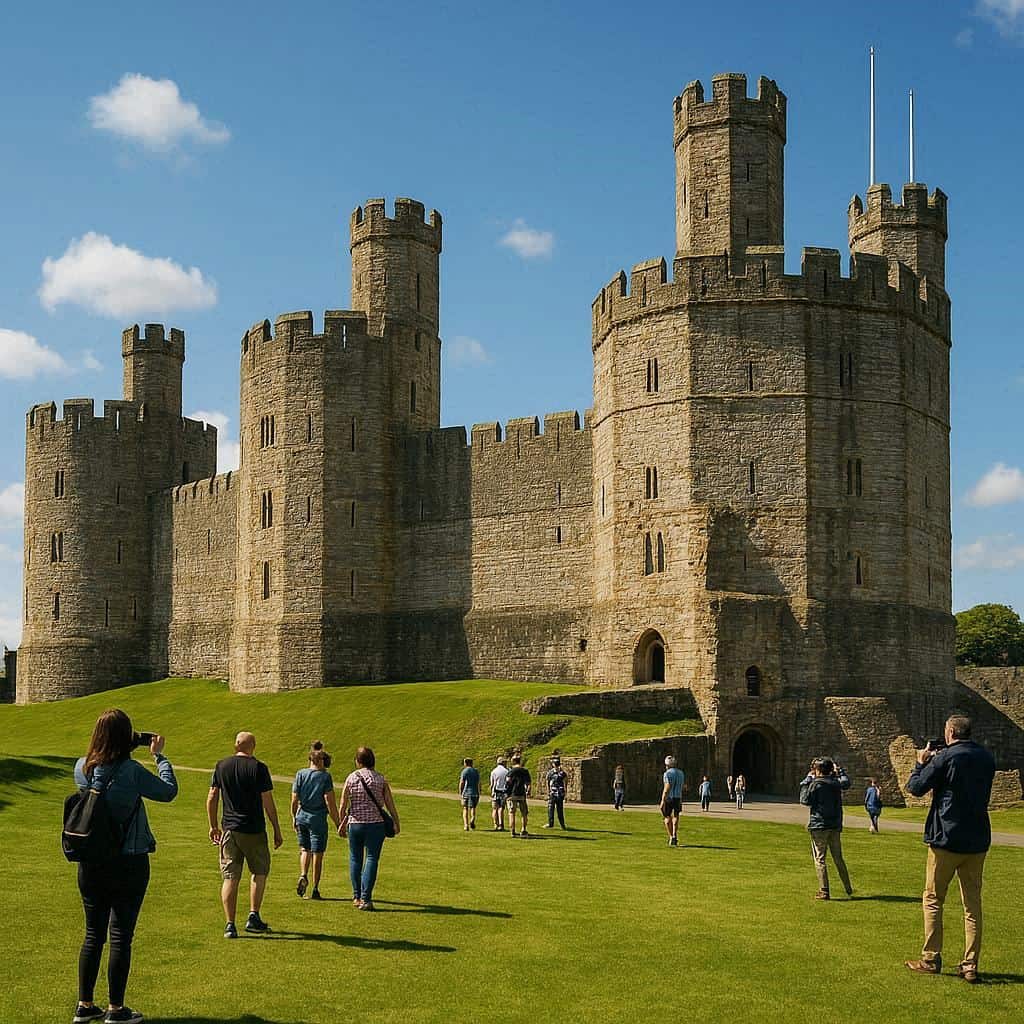
🏰 Caernarfon Castle – Key Medieval Features
- Distinctive polygonal towers inspired by Roman fortresses
- Symbol of English royal authority in Wales
- Birthplace of the first English Prince of Wales
- Part of the UNESCO-listed Edwardian castles of Gwynedd
9. Harlech Castle
Another of Edward I’s “Iron Ring” castles, Harlech Castle was designed by the master architect James of St George. Its elevated position allowed it to be supplied by sea during sieges.
Harlech is famously linked to the longest siege in British history during the Wars of the Roses, commemorated in the song Men of Harlech.
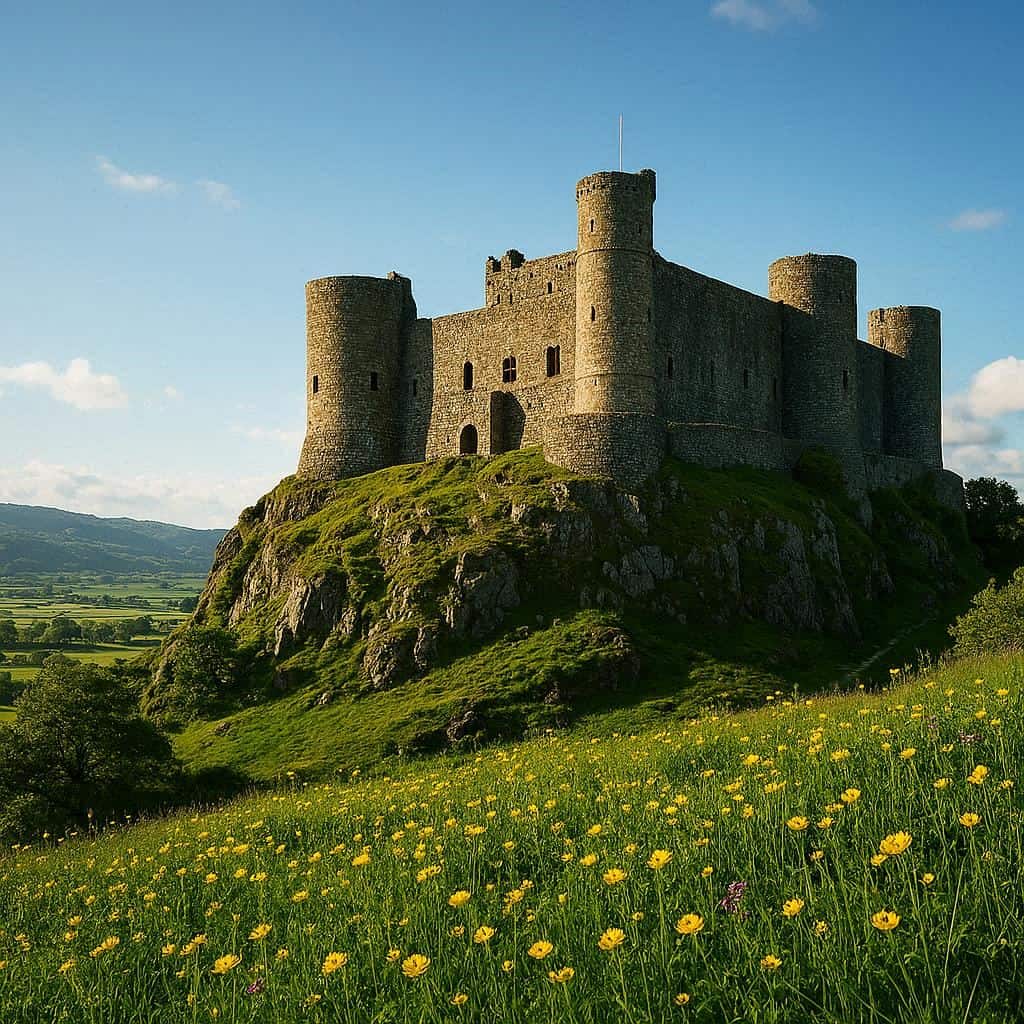
🏰 Harlech Castle – Key Medieval Features
- Built atop a steep rocky crag overlooking the Irish Sea
- Famous for its sea gate, allowing supply during sieges
- Associated with the song “Men of Harlech”
- Played a major role in the Wars of the Roses
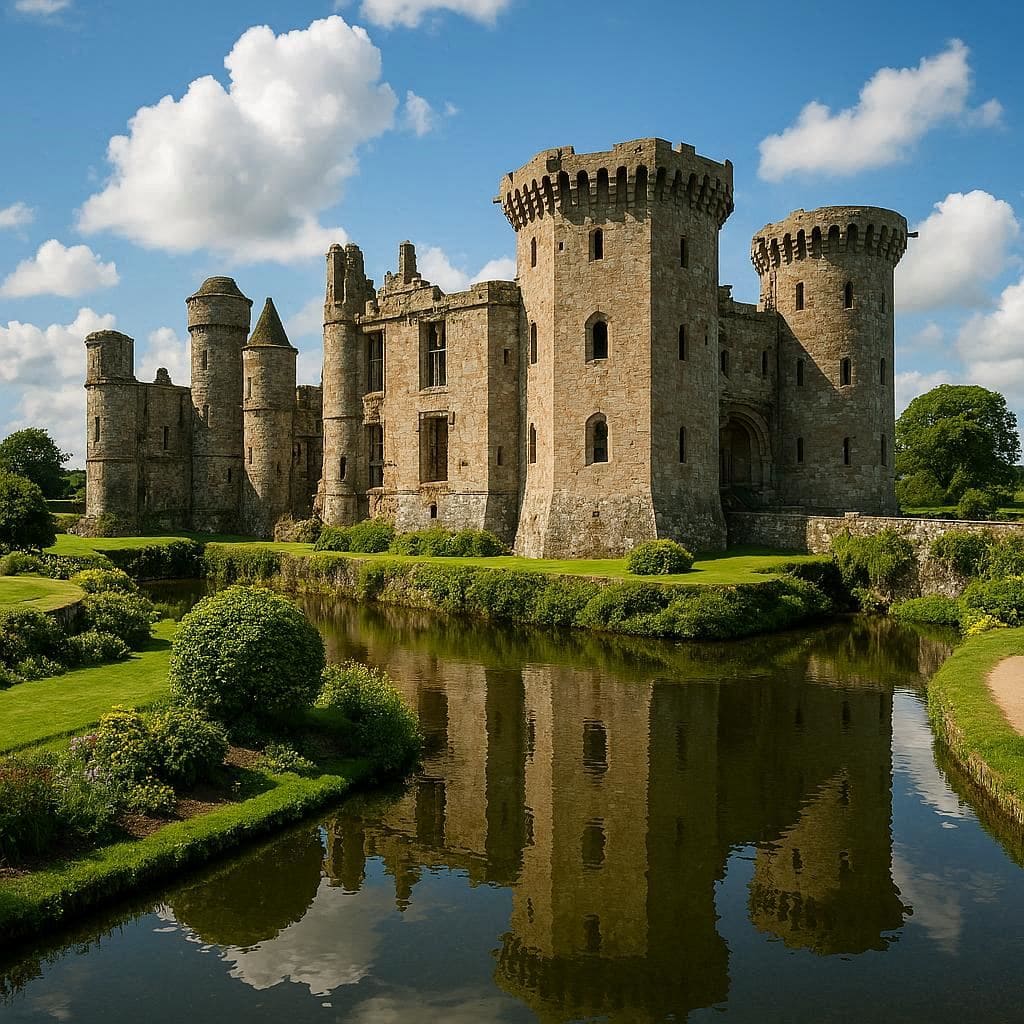
10. Raglan Castle
Unlike earlier medieval fortresses, Raglan Castle reflects a shift toward comfort and status as well as defence. Built in the 15th century, it combines strong fortifications with elegant residential features.
Although damaged during the English Civil War, Raglan remains one of the finest examples of a late medieval noble residence in Wales.
🏰 Pembroke Castle – Key Medieval Features
- Birthplace of King Henry VII, founder of the Tudor dynasty
- Massive round Norman keep dominates the castle
- Strategic location controlling key routes in south-west Wales
- Exceptionally well preserved compared to many medieval castles
Medieval Castles in Wales: Legacy
The castles of Wales reveal a landscape shaped by conquest, resistance, and political control. From early Norman strongholds to Edwardian masterpieces, these fortresses remain enduring symbols of the medieval struggle for power in Britain.
Today, they stand not only as tourist attractions but as some of the most important architectural and historical monuments in Europe.
❓ Top Castles in Wales – Frequently Asked Questions
Why does Wales have so many castles?
Wales has over 600 medieval castles due to centuries of conflict between Welsh princes, Norman lords, and English kings, particularly during the Norman invasion and Edward I’s conquest.
Who built most of the famous Welsh castles?
Many of the largest castles, including Caernarfon, Conwy, Harlech, and Beaumaris, were built by King Edward I in the late 13th century.
Are Welsh castles Norman or Welsh?
Welsh castles include both native Welsh fortresses and Norman or English-built castles, often constructed to control key regions and suppress rebellion.
Which Welsh castles are UNESCO sites?
Caernarfon, Conwy, Harlech, and Beaumaris form the UNESCO-listed Castles and Town Walls of King Edward in Gwynedd.
Can you visit most castles in Wales?
Yes. Many castles are open to the public and managed by Cadw, offering access to towers, battlements, and guided tours.
🧠 Welsh Castles Knowledge Quiz
📜 Glossary of Medieval Welsh Castle Terms
A Norman castle design featuring a raised mound with a wooden or stone keep.
A fortress with multiple defensive walls, one inside another, such as Caerphilly Castle.
Castles built by King Edward I during his conquest of Wales in the late 13th century.
The Welsh government body responsible for preserving historic sites in Wales.
Edward I’s chain of castles designed to encircle and control North Wales.
An enclosed area within a castle containing buildings and defensive structures.