Medieval Scotland was a land of shifting kingdoms, powerful clans, fortified castles, and enduring cultural traditions. Shaped by Celtic heritage, Norse influence, feudal institutions, and constant interaction with England and continental Europe, Scotland developed a distinct identity during the Middle Ages. Political struggle, warfare, and alliance-building defined much of the period, while everyday life revolved around agriculture, kinship, and local lordship.
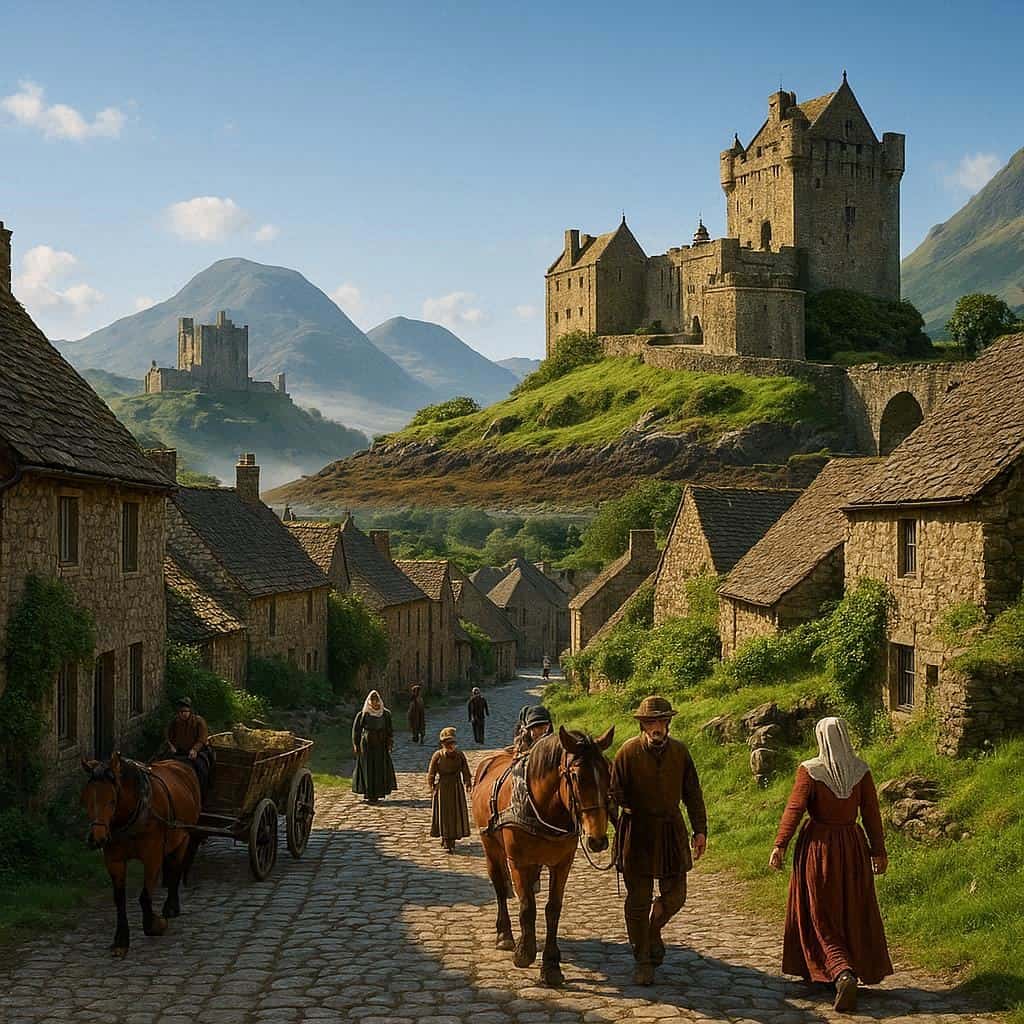
The Beginning of Medieval Scotland (5th–9th Centuries)
The medieval period in Scotland emerged gradually after the withdrawal of Roman influence from Britain in the early 5th century. Unlike southern Britain, most of Scotland had never been fully Romanised. Instead, early medieval Scotland consisted of several distinct peoples and kingdoms.
Key groups included:
- The Picts in northern and eastern Scotland
- The Gaels of Dál Riata in the west
- The Britons of Strathclyde in the south-west
- Anglo-Saxons in the south-east
During the 9th century, Viking raids and settlements added further complexity, particularly in the Northern Isles, Hebrides, and coastal regions.
🏴 Click to Reveal: Key Aspects of Medieval Scotland
Scottish Clans
Clans dominated Highland society, organised around kinship, loyalty, and shared ancestry, with chiefs acting as military, legal, and social leaders.
Kings and Royal Authority
Medieval Scottish kings ruled through personal loyalty, land grants, and alliances, often facing resistance from powerful nobles and regional lords.
Castles and Fortifications
Scottish castles evolved from timber halls to stone fortresses, serving as defensive strongholds, administrative centres, and symbols of lordly power.
Warfare and Military Tactics
Warfare shaped medieval Scotland, from clan feuds to large-scale conflicts such as the Wars of Scottish Independence.
The Church and Religion
The Church influenced education, law, and daily life, with monasteries and abbeys acting as centres of learning and authority.
Trade and Daily Life
While largely rural, medieval Scotland developed trade through royal burghs, connecting it to England, Scandinavia, and continental Europe.
The Formation of the Kingdom of Scotland
By the mid-9th century, increasing pressure from Viking incursions encouraged political consolidation. Traditionally, Kenneth MacAlpin is associated with the unification of the Picts and Gaels, forming the foundations of the Kingdom of Alba.
Over time, Alba expanded southward and eastward, gradually absorbing other regions. By the 11th century, the kingdom that would become Scotland had begun to take clearer shape, although royal authority remained limited and regional power was strong.
Kingship, Feudalism, and Royal Power
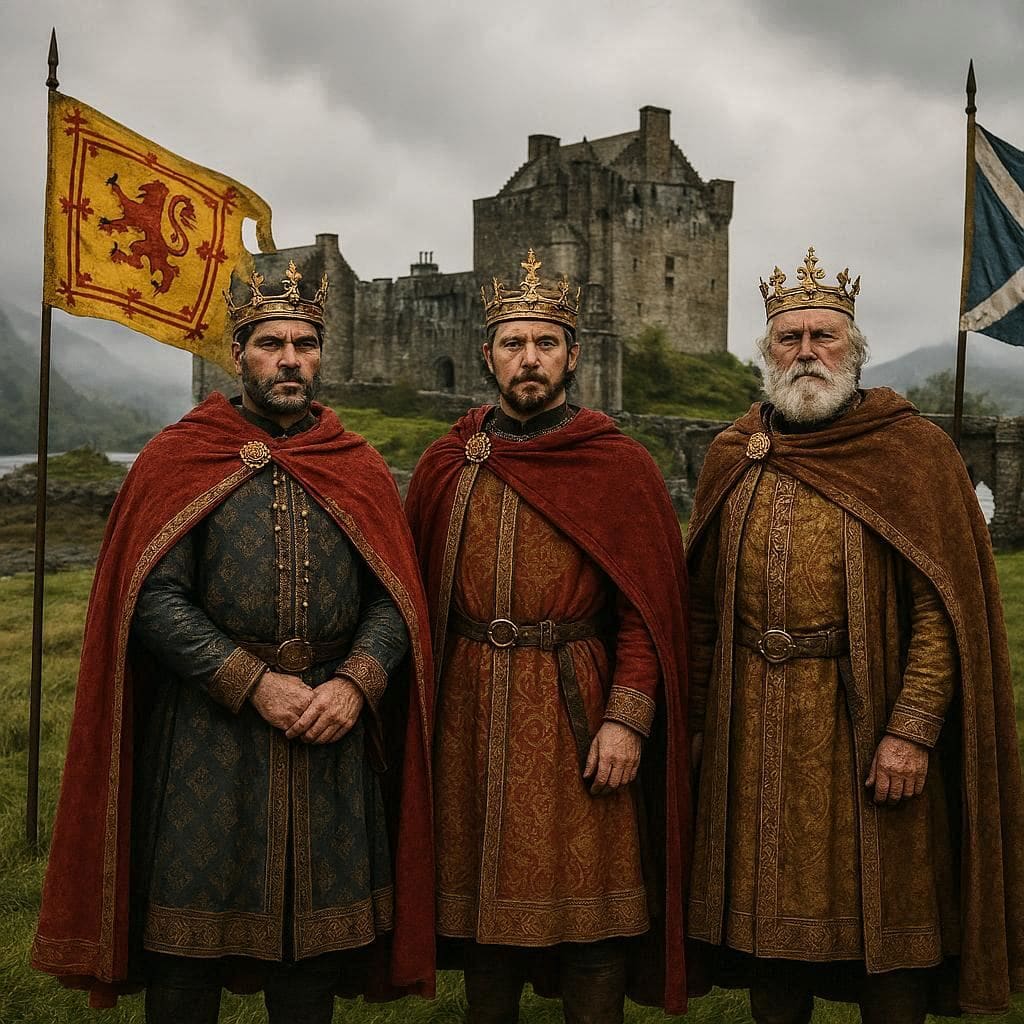
Medieval Scottish kingship relied heavily on personal loyalty, kinship, and land grants. From the 12th century, particularly under David I, Scotland experienced significant feudal reform.
These reforms included:
- Introduction of feudal landholding
- Establishment of royal burghs
- Expansion of royal administration
- Encouragement of Norman and Anglo-French settlers
While these changes strengthened royal authority, Scotland remained less centralised than England, with powerful nobles and regional lords retaining considerable independence.

Clans, Nobility, and Social Structure
Scottish society was hierarchical but varied greatly by region. In the Highlands and Islands, clan-based systems dominated, emphasising kinship, loyalty, and shared ancestry. Chiefs acted as military leaders, judges, and landlords.
In the Lowlands, feudal structures were more prominent, with nobles holding land from the king in exchange for military service. Beneath the nobility were freemen, tenants, and peasants who worked the land and formed the backbone of the rural economy.
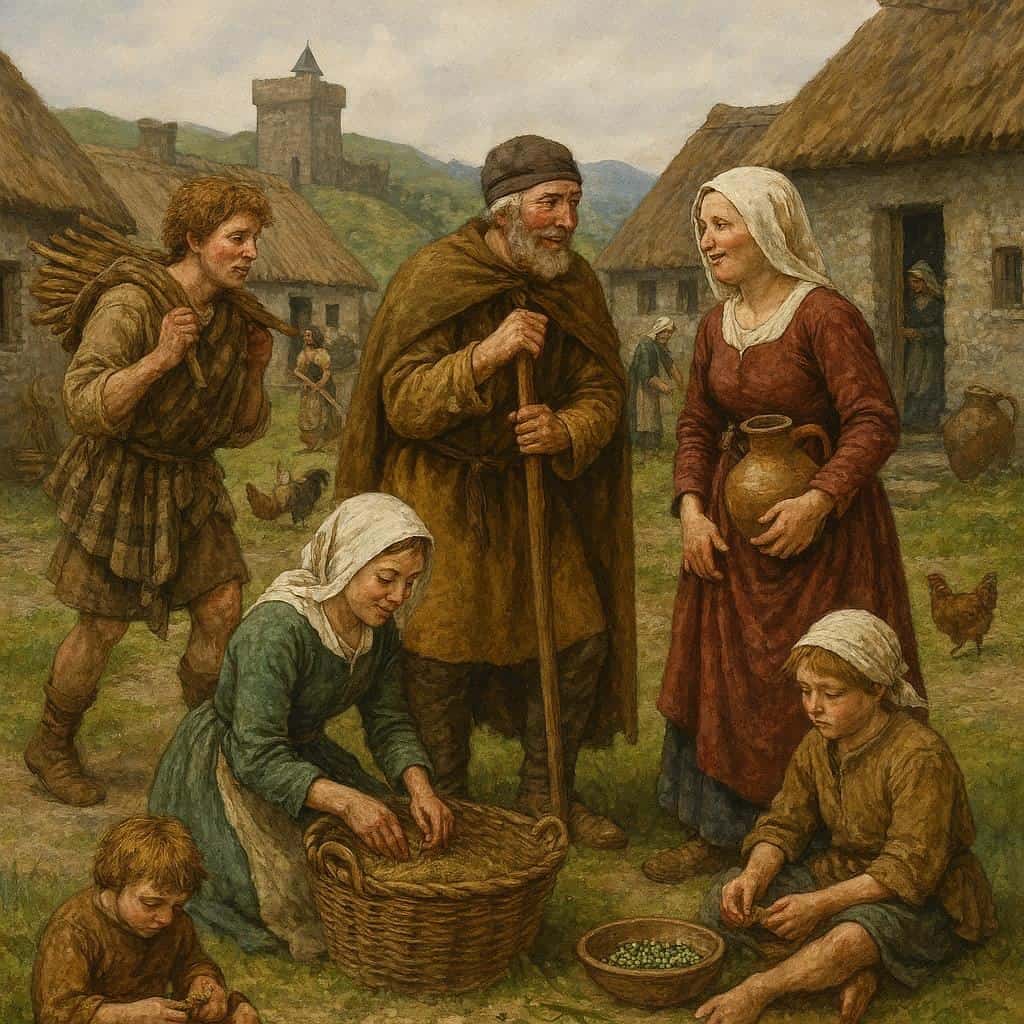
Peasants and Daily Life in Medieval Scotland
Most Scots were peasants, living in small farming communities. Life revolved around agriculture, livestock rearing, and seasonal labour. Crops such as oats and barley were staples, while cattle were a key measure of wealth.
Peasant obligations often included:
- Paying rents or dues
- Providing labour services
- Supporting local lords during times of war
Despite hardships, local communities were tightly knit, and traditions of oral storytelling, music, and custom played a central role in everyday life.
Castles, Warfare, and Defence
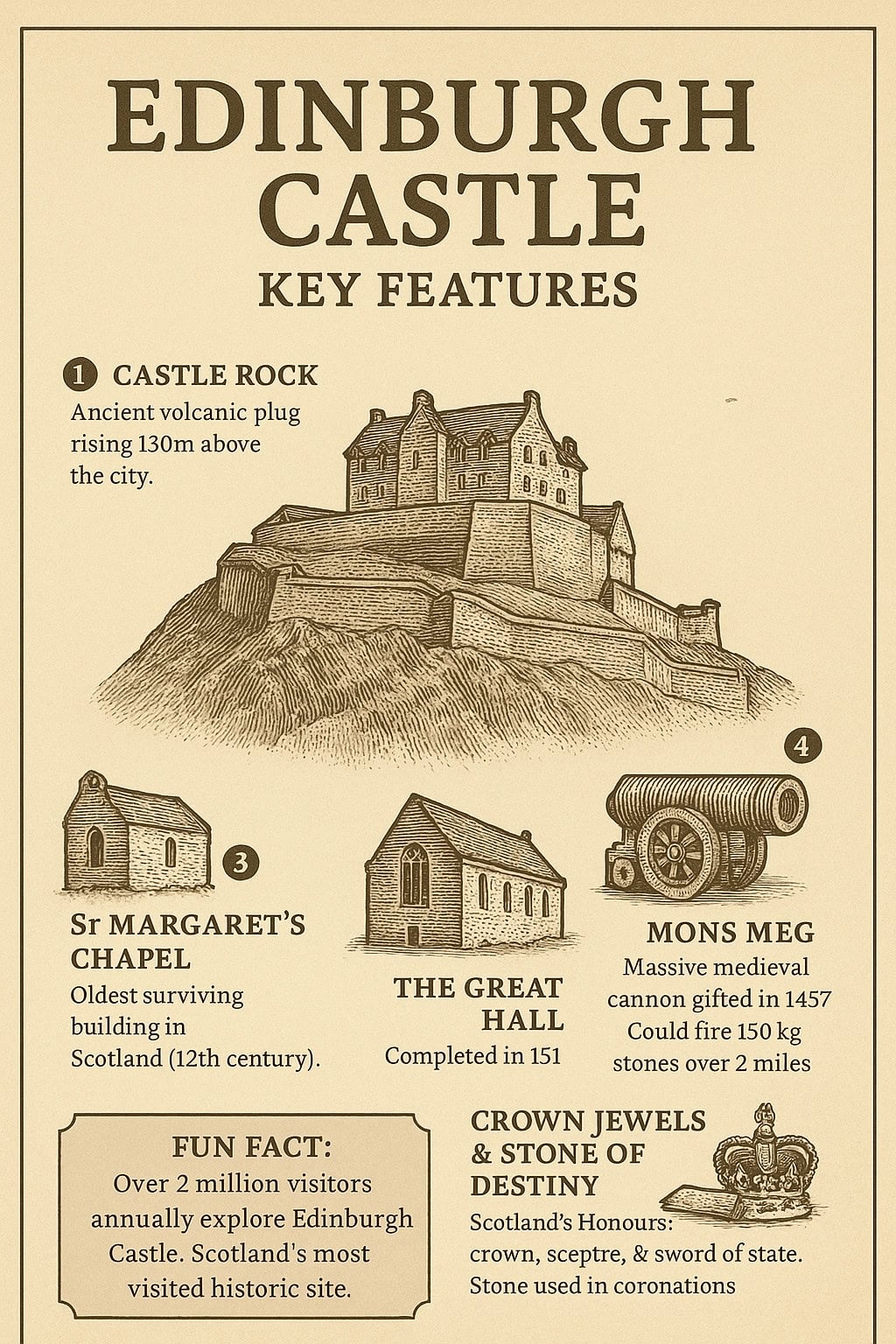
Warfare was a defining feature of medieval Scotland. Early fortifications included timber halls and earthworks, but from the 12th century, stone castles became widespread.
Scottish castles served as:
- Military strongholds
- Administrative centres
- Symbols of lordly power
Frequent conflict with England, internal rivalries, and clan warfare shaped military practices. Infantry armed with spears and later long pikes formed the core of Scottish armies, while cavalry played a more limited role than in southern Europe.
The Wars of Scottish Independence
The late 13th and early 14th centuries were dominated by the Wars of Scottish Independence. Following the death of Alexander III and a succession crisis, England sought to assert control over Scotland.
Key figures included:
- William Wallace, a leader of early resistance
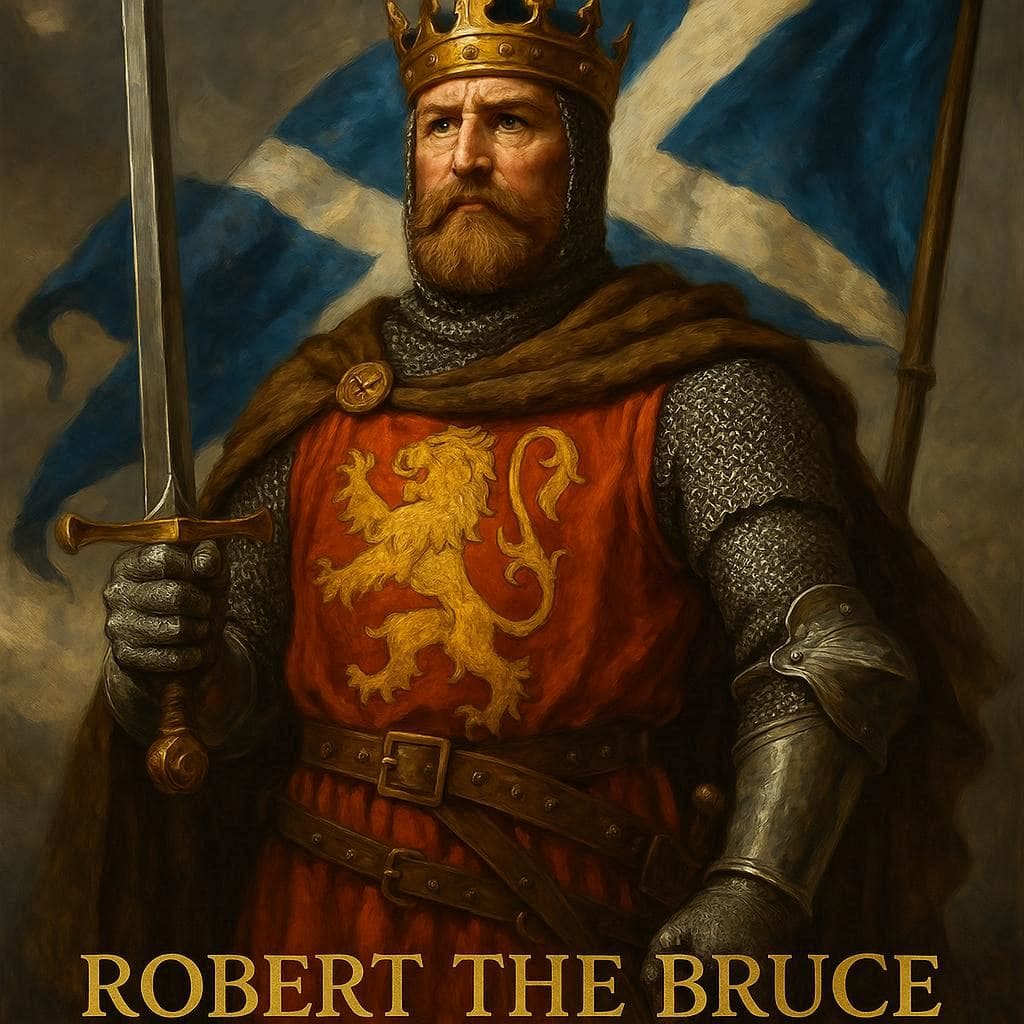
- Robert the Bruce, who secured Scottish independence after victory at Bannockburn in 1314
These wars reinforced Scottish national identity and shaped the monarchy for generations.
Religion and the Church in Medieval Scotland
The Church played a central role in medieval Scottish life. Monasteries, abbeys, and parish churches were centres of learning, charity, and spiritual authority.
Religious institutions:
- Owned large estates
- Educated clergy and administrators
- Connected Scotland to wider European intellectual life
Pilgrimage, saints’ cults, and religious festivals were deeply woven into daily experience.
📚 Medieval Scottish Culture and Learning
Medieval Scottish culture was shaped by a blend of Celtic, Norse, and continental European influences. These traditions varied by region but together formed a distinct cultural identity.
🎶 Oral Tradition and Literary Culture
Poetry, genealogy, and oral tradition were central to medieval Scottish culture, particularly in Gaelic-speaking regions. Bards and storytellers preserved history, law, and lineage through spoken verse and song.
🎓 Learning and Universities
By the late Middle Ages, Scotland became increasingly connected to European intellectual life. Universities such as St Andrews (1413), Glasgow (1451), and Aberdeen (1495) were founded, reflecting the kingdom’s growing engagement with European scholarship, law, theology, and the liberal arts.
Economy, Trade, and Town Life
While largely rural, medieval Scotland developed a modest urban economy. Royal burghs acted as centres of trade, craft production, and administration.
Exports included:
- Wool
- Hides
- Fish
Trade connected Scotland to England, the Low Countries, Scandinavia, and France, reinforcing economic and diplomatic ties.
Medieval Scotland and Its Legacy
By the end of the Middle Ages, Scotland had emerged as a distinct and resilient kingdom. Its institutions, traditions, and cultural identity were shaped by centuries of conflict, adaptation, and local autonomy.
Medieval Scotland laid the foundations for later national development, leaving a legacy still visible in its castles, laws, language, and historical memory.
❓ Medieval Scotland – Frequently Asked Questions
When did the medieval period begin in Scotland?
The medieval period in Scotland began after Roman withdrawal in the early 5th century.
Was medieval Scotland a unified kingdom?
Over time yes, but royal authority was often limited, especially in the Highlands and Islands.
Who were the most famous medieval Scottish kings?
Notable kings include David I, Alexander III, and Robert the Bruce.
What were Scottish clans?
Clans were extended kinship groups bound by loyalty to a chief, especially prominent in the Highlands.
Why are the Wars of Independence important?
They secured Scottish independence and strengthened national identity in the 13th–14th centuries.
🧠 Medieval Scotland Knowledge Quiz
📜 Glossary of Medieval Scotland Terms
Clan
An extended kinship group led by a chief, central to Highland society.
Alba
The early medieval kingdom that became Scotland.
Burgh
A chartered town granted trading privileges by the king.
Mormaer
A regional ruler or earl in early medieval Scotland.
Feudalism
A system of landholding based on service and loyalty.