Medieval clothing changed dramatically over the course of a thousand years, reflecting wider shifts in society, technology, class structure, and cultural influence. From the simple wool garments of the Early Middle Ages to the highly tailored, brightly coloured fashions of the 14th and 15th centuries, clothing became one of the clearest markers of wealth, identity, and social status.

This detailed guide explores how men, women, children, and peasants dressed across the medieval period—and how clothing transformed alongside medieval life itself.
Early Medieval Clothing (c. 500–1000): Practical & Influenced by Germanic Traditions
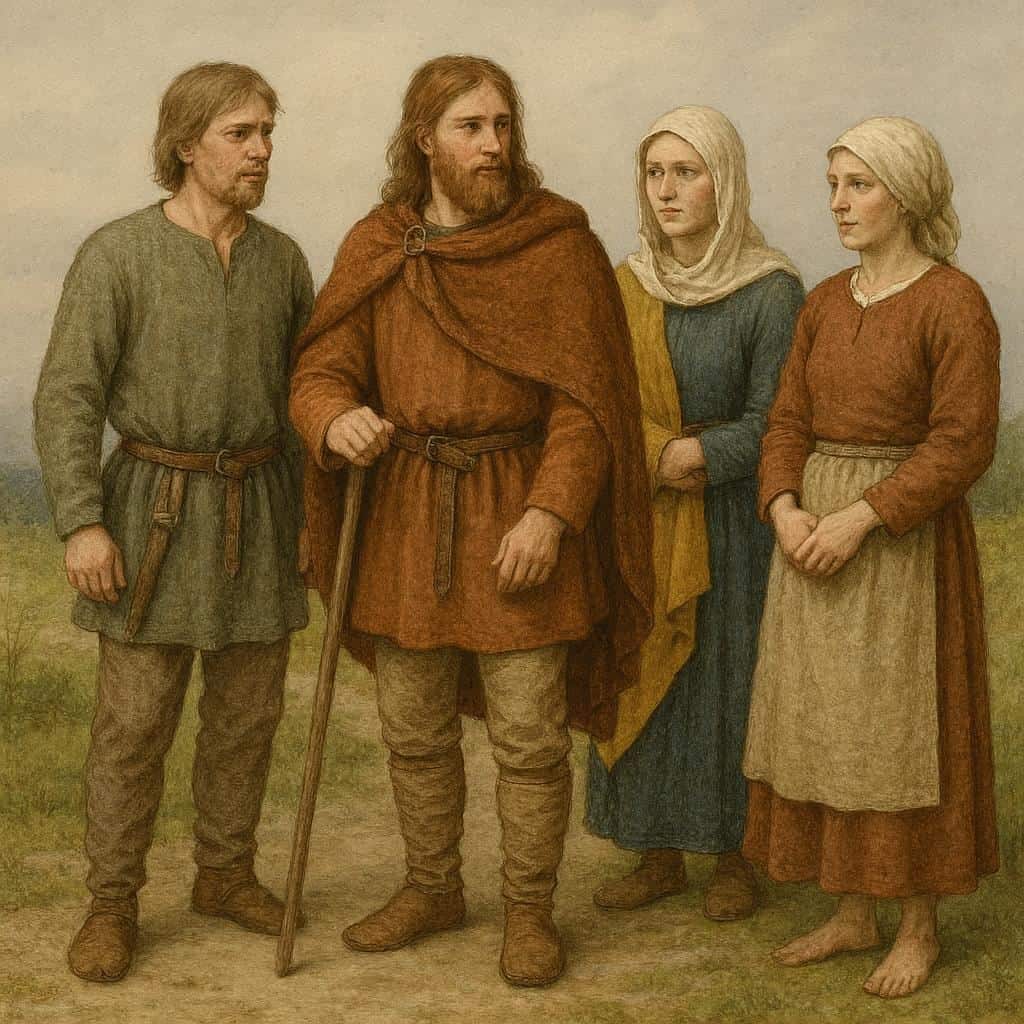
Clothing in the early medieval era was shaped less by the Roman world than previously believed and more by Germanic, Norse, and Celtic traditions. Early garments were loose-fitting, simple, and practical, designed for warmth and everyday labour.
Key Features of Early Medieval Clothing
- Predominantly wool with some linen undergarments
- Loose tunics, cloaks, and robes
- Minimal tailoring
- Limited colour variation
- Clothing designed for utility, not display
Although nobles wore finer fabrics and more vibrant dyes, early medieval clothing remained relatively modest across all classes.
High Medieval Clothing (c. 1000–1300): Colour, Status, and New Silhouettes
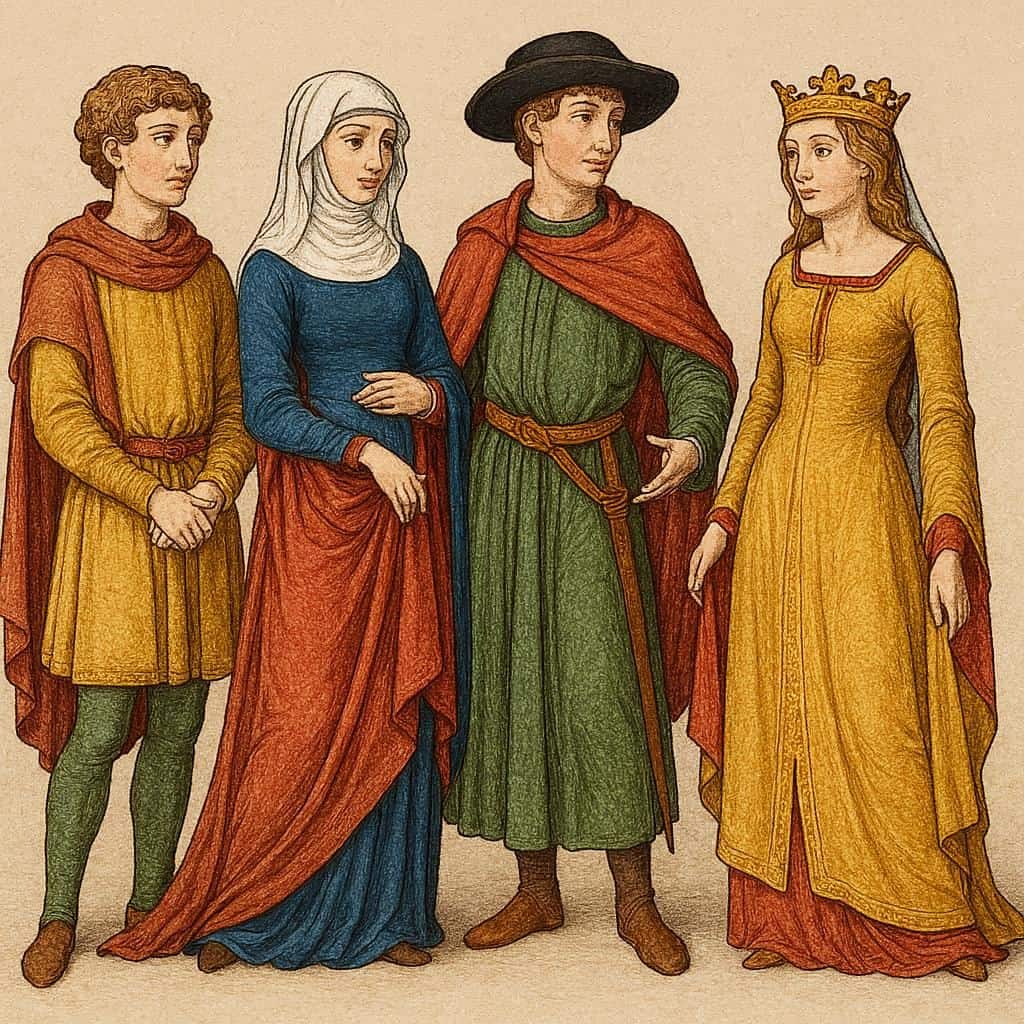
By the 11th and 12th centuries, society had become more structured, cities grew, and trade expanded. This helped create a wider market for fashion. Clothing now signalled rank, wealth, profession, and even nationality.
Emerging Trends in High Medieval Fashion
- Growing use of brighter dyes (reds, greens, blues)
- Better tailoring and garment shaping
- More decorative trims, girdles, and embroidered borders
- Cloaks and surcoats lined with fur among the wealthy
- Clothing became a visible symbol of social hierarchy
Despite these developments, clothing for the lower classes remained simple and functional, typically in natural tones.
Late Medieval Clothing (c. 1300–1500): The Birth of Fashion
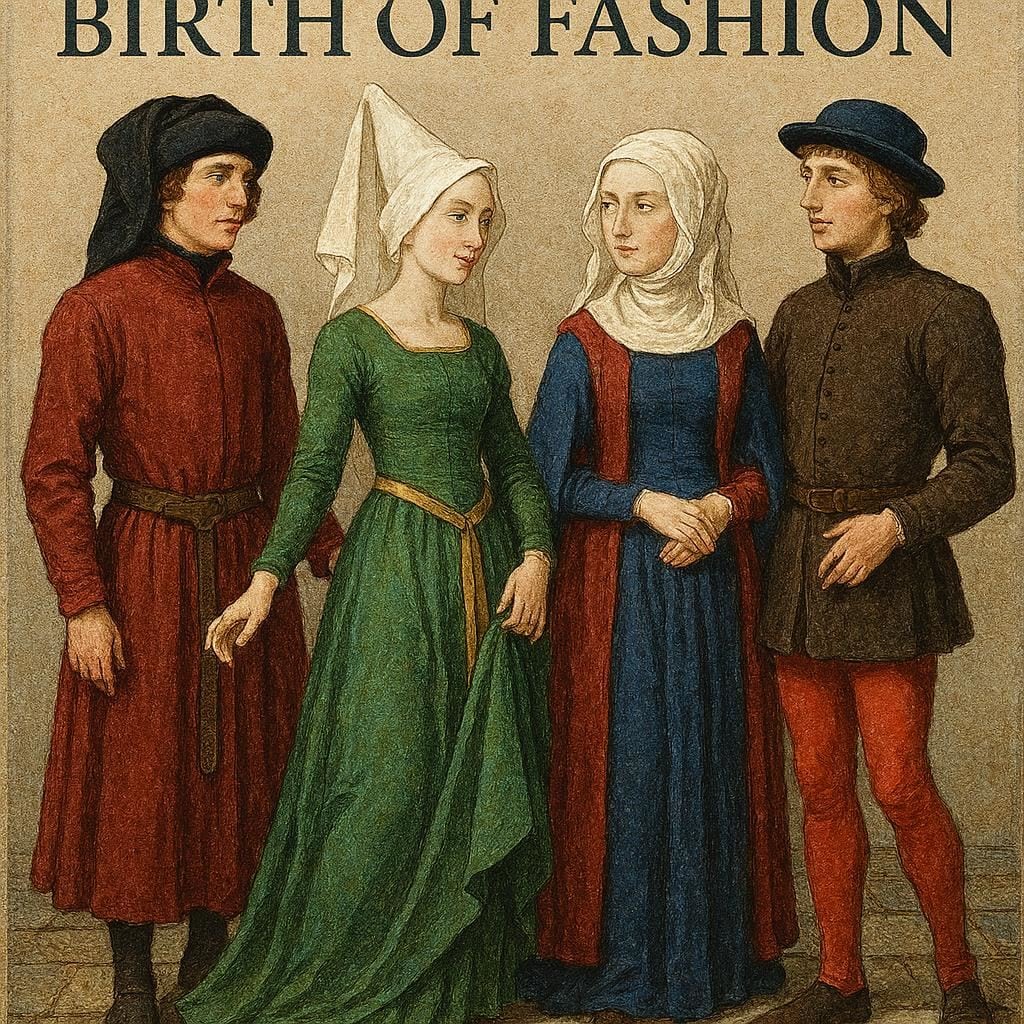
The 14th and 15th centuries saw a revolution in European clothing. Advances in textile production, international trade, and wealth in towns allowed for true fashion trends, with styles changing decade by decade. This period introduced the first recognisable forms of tailored, fitted clothing in Europe.
Defining Characteristics of Late Medieval Clothing
- Tight-fitting garments using buttons, laces, and gored panels
- Luxurious materials: silk, velvet, fine worsted wool
- Highly structured gowns for women
- Padded doublets and fitted hose for men
- Elaborate headwear, including hennins, chaperons, and veils
- Dramatic footwear such as long poulaines
The late medieval period clearly separated the rich from the poor through sumptuary laws, which regulated which classes could wear certain fabrics, colours, and jewellery.
Men’s Clothing Through the Medieval Ages
Early Medieval Men’s Clothing
Men generally wore:
- A linen shirt (undertunic)
- A wool tunic
- A belt for knives, pouches, and tools
- Cloaks fastened with brooches
- Leg wrappings or simple trousers
Warriors favoured shorter tunics to allow free movement.
⚔️ Early Medieval Men’s Clothing (Click to Reveal)
What Did Early Medieval Men Wear?
Early medieval men typically wore simple, loose-fitting garments made from wool and linen. Clothing was designed for warmth, durability, and practicality—especially in societies shaped by farming and warfare.
Common Garments
• A linen undertunic worn against the skin
• A woolen tunic (knee-length or mid-thigh for warriors)
• A practical belt for tools, pouches, and knives
• A wool cloak fastened with a brooch
• Basic trousers or leg wrappings depending on region
Materials & Colours
Clothing was usually made of wool with linen undergarments. Colours tended to be natural tones—brown, grey, cream—though wealthier men or tribal leaders sometimes used plant dyes such as woad (blue) or madder (red).
Warriors & Nobles
Early medieval warriors usually wore shorter tunics for mobility, along with cloaks, belts, shields, and simple boots. Nobles had better quality wool, imported dyes, intricate brooches, and decorative trim unavailable to common men.
High Medieval Men’s Clothing
Styles became more refined:
- Tunics grew more colourful and were worn in layers
- Cloaks and surcoats became fashionable for knights and nobles
- Hose became more common, although not yet joined like tights
👕 High Medieval Men’s Clothing (12th–13th Century)
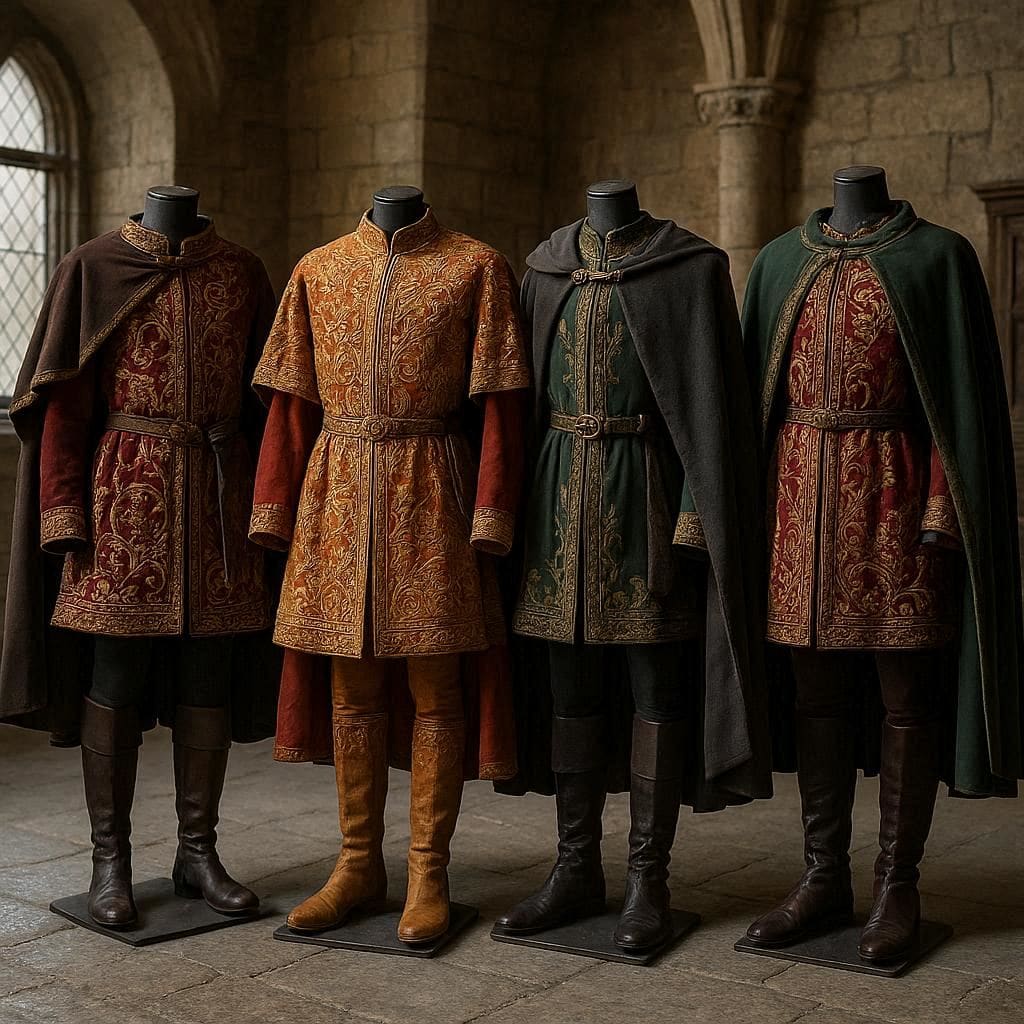
During the High Middle Ages, men’s clothing became far more fitted, colourful, and socially expressive. Gone were the loose, simple garments of earlier centuries—replaced with tailored tunics, rich fabrics, and distinctive layering that reflected rising wealth and status across medieval Europe.
- Fitted Tunics: Tunics shortened slightly and became more tailored, often cinched with a belt and decorated with embroidery at the sleeves and hem.
- Surcoats & Cloaks: Worn over the tunic for warmth and status display; surcoats were often sleeveless, while cloaks could be fur-lined for nobles.
- Vibrant Colours: Dyes such as madder red, woad blue, and saffron yellow became popular. Nobles wore brighter hues, while peasants kept to natural tones.
- Hose & Legwear: Hose became tighter-fitting and more common, especially among wealthier men, replacing older loose trousers.
- Footwear: Leather shoes grew more sophisticated, including pointed styles known as poulaines.
- Materials: Common men used wool and linen; nobles flaunted finer wool, dyed fabrics, and imported silks.
- Status Symbolism: Clothing regulations (early sumptuary behaviours) began taking shape, restricting luxurious fabrics to upper classes.
Late Medieval Men’s Clothing
This period saw dramatic change:
- Doublets (padded jackets) became standard
- Joined hose created a fully fitted lower garment
- Shorter, fashionable tunics highlighted leg shape
- Rich fabrics displayed status
Men’s fashion in the 14th–15th centuries became so extravagant that some chroniclers complained that men began to “dress like peacocks.”
Women’s Clothing in the Medieval Period
Early Medieval Women’s Clothing
Women typically wore:
- A long linen shift
- A loose wool gown or tunic
- A simple cloak
- Veils or head coverings for respectability
Noblewomen used finer materials, but the cut remained simple.
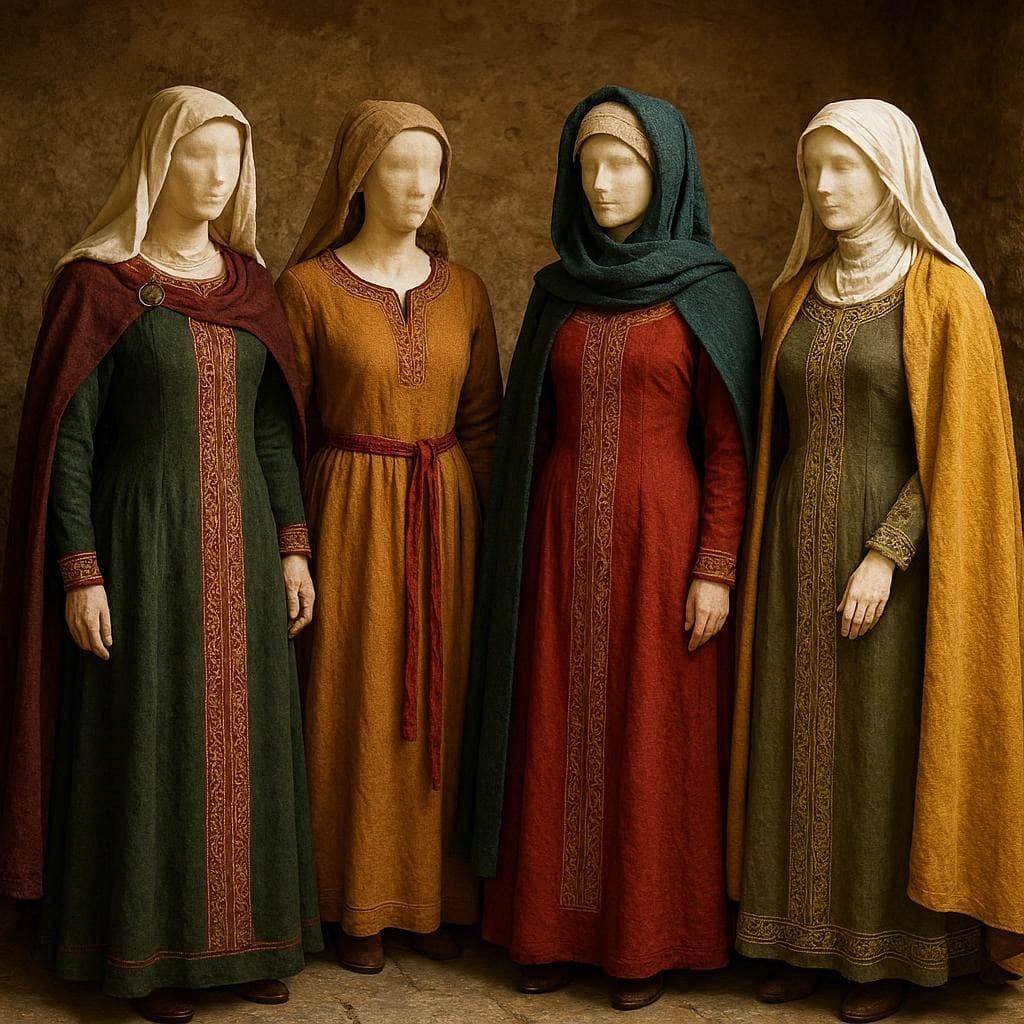
👑 Women’s Clothing in the Medieval Period (Click to Reveal)
Early Medieval Women’s Clothing
Early medieval women typically wore long, loose-fitting gowns made from wool or linen. Clothing prioritised warmth and practicality. Beneath the gown, women wore a shift or chemise, with wealthier women using finer linen.
High Medieval Clothing (12th–13th Century)
In the High Middle Ages, women began wearing more fitted gowns with tailored sleeves and decorative trim. Wealthy women used rich fabrics such as silk, fine wool, and fur. Veils and wimples became common, covering the hair as a sign of modesty and social status.
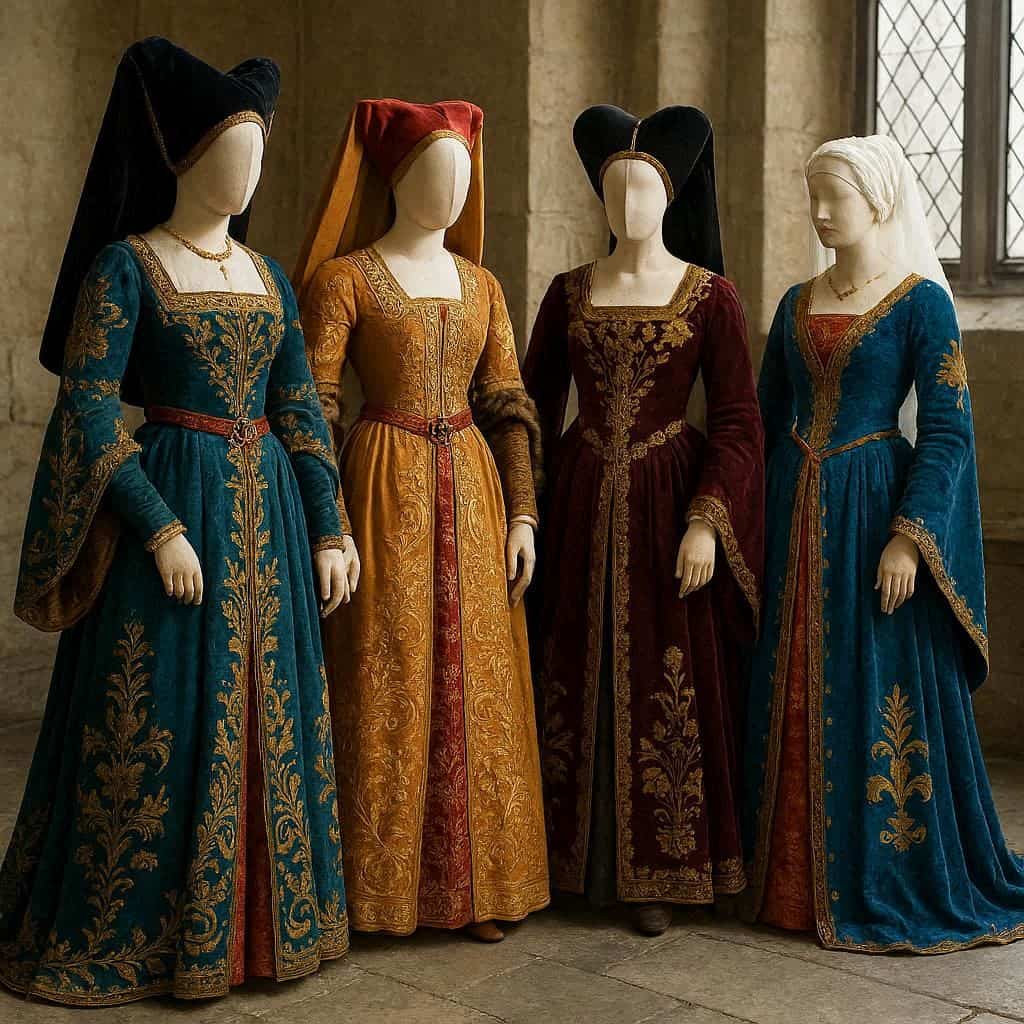
Late Medieval Women’s Fashion (14th–15th Century)
Late medieval women’s fashion grew increasingly elaborate. Dresses featured tighter bodices, laced fronts, and flowing skirts. Accessories such as girdles, decorative belts, surcoats, and embroidered hems became popular. Headwear evolved dramatically, including hennins (cone hats), hoods, and bonnets.
Fabric & Colour
Common fabrics included wool, linen, and sometimes silk for the wealthy. While peasants wore undyed or naturally toned cloth (grey, brown, cream), noblewomen enjoyed brightly coloured gowns, dyed with expensive pigments such as woad (blue), madder (red), and saffron (yellow).
Social Class Differences
Peasant women dressed for practicality, wearing simple wool gowns, aprons, and headscarves. Noblewomen displayed status through fitted tailoring, imported fabrics, lavish embroidery, and high-status headgear. Clothing laws (sumptuary laws) even regulated which colours and fabrics women could legally wear.
High Medieval Women’s Clothing
From the 11th to 13th centuries, wealthier women adopted:
- Fitted kirtles
- Sleeveless surcoats (sometimes with large armholes, called “sideless surcoats”)
- Decorative belts and embroidery
- High-quality imported fabrics such as silk
Hair was typically covered with wimples, veils, or coifs.
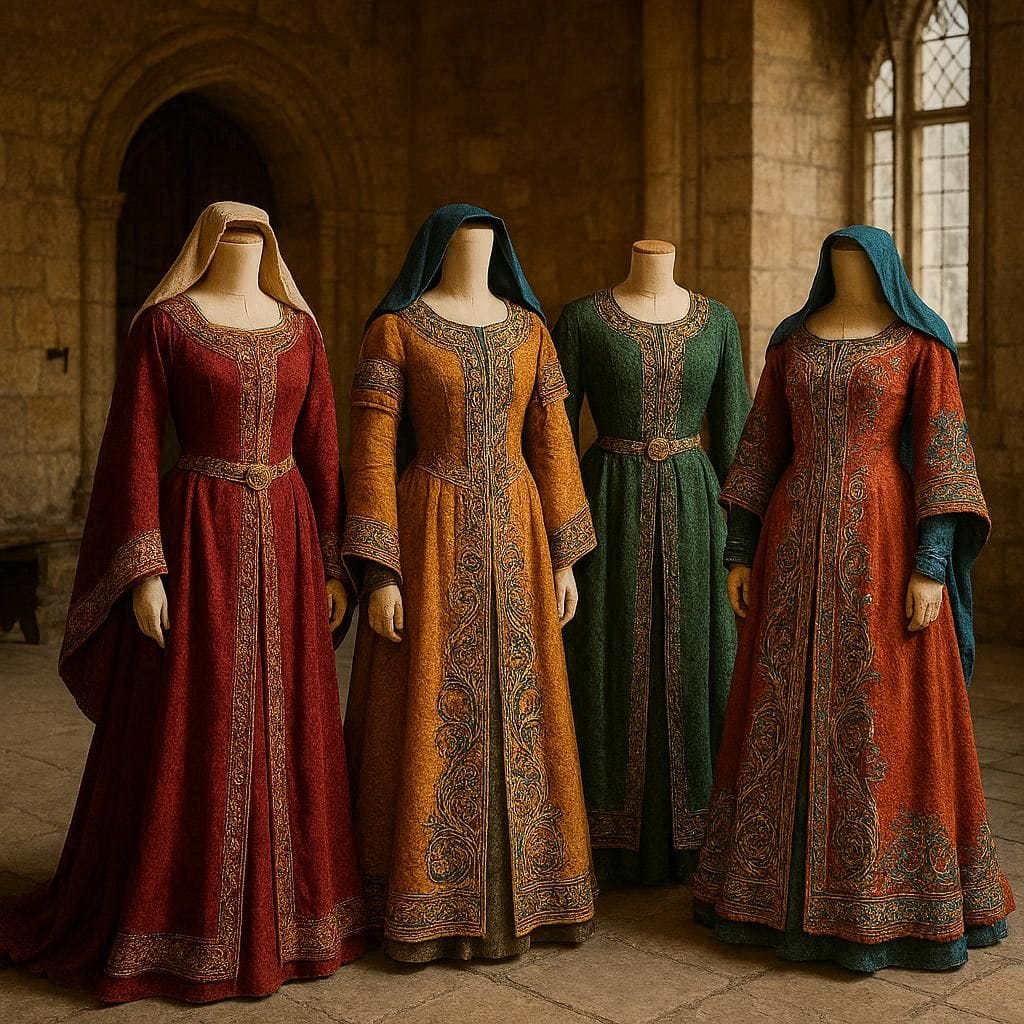
👗 High Medieval Women’s Clothing (12th–13th Century)
By the High Middle Ages, women’s clothing became more structured, elegant, and highly symbolic of social rank. Layering, fitted gowns, and luxurious materials reflected a society becoming wealthier, more urbanized, and increasingly fashion-conscious.
- Long, Fitted Gowns: Women moved from loose early-medieval tunics to gowns with fitted sleeves and tailored bodices, often floor-length and richly decorated.
- Surcoats: Sleeveless surcoats—sometimes with deep side openings—became fashionable, especially among noblewomen.
- Elegant Head Coverings: Veils, wimples, and barbettes were common, while noblewomen adopted elaborate headdresses to display wealth and refinement.
- Luxury Fabrics: Silk, fine wool, and fur trims became increasingly accessible to the upper classes; colours such as deep blue, crimson, and gold signified status.
- Layering for Style: Multiple layers were worn not only for warmth but as markers of fashion, with undergowns (chemises), main gowns, and outer surcoats.
- Decorative Embroidery: Borders on sleeves, hems, and necklines were embellished with patterned stitches, metallic threads, or gemstone beads.
- Footwear: Soft leather shoes replaced primitive designs, sometimes pointed or decorated for the wealthy.
- Social Significance: Clothing strongly indicated rank—sumptuary habits began to dictate what fabrics and colours non-nobles were allowed to wear.
Late Medieval Women’s Clothing
By the 14th–15th centuries, fashion became dramatically more elaborate:
- Fitted gowns with laced or buttoned bodices
- Wide, trailing sleeves and long trains among the elite
- Structured kirtles supporting the bust
- Extravagant headwear (hennins, horns, butterfly veils)
Note: Corsets did not exist yet—they appear in the 16th century.
Children’s Clothing in the Medieval World
Medieval children typically wore miniature versions of adult clothing, regardless of class. Special “children’s fashion” did not exist.
Boys
- Linen shirts
- Short tunics or kirtles
- Hose or simple trousers
- Caps made of linen or wool
Noble boys often wore richer versions with embroidery or dyed fabrics.
Girls
- Simple shifts and tunics
- Long gowns like adult women, but less elaborate
- Veils or hood-like caps
Children’s clothing became more adult-like as they approached their teenage years.
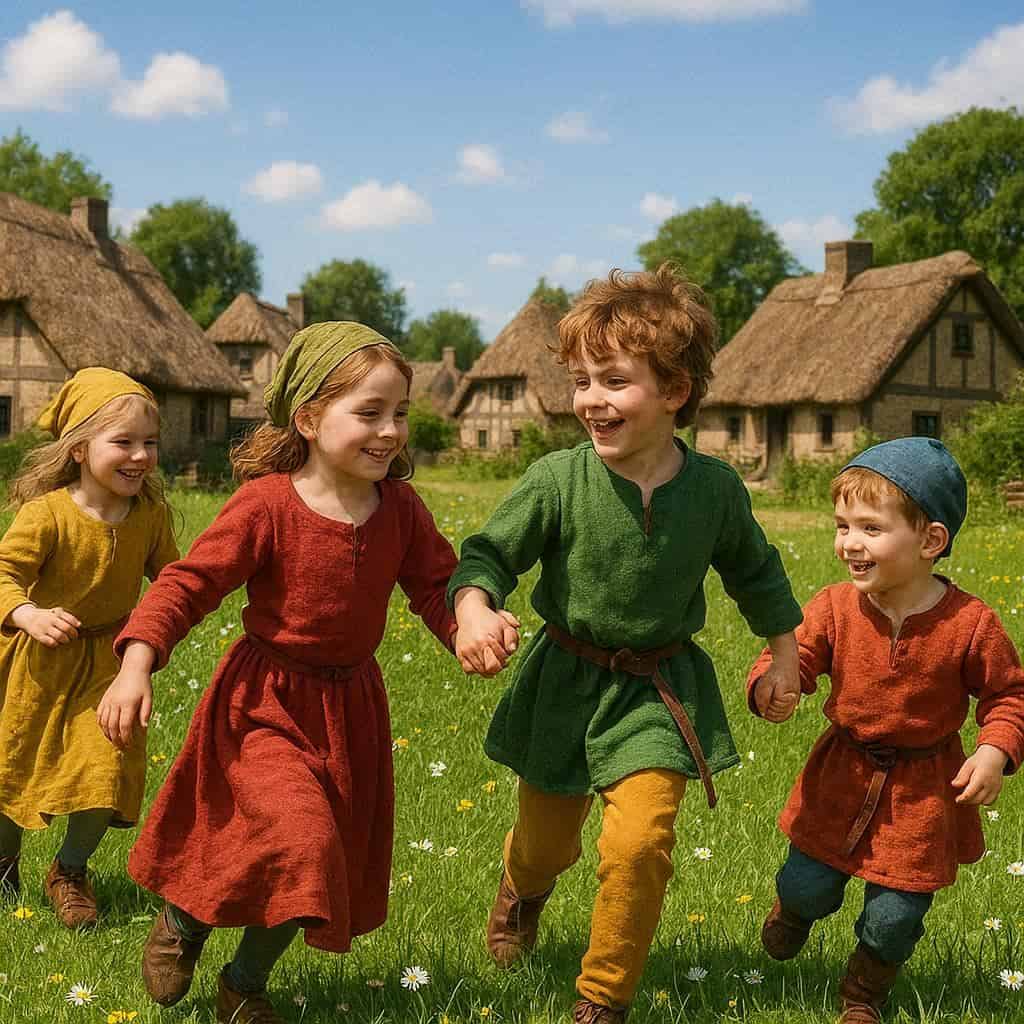
👶 Children’s Clothing in the Medieval World
Early Childhood Clothing (Boys & Girls)
Young children typically wore simple wool or linen frocks, regardless of gender. These garments were loose, durable, and easy to clean. Clothing at this age focused entirely on practicality rather than status or style.
Boys’ Clothing as They Grew Older
Boys began wearing stockings, tunics, and small hoods as they approached adolescence. Noble boys often had dyed stockings or decorated tunics, while peasant boys continued wearing coarse, practical wool garments. Some wore braies, a medieval form of undergarment.
Girls’ Clothing Before Adulthood
Girls wore tunics, long frocks, and simple veils or caps. Embroidery was rare but sometimes added for wealthier families. Their clothing remained practical until they were old enough to transition to adult women’s fashions such as fitted gowns, surcoats, and elaborate headwear.
Social Class and Clothing Differences
Peasant children wore undyed, homespun wool, while noble children had access to finer fabrics, richer colours, and tailored garments. However, children of all classes generally dressed more simply than adults until their teenage years.
Purpose of Children’s Clothing
Medieval children’s clothing focused on mobility, durability, and preparing them for adult roles. Boys’ clothes gradually reflected the work or status they were expected to assume, while girls’ dresses prepared them for the fashion norms of medieval womanhood.
Peasant Clothing: Practical, Durable, and Undyed
Peasants’ clothing reflected the hardships of labour-intensive life and limited economic means.
Peasant Men
- Knee-length wool tunics
- Undyed or earth-toned fabrics (brown, grey, off-white)
- Basic hose or leg wraps
- Leather or wooden shoes
- Cloaks made of sheepskin or heavy wool
Peasant Women
- Long wool dresses
- Aprons for work
- Simple woolen veils
- Practical belts for tools and pouches
Peasants rarely owned more than one full outfit, repairing and reusing materials repeatedly.
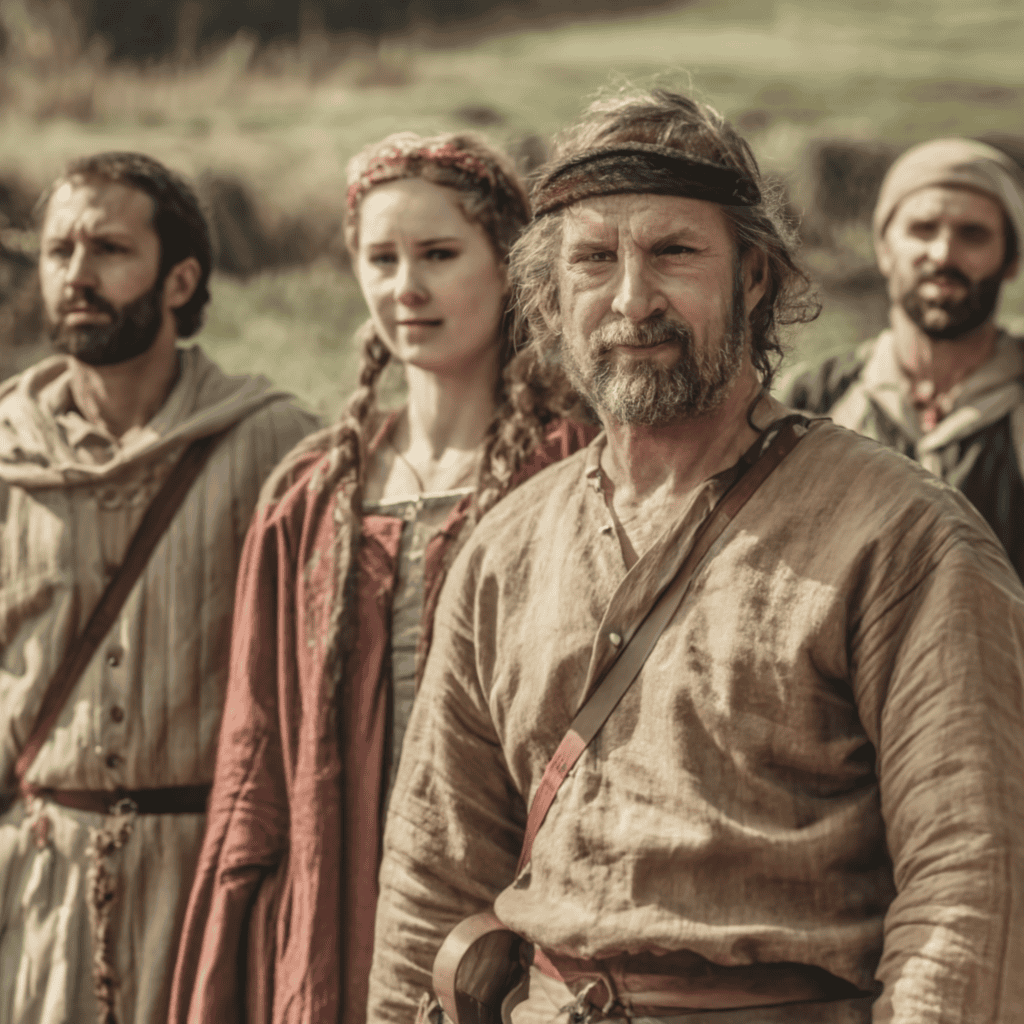
🌾 Click-to-Reveal: Peasant Clothing
What Did Medieval Peasants Wear?
Medieval peasants dressed almost entirely for *practicality*. Their clothing was designed to withstand harsh labour, rough weather, and daily wear. Unlike nobles, they rarely had access to dyes, imported fabrics, or decorative items.
Materials Used
Peasant clothing was made primarily from **coarse, homespun wool** and **undyed linen** grown and woven within their own villages. Fabric was thick, heavy, and rarely coloured—usually brown, grey, or off-white depending on the natural fibre.
Men’s Clothing
Peasant men wore **simple tunics** that fell to the knee, usually belted for practicality. **Stockings or hose**, often made of cloth strips, protected the legs. A **hood or coif** provided warmth, and in winter they wore **sheepskin cloaks**.
Women’s Clothing
Peasant women wore **long wool gowns** with linen under-shifts. A simple **apron** was worn for work, and a **linen headscarf** or hood kept hair clean and protected. Their shoes were basic leather or wooden clogs.
Seasonal Clothing
Winter clothing included **thick wool cloaks**, **mittens**, and **fur-lined caps** if available. Summer clothing was lighter but still designed for durability rather than comfort.
Evolution of Medieval Clothing: What Drove the Changes?
Several major historical forces shaped medieval fashion:
1. Growth of Towns and Trade
More merchants meant access to imported fabrics and dyes.
2. Rise of Tailoring
New garment-cutting techniques created fitted clothing and curved seams.
3. Social Mobility
Urban wealth blurred class lines—leading elites to create stricter sumptuary laws.
4. Warfare and Knighthood
Surcoats, jupons, gambesons, and heraldic clothing reflected military culture.
5. Cultural Exchange
The Crusades and Mediterranean trade introduced silk, cotton, and new styles.
6. Climate
The Medieval Warm Period and subsequent cooling influenced fabrics and layering.
Conclusion: Clothing as a Mirror of Medieval Society
Medieval clothing tells the story of a world transitioning from simple tribal societies to sophisticated kingdoms with defined social hierarchies. Clothing evolved from loose, practical garments into highly tailored, decorative fashions that displayed wealth, identity, and power.
By the late Middle Ages, Europe saw the beginnings of true fashion culture—a foundation that would explode in the Renaissance and early modern period.
❓ Medieval Clothing — Frequently Asked Questions
Did medieval people make their own clothing?
Most peasants produced their clothing at home using homespun wool and linen. Nobles hired professional tailors and imported fine fabrics such as silk and brocade.
Were medieval clothes colourful?
Nobles wore rich colours such as crimson, emerald, and gold. Peasants rarely used dye, so their clothing was typically earth-toned: brown, grey, or off-white.
Did men and women dress very differently?
Yes. While both wore tunics and linen undergarments, women’s clothing evolved into fitted gowns, kirtles, and elaborate headgear, while men adopted hose, doublets, and tailored garments.
How did clothing show social class?
Materials, colours, length, and decoration all indicated rank. Sumptuary laws even restricted which classes could wear certain fabrics or colours.
When did fashion become more elaborate?
The High and Late Middle Ages saw dramatic increases in tailoring, decoration, fitted garments, and accessories—especially among the nobility and wealthy merchant classes.
🧠 Medieval Clothing Knowledge Quiz
Test what you’ve learned about medieval clothing — fabrics, fashion, and social class!
📜 Medieval Clothing Glossary
Key terms to help you understand fabrics, garments, and fashion across the medieval world.
Tunic
A basic garment worn by men, women, and peasants; lengths varied by class and purpose.
Shift / Chemise
A linen undergarment worn beneath clothing to protect outer layers and improve comfort.
Hose
Tight-fitting leg coverings worn by men; often wool, sometimes joined at the waist.
Surcoat
A sleeveless outer garment worn over armour or formal clothing; common in the High Middle Ages.
Coif
A close-fitting linen cap worn by men, boys, and sometimes women for warmth and modesty.
Girdle
A belt or sash used to secure gowns or tunics and sometimes adorned with metal or embroidery.
Kirtle
A fitted gown worn by women beneath their outer garment; central to late medieval fashion.
Braies
Loose linen underpants worn by medieval men, especially in early and high periods.
Bodice
The fitted upper part of a woman’s dress; emerged strongly in the 14th–15th centuries.
Wool
The most common medieval fabric; worn by all classes, especially peasants.