A Comprehensive Guide to Castles in the Middle Ages (c. 500–1500)
Medieval castles were fortified structures built across Europe and parts of the Middle East during the Middle Ages. They served as military strongholds, administrative centers, and symbols of feudal authority, protecting rulers, controlling territory, and enforcing law and order in a violent and unstable world.
Originally constructed from wood and earth, early castles evolved into imposing stone fortresses featuring keeps, curtain walls, towers, gatehouses, and moats. Over time, castle design became increasingly sophisticated as builders responded to new siege technologies and changing political realities.
This hub page provides a structured overview of medieval castles, their origins, purposes, types, and decline. Each section links to more detailed articles exploring individual topics in depth.
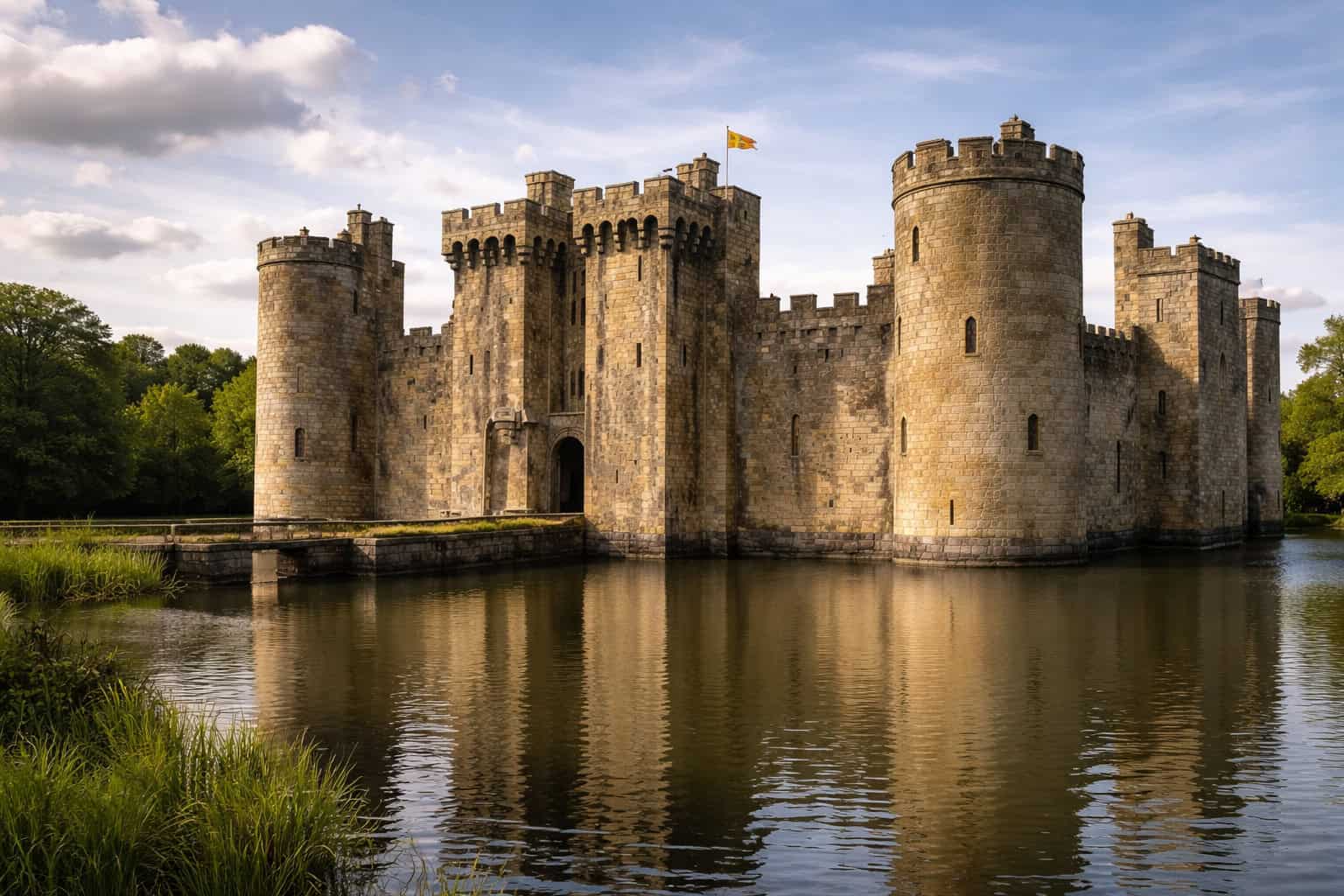
What Is a Medieval Castle?
A castle is generally defined as a private fortified residence built during the Middle Ages by kings, nobles, or military orders. Unlike Roman forts or city walls, castles combined defensive architecture with residential and administrative functions.
Castles were designed to:
- Control land and populations
- Defend against military attack
- Serve as political and judicial centers
- Display wealth, power, and legitimacy
Origins of Medieval Castles
Although castles are closely associated with the Middle Ages, their origins lie in earlier fortifications.
- Ancient civilizations built fortified settlements for protection
- Roman forts influenced later European military architecture
- After the collapse of Roman authority, local rulers needed defensible strongholds
Many medieval castles were constructed on or near earlier Roman or Iron Age sites, reusing strategic locations.
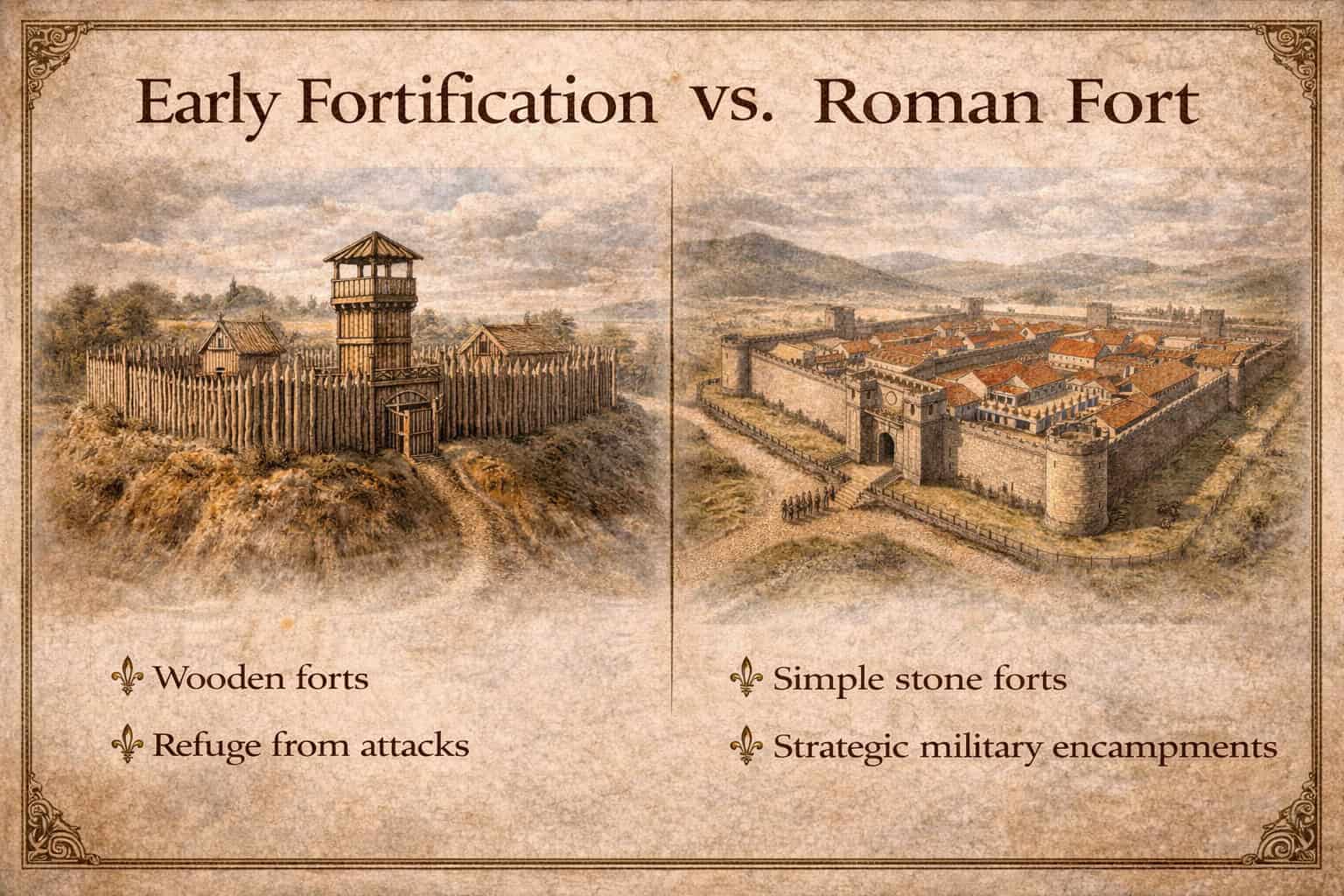
🏰 Timeline: Evolution of Medieval Castle Types
- c. 500–900 — Early Fortified Settlements
Hillforts and reused Roman forts provided basic defense during early medieval instability. - c. 950–1150 — Motte and Bailey Castles
Quickly built wooden fortifications featuring a raised motte and enclosed bailey, popular with the Normans. - c. 1050–1200 — Stone Keeps
Timber structures were replaced with stone towers to resist fire and prolonged siege warfare. - c. 1150–1300 — Enclosure & Shell Keep Castles
Circular stone walls replaced wooden palisades, offering stronger perimeter defense. - c. 1270–1350 — Concentric Castles
Multiple defensive walls allowed layered resistance, representing the peak of medieval military design. - c. 1350–1500 — Fortified Residences
Castles increasingly balanced defense with comfort as gunpowder warfare began to change military strategy.
Norman Castles and the Motte-and-Bailey
The widespread construction of castles accelerated after the Norman Conquest of England in 1066.
William the Conqueror ordered hundreds of castles to be built to secure control over newly conquered lands.
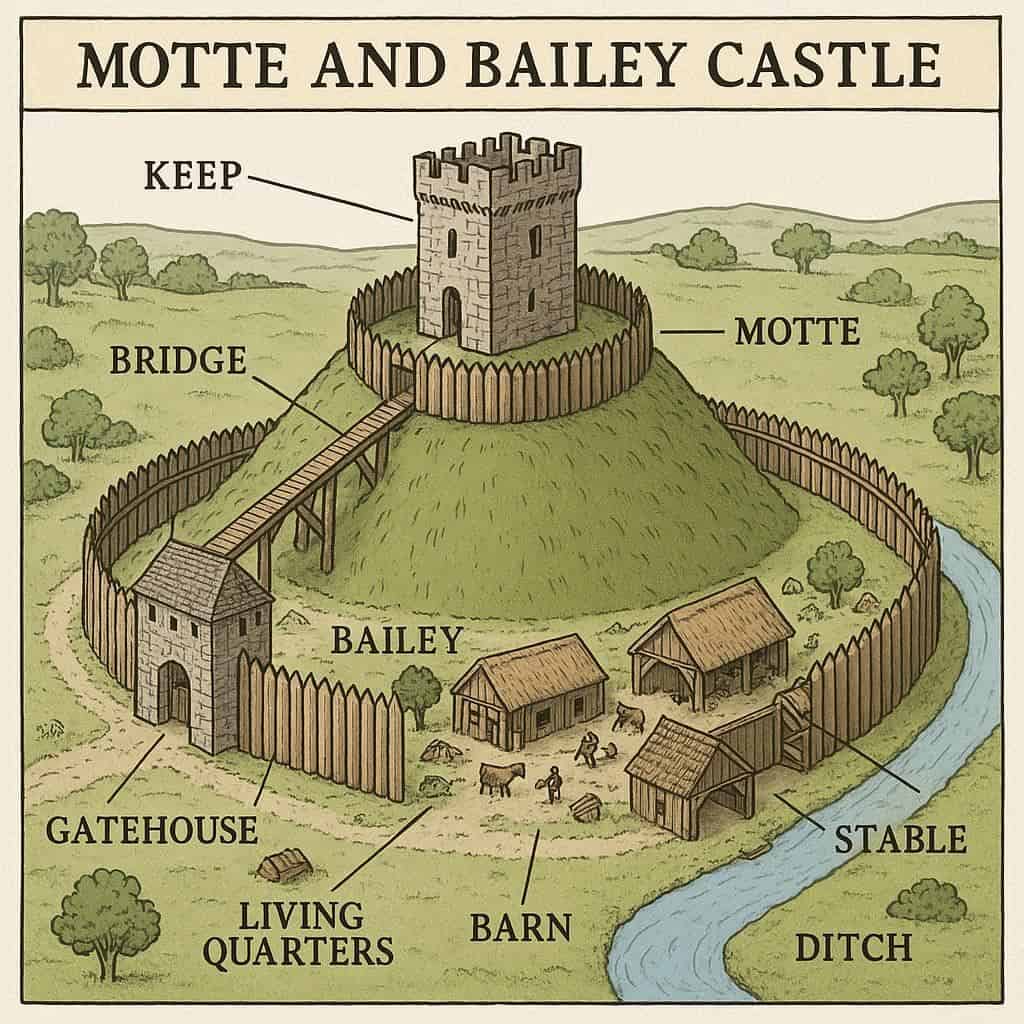
The most common early design was the motte-and-bailey castle, consisting of:
- A motte – a raised earth mound topped by a keep
- A bailey – an enclosed courtyard surrounded by a palisade and ditch
These castles could be built quickly and were highly effective at suppressing rebellion.
Stone Castles and Castle Evolution
As political control stabilized and building techniques improved, castles increasingly shifted from wood to stone.
Stone castles offered:
- Greater resistance to fire and attack
- Taller walls and stronger towers
- Permanent symbols of authority
By the 12th and 13th centuries, stone castles dominated the landscape of medieval Europe.
Concentric Castles – The Peak of Castle Design
In the later Middle Ages, castle builders developed the concentric castle, often described as the ultimate medieval defensive design.
Concentric castles featured:
- Multiple rings of defensive walls
- Overlapping fields of fire
- Inner strongholds that could be defended even if outer walls fell
These castles were especially prominent in regions of sustained warfare.

Life Inside a Medieval Castle
Castles were not only military installations but also centers of daily life.
Within their walls you would find:
- The lord and his family
- Soldiers and servants
- Chapels, kitchens, stables, workshops, and storerooms
In times of war, surrounding villagers might shelter inside the castle for protection.
Defending a Medieval Castle (Overview)
Medieval castles were designed to withstand prolonged sieges rather than quick assaults.
Defensive principles included:
- Height and visibility
- Thick stone walls
- Controlled entry points
- Defensive features such as moats and towers
👉 Detailed explanations of castle defenses are explored in dedicated child pages.

Famous Medieval Castles
Some medieval castles remain among the most famous historical landmarks in the world, including:
- Tower of London – England
- Windsor Castle – England
- Warwick Castle – England
- Bodiam Castle – England
- Château de Carcassonne – France
- Château Gaillard – France
These castles illustrate different styles, periods, and purposes of medieval fortification.
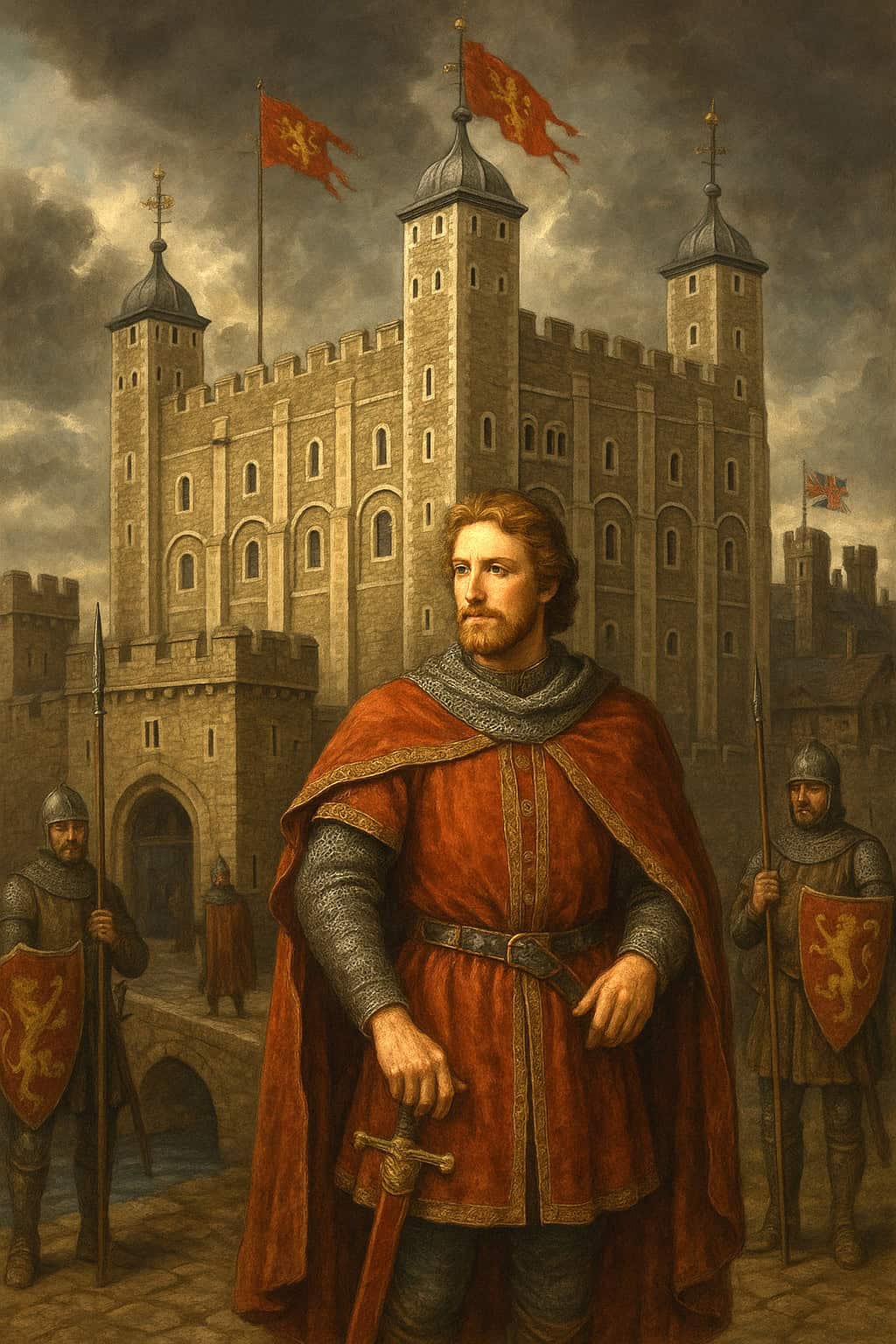
🏰 Famous Medieval Castles
Across medieval Europe, castles rose as powerful symbols of authority, defense, and noble ambition. The fortresses listed below are among the most famous and historically significant castles of the Middle Ages.
🏰 Tower of London (England)
Built by William the Conqueror after 1066, the Tower served as a royal fortress,
palace, treasury, and prison. It symbolized Norman dominance over medieval England.
🏰 Warwick Castle (England)
A major Norman stronghold founded in 1068, Warwick Castle controlled surrounding
lands and played a key military role throughout the medieval period.
🏰 Bodiam Castle (England)
Constructed in the late 14th century, Bodiam Castle is a classic moated fortress
designed to project both military strength and noble prestige.
🏰 Windsor Castle (England)
Founded by William the Conqueror, Windsor Castle evolved into a royal residence
and remains the oldest continuously inhabited castle in the world.
🏰 Cité de Carcassonne (France)
A fortified medieval city whose walls and towers reflect centuries of layered
military architecture from Roman times through the Middle Ages.
🏰 Beaumaris Castle (Wales)
Built by Edward I, Beaumaris represents the pinnacle of concentric castle design,
using multiple defensive walls to overwhelm attackers.
Decline of the Medieval Castle
By the late 15th century, the military importance of castles declined.
Key reasons included:
- The rise of gunpowder weapons
- Powerful cannon capable of breaching stone walls
- Centralized nation-states replacing feudal power
While castles lost their military role, many were adapted into palaces or administrative buildings.
Medieval Castles Today
Today, medieval castles survive as:
- Tourist attractions
- Museums
- World Heritage Sites
They provide invaluable insight into medieval warfare, politics, architecture, and daily life.
❓ Medieval Castles – Frequently Asked Questions
What was the primary purpose of medieval castles?
Medieval castles were built as fortified residences for nobles, serving defensive, administrative, and symbolic roles. They controlled territory, protected populations, and projected power.
When were most medieval castles built?
The majority of medieval castles were constructed between the 9th and 14th centuries, particularly after the Norman Conquest of England in 1066.
Why were castles often built on hills or near rivers?
High ground and waterways provided natural defense, improved visibility, and made siege warfare more difficult for attackers.
What is the difference between a castle and a fort?
A castle was typically a private fortified residence of a noble, while forts were purely military structures without residential or administrative functions.
How did gunpowder affect medieval castles?
The introduction of cannons made high stone walls vulnerable, leading to the decline of traditional castles and the rise of star forts and artillery defenses.
Are medieval castles still standing today?
Yes. Thousands of medieval castles survive across Europe, many preserved as historic monuments, museums, or tourist attractions.
🧠 Medieval Castles Knowledge Quiz
📜 Medieval Castles – Key Terms Glossary
The strongest tower in a castle, serving as the final defensive refuge.
A raised earth mound on which a keep or tower was constructed.
An enclosed courtyard within the castle’s defensive walls.
The defensive stone wall enclosing the castle or its inner sections.
A fortified entrance protecting the weakest point of a castle.
A ditch, often filled with water, designed to hinder attackers.
Parapets with crenels allowing defenders to fire while protected.
Narrow openings that allowed archers to shoot from safety.
A castle with multiple defensive walls arranged within one another.
The main tower or great keep of a medieval castle.