A Comprehensive Guide to Warfare in the Middle Ages (c. 500–1500)
The medieval period was defined by near-constant warfare, as kingdoms, empires, religious powers, and noble dynasties fought for territory, authority, and survival. From the collapse of Roman rule in Western Europe to the rise of centralized monarchies at the close of the Middle Ages, medieval battles and wars shaped the political and social foundations of Europe and beyond.
Between approximately 500 and 1500 AD, warfare evolved dramatically. Early conflicts relied on infantry and shield walls, while later battles were transformed by heavy cavalry, longbowmen, gunpowder, and increasingly professional armies.
This parent guide introduces the most important medieval battles and wars, serving as a central hub linking to detailed articles on individual conflicts, commanders, and campaigns.
⚔️ Click to Reveal: Pivotal Medieval Battles
These eight battles represent major turning points in medieval warfare, shaping kingdoms, dynasties, and the political order of Europe from the early Middle Ages to the late medieval period.
Battle of Tours (732)
- Led by Charles Martel against the Umayyad Caliphate
- Halted further Muslim expansion into Western Europe
- Enabled the rise of the Carolingian Empire
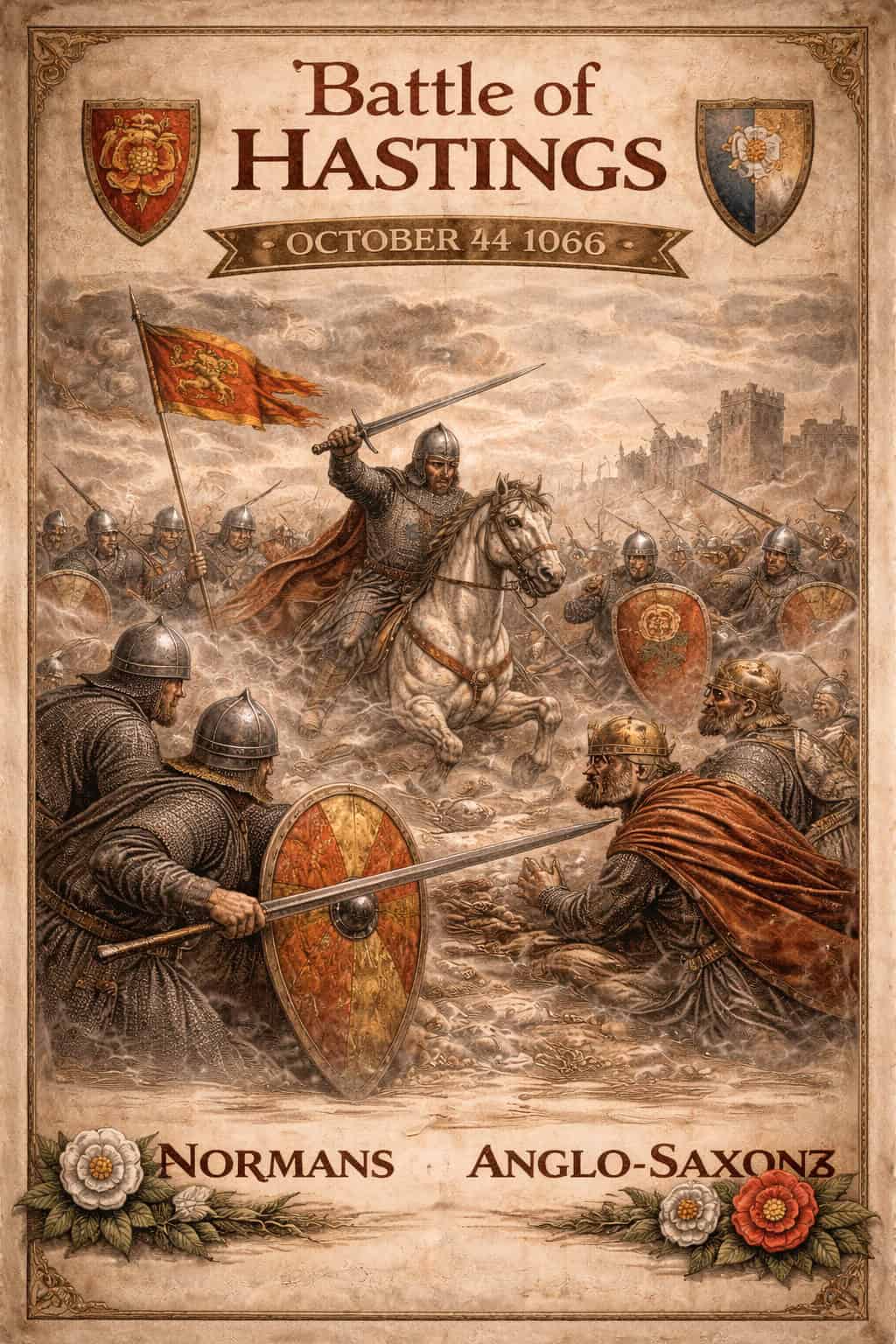
Battle of Hastings (1066)
- Fought between William, Duke of Normandy and King Harold II
- Marked the Norman Conquest of England
- Reshaped English nobility, law, and governance
Battle of Bouvines (1214)
- French victory under Philip II Augustus
- Defeated an imperial coalition led by Otto IV
- Strengthened Capetian royal authority in France
Battle of Bannockburn (1314)
- Scottish victory under Robert the Bruce
- Decisive defeat of Edward II of England
- Secured Scottish independence for a generation
Battle of Crécy (1346)
- Major English victory in the Hundred Years’ War
- Demonstrated the power of the English longbow
- Marked the decline of knightly cavalry dominance
Battle of Agincourt (1415)
- Led by Henry V of England
- Outnumbered English army defeated French forces
- Iconic victory of medieval English warfare
Battle of Castillon (1453)
- Final major battle of the Hundred Years’ War
- French victory using early gunpowder artillery
- Ended English territorial ambitions in France
Battle of Bosworth Field (1485)
- Final battle of the Wars of the Roses
- Death of Richard III
- Victory of Henry Tudor and end of medieval England
What Caused Medieval Wars?
Medieval warfare was driven by a combination of political, dynastic, religious, and economic pressures.
The most common causes included:
- Dynastic succession disputes between rival royal houses
- Territorial expansion by ambitious kings and emperors
- Religious conflict, especially during the Crusades
- Feudal obligations between lords and vassals
- National resistance against foreign rule
Unlike modern warfare, medieval conflicts were often personal, tied directly to royal bloodlines and claims to legitimacy.
📜 Timeline of Key Medieval Battles and Wars
This timeline highlights major battles and conflicts that shaped medieval Europe, from the early Middle Ages to the close of the medieval period.
Frankish forces under Charles Martel defeated the Umayyad Caliphate, securing Western Europe and enabling the rise of the Carolingian Empire.
William, Duke of Normandy defeated King Harold II, beginning the Norman Conquest of England and transforming English rule.
A decisive French victory under Philip II Augustus over an imperial coalition led by Otto IV, strengthening Capetian royal power.
Scottish forces led by Robert the Bruce defeated Edward II of England, securing Scottish independence.
A prolonged conflict between England and France featuring key battles such as Crécy (1346), Poitiers (1356), and Agincourt (1415).
The final battle of the Hundred Years’ War, marked by French use of gunpowder artillery and the collapse of English power in France.
A series of English civil wars between the Houses of Lancaster and York, devastating the medieval nobility.
Death of Richard III and victory of Henry Tudor, marking the end of medieval England.

📌 Why Was the Battle of Tours (732) So Important?
The Battle of Tours—also known as the Battle of Poitiers—was one of the most significant engagements of the early Middle Ages. Fought in 732 AD, it marked a decisive moment in the struggle between the expanding Umayyad Caliphate and the Christian kingdoms of Western Europe.
- It halted further Umayyad expansion into Western Europe, preventing Islamic rule from extending north of the Pyrenees.
- The victory elevated Charles Martel as the dominant military leader of the Franks, earning him lasting historical significance.
- It secured the foundations of the Carolingian dynasty, paving the way for the later reign of Charlemagne.
- The battle demonstrated the effectiveness of disciplined infantry formations over cavalry-based raiding armies.
- It helped preserve the political and cultural development of Christian Europe during a formative period of medieval history.
While modern historians debate the extent of its long-term impact, contemporaries viewed the Battle of Tours as a defining victory—one that shaped the future balance of power in medieval Europe.
Major Types of Medieval Conflicts
Dynastic and Civil Wars
Wars fought between rival royal families or claimants to the throne.
Examples include:
- The Wars of the Roses (1455–1487)
- The Anarchy (1135–1153)
- Succession struggles within the Plantagenet dynasty

National and Territorial Wars
Long-running wars between kingdoms seeking dominance.
Key examples:
- The Hundred Years’ War (1337–1453)
- Anglo-Scottish Wars of Independence
- Anglo-French conflicts of the 12th–13th centuries
Religious Wars
Conflicts motivated by faith and religious authority.
Most notably:
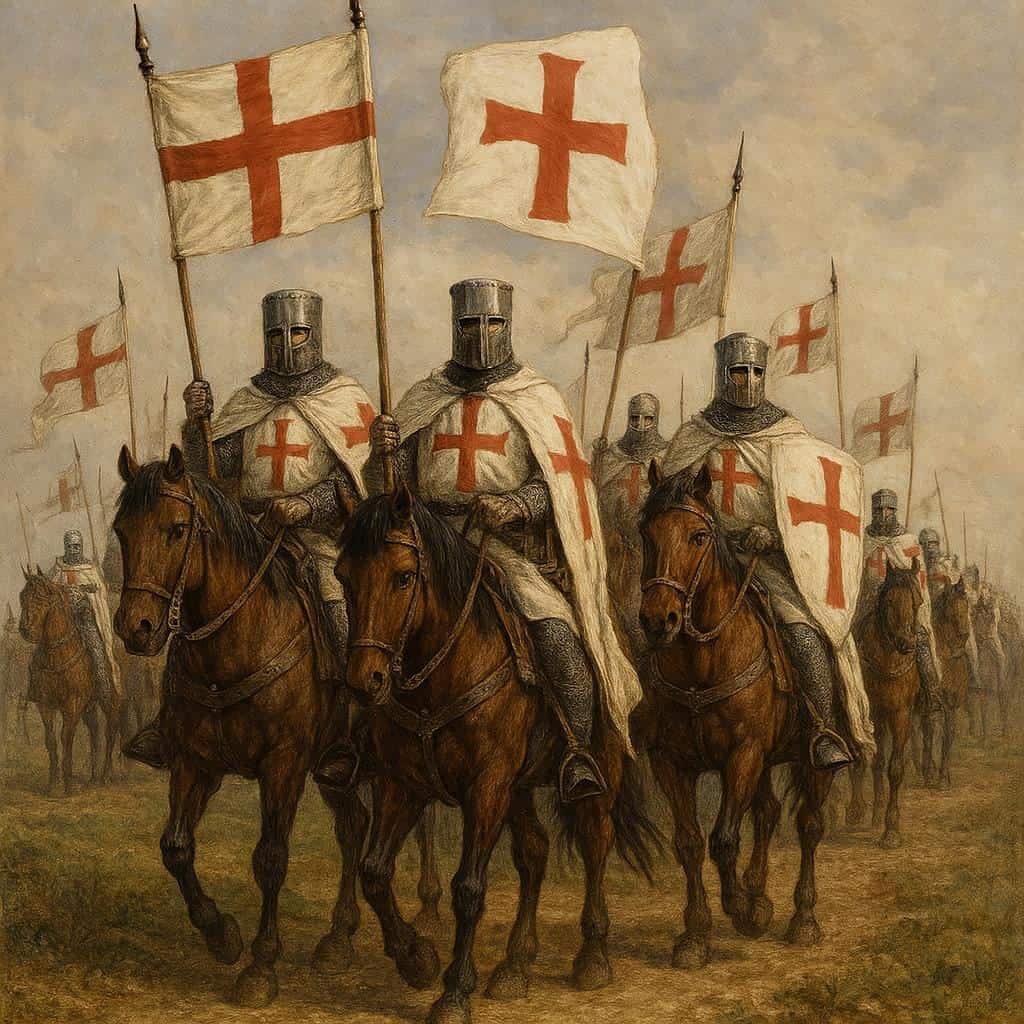
- The Crusades (1096–1291)
- The Crusade of Nicopolis (1396)
- Conflicts involving Christian and Muslim powers across Europe and the Middle East
The Hundred Years’ War (1337–1453)
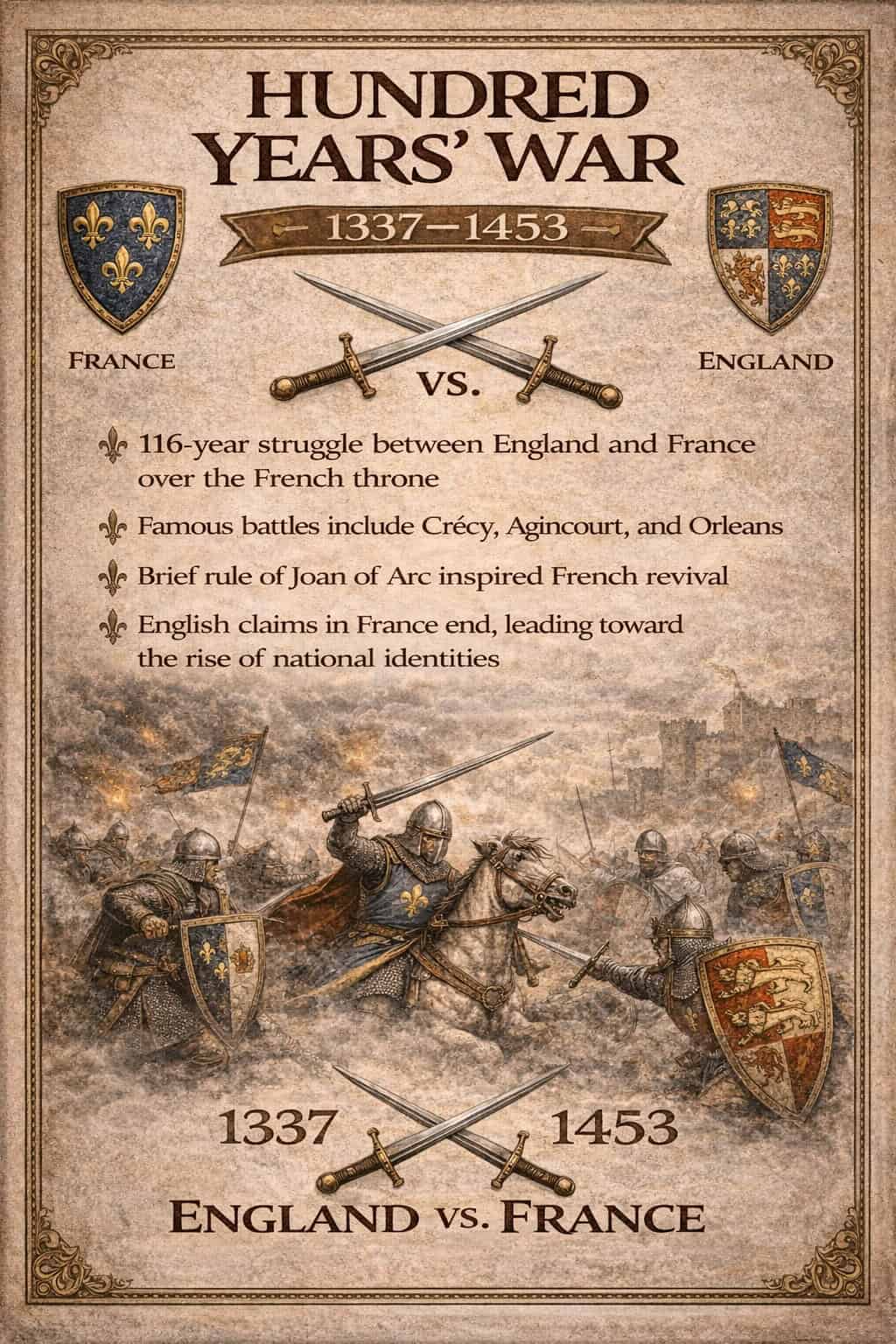
The Hundred Years’ War was the longest sustained conflict of the Middle Ages, lasting 116 years between the kingdoms of England and France.
Causes
- English kings of the House of Plantagenet claimed the French throne
- The ruling French House of Valois rejected these claims
- Longstanding Anglo-French territorial disputes
Defining Battles
- Battle of Crécy (1346) – English longbow dominance
- Battle of Poitiers (1356) – Capture of the French king
- Battle of Agincourt (1415) – Decisive English victory under Henry V
- Battle of Castillon (1453) – French victory ending the war
The war permanently altered medieval warfare and ended England’s ambitions on the European mainland.
⚔️ The Hundred Years’ War (1337–1453)
The Hundred Years’ War was a prolonged conflict between the kingdoms of England and France. Below are the major battles of the war, showing their dates, victors, and historical outcomes.
The Wars of the Roses (1455–1487)
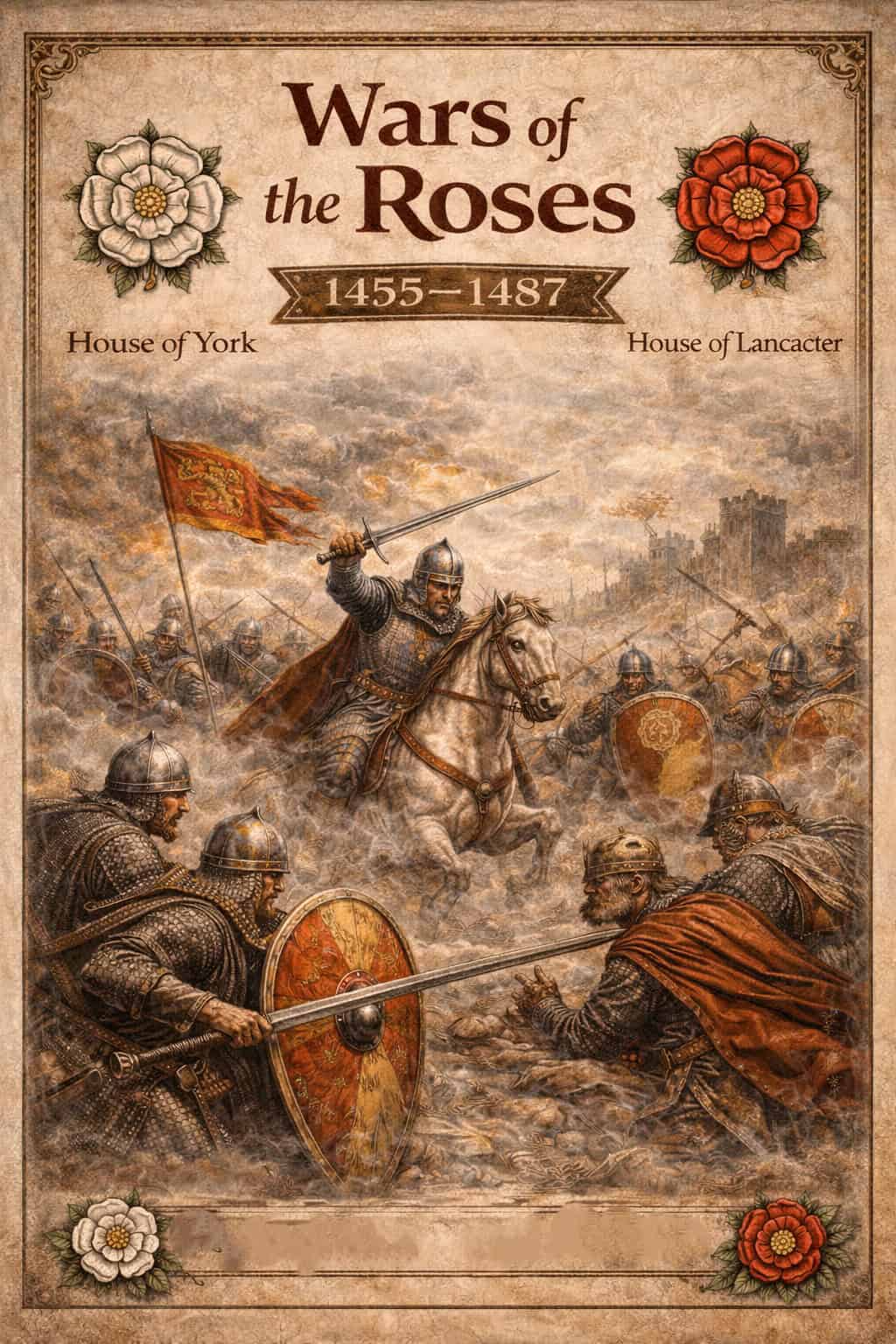
The Wars of the Roses were a brutal series of civil wars between:
- House of Lancaster (Red Rose)
- House of York (White Rose)
Both houses descended from the Plantagenet dynasty.
Consequences
- Destruction of much of the English nobility
- Collapse of medieval feudal power
- Rise of the Tudor dynasty
⚔️ Pivotal Medieval Battles
The following battles marked decisive turning points in medieval warfare, reshaping kingdoms, dynasties, and the political order of Europe between the 8th and 15th centuries.
🛡️ Early & High Middle Ages
Battle of Tours (732)
- Led by Charles Martel against the Umayyad Caliphate
- Secured Frankish dominance in Western Europe
- Paved the way for the Carolingian Empire
Battle of Hastings (1066)
- Fought between William, Duke of Normandy and King Harold II
- Marked the Norman Conquest of England
- Transformed English governance, nobility, and culture
Battle of Bouvines (1214)
- French victory under Philip II Augustus
- Defeated an imperial coalition led by Otto IV
- Strengthened Capetian royal authority in France
⚔️ Late Middle Ages
Battle of Bannockburn (1314)
- Scottish victory under Robert the Bruce
- Defeated Edward II of England
- Secured Scottish independence for a generation
Battle of Bosworth Field (1485)
- Final battle of the Wars of the Roses
- Death of Richard III
- Victory of Henry Tudor and start of the Tudor dynasty
- Marked the end of the medieval period in England
Why Medieval Battles Matter
Medieval warfare:
- Shaped national borders still recognizable today
- Transformed military technology and tactics
- Weakened feudalism and strengthened monarchy
- Influenced modern concepts of state power and law
The legacy of medieval wars extends far beyond the battlefield.
❓ Medieval Battles & Wars – Frequently Asked Questions
1. What caused most medieval battles and wars?
Medieval wars were usually caused by dynastic disputes, territorial expansion, feudal obligations, and religious conflict, especially during the Crusades.
2. When did the medieval period of warfare take place?
Most medieval warfare occurred between c. 500 and 1500 AD, from the fall of the Western Roman Empire to the rise of early modern states.
3. What was the most important medieval battle?
Battles such as Hastings (1066), Tours (732), Agincourt (1415), and Bosworth Field (1485) are often considered the most historically significant.
4. How did medieval warfare change over time?
Warfare evolved from infantry shield walls to knightly cavalry, then toward longbowmen, professional armies, and early gunpowder weapons.
5. What role did religion play in medieval wars?
Religion played a central role, particularly during the Crusades, where warfare was justified as a sacred duty sanctioned by religious authorities.
6. Why did medieval wars shape modern Europe?
Medieval wars shaped national borders, weakened feudalism, strengthened monarchies, and laid foundations for modern European states.
🧠 Medieval Battles & Wars Knowledge Quiz
📜 Glossary of Medieval Battles & Warfare Terms
This glossary explains key terms, battles, and concepts essential to understanding medieval warfare and the conflicts that shaped Europe between c. 500–1500 AD.
Medieval Warfare
The methods, strategies, and weapons used in war during the Middle Ages, including infantry combat, cavalry charges, sieges, and later gunpowder weapons.
Battle of Tours (732)
A major Frankish victory under Charles Martel that halted Umayyad expansion into Western Europe.
Battle of Hastings (1066)
The battle in which William the Conqueror defeated King Harold II, leading to the Norman Conquest of England.
Hundred Years’ War
A prolonged conflict (1337–1453) between England and France over dynastic claims to the French throne.
Longbow
A powerful English bow capable of penetrating armor, decisive at battles such as Crécy and Agincourt.
Siege Warfare
Military operations aimed at capturing fortified towns or castles by surrounding them, cutting supplies, or using siege engines.
Battle of Bannockburn (1314)
A decisive Scottish victory led by Robert the Bruce that secured Scottish independence from England.
Battle of Bouvines (1214)
A major French victory under Philip II Augustus that strengthened royal authority in France.
Crusades
A series of religious wars fought between Christian and Muslim forces over control of the Holy Land during the medieval period.
Battle of Bosworth Field (1485)
The final battle of the Wars of the Roses, marking the death of Richard III and the rise of the Tudor dynasty.