Medieval shields were among the most important pieces of medieval armor, providing warriors with vital protection against swords, arrows, axes, and lances. Used by knights, archers, and infantry, shields were designed not only to block attacks but also to control space in combat and even strike opponents when necessary.
Throughout the Middle Ages, shield designs evolved alongside advances in weaponry and battlefield tactics. From the circular shields of early Germanic warriors to the highly specialized pavises used by crossbowmen, each development reflected the constant arms race between offense and defense. Durable yet mobile, shields remained a defining feature of medieval warfare until the growing use of gunpowder weapons gradually reduced their effectiveness.

What Were Medieval Shields?
Medieval shields were essential defensive tools used by knights, infantry, and archers throughout the Middle Ages. Typically constructed from wood and reinforced with leather or metal, shields protected warriors from swords, arrows, and lances while also supporting offensive tactics such as shield bashes and formation fighting.
Evolution of Medieval Shields
The history of medieval shields is one of continuous adaptation. As cavalry warfare expanded, armor improved, and ranged weapons became more powerful, shields were reshaped to meet new tactical demands.
Early shields emphasized mobility and group defense, while later designs often prioritized full-body protection or specialized battlefield roles. Despite these changes, the core purpose remained the same — keeping the warrior alive long enough to fight effectively.
Early Medieval Shields (5th – 10th Century)
Early medieval shields emphasized mobility, durability, and coordinated formation tactics. Round shields dominated the battlefield and became essential defensive tools for survival in close combat.
Round Shields
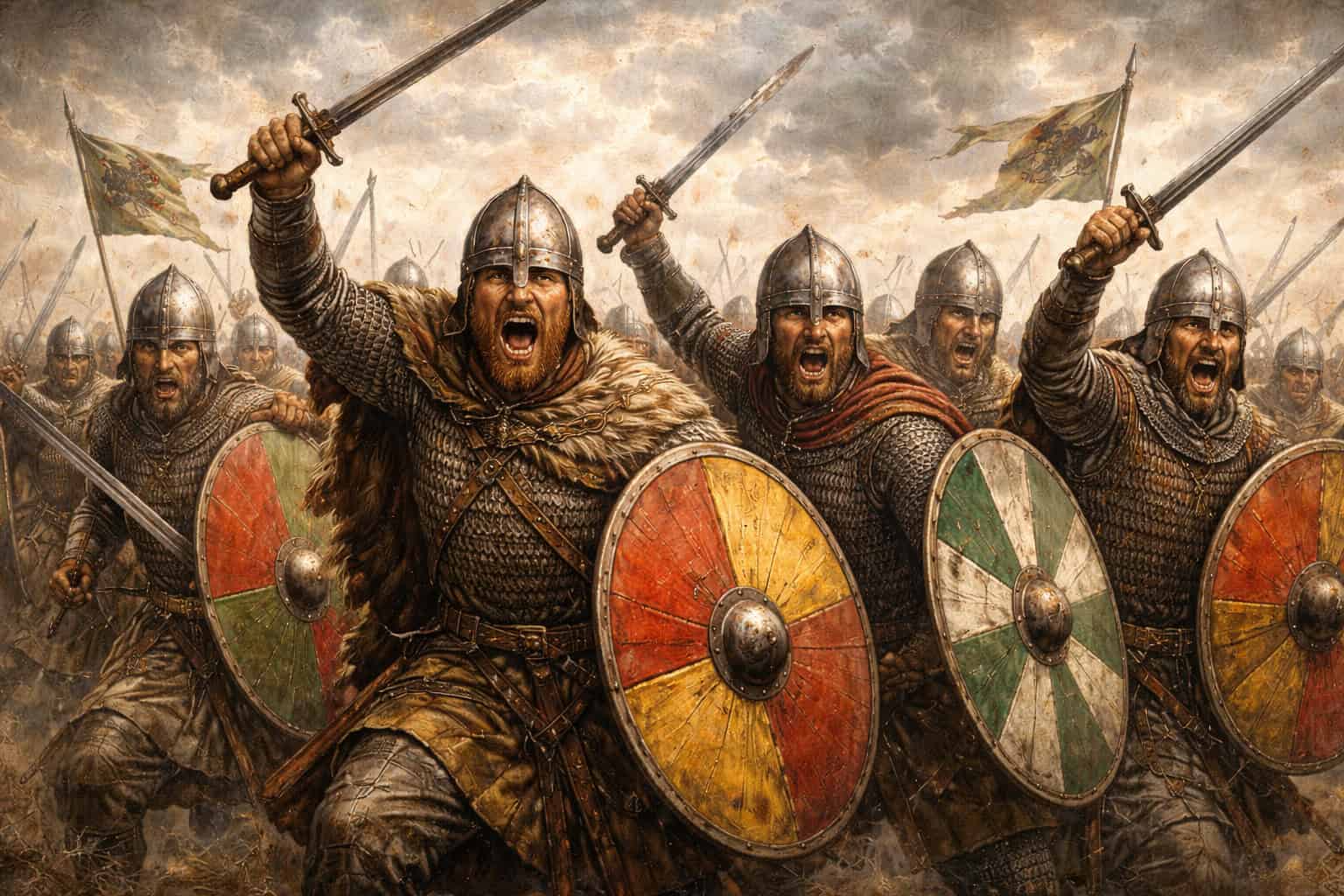
The round shield was the most common defensive weapon of the early medieval world, influenced by classical designs such as the Greek hoplon. Typically constructed from layered wood and reinforced with leather or metal, these shields provided strong protection without excessive weight.
Round shields were especially effective in formation fighting, where warriors locked shields together to create defensive barriers known as shield walls. This tactic allowed soldiers to absorb enemy attacks while steadily advancing.
Formation warfare made the round shield one of the defining defensive weapons of early medieval battles.
Viking Shields
Viking shields were among the most recognizable shields of the medieval world. Measuring roughly 30–36 inches in diameter, they balanced maneuverability with dependable protection for aggressive fighting styles.
- Circular shape for flexible movement
- Wooden construction with leather facing
- Central shield boss for reinforcement
- Balanced for both attack and defense
The raised metal boss — sometimes called the umbo — protected the hand gripping the shield and helped deflect incoming blows away from the body, becoming one of the most important structural features in later shield construction.
Viking shield design influenced defensive equipment throughout the medieval period.
High Medieval Shields (11th – 13th Century)
As mounted warfare became more prominent during the High Middle Ages, shield design evolved to meet the demands of cavalry combat, improved armor, and increasingly specialized battlefield roles.
Kite Shields
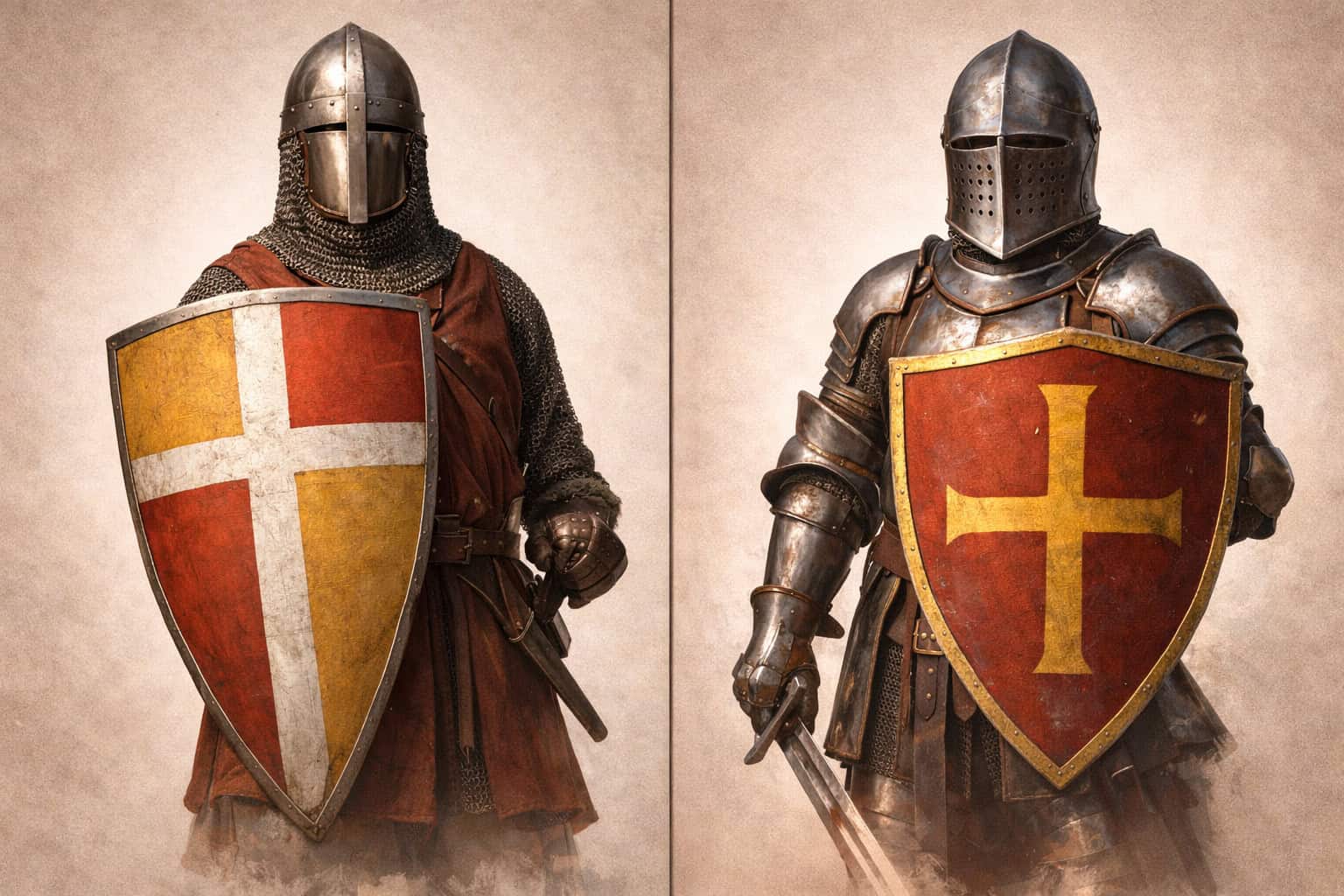
The kite shield emerged as one of the defining defensive weapons of the High Middle Ages. Its elongated shape protected a rider’s torso and legs — areas especially vulnerable on horseback when chain mail was the primary form of armor.
- Extended lower-body protection
- Strong defensive coverage during cavalry charges
- Curved surface designed to deflect weapon strikes
Favored by Norman knights, the kite shield provided excellent coverage during mounted engagements. As armor technology advanced and leg protection improved, the shield gradually became smaller.
The kite shield marked a major transition toward cavalry-optimized defensive equipment.
Heater Shields
Developed from the kite shield, the heater shield became closely associated with medieval knighthood. Named for its resemblance to the base of a household iron, it was smaller, more maneuverable, and well suited to evolving combat styles.
- Improved mobility
- Compatible with heavier armor
- Effective for both mounted and foot combat
- Prominent surface for heraldic symbols
The heater shield also carried cultural significance, often displaying heraldry that identified a knight’s lineage, alliances, and achievements.
Alongside these larger shields, the buckler gained popularity among infantry and duelists — valued for speed, parrying ability, and close-quarters defense.
Late Medieval Shields (14th – 15th Century)
By the late medieval period, warfare had become increasingly specialized. Professional armies, powerful ranged weapons, and fortified positions drove the development of shields designed for specific tactical roles rather than universal use.
Pavise & Targe Shields
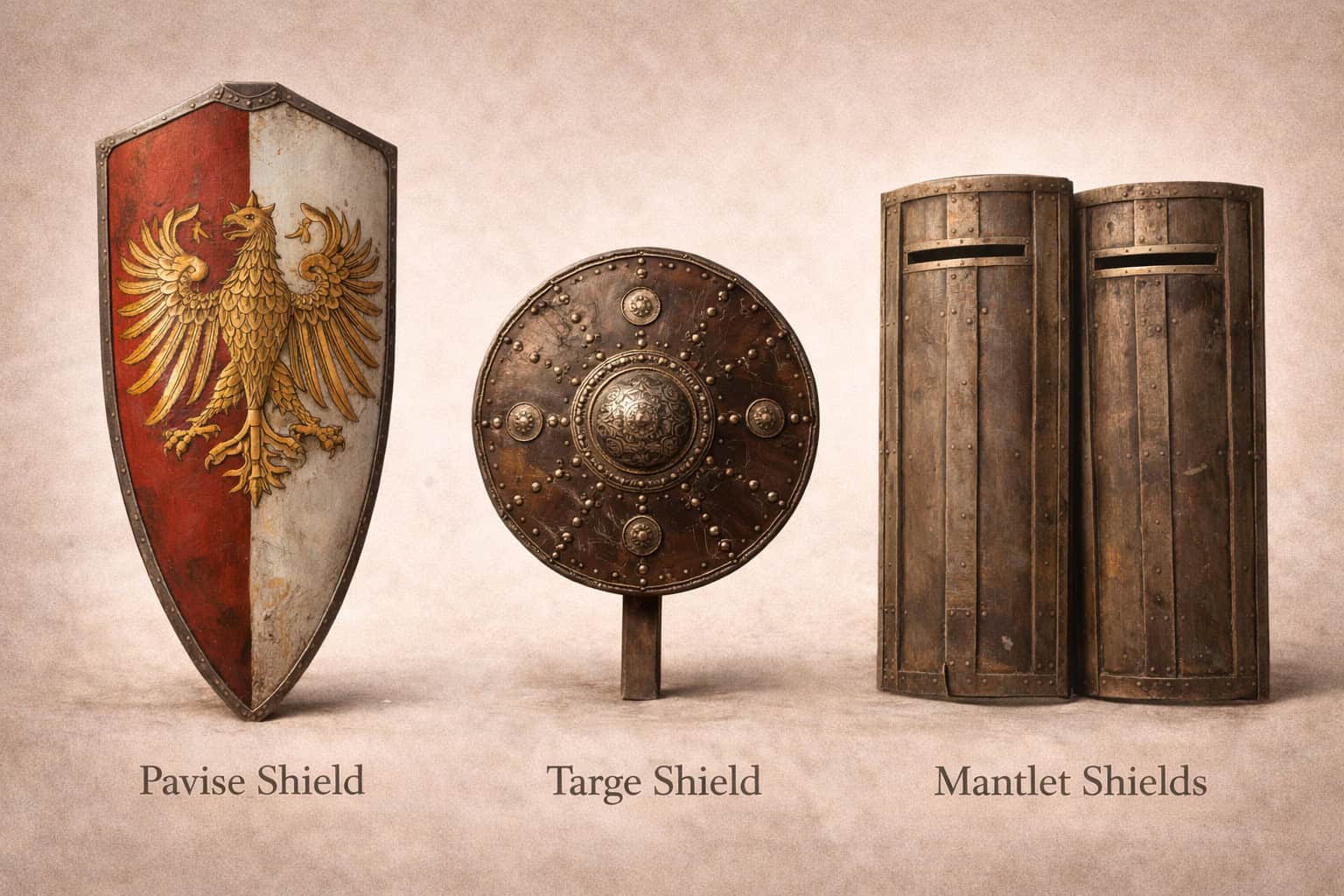
The pavise was a large, often rectangular shield primarily used by crossbowmen and archers. Unlike smaller handheld shields, pavises could be planted into the ground to create portable cover during reload times.
- Provided stationary battlefield protection
- Ideal for exposed ranged troops
- Created defensive firing positions
The targe, commonly associated with Scotland and parts of Western Europe, featured a concave design that balanced durability with manageable weight. Typically constructed from wood and reinforced with leather or metal, it remained effective in close combat.
These shields reflected the growing need for role-specific defensive equipment.
Mantlets
Mantlets functioned almost like mobile walls. Mounted on wheeled frames or carried by soldiers, they provided substantial protection against missile fire during sieges and battlefield advances.
- Shielded troops from arrows and bolts
- Used heavily in siege warfare
- Supported organized battlefield advances
Rather than serving individual warriors, mantlets protected groups of soldiers, highlighting the increasing coordination seen in late medieval armies.
Together, these shield types demonstrate how medieval warfare shifted toward tactical specialization instead of relying on a single universal shield design.
Medieval Shield Types
Across the Middle Ages, shield shapes varied widely depending on combat style, regional preferences, and technological developments. Some were circular, others elongated or rectangular, but all were built with the same fundamental goal — survival.
The most influential shield types included:
- Round shields
- Kite shields
- Heater shields
- Bucklers
- Pavises
- Targes
Each design reflects a specific stage in the evolution of medieval armor and battlefield strategy.
Medieval Shield Materials
Most medieval shields were constructed using layered wood, often linden, chosen for its strength and shock absorption. To increase durability, shield faces were typically covered with leather, rawhide, or occasionally metal fittings.
Common materials included:
- Wood
- Leather or animal hide
- Iron or steel reinforcements
- Bark
- Wicker
Shield makers had to carefully balance weight with protection. A shield that was too heavy could exhaust the user, while one that was too light might fail under repeated blows.
Timeline of Medieval Shield Development
The evolution of medieval shields reflects changing battlefield tactics, advances in armor, and the growing specialization of medieval armies.
5th – 10th Century
Round shields dominated early medieval warfare, especially among Viking and Germanic warriors.
10th – 12th Century
The kite shield emerged to protect mounted knights, offering extended leg coverage.
12th – 14th Century
The heater shield became the knightly standard and a key surface for heraldry.
14th – 15th Century
Specialized shields such as the pavise and targe supported ranged troops and tactical warfare.
Parts of a Medieval Shield
Several components were essential to effective shield construction.
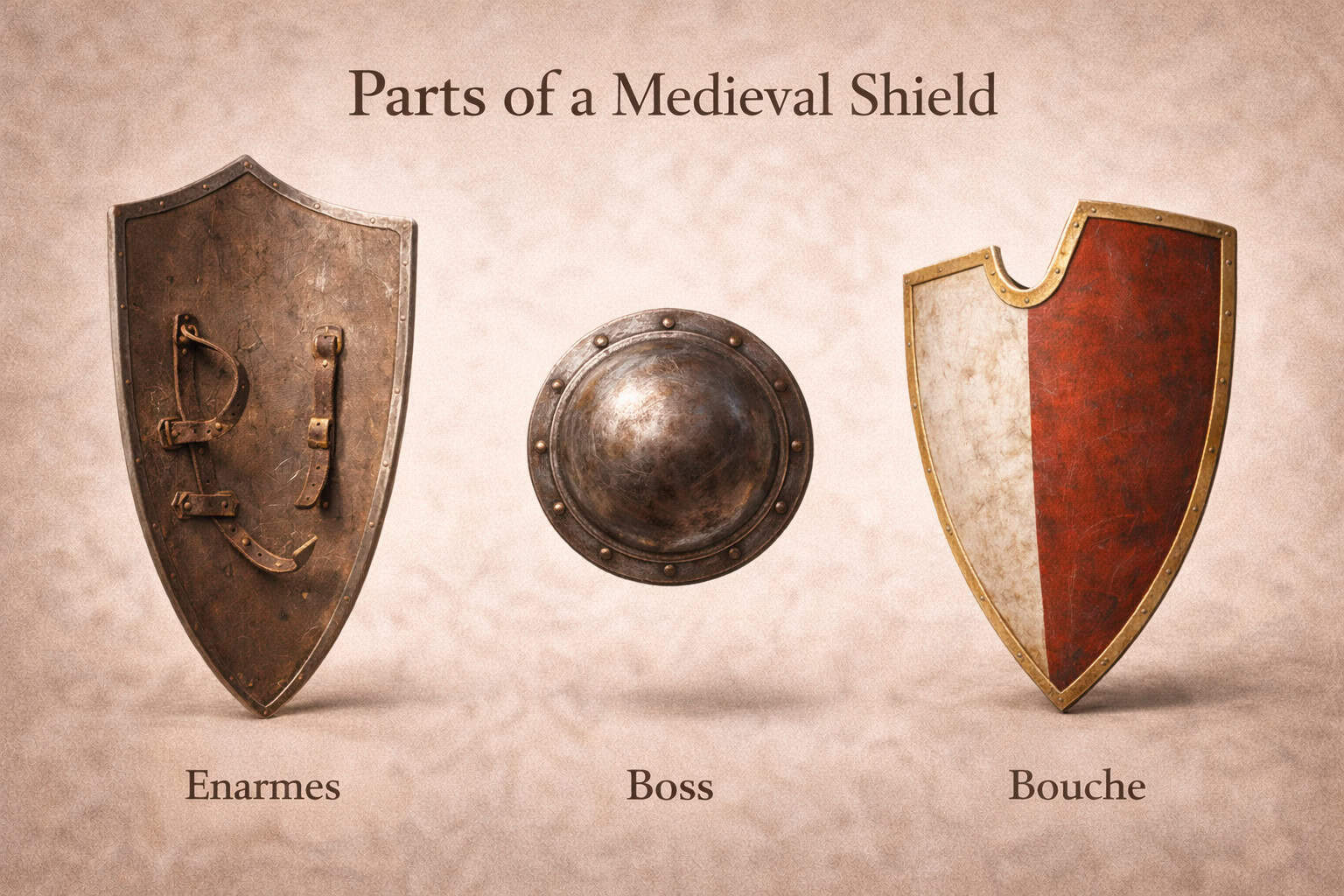
Enarmes were the leather straps fixed to the reverse side, allowing the shield to be secured to the forearm for stability.
The boss, positioned at the center, reinforced the structure and guarded the hand.
Some shields — particularly those used in tournaments — featured a bouche, a notch designed to support a lance during mounted combat.
Together, these elements transformed shields from simple barriers into engineered defensive tools.
Who Made Medieval Shields?
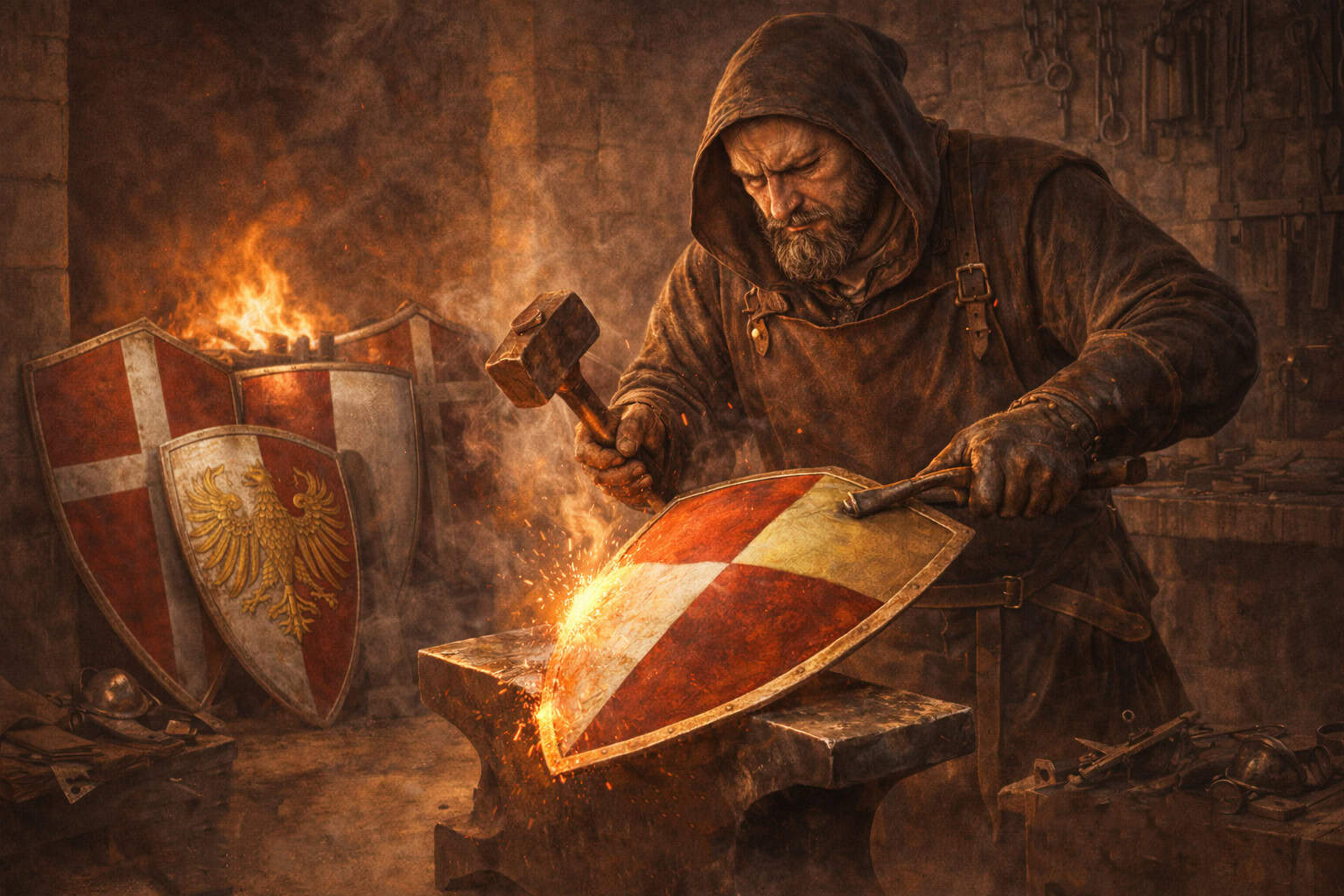
Specialist craftsmen known as armorers were responsible for producing shields as well as other defensive equipment. Their work required deep knowledge of materials, forging techniques, and battlefield realities.
The Middle Ages saw a constant technological competition: stronger weapons demanded better armor, which in turn inspired even more powerful weaponry. This cycle drove steady improvements in both shield durability and design.
Knight Shields vs Infantry Shields
Not all shields served the same purpose. Equipment often reflected the role of the warrior using it.
Knightly shields, such as the kite and heater, prioritized coverage while remaining manageable from horseback. Their shapes complemented body armor and allowed mounted warriors to maintain offensive momentum.
Infantry shields, including bucklers and later pavises, focused on practicality. Some enhanced mobility in close combat, while others provided stationary protection against missile fire.
Understanding this distinction helps explain why shield design diversified so dramatically over time.
Best Medieval Shields for Combat
Determining the “best” medieval shield depends on battlefield context. However, the kite shield and heater shield were among the most effective general-purpose designs used throughout the Middle Ages.
Kite Shield
The kite shield excelled in mounted warfare by protecting the torso and legs, offering strong coverage during cavalry charges and close combat.
- Strong defensive coverage
- Effective for cavalry combat
- Curved shape helps deflect strikes
Heater Shield
The heater shield became a knightly standard thanks to its improved mobility, versatility on foot or horseback, and ideal surface for heraldry.
- Manageable weight
- Versatile in mounted and foot combat
- Excellent balance of protection and speed
Together, these shields combined strong defense, manageable weight, and battlefield versatility, allowing warriors to block attacks and deliver effective counterstrikes.
Medieval Shield Training
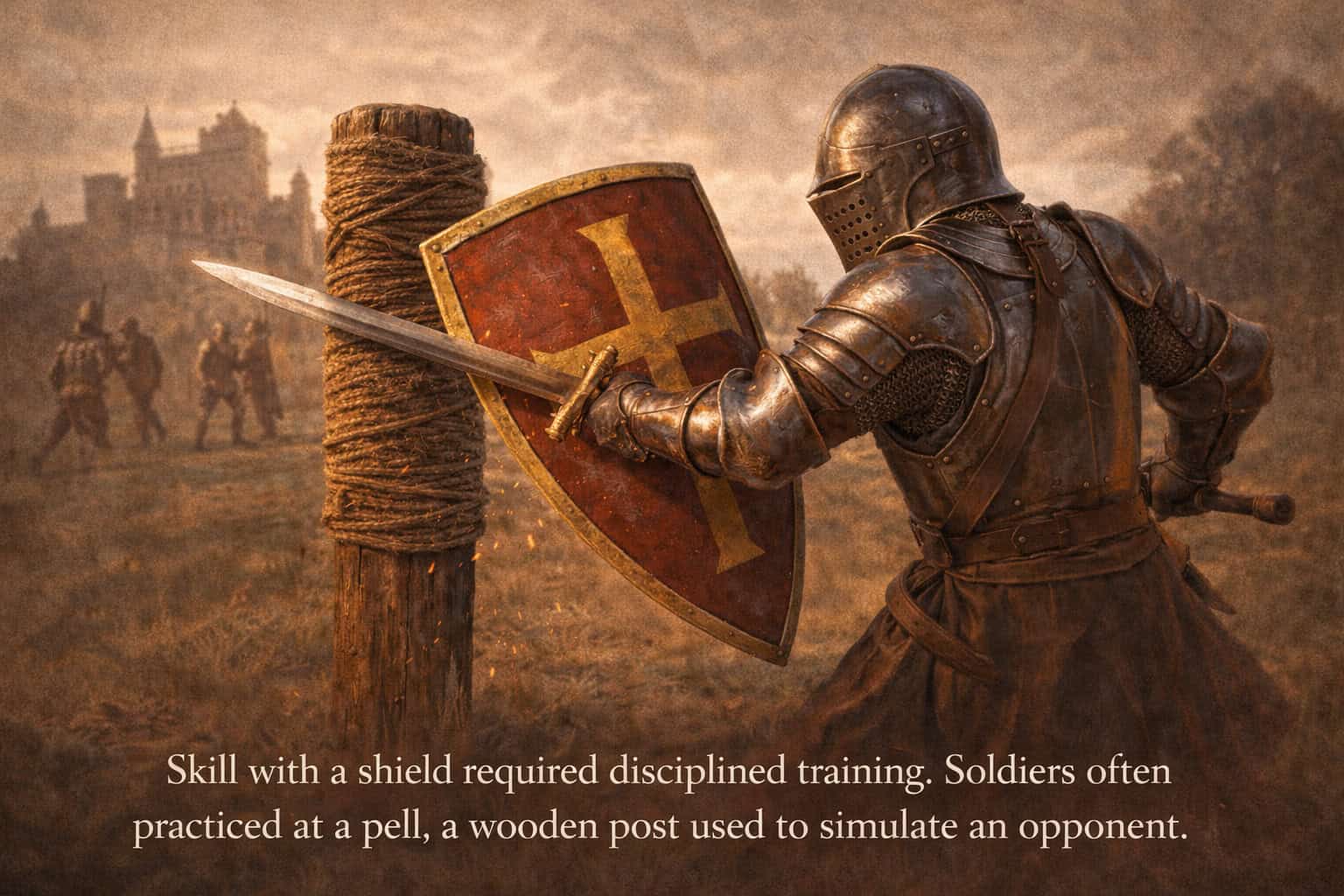
Skill with a shield required disciplined training. Soldiers often practiced at a pell, a wooden post used to simulate an opponent.
Using wooden swords or batons, warriors rehearsed defensive movements, strikes, and coordinated shield use. Over time, shields even became offensive tools capable of shoving, striking, and destabilizing enemies during close combat.
Medieval Shield Comparison
Comparing major medieval shield types highlights how design adapted to changing combat styles throughout the Middle Ages.
| Shield | Primary Era | Typical Users | Key Strength | Combat Role |
|---|---|---|---|---|
| Round Shield | 5th–10th Century | Vikings, infantry | Mobility | Formation fighting |
| Kite Shield | 10th–12th Century | Norman knights | Leg protection | Cavalry warfare |
| Heater Shield | 12th–14th Century | Knights | Balanced defense | Mounted & foot combat |
| Pavise | 14th–15th Century | Crossbowmen | Large coverage | Static protection |
| Targe | 15th Century | Scottish warriors | Durability | Close combat |
The Decline of Medieval Shields
For centuries, the shield served as a warrior’s primary defense. Yet technological change eventually altered the battlefield.
The spread of gunpowder weapons reduced the effectiveness of handheld shields, as firearms could penetrate defenses that once stopped arrows and blades. Meanwhile, advances in plate armor provided comprehensive body protection, allowing some knights to abandon shields altogether.
Although shields never disappeared entirely, their dominance faded as warfare entered a new era.
Legacy of Medieval Shields
Today, medieval shields remain powerful symbols of chivalry, warfare, and craftsmanship. Beyond their practical role in combat, they carried identity through heraldry and reflected the technological ingenuity of medieval armorers.
From Viking shield walls to mounted knightly charges, shields shaped the tactics and survival of warriors across a thousand years — standing as one of the most enduring defensive innovations of the medieval world.
Frequently Asked Questions About Medieval Shields
These answers explain how medieval shields were constructed, used in battle, and adapted as warfare evolved throughout the Middle Ages.
What were medieval shields made from?
Most medieval shields were constructed from layered wood and reinforced with leather, rawhide, or metal. This combination provided strength while keeping the shield light enough for maneuverability in combat.
Which shield did knights commonly use?
The heater shield became the classic knightly shield thanks to its balance of protection, mobility, and suitability for displaying heraldry.
What was the purpose of the shield boss?
The shield boss was the raised metal dome at the center of many shields. It protected the warrior’s hand and helped deflect incoming weapon strikes.
Were shields still used in the late medieval period?
Yes. Although armor improved, specialized shields such as the pavise remained essential for crossbowmen and archers who required portable battlefield cover.
Why did shields eventually decline?
The widespread adoption of plate armor and the emergence of gunpowder weapons gradually reduced the need for shields on the battlefield.
Glossary of Medieval Shield Terms
Key definitions related to medieval shields, their construction, and their role in medieval warfare.
Boss
A raised metal dome at the center of a shield designed to protect the hand and deflect weapon strikes.
Enarmes
Leather straps attached to the back of a shield that allowed a warrior to grip and control it securely.
Heraldry
Symbols and coats of arms displayed on shields to identify lineage, allegiance, and social status.
Pavise
A large protective shield used primarily by crossbowmen and archers to create portable battlefield cover.
Buckler
A small handheld shield favored for close combat and dueling due to its speed and maneuverability.
Shield Wall
A defensive formation in which warriors locked shields together to form a protective barrier against enemy attacks.