Medieval armour and shields were central to warfare throughout the Middle Ages, serving as both life-saving protection and visible symbols of rank, wealth, and identity. As weapons became more powerful and tactics more complex, armour evolved in response—progressing from early chainmail and wooden shields to sophisticated suits of plate armour by the late medieval period.

Understanding medieval armour reveals how warriors fought, how technology advanced, and how medieval society expressed power and status on the battlefield.
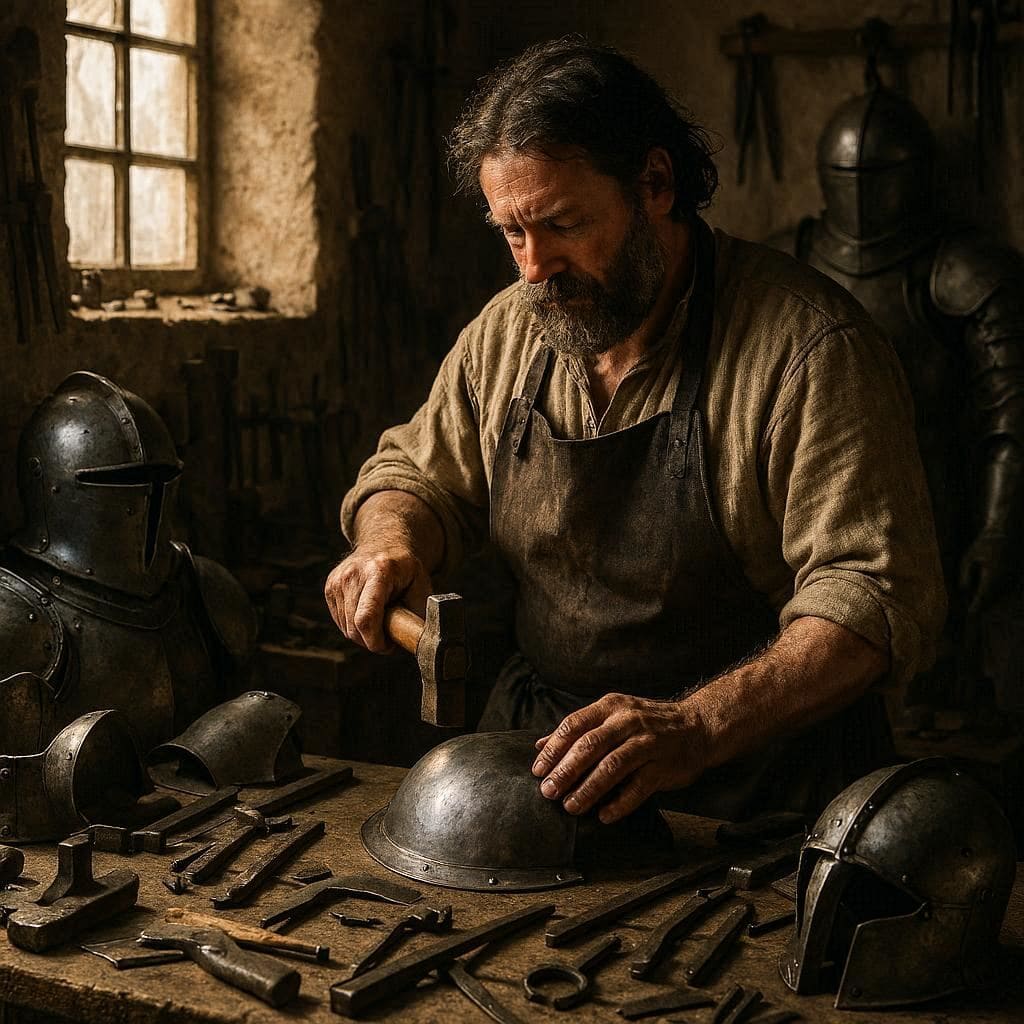
Who Made Medieval Armour
Medieval armour was crafted by specialist armourers, a highly skilled group of blacksmiths trained to shape iron and steel into protective equipment. As demand grew, armour production became more organised and specialised.
Armourers typically produced:
- Chainmail (hauberks, coifs, mail chausses)
- Helmets (nasal helms, great helms, sallets)
- Plate components (breastplates, greaves, gauntlets)
- Shields of varying shapes and materials
By the later Middle Ages, armour-making centres emerged in Milan, Augsburg, and Nuremberg, producing armour on a large scale for export across Europe.
Click to Reveal: Key Themes of Medieval Armour & Shields
Early Medieval Armour
Early medieval warriors relied mainly on chainmail, helmets, and shields. Armour was expensive, heavy, and usually limited to elite fighters.
The Role of Shields
Shields were essential for defense, formation fighting, and identity. Designs evolved from round shields to kite and heater shields.
Norman and Knightly Armour
Norman warriors popularised the hauberk and kite shield, setting the foundation for later knightly armour systems.
Chainmail Technology
Chainmail offered flexibility and protection but required padding underneath. It remained vital even after plate armour emerged.
Rise of Plate Armour
From the 14th century, full plate armour protected nearly the entire body, responding to powerful new weapons.
Helmets and Head Protection
Helmet designs evolved from simple nasal helms to sallets, bascinets, and visored helmets.
Armourers and Craftsmanship
Master armourers in regions like Milan and Germany produced some of the finest armour in medieval Europe.
Armour as Status and Identity
Armour and shields displayed heraldry, wealth, and rank, turning battlefield protection into a symbol of social power.
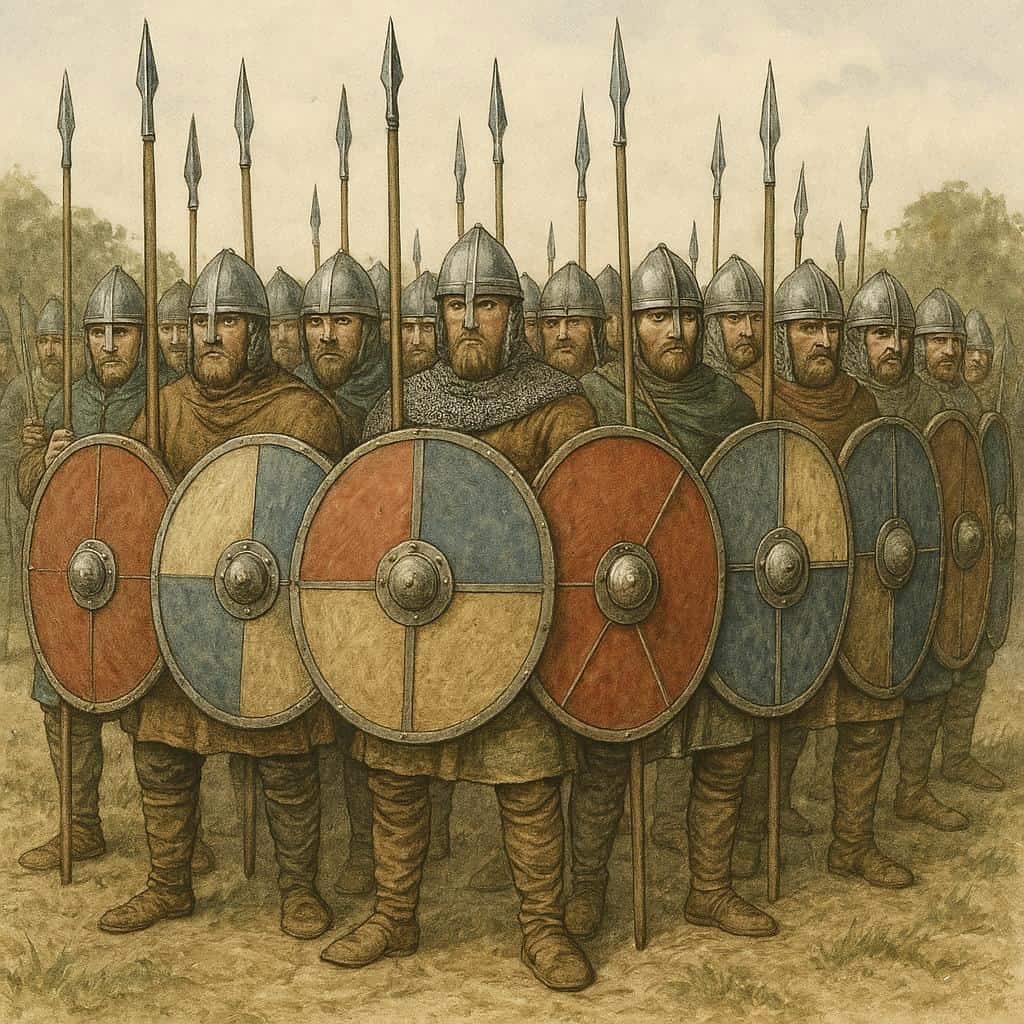
Early Medieval Armour: Anglo-Saxons and Vikings
Early medieval warriors relied on limited but effective armour that prioritised mobility, shields, and formation fighting rather than full body protection.
Anglo-Saxon Armour
- Chainmail mailcoats, rare and extremely expensive
- Round wooden shields, often reinforced with leather or metal
- Helmets, generally reserved for elite warriors
The Sutton Hoo helmet provides powerful archaeological evidence of elite Anglo-Saxon craftsmanship and battlefield protection.
Viking Armour
- Chainmail hauberks, often short-sleeved
- Conical helmets (without horns)
- Large round shields made from linden or pine
Because chainmail was costly, full armour was usually limited to wealthier warriors or professional Viking fighters.
Norman Armour and Mounted Warfare
The Norman period introduced major changes to medieval warfare through heavy cavalry and improved armour systems.
Norman warriors typically wore:
- Long mail hauberks extending to the knees
- Conical steel helmets with nasal guards
- Kite-shaped shields offering extended body protection
The kite shield replaced earlier round shields and became a defining feature of 11th-century warfare.
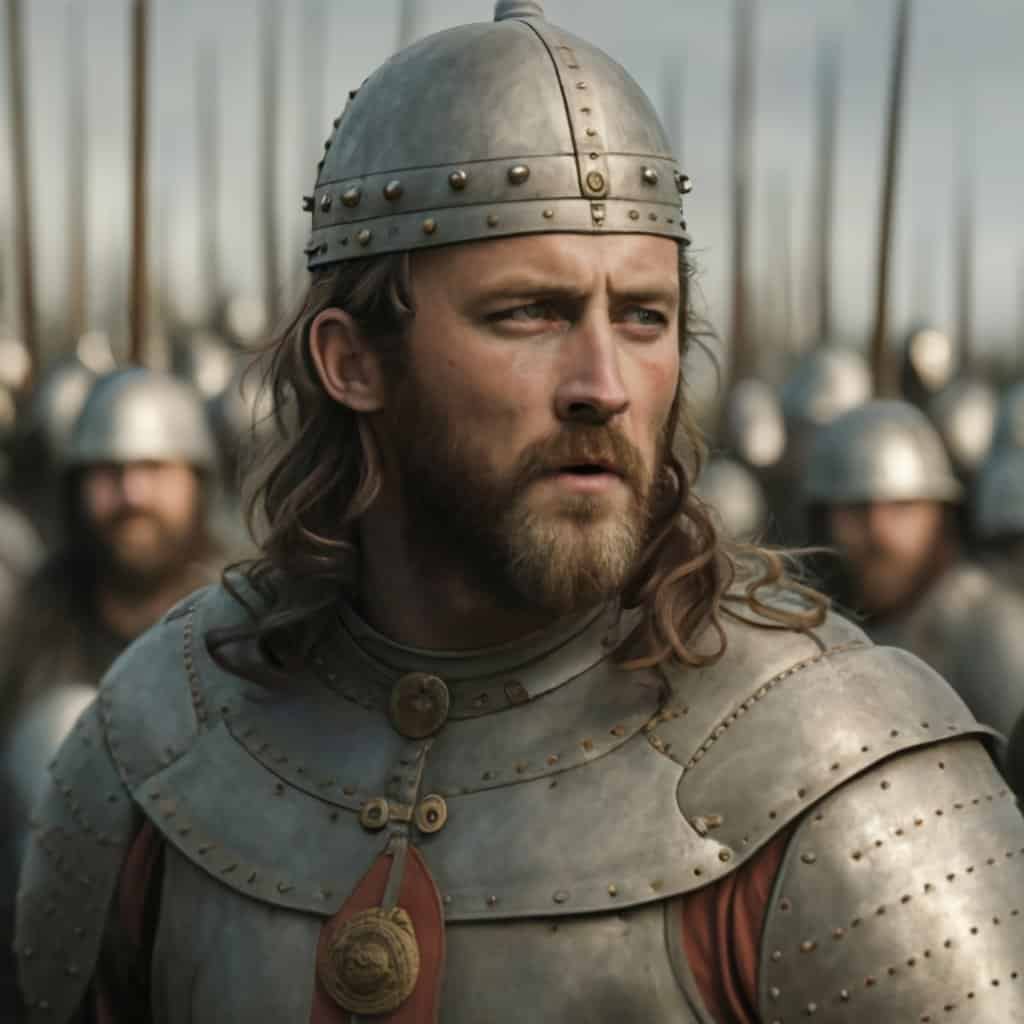
Chainmail: The Backbone of Medieval Armour
Chainmail armour dominated medieval battlefields for centuries due to its flexibility and durability.
Key characteristics of chainmail included:
- Excellent protection against slashing weapons
- Limited defence against blunt force and piercing attacks
- Significant weight and production cost
Mail armour was often worn with:
- Mail coifs (head and neck protection)
- Padded garments such as gambesons or doublets
- Mail goussets covering gaps between plate components

The Rise of Plate Armour
From the 13th century onward, armourers began introducing steel plate components to counter increasingly powerful weapons such as crossbows, polearms, and heavy swords.
Plate armour developed gradually rather than appearing all at once:
- Reinforced chest and shoulder plates added to chainmail armour
- Joint and limb protection introduced for elbows, knees, and arms
- Full plate harnesses eventually replaced mail for elite warriors
By the 15th century, elite knights wore fully articulated suits of plate armour designed to:
- Deflect sword and lance blows
- Preserve battlefield mobility
- Distribute impact across the body to reduce injury
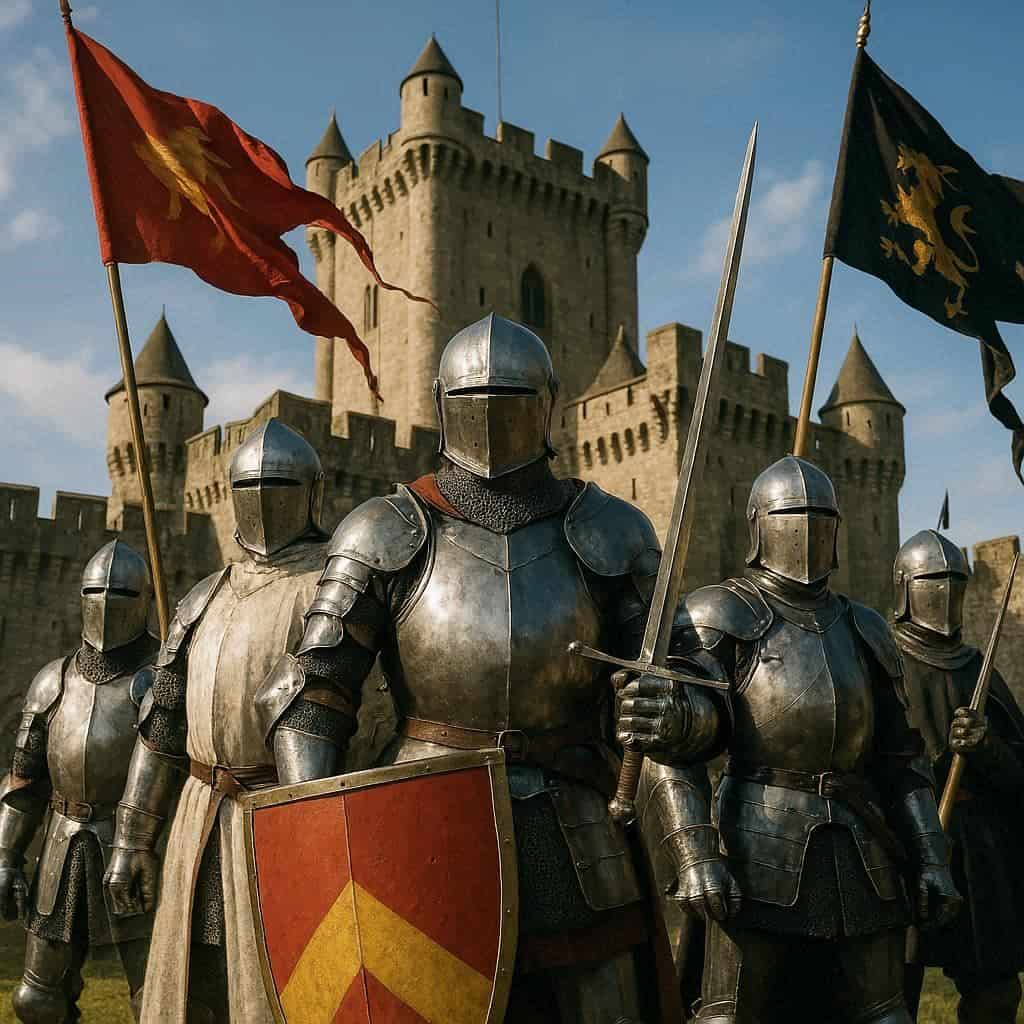
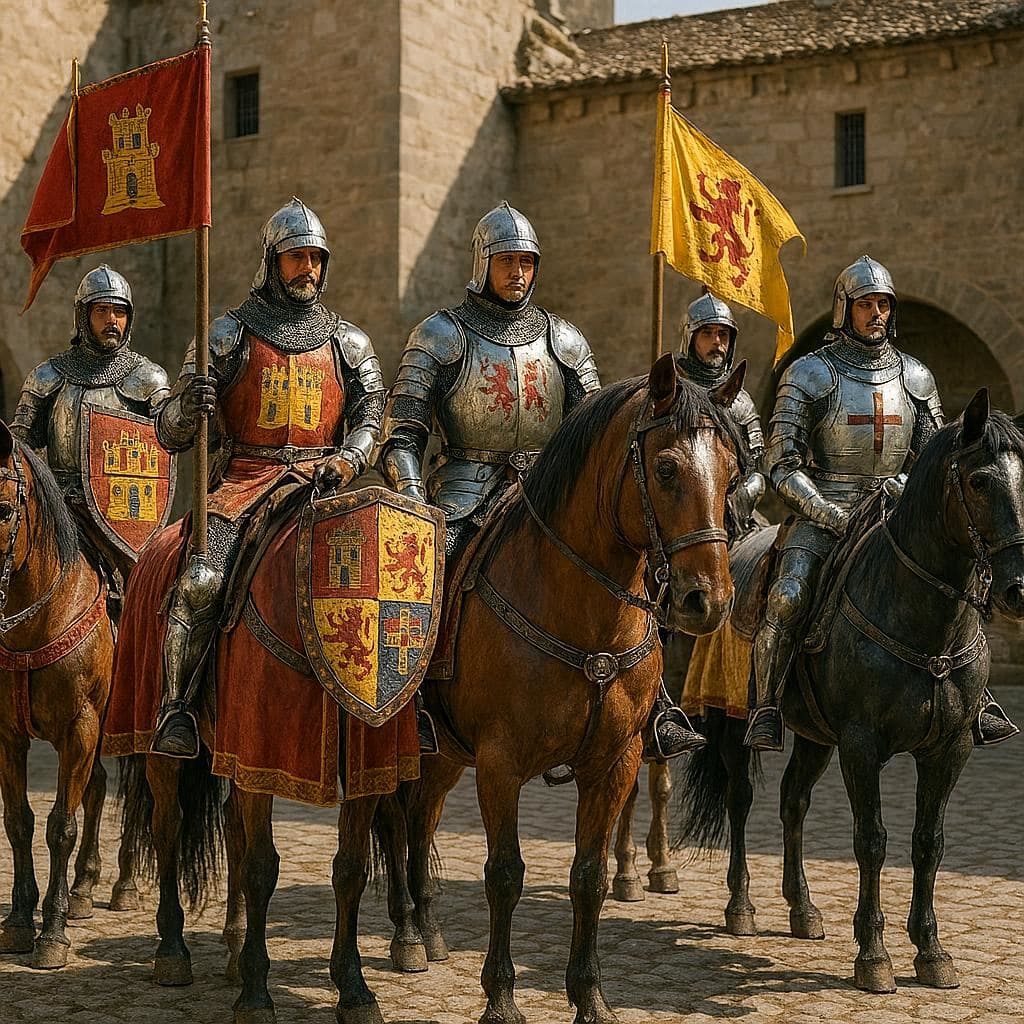
Medieval Shields and Heraldry
Shields played a dual role as defensive equipment and identity markers.
Common medieval shield types included:
- Round shields (early medieval)
- Kite shields (Norman period)
- Heater shields (High and Late Middle Ages)
Heraldic designs on shields:
- Identified warriors on the battlefield
- Displayed lineage and loyalty
- Reinforced social rank
Armour, Status, and Warfare
Armour reflected medieval social hierarchy.
- Knights and nobles wore full armour
- Professional soldiers wore partial protection
- Peasants and militias relied heavily on shields
Contrary to myth, well-made armour allowed significant mobility, and trained knights could fight, ride, and manoeuvre effectively while armoured.
🛡️ Medieval Armour Parts Explained
Chainmail Armour
Chainmail (also called mail) was one of the earliest and most widespread forms of medieval body protection. It was made from thousands of interlinked iron or steel rings.
- Hauberk – long chainmail shirt protecting torso and arms
- Mail coif – hood protecting head, neck, and shoulders
- Chausses – mail leggings worn on the legs
- Gussets – mail sections covering gaps between plates
Chainmail offered excellent protection against cuts but was less effective against heavy blunt force or piercing weapons.
Plate Armour
Plate armour developed later in the Middle Ages and consisted of shaped steel plates designed to deflect blows and distribute impact across the body.
- Helmet (Sallet or Bascinet) – head protection
- Breastplate & Cuirass – chest and torso defense
- Pauldrons & Spaulders – shoulder protection
- Vambraces – arm and forearm guards
- Gauntlets – articulated hand protection
- Cuisses & Greaves – thigh and lower leg armor
- Sabatons – armored footwear
Full plate harnesses balanced protection with mobility and represented the peak of medieval armour technology.
Medieval armour and shields were the result of centuries of innovation driven by warfare, technology, and social structure. From chainmail to plate armour, these systems shaped medieval combat and symbolised power, identity, and craftsmanship. Their enduring legacy continues to define how we imagine the medieval battlefield today.
❓ Medieval Armour & Shields – Frequently Asked Questions
What was medieval armour made from?
Medieval armour was primarily made from iron and later steel, with earlier forms relying heavily on chainmail and leather.
Who could afford full plate armour?
Only wealthy knights and nobles could afford full plate armour due to its high cost and skilled craftsmanship.
Was chainmail effective in battle?
Chainmail was highly effective against slashing attacks but less protective against blunt force or heavy piercing weapons.
Did Vikings wear horned helmets?
No. Horned helmets are a modern myth. Viking helmets were simple and functional.
What was the purpose of shields?
Shields provided mobile protection and were essential for blocking blows, missiles, and maintaining formations.
How heavy was medieval armour?
A full suit of plate armour typically weighed 20–25 kg, evenly distributed to allow movement.
Did armour make knights slow?
Well-made armour allowed for surprising mobility, including running and mounting horses.
Why did armour decline?
The rise of gunpowder weapons made heavy armour less effective and too costly to maintain.
🧠 Medieval Armour & Shields Quiz
📜 Glossary of Medieval Armour & Shield Terms