Robert the Bruce (1274–1329), also known as Robert I of Scotland, was the most prominent leader in the First War of Scottish Independence during the early 14th century. Rising from Scottish nobility to claim the Scottish throne, Robert became a symbol of national resilience and resistance against English domination. His victory at the Battle of Bannockburn in 1314 secured Scotland’s independence and established him as one of the greatest warrior kings of the medieval era. Revered for his leadership, determination, and tactical genius, Robert the Bruce remains one of Scotland’s most enduring historical heroes.
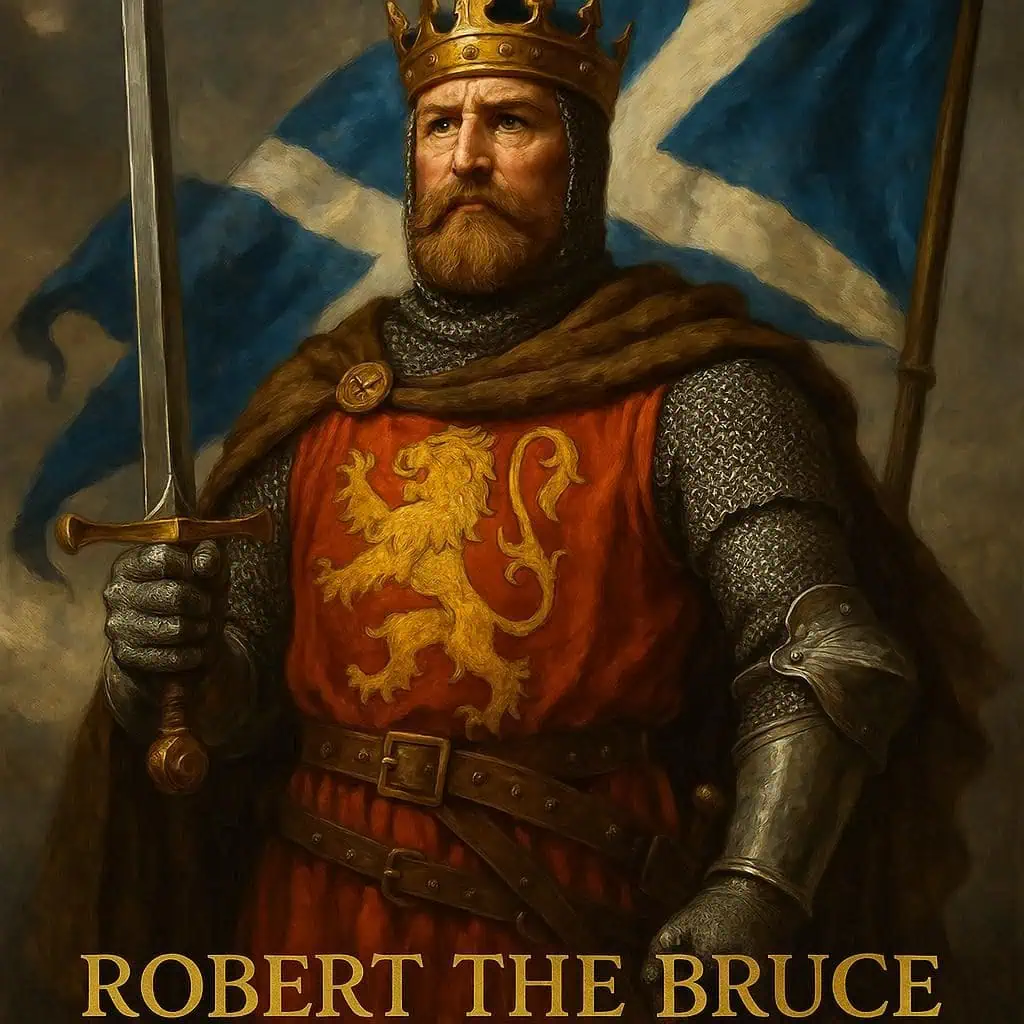
Along with leading the Scottish resistance, Bruce was also crowned the King of the Scots in 1306.
His role is immensely significant in the history of the British Isles in that he helped Scotland maintain its independence in the face of an English king who was determined to bring Scotland under English control.

Bruce not only repulsed English military incursions into Scotland but was also able to take the war to northern England and Ireland, putting England on the defensive.
English Intervention in Scotland
Direct English intervention in Scotland began in 1292 when Edward I of England was invited by the Scots to mediate the dispute over Scottish succession.
Edward had John Balliol installed on the Scottish throne. Robert the Bruce and his family also had a claim to the Scottish throne, so they sided with Edward as the latter tried to undermine Balliol’s power in Scotland.
By 1296, Edward had invaded Scotland, deposed Balliol, and installed Englishmen to rule Scotland on his behalf. This finally induced Robert the Bruce to join a rebel coalition in 1297, paving the way for him to lead Scotland to independence.

💡 Did You Know? Fascinating Facts About Robert the Bruce
His coronation at Scone set Scotland on a path toward restored independence.
Bruce’s victory over the English army under Edward II became a defining moment in the First War of Scottish Independence.
This famous letter asserted Scotland’s sovereignty and Bruce’s right to rule.
The legend says Bruce watched a spider persist until it succeeded — inspiring his own resilience.
He used hit-and-run warfare and terrain advantage to wear down stronger English forces.
Guardianship of Ireland
The Scots continued to resist Edward’s attempts to bring Scotland under effective English control. To this end, Robert the Bruce was appointed one of the Guardians of Ireland, alongside his rival John Comyn.
Due to disagreements between the two, Bruce resigned in 1300. Between 1300 and 1305, Edward I made a number of invasions of Scotland during which Bruce submitted to his authority alongside most other Scottish noblemen.
This helped him retain his estates and retain his political power base in Scotland.

Coronation as King of Scots
In 1306, Bruce killed John Comyn. This effectively made him the one man with the strongest claim to the Scottish throne and enough political allies to mount an effective resistance against the English.

He was crowned the King of the Scots the same year. Edward I mounted another invasion of Scotland and Bruce fled with his allies. He returned in 1307 and began a guerrilla war against the English occupation.
He defeated English allies in Scotland in a number of key confrontations. By 1314, Bruce had effective control of most of Scotland and inflicted a decisive defeat on the English at the Battle of Bannockburn the same year.
This would mark the point where Bruce’s resistance put the English on the defensive.

Campaign in Ireland
After decisively ending English ambitions in Scotland, Bruce aggressively pushed further into northern England. He also invaded Ireland in 1315 in an attempt to forge a Scott-Irish alliance against England.
He was consequently crowned the High King of Ireland in 1316 but he failed to rally sufficient support. The Scottish army in Ireland was defeated by the English forces in 1318, ending Bruce’s attempts to join Ireland and Scotland under a single crown.
❓ Frequently Asked Questions About Robert the Bruce
1. Who was Robert the Bruce?
Robert the Bruce (1274–1329), or Robert I of Scotland, was the king who led Scotland to freedom during the First War of Scottish Independence.
2. When did Robert the Bruce become king?
He was crowned at Scone in 1306, after years of political turmoil and rivalry for the Scottish throne.
3. Why is the Battle of Bannockburn (1314) so important?
Bruce’s decisive victory over Edward II’s army secured Scottish momentum, boosted national morale, and forced England to reconsider its occupation.
4. What was Bruce’s military strategy?
He combined guerrilla tactics, scorched-earth policy, and shrewd use of terrain — forcing heavier English armies into unfavorable fights.
5. What is the Declaration of Arbroath?
A 1320 letter to the Pope affirming Scotland’s sovereignty and Bruce’s legitimate kingship — a landmark in medieval political thought.
6. Did Bruce always oppose England?
Early alliances shifted, but once crowned, Bruce pursued Scottish independence relentlessly, culminating in lasting recognition of Scotland’s autonomy.
7. How is Robert the Bruce remembered today?
As Scotland’s hero king — a symbol of resilience, leadership, and national identity in the medieval period.