Medieval entertainers played an essential role in bringing music, storytelling, theatre, and humor to communities across medieval Europe. From royal courts to busy markets and village festivals, these performers provided welcome relief from daily hardships while preserving important oral traditions, sharing legends and ballads, and spreading news and information between towns and kingdoms.
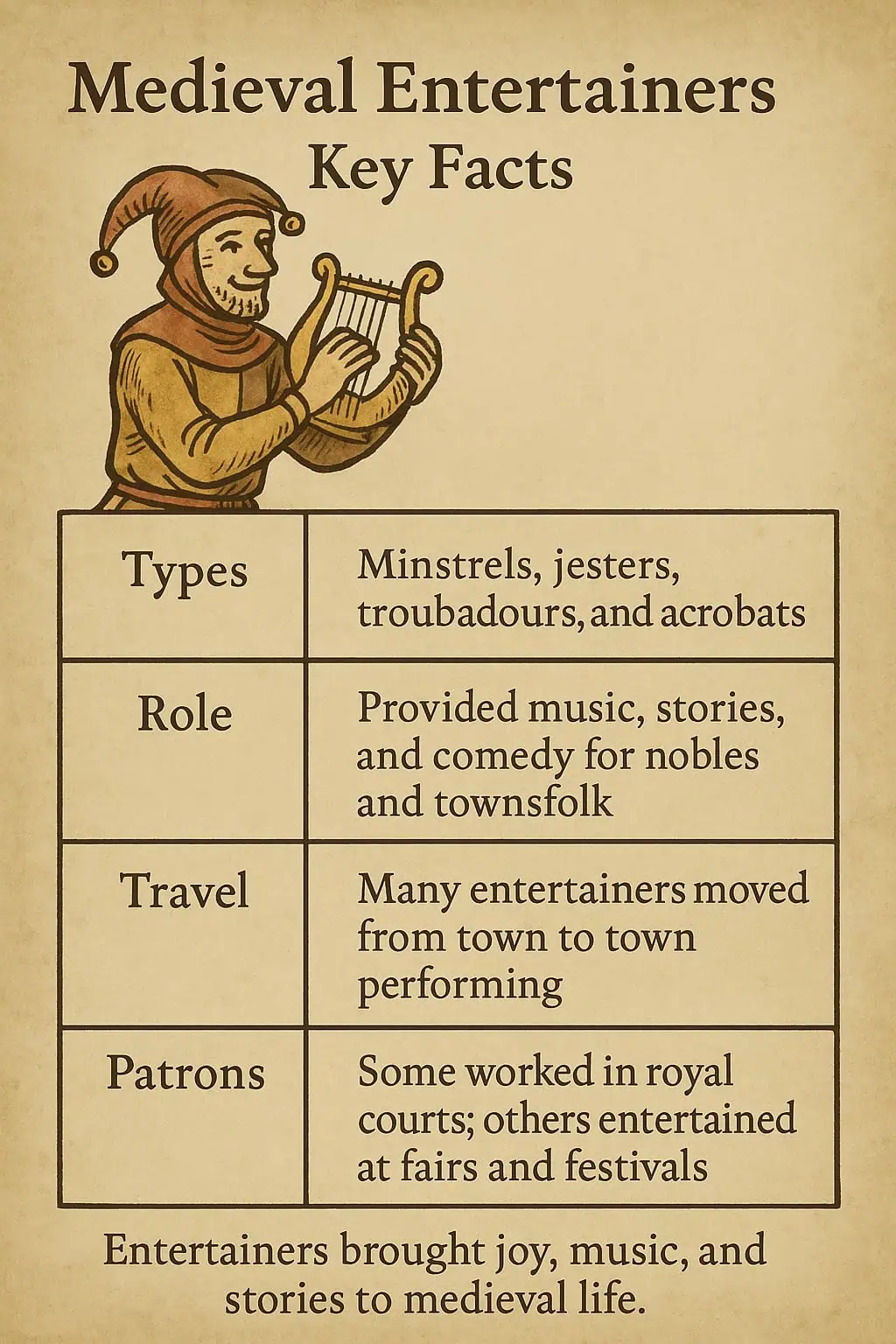
This guide explores the major types of medieval entertainers—minstrels, troubadours, jongleurs, mummers, jesters, jugglers, acrobats, and more—highlighting their roles, history, and influence.
Timeline of Medieval Entertainment
A quick journey through the age of jesters, minstrels, and mummers
Types of Medieval Entertainers
1. Mummers – Folk Actors and Festival Performers
Mummers were amateur or semi-professional performers who took part in festive plays, processions, and masked performances—especially during Christmas and seasonal celebrations.
Historical Accuracy
- Mumming traditions date back to at least the 13th century, not only the 15th.
- Performances often included speech, music, masks, and simple scripts, not purely mime.
- Many performers were local villagers, though nobles sometimes sponsored elaborate mumming events.
Characteristics of Medieval Mummers
- Wore bright costumes, masks, and animal-shaped headpieces.
- Performed short plays, often featuring themes of death and revival.
- Appeared at feasts, fairs, and taverns.
- Frequently accompanied by minstrels, drummers, or dancers.
Mumming helped preserve communal traditions and offered entertainment during some of the darkest months of the year.

Types of Medieval Entertainers
Mummers performed folk plays—often masked—at festivals and holidays. Their performances included humour, music, and symbolic themes such as death and rebirth. Many were amateur villagers, though noble-sponsored mummings also existed.
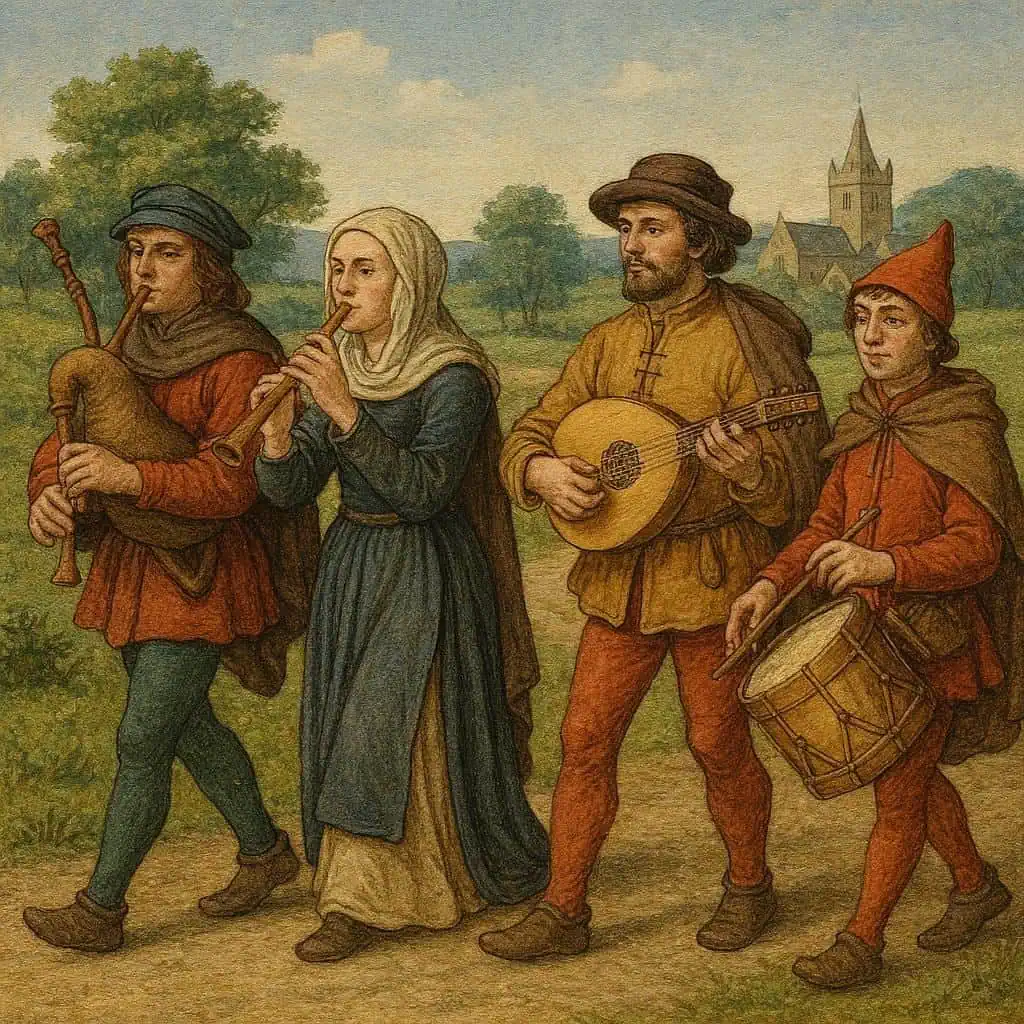
Minstrels were professional musicians and storytellers who performed in courts and towns. They sang ballads, played instruments, and recited tales of heroes, legends, and history. Many travelled widely, sharing news and stories across Europe.
Troubadours were poet-composers from Occitania who created refined songs about courtly love, chivalry, and noble ideals. They often belonged to the aristocracy and influenced European poetry.
Jongleurs were travelling entertainers who juggled, played instruments, told stories, and brought news between regions. They were skilled performers but often viewed with suspicion by the Church.
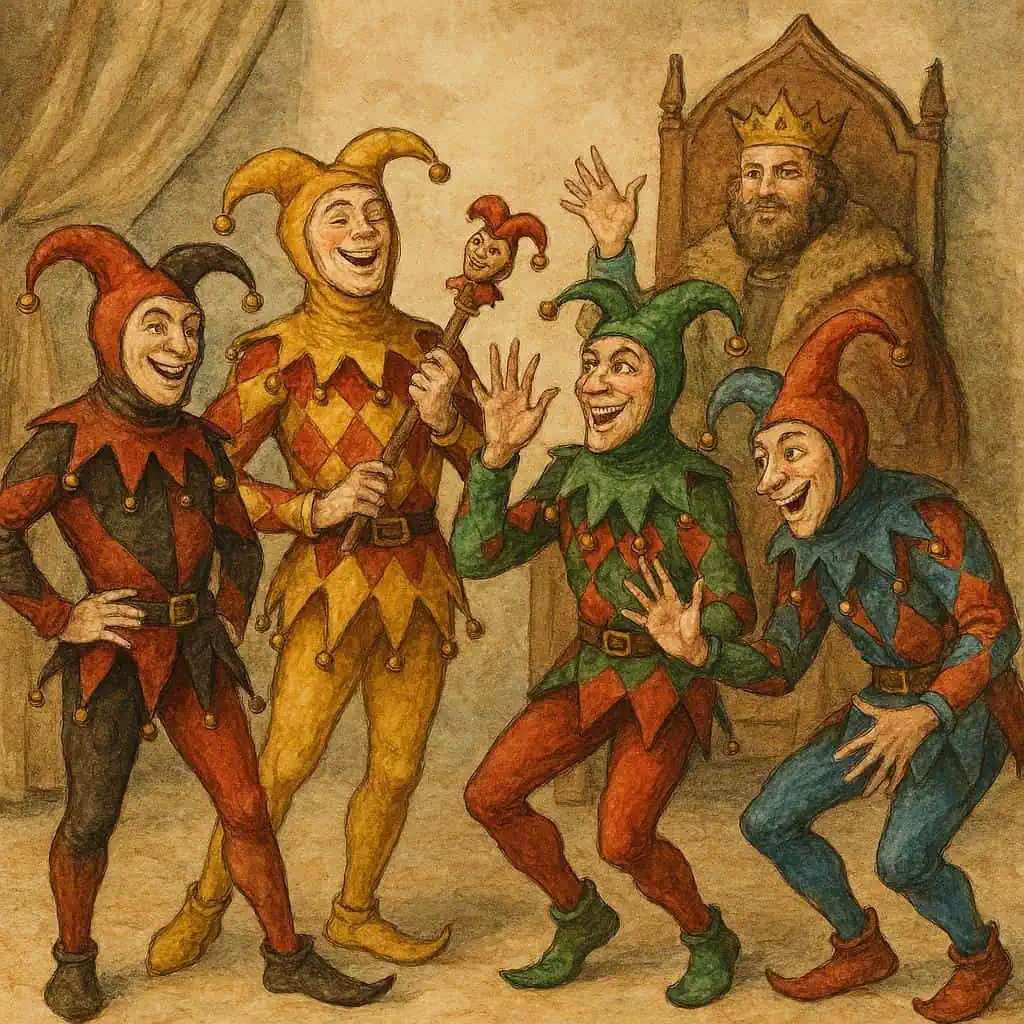
Jesters used comedy, wit, music, and physical humour to entertain nobles and kings. They sometimes spoke bold truths disguised as jokes—earning a unique place in court culture.
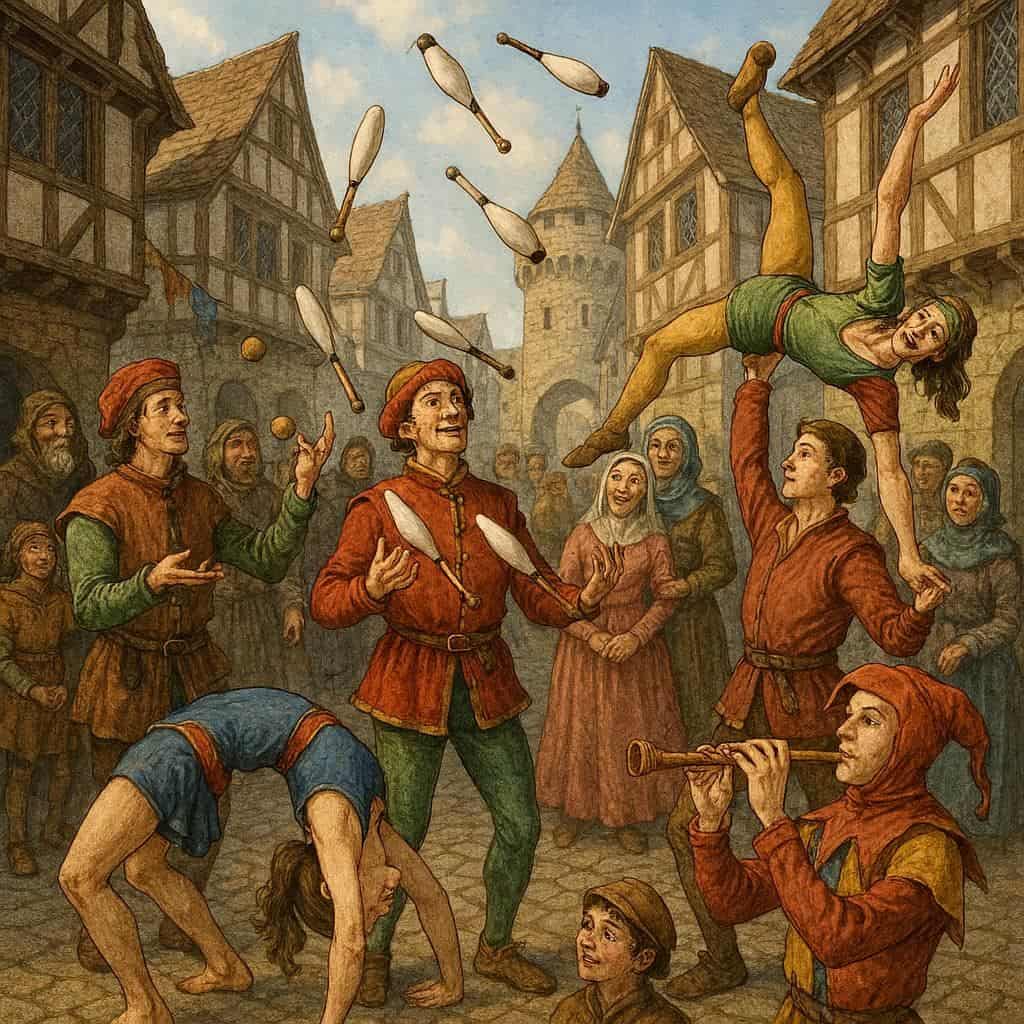
Jugglers performed at fairs, markets, and festivals. They were skilled in juggling, fire tricks, balancing acts, and other feats that delighted crowds.
Acrobats entertained audiences with tumbling, tightrope walking, flips, and physical stunts. Their performances required great skill, strength, and agility.
Medieval conjurers performed sleight-of-hand tricks, illusions, and early forms of magic. They entertained crowds with cups-and-balls tricks, disappearing objects, and clever misdirection.
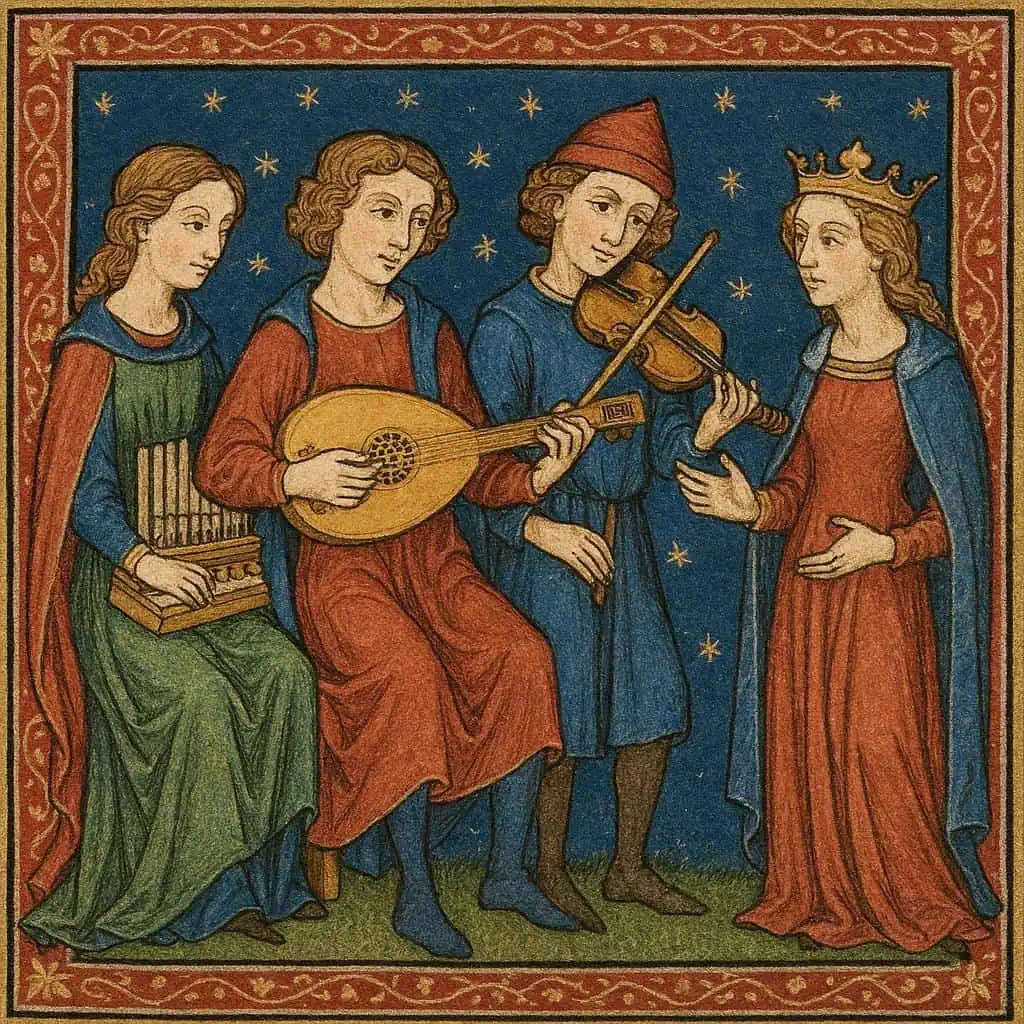
2. Troubadours & Trouvères – Poet-Musicians of the Noble Courts
Troubadours (from southern France / Occitania) and Trouvères (from northern France) were poet-composers who flourished between the 11th and 13th centuries. They were not typical wandering musicians—they were often literate, educated, and connected to noble courts.
What Troubadours Did
- Composed and performed songs of courtly love, chivalry, morality, and occasionally political commentary.
- Wrote poetry in Occitan (troubadours) or Old French (trouvères).
- Sometimes employed jongleurs to perform their works publicly.
Did Troubadours Travel with Crusaders?
A few wrote Crusade songs, but there is limited evidence they traveled with Crusader armies. Their influence spread through noble courts, not military camps.
Their Legacy
The troubadour tradition shaped European lyric poetry, courtly culture, and later forms of balladry.
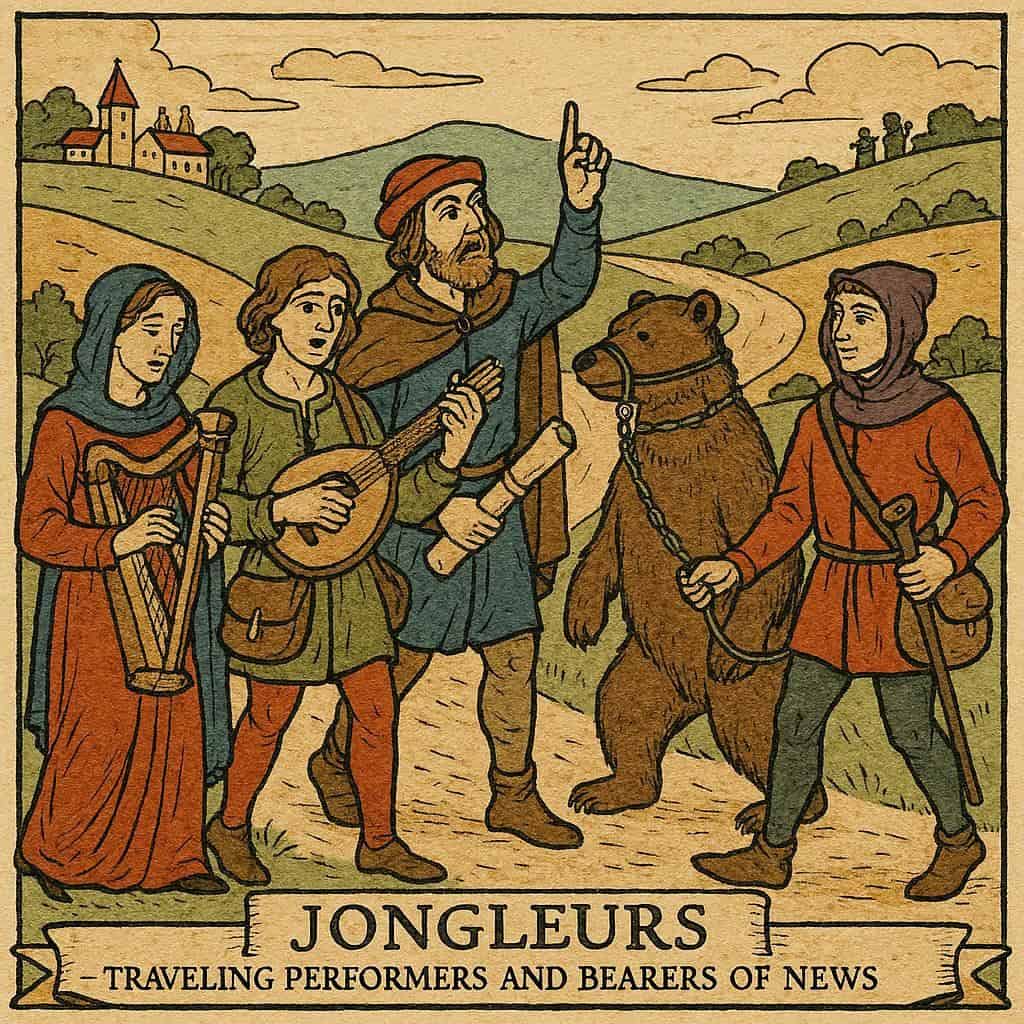
3. Jongleurs – Traveling Performers and Bearers of News
Jongleurs were multi-skilled entertainers who traveled from town to town performing music, acrobatics, juggling, storytelling, and tricks.
Their Role in Medieval Society
- Performed in town squares, markets, fairs, taverns, and sometimes courts.
- Spread news, gossip, and stories between regions.
- Often performed works written by troubadours or minstrels.
Jongleurs were admired by the public but sometimes mistrusted by the Church, which viewed their itinerant lifestyle with suspicion.
4. Minstrels – Professional Musicians and Poets
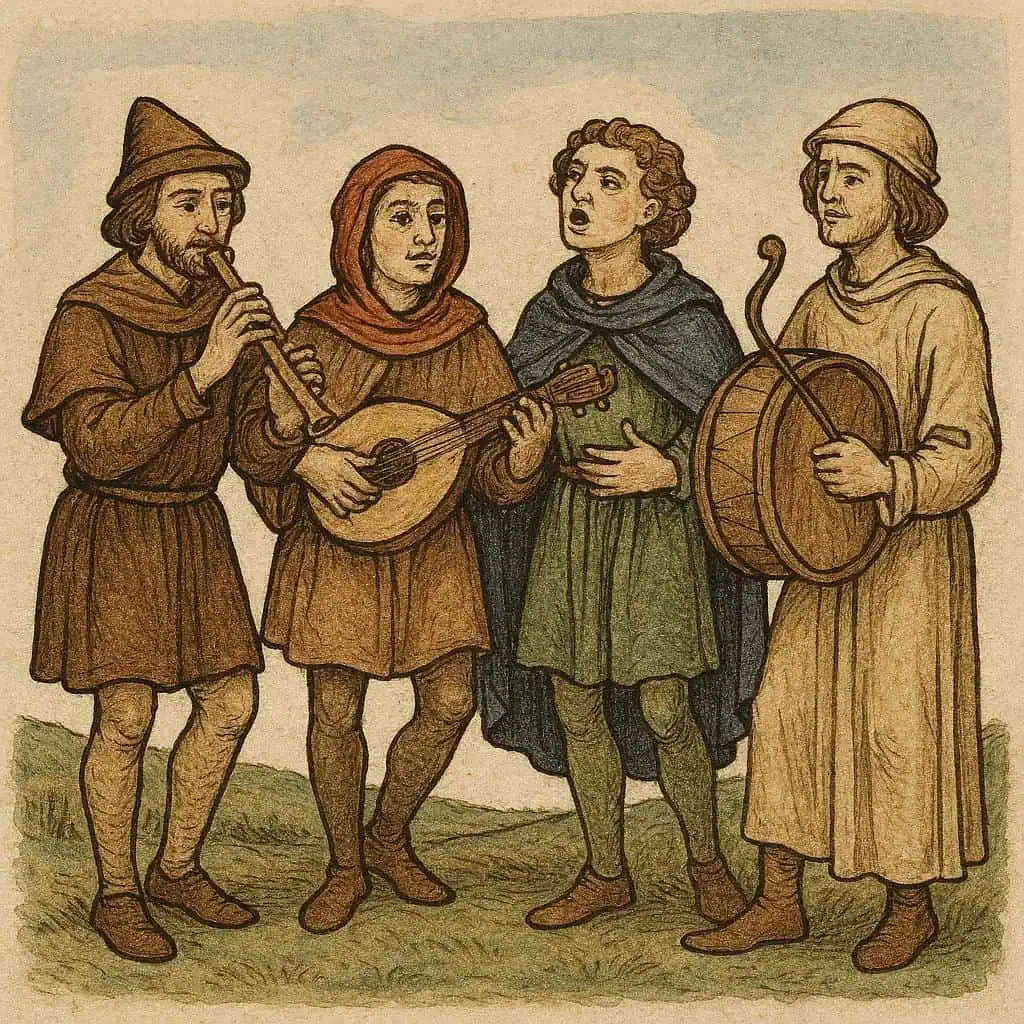
Minstrels were professional performers employed by nobles, towns, or guilds. Their role expanded from simple musicians to storytellers, instrumentalists, poets, and occasionally acrobats.
Key Historical Notes
- Not always household servants—many worked independently, traveling between courts.
- Could be hired for feasts, tournaments, and ceremonies.
- Known across Europe:
- France: Jongleurs / Menestrels
- Germany: Minnesingers
- Ireland: Bards
What Minstrels Performed
- Ballads about heroes, legends, and historical events
- Epic poems like the chansons de geste
- Music played on lutes, harps, fiddles, flutes, and drums
By the late Middle Ages, minstrels’ guilds regulated professional standards, but eventually the role declined with the rise of printed music and Renaissance court musicians.
5. Jesters – Entertainers of Kings and Nobles
Jesters (or fools) were entertainers who performed for royalty and nobles rather than the general population.
Their Responsibilities
- Told jokes, stories, and satirical songs
- Performed physical comedy or acrobatics
- Occasionally offered blunt political or personal commentary, protected by their role
Jesters sometimes enjoyed unique freedom to speak truths others dared not express, though this was not universal—some rulers tolerated criticism more than others.
6. Jugglers, Acrobats & Street Performers
Many entertainers performed for common crowds rather than courts.
Jugglers
- Skilled in juggling balls, knives, rings, and torches
- Often associated with fairs and marketplaces
- Sometimes criticized by clergy for encouraging disorder
Acrobats
- Walked tightropes
- Performed flips, balancing acts, and stunts
- Appeared in towns and festivals across Europe
Conjurers / Illusionists
- Performed sleight-of-hand tricks
- Used props such as cups, balls, ropes, and boxes
- Entertained both noble and common audiences
7. Strolling Players (Late Medieval / Early Tudor Period)
Although not strictly medieval, strolling players became prominent in the late 15th and early 16th centuries.
They performed biblical plays, morality plays, and popular tales such as Robin Hood.
Regulation and Decline
- In 1572, the English government banned unauthorized acting troupes under the Vagabonds Act, fearing vagrancy and the spread of disease.
- Only performers licensed by a noble household could legally perform.
These troupes helped pave the way for Renaissance theatre and eventually Shakespeare’s era.
Why Medieval Entertainers Were Important
Medieval entertainers:
- Preserved oral culture, myths, and histories
- Spread news and ideas across distant regions
- Provided emotional relief during hardship
- Strengthened community bonds through festivals and rituals
Their legacy remains visible today in modern music, theatre, and performance arts.

Medieval Entertainers – FAQ
Medieval Entertainers Quiz
1. Which entertainer was known for composing poetry about courtly love?
2. Who often carried news and stories between medieval towns?
3. What were mummers best known for?
4. Which entertainer was employed to amuse nobles and kings with humor and satire?
5. Minstrels mainly performed:
6. What skill was commonly associated with jugglers?
7. Which medieval entertainer performed illusions and sleight-of-hand tricks?