Who were the medieval nobility?
The medieval nobility were the landowning elite of medieval society who held power through inheritance, military service, and loyalty to a monarch. They formed the upper ranks of the feudal system and played a central role in governing land, leading armies, and maintaining order throughout the Middle Ages. In medieval Europe, wealth and power were closely tied to land ownership. The nobility controlled vast estates worked by peasants and serfs, and in return for their privileges they owed military and political service to their king or overlord.
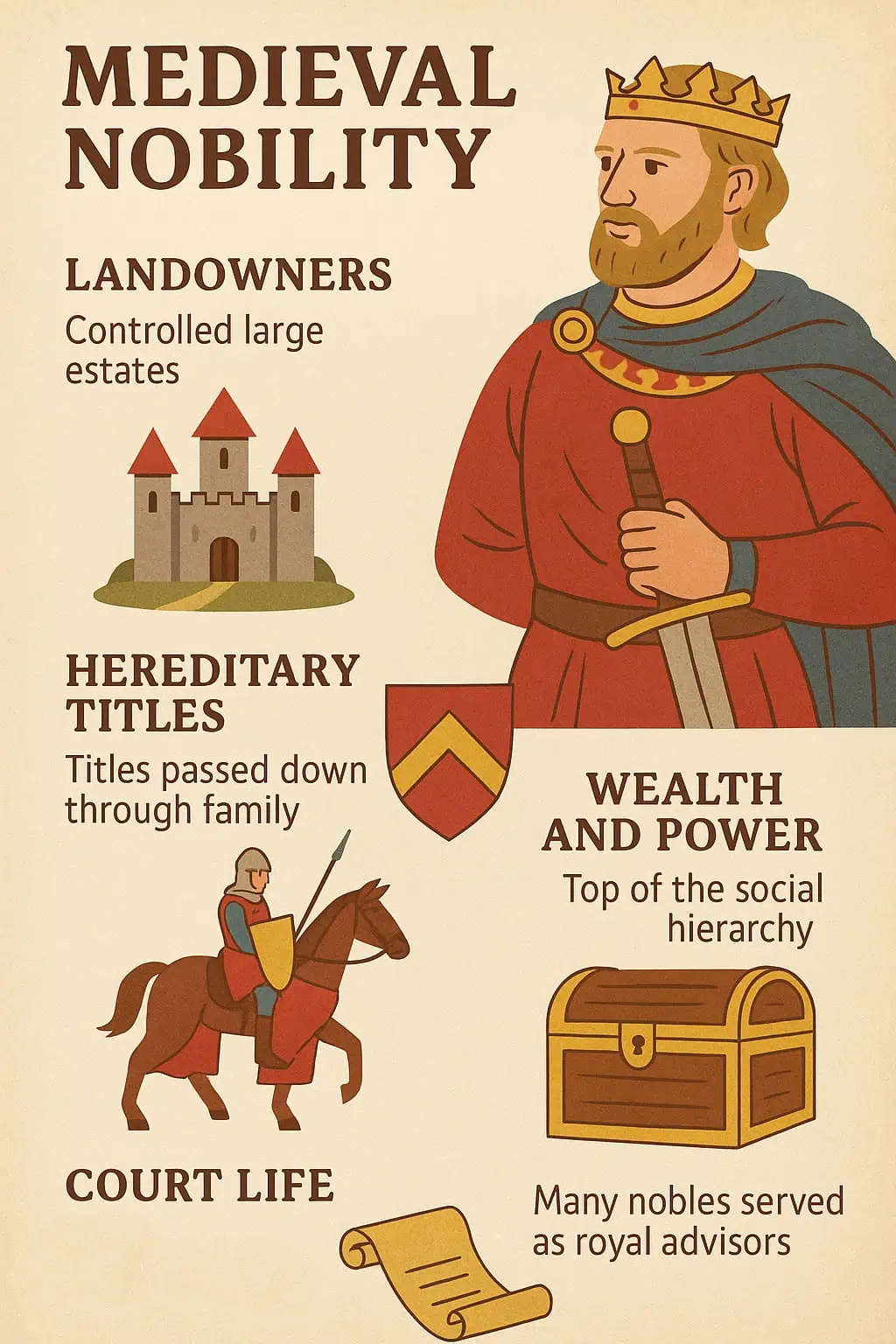
The Place of Nobility in Medieval Society
Medieval society was often described as being divided into three estates:
- Those who pray – the clergy
- Those who fight – the nobility
- Those who work – peasants and townspeople
The nobility were expected to defend society, enforce law and order, and support the Church and the crown. In practice, their power could rival that of kings, especially during periods of weak royal authority.
👑 Click-to-Reveal: Medieval Nobility Explained
Who Were the Medieval Nobility?
The medieval nobility were the landowning elite who held power through inheritance, military service, and loyalty to a king within the feudal system.
Nobility and the Feudal System
Under feudalism, nobles held land from the king in exchange for loyalty, advice, and military service, forming the backbone of medieval government.
Ranks Within the Nobility
The nobility included dukes, counts (earls), barons, lords, and knights. Wealth and influence varied greatly, even within the same rank.
Duties and Responsibilities
Medieval nobles were expected to lead troops, administer justice, collect rents, maintain castles, and support the king during war and peace.
Daily Life of Medieval Nobles
Noble life involved estate management, hunting, feasting, court politics, and military training, though disease and warfare were constant threats.
Role of Noblewomen
Noblewomen managed households, estates, and alliances, and could rule lands as regents when husbands were absent or deceased.
Limits to Noble Power
Although powerful, nobles were constrained by royal authority, church law, rival lords, and the gradual rise of stronger central governments.
Legacy of the Medieval Nobility
The influence of the medieval nobility survives in titles, castles, heraldry, land ownership, and political traditions across Europe.
The Feudal System and Noble Power
What was the feudal system?
Feudalism was a system of landholding and loyalty that structured medieval political life. Kings granted land (fiefs) to nobles in exchange for loyalty, military service, and advice.
Under the feudal system:
- The king was the ultimate owner of the land
- Nobles held land as vassals
- Knights served nobles in return for land or payment
- Peasants and serfs worked the land
Feudal relationships were based on personal oaths, not modern laws, and varied greatly by region and period.

Ranks Within the Medieval Nobility
The medieval nobility were not a single uniform group. Status, wealth, and influence varied enormously.
Common noble ranks included:
- King – the supreme ruler
- Dukes and counts (earls) – powerful regional lords
- Barons and lords – landholders owing loyalty to greater nobles
- Knights – lesser nobles or retainers, often landholding warriors
Not all nobles were wealthy. Some knights owned little land, while great dukes controlled territories larger than modern countries.
Duties and Responsibilities of the Nobility
Medieval nobles had military, political, and judicial responsibilities. Their authority came with obligations as well as privileges, and their status depended on fulfilling these duties.
Noble duties included:
- Providing military service to the king
- Leading armies and knights in times of war
- Administering justice within their lands
- Collecting taxes and rents from their estates
- Maintaining castles and defences
Failure to meet these obligations could result in the loss of land, titles, or royal favour.
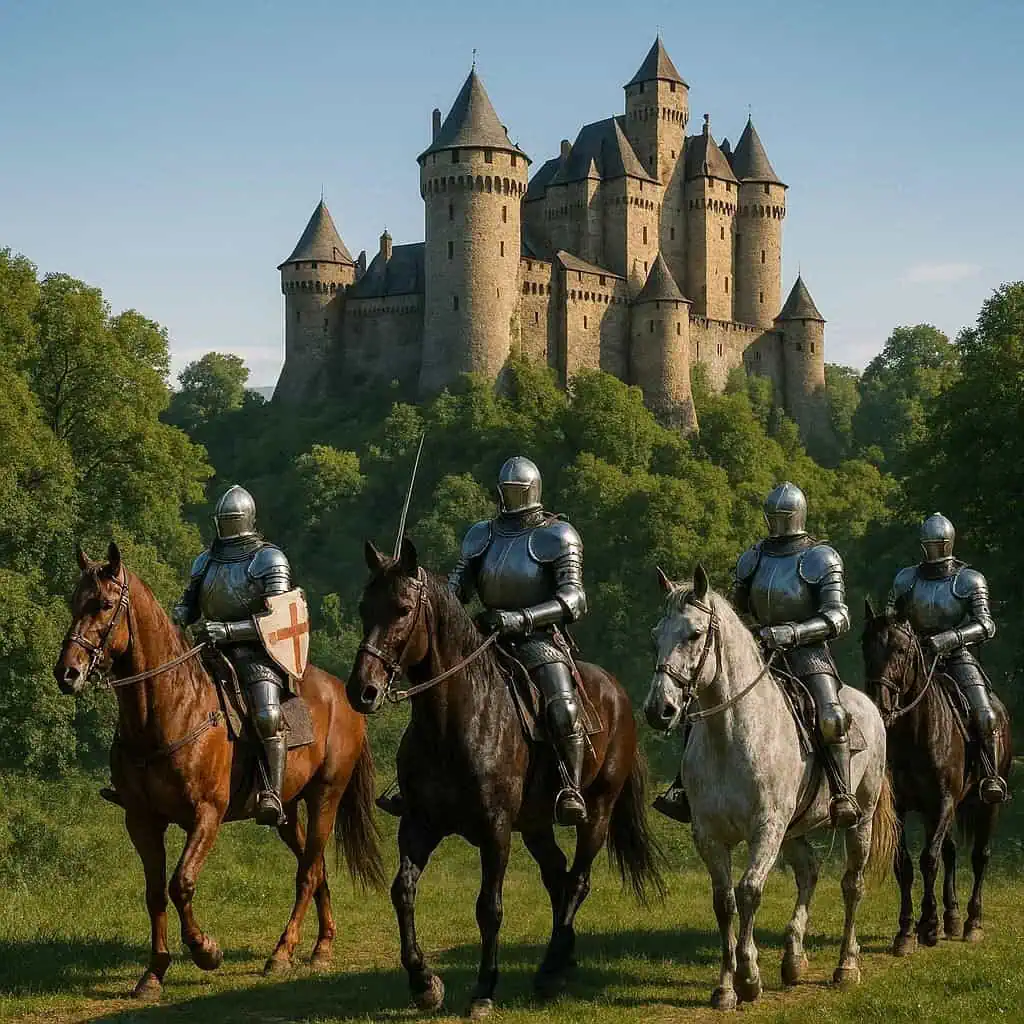
Castles and Noble Power
Castles were the physical symbol of noble authority. They served as:
- Military fortifications
- Administrative centres
- Noble residences
From their castles, nobles controlled surrounding lands, stored food and wealth, and enforced their rule. Over time, castles also became more comfortable residences, reflecting the noble lifestyle as well as military needs.
Daily Life of the Medieval Nobility
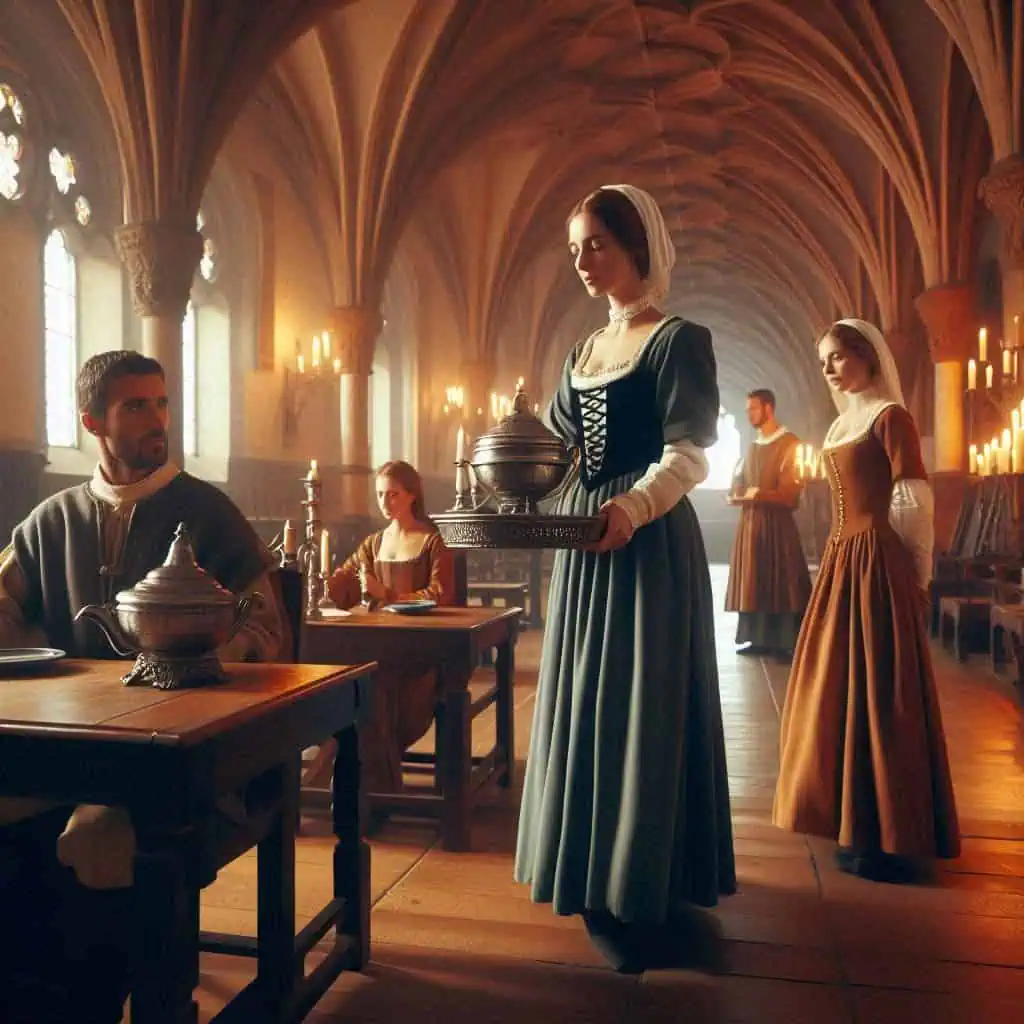
The daily life of medieval nobles was far more comfortable than that of peasants, but it was still shaped by warfare, politics, and duty.
Noble life included:
- Managing estates and servants
- Training for warfare and hunting
- Attending court and councils
- Hosting feasts and religious celebrations
Despite their wealth, medieval life was harsh by modern standards. Disease, political instability, and violent conflict were constant threats.
Noble Women in the Middle Ages
What was the role of noblewomen?
Noblewomen played vital roles in managing households, estates, and family alliances. When husbands were away at war, noblewomen often acted as estate managers and local authorities.
Noblewomen:
- Oversaw servants and finances
- Arranged marriages and alliances
- Educated children
- Sometimes ruled lands as regents or widows
Marriage was a key political tool among the nobility, used to secure land, wealth, and loyalty.
Nobility, the Church, and the Crown
The medieval nobility were closely connected to both the Church and the monarchy.
- Many nobles donated land to monasteries
- Younger sons often entered the clergy
- Bishops and abbots were frequently drawn from noble families
At the same time, nobles could challenge royal authority. Rebellions, civil wars, and power struggles between kings and nobles were common throughout the Middle Ages.
Limits to Noble Power
Although powerful, the medieval nobility were not all-powerful. Their authority was restricted by a range of political, religious, and economic forces.
Their authority was limited by:
- Royal authority, particularly under strong kings
- Church law and religious influence
- Competing nobles and internal rivalries
- Economic constraints such as poor harvests or debt
As medieval states became more centralised, royal governments increasingly reduced noble independence, transforming the role of the nobility rather than eliminating it.
Decline and Transformation of the Nobility
From the late medieval period onward, changes such as:
- Gunpowder warfare
- Standing armies
- Stronger monarchies
- Growing towns and trade
began to weaken the traditional military role of the nobility. While nobles retained social status, their political power was gradually transformed rather than eliminated.
Legacy of the Medieval Nobility
The legacy of the medieval nobility can still be seen today in:
- Titles of nobility
- Land ownership patterns
- Castles and historic estates
- Parliamentary and aristocratic traditions
- Heraldry and family lineages
In Summary
The medieval nobility were the landowning elite who shaped politics, warfare, and society throughout the Middle Ages. Their power rested on land, military service, and feudal loyalty, but varied greatly by time and place. Though their role changed over centuries, the influence of medieval nobles remains visible in modern Europe.
❓ Medieval Nobility – Frequently Asked Questions
Who were the medieval nobility?
The medieval nobility were the landowning elite who held power through inheritance, feudal loyalty, and military service.
What was the role of nobles in the feudal system?
Nobles held land from the king in exchange for loyalty, advice, and military support, forming the backbone of medieval governance.
Were all medieval nobles wealthy?
No. While great lords could be extremely wealthy, many lesser nobles and knights owned little land and lived modestly.
What duties did medieval nobles have?
Their duties included military leadership, administering justice, collecting rents, and maintaining castles and defences.
Did noblewomen have power?
Yes. Noblewomen managed estates, arranged alliances, and sometimes ruled lands as regents or widows.
How did nobles maintain control?
Through land ownership, military force, castles, legal authority, and loyalty networks.
Could nobles lose their status?
Yes. Failure to meet obligations or rebellion against the king could lead to loss of land and titles.
What is the legacy of medieval nobility?
Their legacy survives in titles, castles, heraldry, land ownership, and political traditions.
🛡 Medieval Nobility Quiz
📜 Glossary of Medieval Nobility Terms
Nobility
Landowning elite who ruled through feudal loyalty and inheritance.
Feudalism
A system of landholding based on loyalty and military service.
Vassal
A noble who held land from a superior lord.
Fief
Land granted in exchange for service and loyalty.
Knight
A mounted warrior who served a noble lord.
Castle
A fortified residence symbolising noble authority.