Medieval knights were among the most powerful and recognizable figures of the Middle Ages. More than heavily armored cavalry, they formed the military backbone of the feudal system and played a decisive role in medieval warfare, politics, and the social hierarchy across medieval Europe.
Bound by oaths of loyalty and guided by the ideals of chivalry, knights served kings and nobles, defended castles and territories, and fought in some of the most influential conflicts in European history. Their impact extended beyond the battlefield into culture, religion, and enduring legend — shaping how later generations understood honor, duty, and heroism.

Understanding Medieval Knights
This Medieval Knights Questions & Answers hub is designed to provide clear, authoritative explanations of the most important aspects of knighthood. Inside, you will discover how boys trained for knighthood, the responsibilities knights carried in both war and peace, the weapons and armor they relied upon, and the ethical code that governed their behavior.
Whether you are researching knight training, exploring battlefield roles, learning about tournaments, or examining the realities of daily life in the Middle Ages, this page serves as a structured gateway to the world of medieval knighthood — connecting you to deeper guides and expert resources across our site.
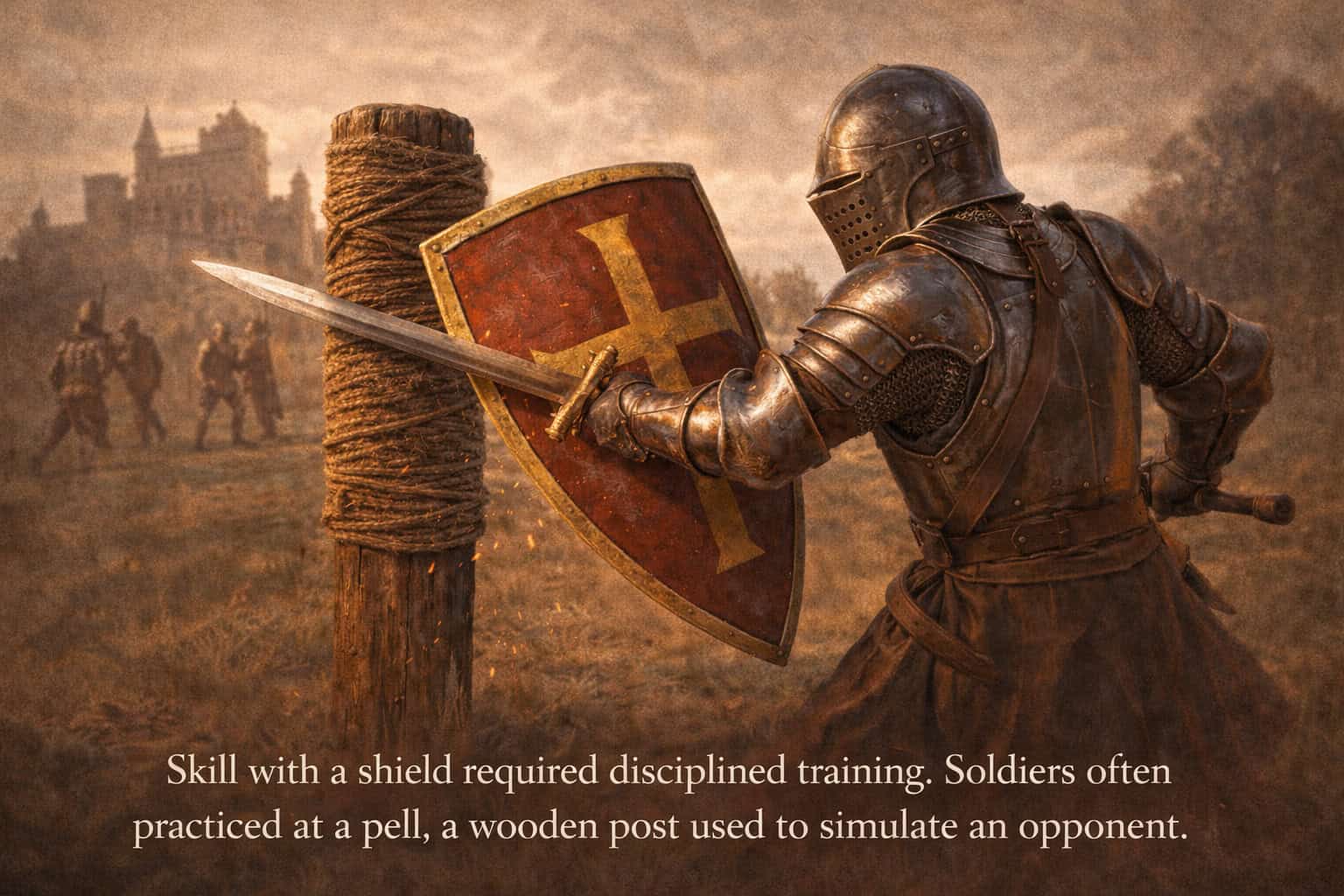
⚔️ Medieval Knights — At a Glance
Medieval knights were elite warriors who shaped warfare, politics, and social order throughout the Middle Ages. Bound by feudal loyalty and guided by the ideals of chivalry, they served kings, defended castles, and fought in decisive battles across Europe.
- Military Elite: Highly trained cavalry who dominated medieval battlefields.
- Feudal Servants: Knights pledged loyalty and military service to powerful lords.
- Symbols of Honor: Chivalric ideals emphasized courage, duty, and protection of the weak.
- Expensive Profession: Armor, weapons, and warhorses made knighthood a status of wealth.
- Cultural Legacy: Knightly legends continue to influence modern ideas of heroism.
Understanding medieval knights reveals how military power and social hierarchy defined much of medieval European civilization.
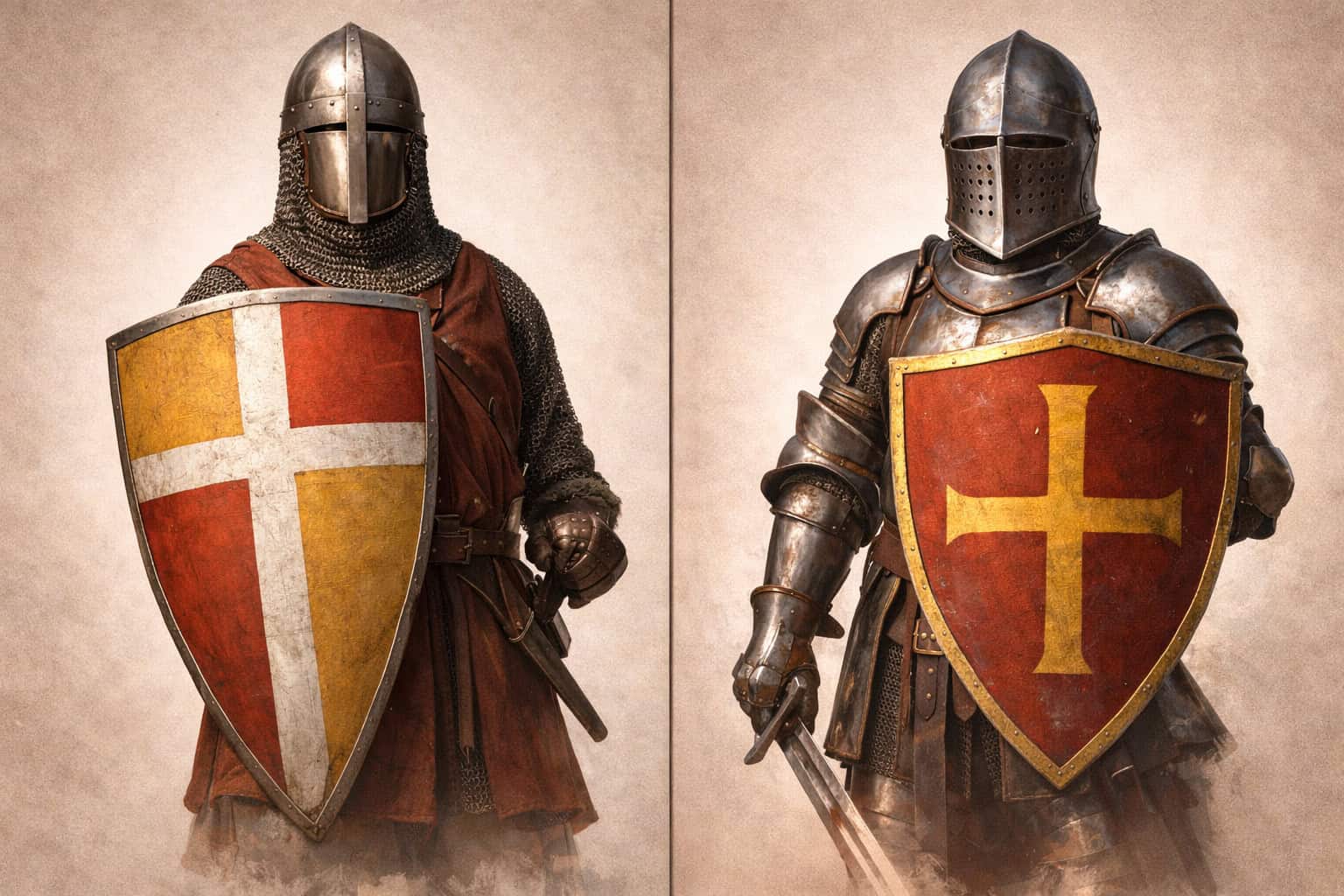
🕰️ Timeline of Medieval Knighthood
Knighthood evolved over centuries, adapting to changes in warfare, political power, and military technology.
- 8th–9th Centuries: Early mounted warriors emerge under Charlemagne, forming the foundation of European knighthood.
- 10th–11th Centuries: Feudalism strengthens the knight’s role as a landholding military servant.
- 12th Century: Chivalry develops, shaping knightly conduct both in war and society.
- 13th Century: Knights reach peak battlefield importance during crusades and major conflicts.
- 14th–15th Centuries: gunpowder weapons and professional armies reduce the military dominance of knights.
By the late Middle Ages, knighthood shifted from a purely military role toward one increasingly associated with status and nobility.
⚖️ How the Role of Knights Changed Over Time
Although often viewed as timeless armored warriors, the responsibilities and battlefield importance of knights evolved significantly throughout the Middle Ages.
Early Medieval Knights
- Primarily mounted warriors serving regional rulers
- Equipment was simpler but highly effective
- Strong ties to emerging feudal structures
- Focused mainly on territorial defense
High Medieval Knights
- Elite heavy cavalry dominating European warfare
- Closely associated with the code of chivalry
- Central participants in crusades and major conflicts
- Increasingly influential within noble society
Late Medieval Knights
- Faced competition from infantry and longbowmen
- Gunpowder weapons reshaped battlefield tactics
- Knighthood became more ceremonial
- Status shifted toward aristocratic prestige
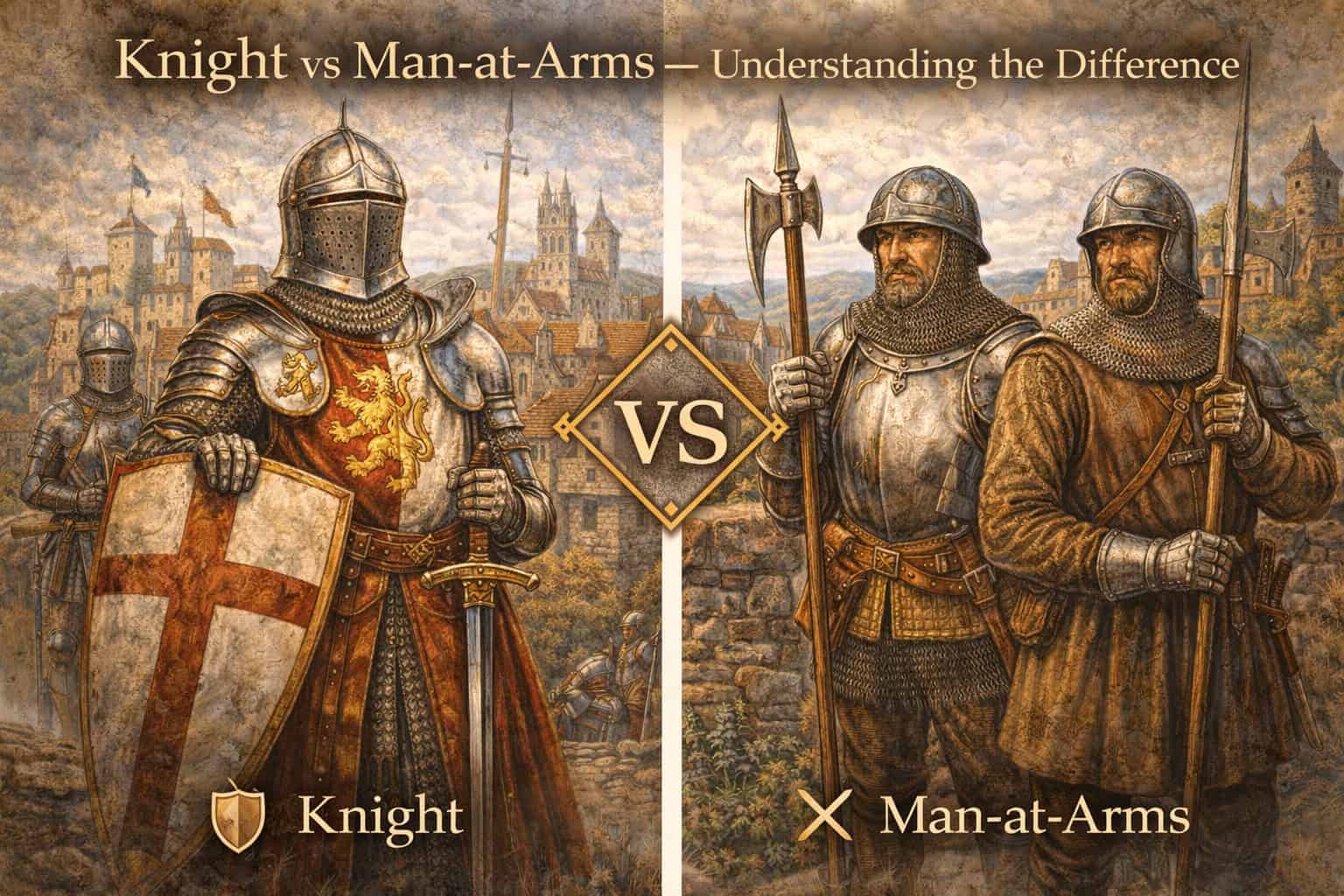
⚔️ Knight vs Man-at-Arms — Understanding the Difference
Although often confused in popular history, knights and men-at-arms occupied different positions within medieval military society. Both were heavily armed warriors, but their social status, training, and obligations set them apart.
🏇 Medieval Knight
- Social Rank: Member of the lower nobility
- Status: Held land or received income for military service
- Training: Began in childhood as a page and later a squire
- Code: Expected to follow the ideals of chivalry
- Role: Elite cavalry, battlefield leaders, and feudal retainers
Knighthood was both a military role and a social distinction, often granting prestige and political influence.
🛡️ Man-at-Arms
- Social Rank: Professional soldier, not necessarily noble
- Status: Paid for service rather than bound by feudal duty
- Training: Skilled fighter but without the ceremonial path to knighthood
- Code: Military discipline rather than chivalric tradition
- Role: Served in cavalry or infantry depending on campaign needs
By the late Middle Ages, many armies relied increasingly on experienced men-at-arms, reflecting the shift toward professional warfare.
❓ Medieval Knights — Frequently Asked Questions
Medieval knights played a central role in warfare, politics, and feudal society. These commonly asked questions clarify how knights lived, fought, and rose to prominence during the Middle Ages.
What was a medieval knight?
A knight was a heavily armed mounted warrior who typically belonged to the lower nobility and served a lord or monarch in exchange for land, income, or status.
How did someone become a knight?
Training usually began around age seven as a page, followed by service as a squire. After demonstrating loyalty, skill, and discipline, the candidate could be formally knighted in a ceremonial dubbing.
Did all knights follow the code of chivalry?
Chivalry promoted ideals such as honor, courage, loyalty, and protection of the weak. While many knights aspired to these values, real behavior often depended on politics and the realities of war.
What weapons did knights use?
Knights commonly fought with swords, lances, shields, and maces while wearing chain mail or later plate armor for protection.
Were knights always wealthy?
Maintaining armor, horses, and equipment was expensive, meaning most knights came from noble or landholding families, though some earned knighthood through exceptional service.
What role did knights play in feudal society?
Knights acted as military retainers, defended territories, enforced authority, and sometimes governed estates on behalf of powerful lords.
Knights were more than battlefield fighters — they were key figures in the social and political framework of medieval Europe.
📖 Glossary of Medieval Knight Terms
Understanding knighthood is easier when you recognize the key terms that defined medieval warfare, training, and social hierarchy.
Chivalry: A moral and social code associated with knighthood that emphasized honor, loyalty, courage, and respect.
Dubbing: The formal ceremony in which a squire was declared a knight, often accompanied by religious blessings and symbolic gestures.
Feudalism: The hierarchical system that structured medieval society, linking land ownership with military service and loyalty.
Man-at-Arms: A professional, heavily armed soldier who fought on horseback or foot but was not necessarily a member of the nobility.
Page: A young boy in training for knighthood who served in a noble household while learning etiquette and basic combat skills.
Squire: An apprentice knight responsible for assisting a fully trained knight and mastering weapons, armor, and battlefield tactics.
Tournament: A staged combat event where knights tested their abilities, gained prestige, and practiced warfare skills.
Vassal: A noble who pledged loyalty and military service to a higher lord in return for protection and land.
These terms reveal how knighthood functioned as both a military profession and a social institution.