Medieval Eastern Europe was a region shaped by powerful kingdoms, shifting borders, and rich cultural exchanges. From the forests of Poland and Lithuania to the Carpathian Basin of Hungary and the riverlands of the Rus’, this vast area formed a crossroads between East and West, where diverse peoples—Slavs, Balts, Magyars, and steppe nomads—interacted, traded, and often clashed. This complex world produced an enduring legacy that still influences the region today.

Click & Reveal: Medieval Eastern Europe Q&A
A Changing Landscape of Power
Throughout the Middle Ages, Eastern Europe was not a unified region but a patchwork of rising and falling states, each with its own traditions, rulers, and political ambitions. It was shaped by the influence of the Byzantine Empire, the later threat of the Ottoman Empire, and the expansive reach of the Mongol Empire, especially after the 13th century.
Rather than being a passive frontier, Eastern Europe was a dynamic arena where Christianity spread, trade routes flourished, cities expanded, and powerful dynasties forged lasting states.
Did You Know?
Medieval Eastern Europe was never a single unified region. Instead, it formed a constantly shifting mosaic of kingdoms, principalities, and duchies, each pursuing its own political goals. Powerful outside forces also shaped the region’s destiny. The Byzantine Empire spread religion, literature, and law; the Mongol Empire transformed political power after the 13th century; and the rising Ottoman Empire forced many states to adapt, defend themselves, or forge new alliances. These competing influences created one of the most culturally diverse and politically dynamic regions in the medieval world.
The Kingdom of Poland
The Kingdom of Poland emerged as a major power under the Piast dynasty, with its early centers at Gniezno and later Kraków. During the Middle Ages, Poland:
- Adopted Christianity in 966, strengthening ties with Western Europe
- Developed into a centralized monarchy
- Formed political alliances with Lithuania
- Became a cultural bridge between Western and Eastern Europe
By the 14th–15th centuries, Poland reached its height under the Jagiellonian dynasty, shaping the political balance of the region.

The Grand Duchy of Lithuania
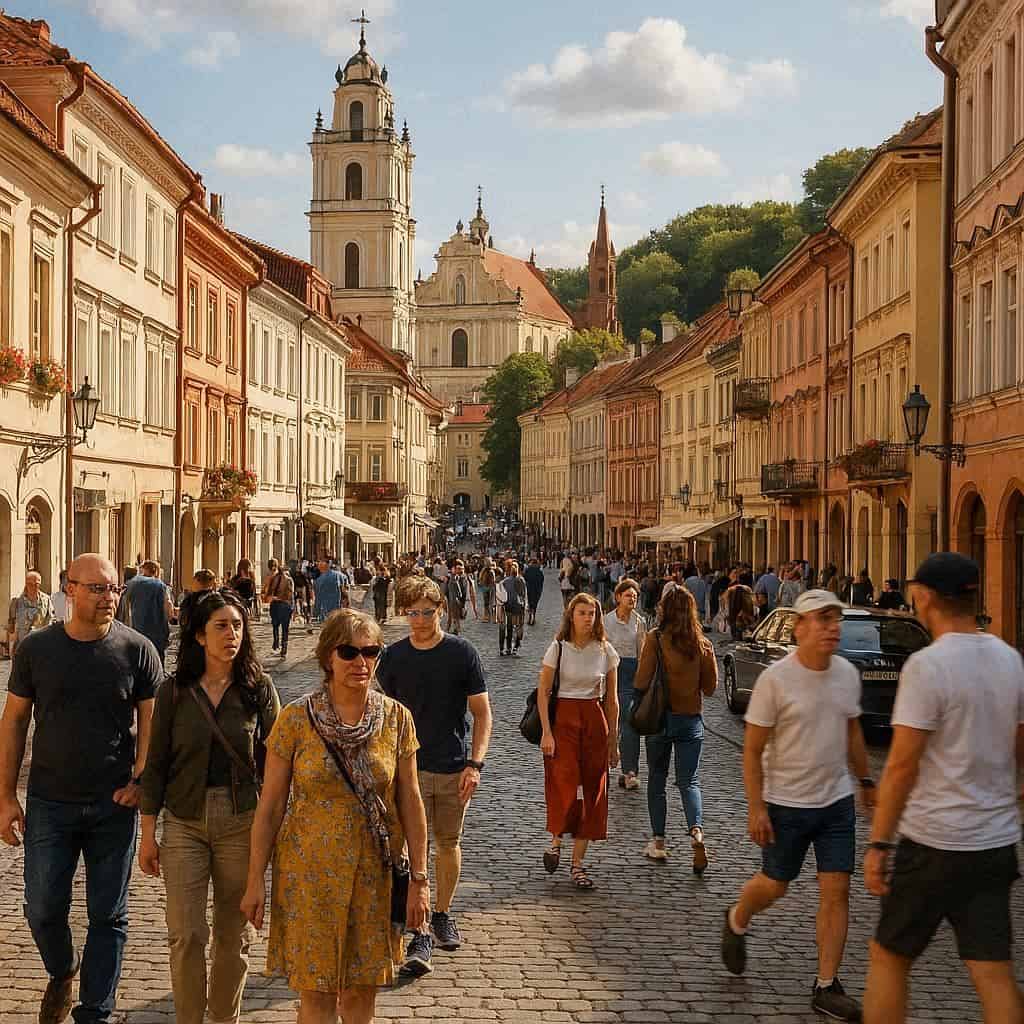
One of medieval Europe’s most remarkable states, the Grand Duchy of Lithuania, expanded across vast territories of modern Lithuania, Belarus, Ukraine, and parts of Poland.
Key features:
- Governed from Vilnius, a thriving political and cultural center
- Absorbed much of former Kievan Rus’ territory
- Practiced both pagan traditions (until 1386) and later Christianity
- Formed the Polish–Lithuanian Union through the marriage of Jogaila and Queen Jadwiga
At its height in the 14th century, Lithuania was one of the largest states in Europe.
The Kingdom of Hungary
The Kingdom of Hungary was founded by the Magyars in the Carpathian Basin. Early medieval capitals included Esztergom and Székesfehérvár, with Buda rising to prominence later.
Medieval Hungary:
- Controlled lands in Hungary, Slovakia, Croatia, Transylvania, and parts of Serbia
- Became a strong Christian kingdom after St. Stephen I’s coronation in 1000
- Fought against both Mongol invasions (1241–42) and later Ottoman expansion
Hungary’s position made it one of Europe’s key defensive frontiers.

The Principality of Moldavia
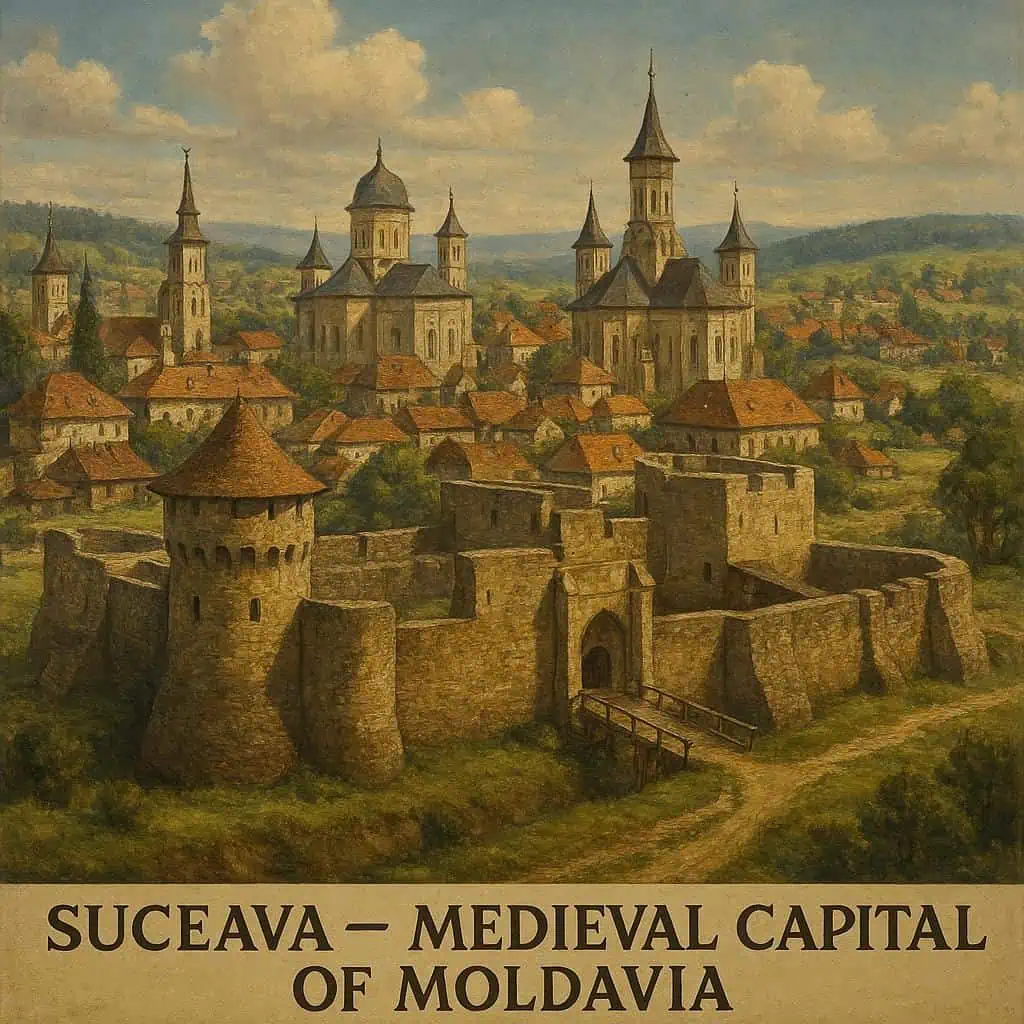
The Principality of Moldavia emerged in the 14th century between the Carpathians and the Black Sea.
Historical notes:
- Centers included Suceava and later Iași
- Maintained complex relations with Poland, Hungary, and the Ottoman Empire
- Produced legendary rulers such as Stephen the Great, who resisted Ottoman expansion
- Became known for its painted monasteries and vibrant Orthodox culture
Though smaller than its neighbors, Moldavia was an influential regional power.
The Medieval Serbian States
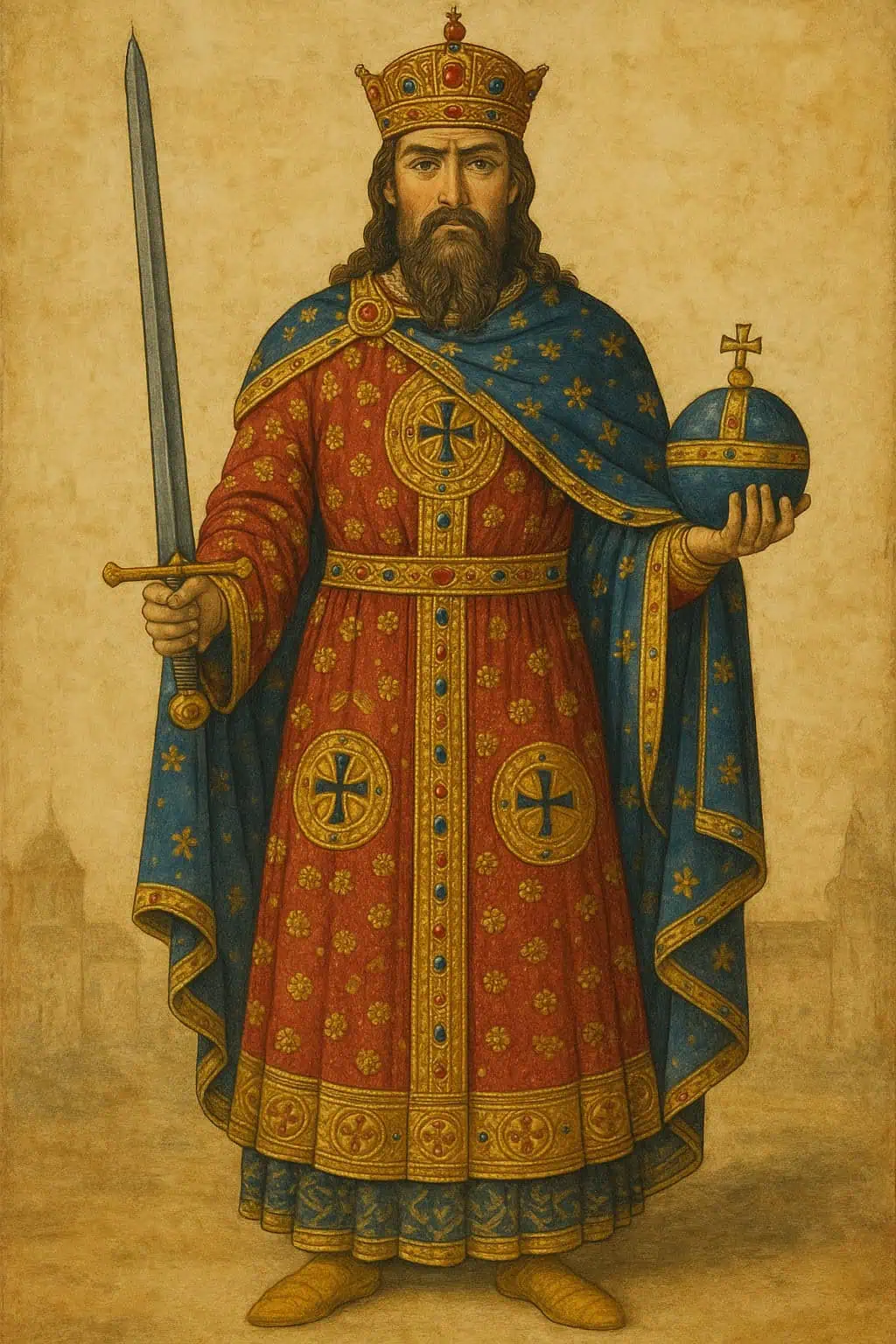
Medieval Serbia underwent several phases, from early principalities to the powerful Serbian Kingdom and later Serbian Empire under Stefan Dušan (r. 1331–1355).
Highlights:
- Early capital at Ras
- Strong cultural influence from the Byzantine Empire
- Expanded into Macedonia, Albania, and Greece during its imperial phase
- Produced distinctive Serbian Orthodox art and architecture
After Dušan’s death, the empire fragmented, eventually falling under Ottoman rule.
Cultural Exchanges and Influences
Medieval Eastern Europe drew from a wide range of civilizational influences:
From Byzantium:
- Christianity (Orthodox),
- Art and architecture,
- Law, administration, and literacy.
From the Mongols:
- Military strategies,
- Political restructuring,
- Tribute systems across the Rus’ lands.
From the West:
- Catholic Christianity,
- Chivalric culture,
- Western forms of governance.
This blending of cultures shaped a region that was neither fully Eastern nor fully Western—but uniquely its own.
A Shared but Diverse Legacy
Despite the differences between Poles, Hungarians, Lithuanians, Serbs, Rus’, Bulgarians, and others, medieval Eastern Europe developed:
- Shared religious traditions (Christianity in multiple forms)
- Distinctive artistic styles
- Expanding trade networks
- Strong dynastic states
- Resilience in the face of conquest
The medieval foundations of these societies continue to influence modern national identities.
Did You Know?
In medieval Eastern Europe, people in different kingdoms could share the same faith but follow different church traditions. A ruler in Poland might support the Latin (Catholic) Church, while a ruler in Serbia or Bulgaria followed the Orthodox Church—yet all saw themselves as part of the wider Christian world.
Trade routes linked these societies together. Merchants carried not only goods like salt, furs, grain, and cloth, but also languages, ideas, and artistic styles. A market in Kraków or Buda might include traders from the German lands, the Italian cities, and the Black Sea ports, all bargaining side by side.
Over time, shared experiences of war, conversion, dynastic marriages, and foreign invasions helped create a sense of regional connection—while still allowing Poles, Hungarians, Lithuanians, Serbs, Rus’, Bulgarians, and others to keep their own distinct languages, customs, and identities.
The Enduring Legacy of Medieval Eastern Europe
Medieval Eastern Europe was far more than a frontier between empires—it was a vibrant region where kingdoms rose, cultures blended, and identities took shape. From the flourishing courts of Poland and Hungary to the vast territories of Lithuania and the spiritual centers of the Rus’, each state contributed to a shared yet diverse heritage. The struggles against outside powers, the forging of political unions, and the development of artistic and religious traditions all helped define a region whose influence stretches into the present day.
Understanding medieval Eastern Europe allows us to see how resilience, adaptation, and cultural exchange laid the foundations for many of the nations that stand there today.
FAQ: Medieval Eastern Europe
Medieval Eastern Europe Quiz
Glossary: Medieval Eastern Europe
A powerful eastern empire that influenced religion, art, and law across Eastern Europe.
A series of 13th-century conquests that reshaped power across the Rus’ and surrounding regions.
A rising medieval power that expanded into the Balkans, influencing Serbia, Bulgaria, and Hungary.
One of medieval Europe’s largest states, ruling lands across Lithuania, Belarus, and Ukraine.
A medieval federation of Slavic principalities that became a cultural and political center of Eastern Europe.
A political alliance formed through marriage between ruling families, such as Poland and Lithuania.
A geographic region dominated by the medieval Kingdom of Hungary.
Medieval Eastern Europe | Great Books
“The Formation of a Medieval State: Poland, 960-1370” by Robert Bartlett
This book provides a comprehensive study of the political, social, and cultural development of the Kingdom of Poland during the medieval period.
“The Crusade of Varna, 1443-45” by John V. A. Fine Jr.
Focusing on the Kingdom of Hungary and the Crusade of Varna, this book explores the complex interactions between Eastern European powers, the Ottoman Empire, and the broader context of crusading in the region.
“The Lands of Partitioned Poland, 1795-1918” by Piotr S. Wandycz
While not strictly medieval, this book covers the history of Eastern Europe, including Poland, during the era of partitions and sheds light on the region’s political and social dynamics leading up to the modern period.
“The Northern Crusades: Second Edition” by Eric Christiansen
This book examines the Christian Crusades and their impact on the Baltic region, including the Teutonic Knights and their campaigns in medieval Eastern Europe
.
“Medieval Russian Fortresses AD 862–1480” by Konstantin Nossov
Focusing on the fortifications and military structures of medieval Russia, this book provides insight into the defensive strategies and conflicts of Eastern European powers during the medieval period.
These books offer valuable perspectives on the political, cultural, and military aspects of medieval Eastern Europe, providing a deeper understanding of the region’s history during this era.