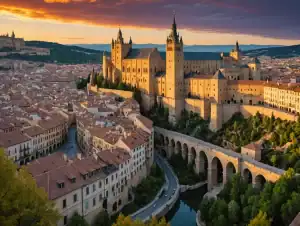
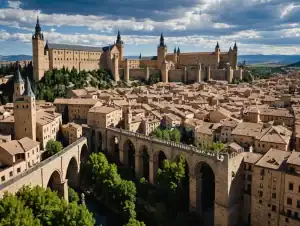
Spain, a country with a rich and diverse history, has been ruled by many kings throughout the early to late medieval period.

From the Visigoths to the Catholic Monarchs, the kings of Spain have played a significant role in shaping the destiny of their country and the world.
In this article, we will provide a comprehensive list of the kings of Spain from the early to late medieval period, highlighting their key events, achievements, and contributions to Spanish history.

Early Medieval Period (5th century to 8th century)
Theodoric I (c. 410-451) The first Visigothic king of Spain, he established his rule over most of the Iberian Peninsula and successfully defended his kingdom against the Roman Empire and other invaders.
Euric (c. 420-484) The most successful Visigothic king of Spain, he expanded the territory of his kingdom and established the Visigothic code, a legal system that became the basis for medieval law in Spain.
Rodrigo (c. 687-711) The last Visigothic king of Spain, his reign was marked by political instability and military conflict. He was defeated and killed by the Arab invasion of Spain, which marked the beginning of the Islamic rule in the country.
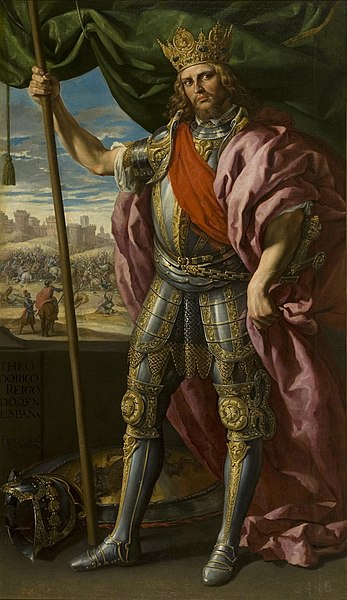
High Medieval Period (8th century to 15th century)
Alfonso VI (1030-1109) The first king of the Kingdom of Castile, he reconquered Toledo and other cities from the Moors and established a strong central government. He also promoted the arts and the education and founded the University of Salamanca.
Ferdinand III (1199-1252) Known as the Saint, he conquered Seville and other cities from the Moors and established the Kingdom of Andalusia. He also founded the Cathedral of Seville and promoted the arts and the culture.
Ferdinand II of Aragon (1452-1516) and Isabella I of Castile (1451-1504) Known as the Catholic Monarchs, they united their kingdoms and completed the Reconquista, the Christian reconquest of Spain from the Moors. They also sponsored Christopher Columbus’ voyages to the New World and established the Spanish Inquisition.

Late Medieval Period (15th century to 16th century):
Charles I of Spain (1500-1558) Known as Charles V, he inherited the kingdoms of Spain, Austria, and the Holy Roman Empire and became one of the most powerful monarchs in Europe. He also sponsored the exploration of the New World and promoted the arts and the culture.
Philip II of Spain (1527-1598) Known as the Prudent, he continued the policies of his father, Charles V, and established the Spanish Empire, which included territories in the Americas, Asia, and Africa. He also promoted the Counter-Reformation and sponsored the construction of the Escorial Palace.
Philip III of Spain (1578-1621) Known as the Pious, he continued the policies of his father, Philip II, and strengthened the power of the Spanish monarchy. He also promoted the arts and the culture and founded the Royal Academy of History.

Conclusion
The kings of Spain from the early to late medieval period played a crucial role in the growth and influence of their country and the world. From the Visigoths to the Catholic Monarchs, they shaped the destiny of Spain and contributed to the development of European civilization.
By understanding their key events, achievements, and contributions, we can gain a deeper appreciation for the history and culture of this great country.