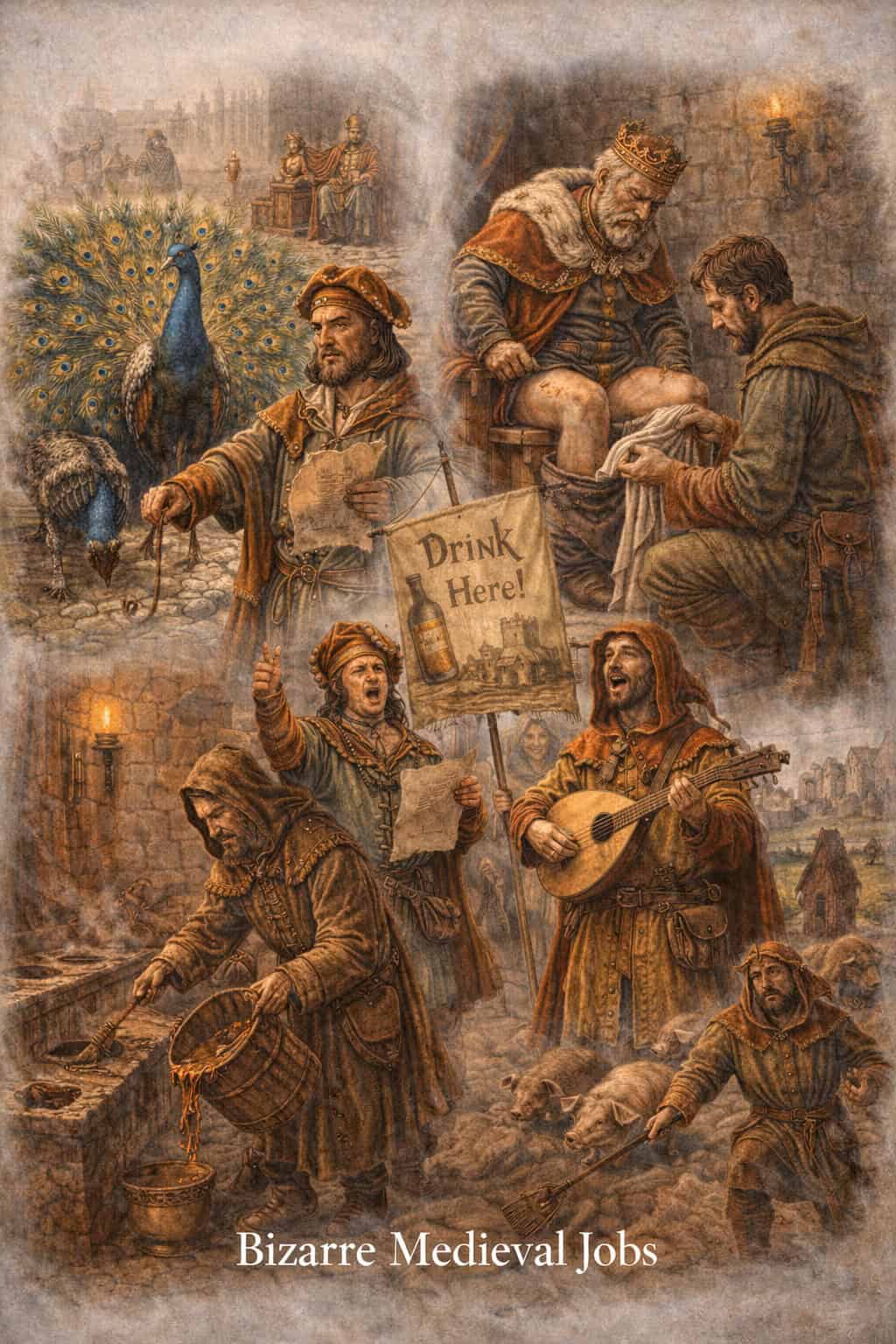
The Middle Ages were not only an age of knights, castles, and battles, but also a time when everyday life depended on a wide range of unusual and often uncomfortable occupations. Long before modern sanitation, medicine, and technology, medieval communities relied on people willing to perform tasks that many today would find shocking or unpleasant.
These bizarre medieval jobs were not curiosities—they were necessary. From caring for animals and managing waste to preserving knowledge and serving royal households, each role played a part in keeping medieval society functioning. While some of these occupations were informal or situational rather than official guild trades, they offer a fascinating insight into how people survived and adapted in the Middle Ages.
The Plague Doctor
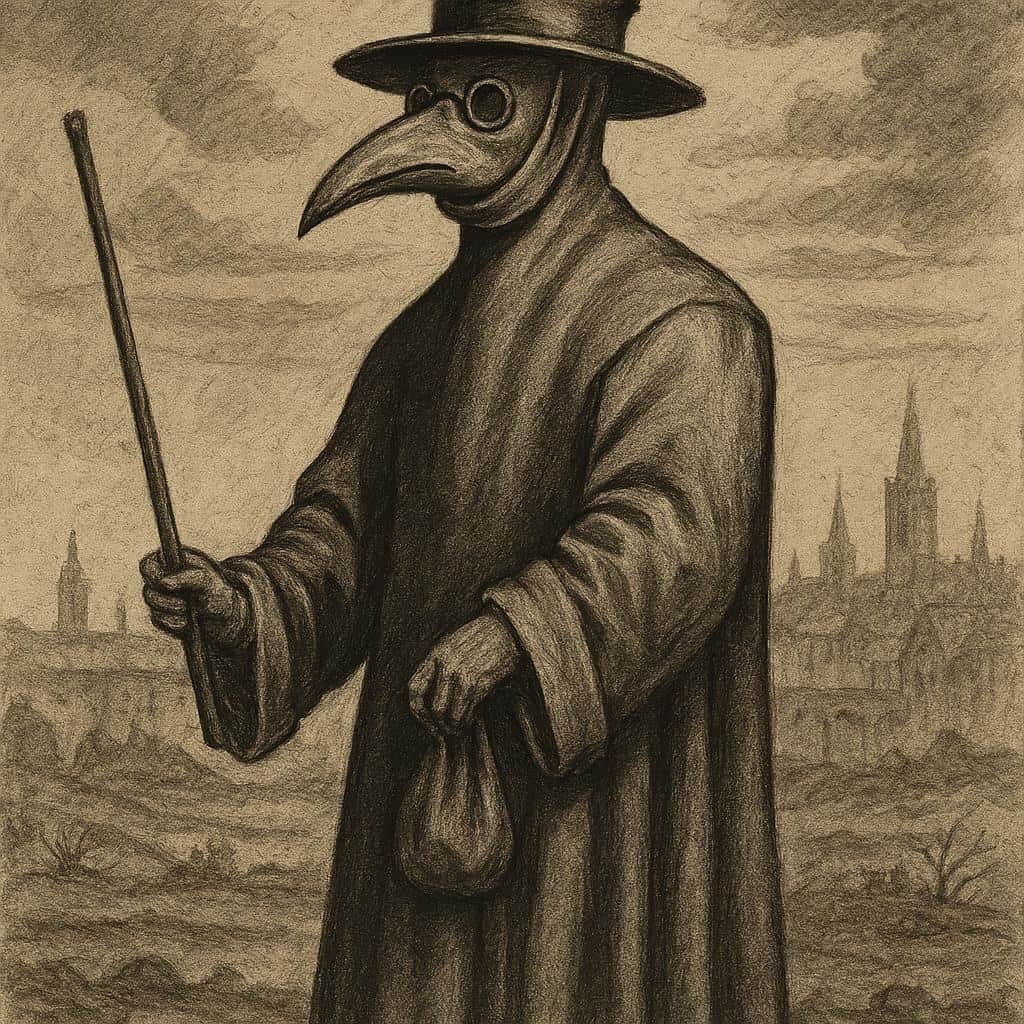
The plague doctor became one of the most recognisable figures of medieval Europe, tasked with treating victims during devastating outbreaks of disease.
What Did They Do?
Plague doctors were hired during epidemics to care for the sick and record deaths, often working in dangerous and poorly understood conditions.
- Treated victims of the Black Death
- Recorded symptoms and mortality
- Advised on prevention methods
Distinctive Appearance
Their iconic outfit was designed to protect them from disease, based on the belief that illness spread through “bad air.”
- Beaked mask filled with herbs
- Long waxed coat and gloves
- Carried a cane to examine patients
Though often ineffective, plague doctors symbolise the desperate attempts to combat disease in a time before modern medicine.
The Sin Eater
One of the most unusual and unsettling roles in medieval society was that of the sin eater—a person believed to absorb the sins of the dead through ritual.
What Was a Sin Eater?
A sin eater was hired to take on the moral burden of a deceased person, allowing their soul to pass more peacefully into the afterlife.
- Performed at funerals or wakes
- Consumed bread and ale placed near the body
- Symbolically absorbed the sins of the dead
Role in Society
Though their service was valued, sin eaters were often treated as outsiders, feared for carrying the spiritual weight of many souls.
- Common in rural Britain and Wales
- Usually from poor or marginalised backgrounds
- Paid small coins or given food
The sin eater reflects deep medieval fears about sin and salvation—where even in death, people sought one last chance at redemption.
Court Animal Handler (Peacock Trainer)
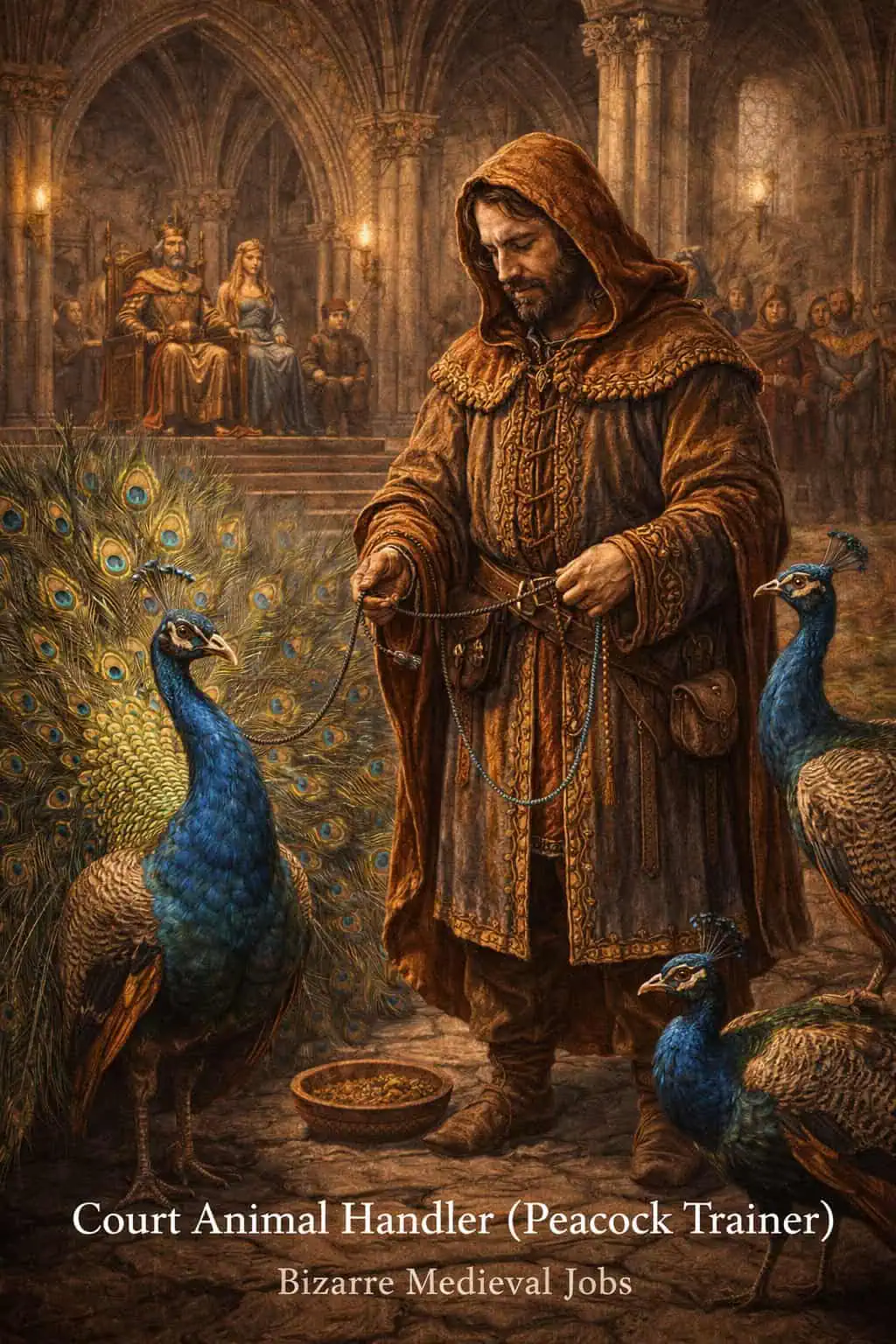
In noble households, exotic animals were symbols of wealth and prestige. Court animal handlers were responsible for caring for and controlling creatures such as peacocks, which were displayed at feasts and ceremonial events.
These handlers trained birds to remain calm in crowded settings and ensured they were properly fed and housed. Working with exotic animals required patience and experience, making this an unusual but important role within elite courts.
The Gong Farmer
The gong farmer performed one of the dirtiest yet most essential jobs in medieval towns, removing human waste from cesspits and latrines.
What Was the Job?
Gong farmers were responsible for clearing out waste, known as “night soil,” to keep towns sanitary and functioning.
- Emptied cesspits and privies
- Worked at night to avoid public contact
- Transported waste outside city limits
Life and Status
Despite the unpleasant nature of their work, gong farmers could earn relatively good wages, though they remained socially isolated.
- Often well-paid compared to labourers
- Lived on the edges of towns
- Faced strong social stigma
Without gong farmers, medieval cities would have been overwhelmed by waste, highlighting their hidden importance.
Urinal Cleaner
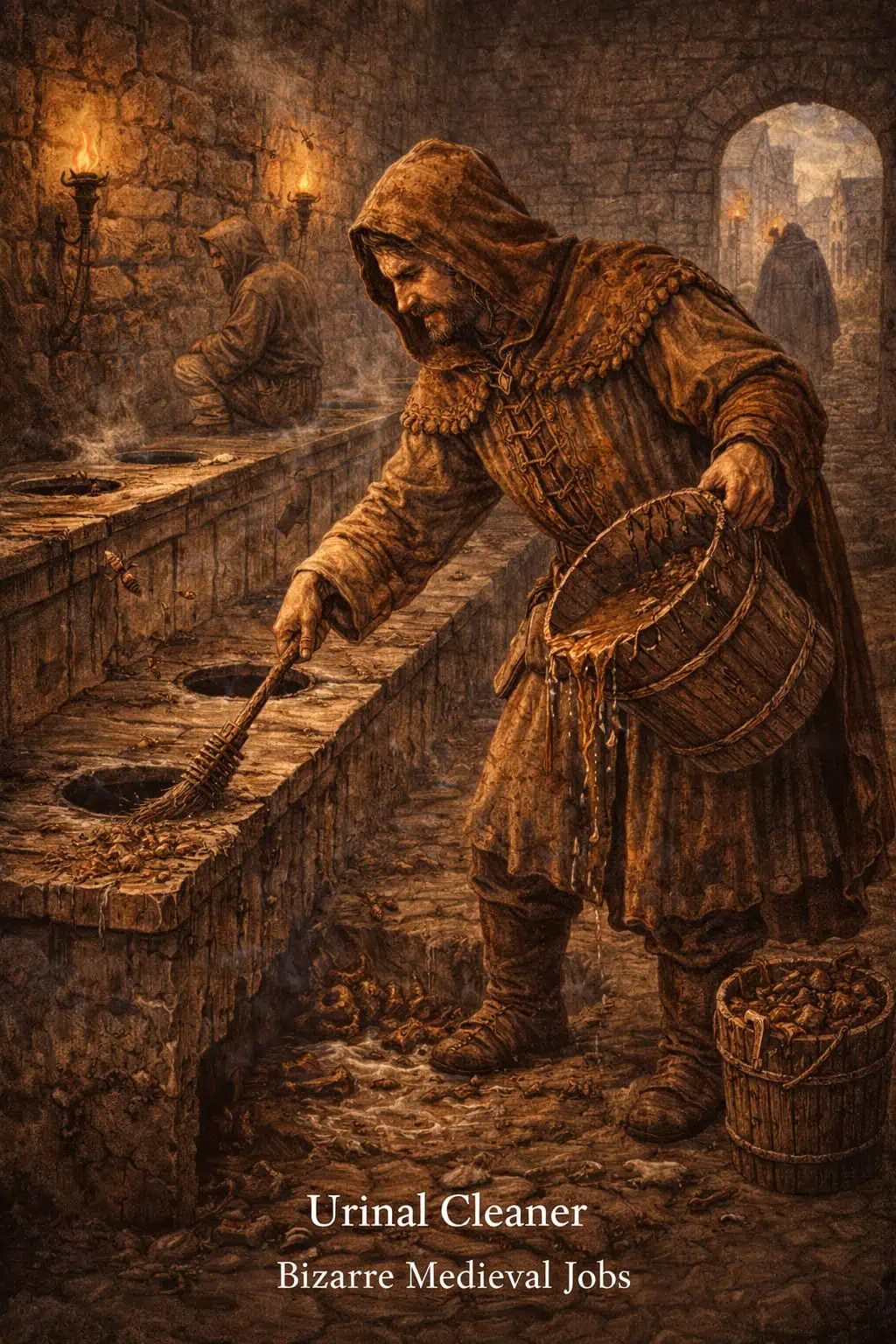
Medieval towns lacked modern plumbing, making waste management a serious challenge. Urinal cleaners were tasked with maintaining latrines, privies, and communal toilets, removing waste to reduce foul smells and disease.
Though the work was unpleasant and poorly paid, it was essential for basic hygiene, especially in densely populated areas. Without these workers, medieval cities would have been far more hazardous places to live.
Rat Catcher
Rats posed a constant threat in medieval towns, contaminating food supplies and spreading disease. Rat catchers were hired to control infestations in homes, granaries, stables, and marketplaces.
Using traps, baskets, and sometimes clubs, they removed rodents wherever they appeared. Their work played a vital role in protecting food stores and improving public health, even if the risks and conditions were grim.

The Court Dwarf
The court dwarf was a common presence in royal and noble households, often kept as a source of entertainment and curiosity.
Role at Court
Individuals with dwarfism were brought into courts where they could serve in various roles, from companions to performers.
- Entertained nobles and guests
- Sometimes served as attendants or advisors
- Featured in court ceremonies and life
Status and Treatment
While some court dwarfs lived comfortably, their position was often based on exploitation and novelty rather than respect.
- Could receive fine clothing and status
- Often treated as curiosities
- Experiences varied widely between courts
The role reflects both the privilege and the prejudice present within medieval court life.
Pig Chaser
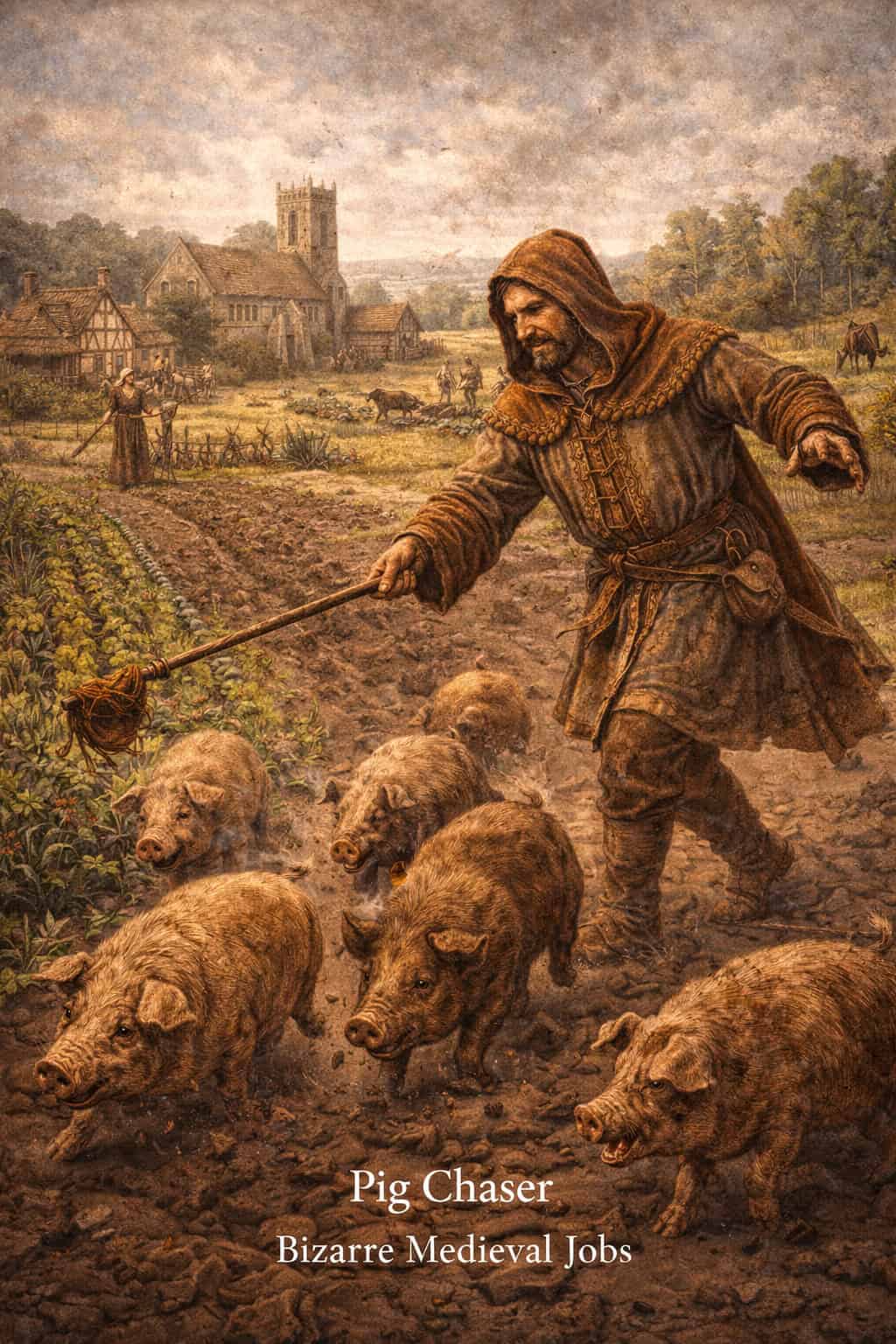
In medieval villages and towns, pigs were often allowed to roam freely, which could cause damage to crops and property. Pig chasers were responsible for driving these animals away from fields or guiding them into designated areas.
Sometimes pigs were rounded up for slaughter or sale, making this job physically demanding and chaotic. Though unusual by modern standards, it was a practical solution to managing livestock in crowded settlements.
The Whipping Boy
The whipping boy was a peculiar solution to royal discipline, punished in place of a young prince who could not be struck directly.
Purpose of the Role
Because royalty was considered too important to be physically punished, another boy would receive the punishment on their behalf.
- Took punishments meant for a prince
- Shared lessons and upbringing
- Served as a moral deterrent
How It Worked
The emotional bond between the prince and the whipping boy was intended to ensure that punishment still had an effect.
- Prince witnessed the punishment
- Encouraged empathy and obedience
- Practice debated by historians
The whipping boy highlights the extreme social hierarchy of medieval royalty and the lengths taken to preserve it.
Occupational Singers and Street Promoters
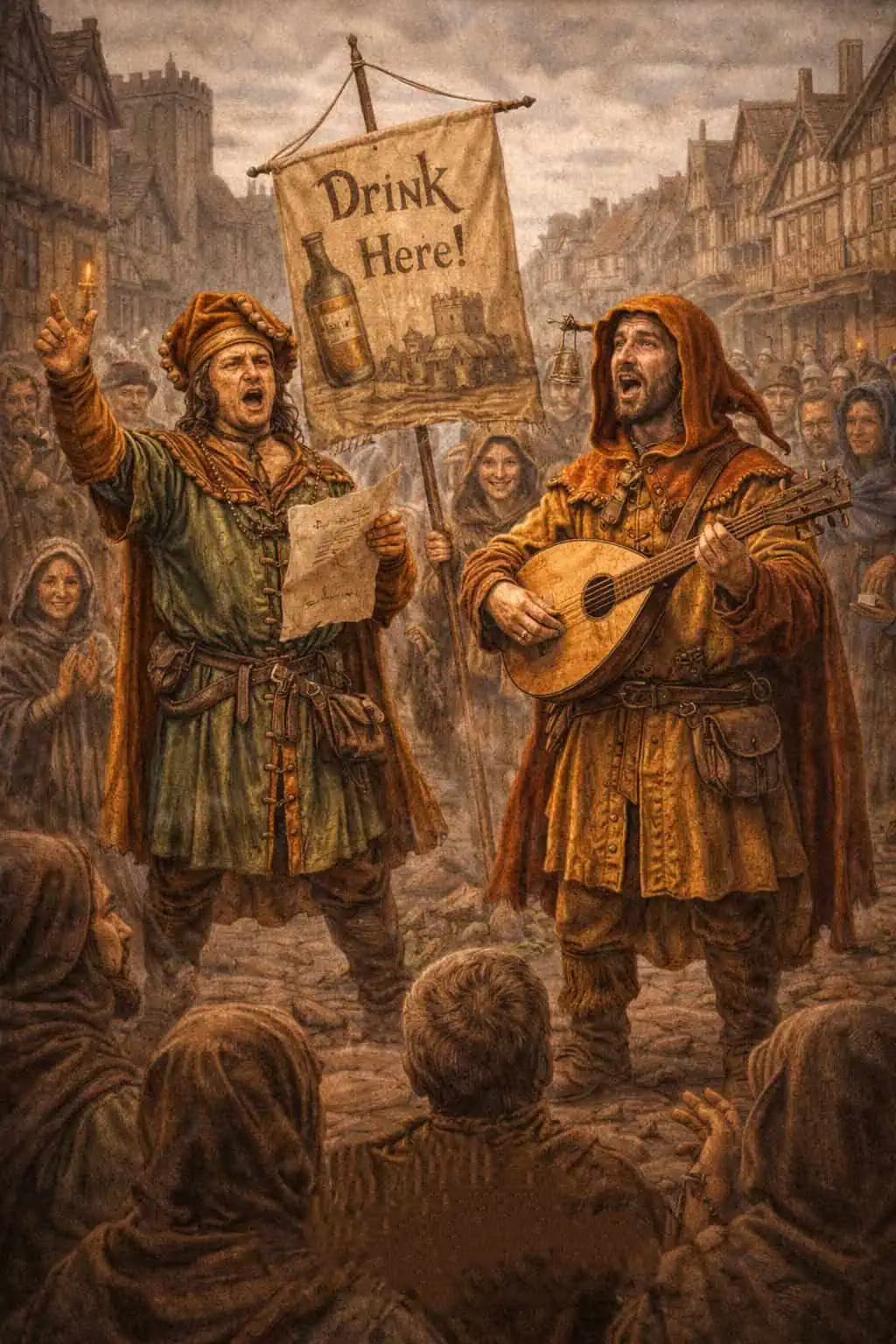
In medieval markets, attracting customers required creativity. Some workers, including millers and traders, used songs or chants to advertise their services and boast about their productivity.
These performances were not formal professions but an informal way to promote goods and services. Singing helped workers stand out in noisy marketplaces and illustrates how entertainment and commerce often overlapped.
Executioner’s Apprentice
The executioner’s apprentice assisted one of the most feared figures in medieval society. Their duties included preparing execution sites, acting as guards, and helping carry out punishments ordered by authorities.
Often drawn from poor backgrounds or orphaned youth, apprentices faced social isolation and exposure to violence. Despite the grim nature of the work, it provided food, shelter, and survival in a harsh world.

The Groom of the Stool
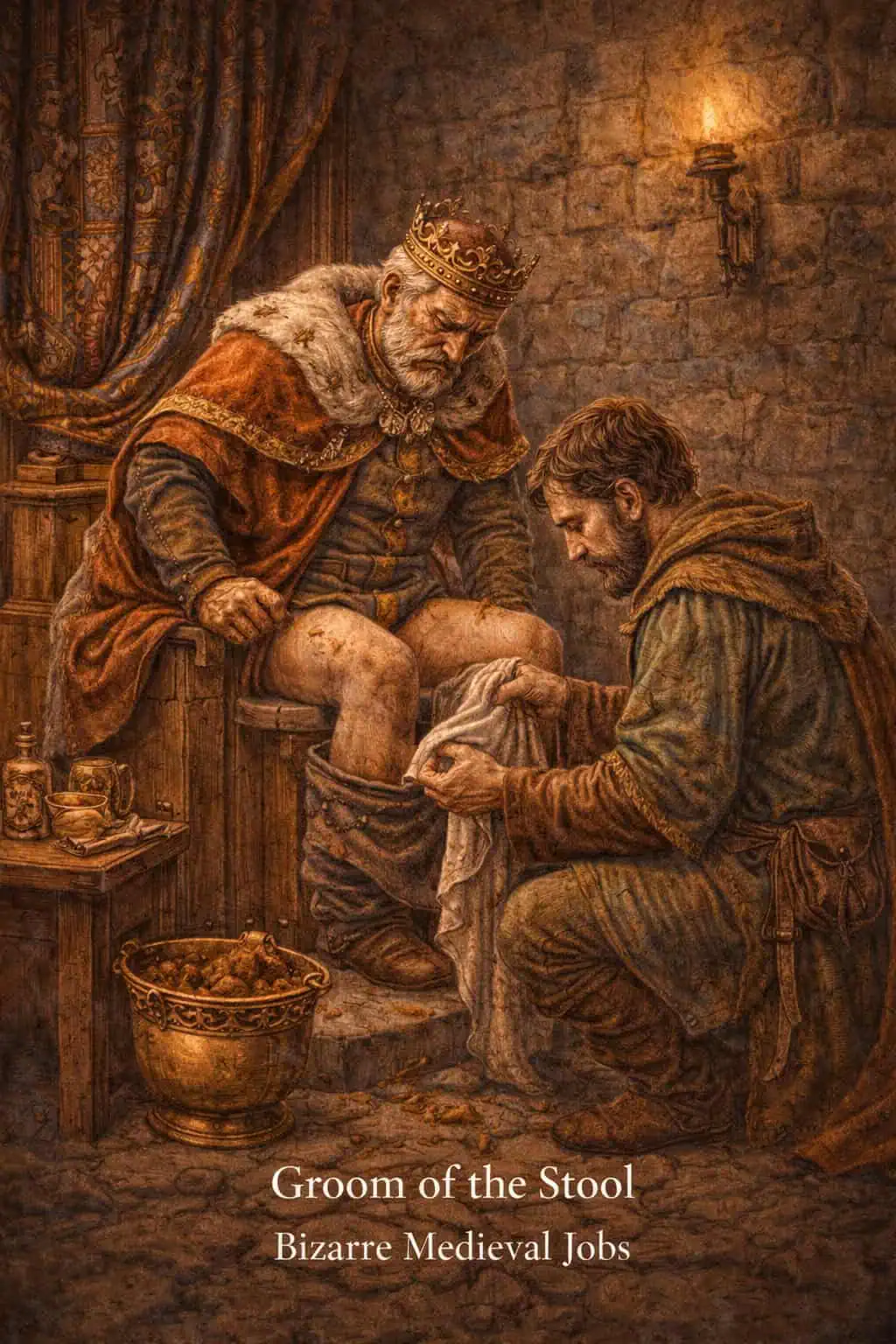
One of the most unusual roles in medieval royal households was the Groom of the Stool. This trusted servant attended to the monarch’s personal hygiene during toileting, a duty implied by the word “stool,” an old term for toilet.
Despite the intimate nature of the role, the position was highly prestigious. The Groom of the Stool often gained the monarch’s confidence and wielded significant political influence at court.
Why These Jobs Matter
These bizarre medieval jobs reveal how people adapted to the realities of life before modern conveniences. Each role—no matter how uncomfortable—served a purpose in maintaining health, order, or survival.
By studying these occupations, we gain a clearer understanding of everyday life in the Middle Ages and the people whose labor supported medieval society behind the scenes.
Frequently Asked Questions About Bizarre Medieval Jobs
What were bizarre medieval jobs?
Bizarre medieval jobs were occupations that may seem strange or unpleasant today but were necessary for survival in medieval society. These included waste removal, animal control, medical practices, and court services.
Were these jobs respected?
Respect varied widely. Some roles, such as scribes or royal servants, held prestige, while others—like gong farmers or rat catchers—were often avoided despite their importance.
Did medieval people choose these jobs?
Many people inherited occupations or took whatever work was available. Poverty, family background, and social class often determined one’s profession.
Were these jobs dangerous?
Yes. Many involved exposure to disease, filth, violence, or physical injury, especially before modern safety standards or medicine.
Test Your Knowledge: Bizarre Medieval Jobs
Glossary of Bizarre Medieval Job Terms
Many medieval occupations used unfamiliar names or described roles that no longer exist today. This glossary explains key terms used throughout the article.
Gong Farmer
A laborer responsible for removing human waste from cesspits and privies, usually working at night in medieval towns without sewer systems.
Whipping Boy
A child punished in place of a young prince, based on the belief that witnessing a companion’s suffering would discipline the royal child.
Fuller
A textile worker who cleaned, thickened, and strengthened cloth after weaving, often using unpleasant substances such as stale urine.
Leech
A medieval medical practitioner who used bloodletting and leeches as treatments, following the belief in balancing the body’s humors.
Groom of the Stool
A trusted royal servant who attended to the monarch’s personal hygiene during toileting, a role that granted close access to royal power and influence.
Executioner’s Apprentice
An assistant to the executioner who helped prepare execution sites, acted as a guard, and carried out assigned duties during punishments.