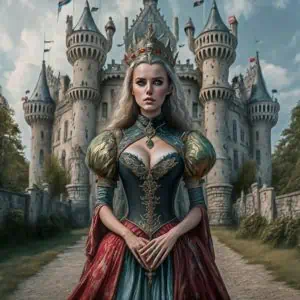
Lady Godiva is one of the most iconic figures in medieval legend, remembered for her bold protest against oppressive taxation. According to legend, she rode naked through the streets of Coventry, covered only by her long hair, to persuade her husband, Leofric, Earl of Mercia, to lift the harsh taxes he imposed on the townspeople. Though historians debate the truth behind the tale, her story endures as a powerful symbol of civil resistance, female courage, and social justice in the Middle Ages.
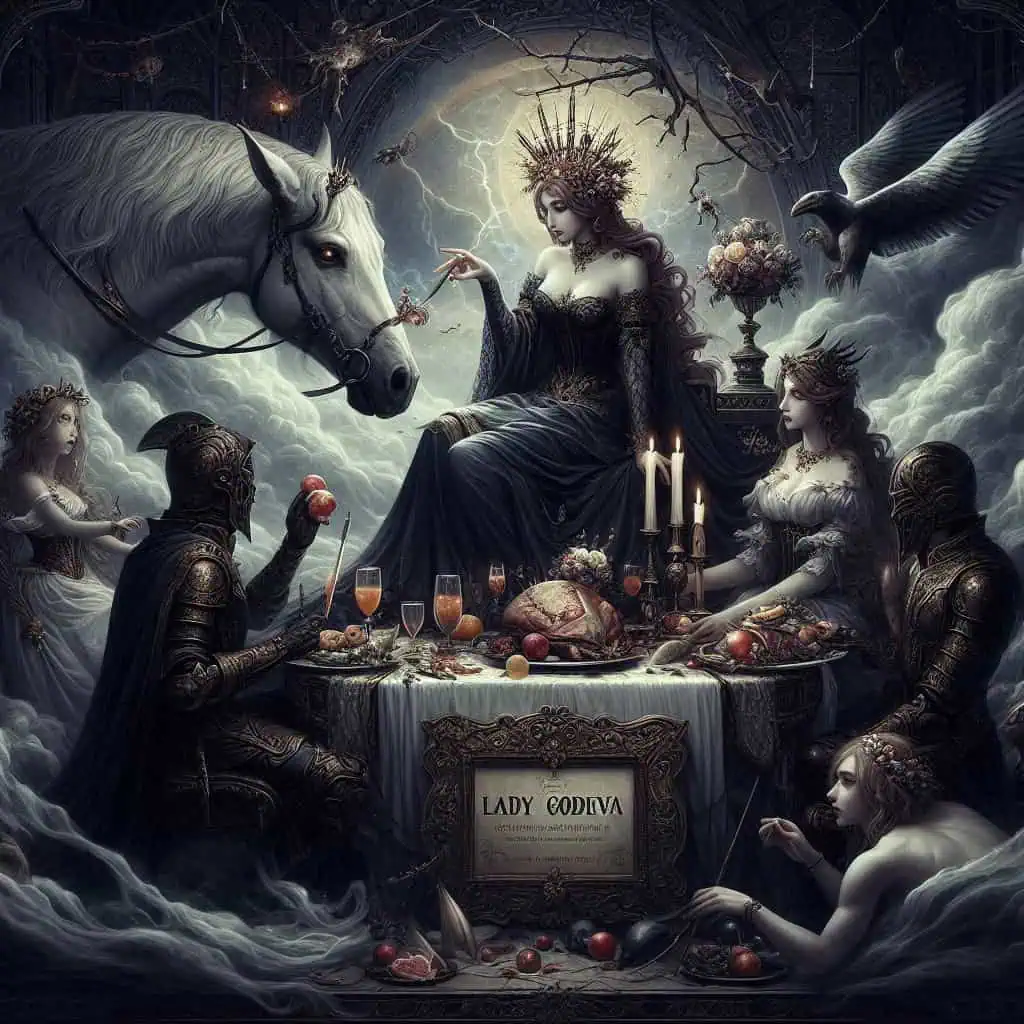
The Legendary Nude Ride of Lady Godiva
The earliest written accounts of Lady Godiva’s famous nude ride emerge in the 13th century, nearly 200 years after her death in the 11th century. By then, her story had taken on legendary proportions and was widely repeated in medieval chronicles.
According to the legend, Lady Godiva was deeply disturbed by the oppressive taxes her husband, Leofric, Earl of Mercia, imposed on the people of Coventry. Compassionate and determined, she repeatedly pleaded with him to ease the burden on the townsfolk.
Frustrated by her persistence, Leofric gave her a seemingly impossible challenge—he would lift the taxes only if she rode naked through the town streets.
To everyone’s amazement, Lady Godiva agreed. Covered only by her long flowing hair, she rode horseback through Coventry, maintaining her dignity while making a bold political statement. Prior to the ride, she requested that townspeople stay indoors and shutter their windows, a plea they honored out of respect.
However, according to legend, one man defied her request—a tailor later known as “Peeping Tom”—who secretly watched her and was allegedly struck blind or punished for his disobedience. This element was added to the tale in later medieval folklore, reinforcing themes of modesty, respect, and divine justice.

The Peeping Tom
The man who famously looked on as Lady Godiva performed her nude ride has come to be known as the Peeping Tom. The story of the Peeping Tom was not originally a part of the Lady Godiva story of the 13th century.
It was added to the legend several centuries later. According to this later addition, one man could not resist the urge to look at Lady Godiva as she rode through the town. This man was a tailor named Tom.
The tailor took one peep at the nude noblewoman. However, he later received punishment for this. Some sources claim that he was struck blind by the heavens as a punishment for his offense. Others state that the townspeople discovered his act and had him blinded on their own.
Historical Record of Lady Godiva
Unlike many other legendary figures of the period, Lady Godiva was an actual person. Numerous mentions of her exist in the historical records from the period.
Most of the sources state that Godiva lived in a period just before the Norman Conquest of England in 1066. In fact, she was still alive at the time of this Conquest. These records confirm numerous gifts and bequeath made by Godiva to the churches and monasteries in her lands.
Further confirmation of her existence comes from the Domesday survey, which was carried out on the orders of William the Conqueror after the Norman Conquest. In this survey, Godiva is confirmed as the only woman with notable landholdings. However, she is recorded as deceased at the time of the survey which was conducted in 1086. So she likely died between 1066 and 1086.
Historical Record of the Story
Although the historical person of Lady Godiva is confirmed through authentic historical sources, the legend associated with her is not. In fact, the legend of her nude ride was first mentioned in the Flores Historiarum, a work from the 13th century.
This is the earliest mention of the ride and there are no other historical sources that confirm the story. However, once the story had been recorded in the 13th-century work, it was taken up and became a popular theme in medieval literature.
Please see the link to lady Godiva’s image details used on the medieval legends page