Jousting is an art of medieval combat that involves two knights charging at each other on horseback with lances. It was a popular sport in the Middle Ages and was used to train knights for battle.

“The joust was the ultimate medieval spectacle, combining chivalry, pageantry, and physical prowess in a single, deadly event.”
Richard W. Barber, British historian and expert on medieval chivalry
Jousting was not just a physical activity but also a mental game where the knights had to strategize and outsmart their opponents. This article delves into the minds of medieval jousting champions and explores the art of jousting.
The History of Jousting:
Jousting originated in the Middle Ages and was a popular sport among knights. The first recorded jousting tournament was held in France in 1066 to celebrate the crowning of William the Conqueror.
Jousting quickly became popular throughout Europe, and tournaments were held regularly. Jousting was not just a sport but was also a way for knights to showcase their skills and impress their lords.
Tournaments were often held to celebrate important events such as weddings or the birth of a prince.

The Rules of Jousting:
Jousting was a complex sport with many rules. The main goal of the sport was for a knight to knock his opponent off his horse.
The knights would ride towards each other at full speed with their lances, and the knight who remained on his horse was declared the winner. Jousting was not just about brute strength but also about strategy.
Knights would try to hit their opponents in weak spots or knock them off balance to gain an advantage.

The Armor
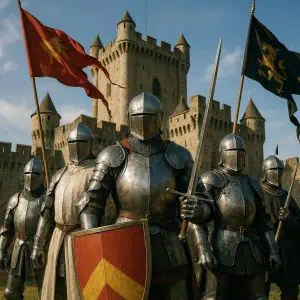
Jousting was a dangerous sport, and the knights needed to wear armor to protect themselves. The armor was specially designed for jousting and was made of metal plates that covered the entire body.
The helmet had a visor that could be raised or lowered, and the armor was designed to distribute the force of a blow evenly across the body.
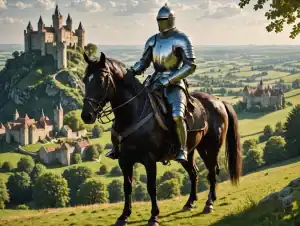
The armor was heavy and weighed around 60 pounds, making it difficult for the knights to move quickly. The horses were also armored, and their heads were covered in metal to protect them from the lances.

The Psychology of Jousting
Jousting was not just a physical sport but also a mental game. The knights had to be mentally prepared for the tournament, and many of them used various techniques to calm their nerves and focus their minds.
One of the techniques was visualization, where the knights would imagine themselves winning the tournament and hitting their opponent in the weak spot.
Another technique was positive self-talk, where the knights would tell themselves that they were strong and capable of winning. The knights would also study their opponents to identify their weaknesses and strategize accordingly.

The Different Types of Jousting:
There were many different types of jousting, and each had its own rules and traditions. The most popular type of jousting was the tilt, where the knights rode towards each other from opposite ends of the field.
The knights would aim their lances at a small target on their opponent’s armor, and the knight who hit the target would be declared the winner.
Another type of jousting was the melee, where a group of knights would charge at each other, and the last knight standing would be the winner.
The quintain was another type of jousting, where the knights would aim their lances at a target that swung from a rope. The aim was to hit the target and avoid being hit by the swinging arm.


“Jousting was the pinnacle of the tournament, a grand display of skill, bravery, and spectacle. But it was also a dangerous game, with many knights losing their lives or suffering serious injuries in pursuit of glory.”
Dan Jones, British historian and author of “The Plantagenets: The Warrior Kings and Queens Who Made England”
The Evolution of Jousting:
Jousting evolved over time, and as the armor became more advanced, so did the sport. The lances became longer and heavier, and the horses were bred for speed and agility. The tournaments became more elaborate, and the crowds grew in size. Jousting became a symbol of chivalry and honor, and the knights who excelled at the sport were admired and respected by all.
Dangers of Jousting
However, jousting was not without its dangers. Accidents were common, and injuries could be severe, even fatal. Despite the risks, knights continued to participate in jousting tournaments, eager to prove their worth and win glory for themselves and their lords.

“Jousting was more than a sport; it was a way of life for medieval knights. The thrill of charging into battle on horseback and the honor of defending one’s lord and lady made it an essential part of the knightly code.”
Kelly DeVries, American historian and author of “Medieval Military Technology”
Jousting Today
Today, jousting is still practiced in some parts of the world as a form of entertainment and historical reenactment, but its popularity as a sport has waned over time, leaving behind a rich legacy and a reminder of the bygone days of knights and chivalry.
Arranging the Tournament
In medieval times, tournaments were usually arranged by the lords or nobles who wished to hold them. The lord would send out invitations to other lords and their knights, inviting them to participate in the tournament.

The invitations would be sent several weeks or even months in advance to allow the knights time to prepare themselves and their equipment.
Once the knights arrived at the tournament, they would register and take an oath to follow the rules of the tournament and behave chivalrously.

The tournament would begin with a grand procession of the knights, displaying their heraldry and colors. This would be followed by a series of contests, including jousting, sword fighting, and other tests of skill and strength.
The tournaments were highly organized events, with a complex system of rules and regulations to ensure fair play and safety.
Judges and officials would oversee the contests and resolve any disputes. At the end of the tournament, prizes and honors would be awarded to the winners, and a feast or banquet would be held to celebrate the event.