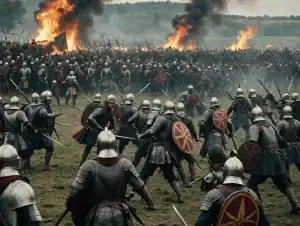
The Hundred Years’ War, a protracted and complex conflict between England and France, spanning from 1337 to 1453, was a defining period in European history.
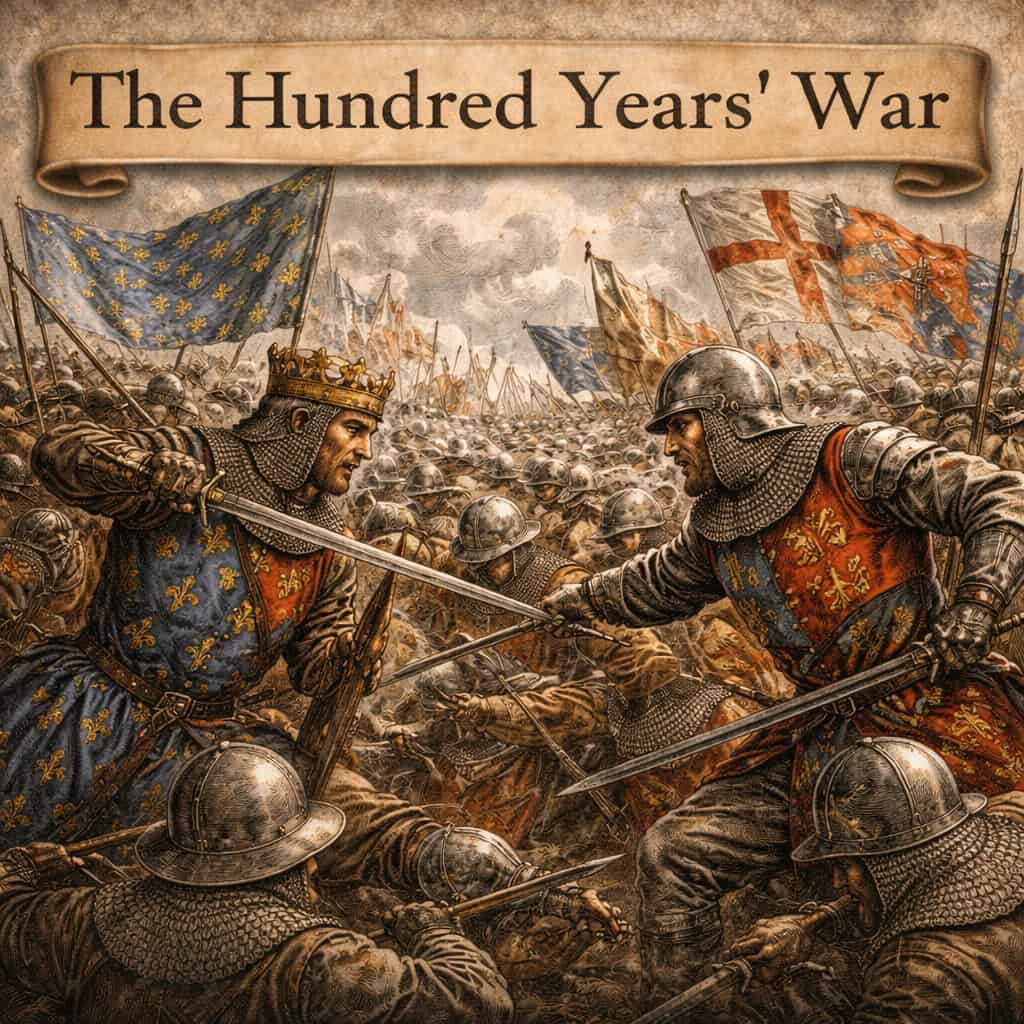
Here are 10 key facts that illuminate the various aspects of this epic and enduring struggle.
1. A Century-Long Conflict
Despite its name, the Hundred Years’ War raged on for 116 years, making it one of the most protracted wars in history. It was a series of intermittent conflicts, battles, and truces that continually reshaped the political landscape of Western Europe.

2. The War of Succession
The war’s primary cause was the dispute over the succession to the French throne. Edward III of England claimed the French crown through his mother, who was the daughter of Philip IV of France, thus challenging the legitimacy of the French monarch.
3. Pivotal Battles
Several battles played a crucial role in the war’s outcome. The Battle of Crecy in 1346 and the Battle of Agincourt in 1415 were notable English victories. Agincourt, in particular, is renowned for the English longbow’s role in securing the triumph.
4. The Remarkable Joan of Arc
Joan of Arc, known as the Maid of Orleans, was a French peasant girl who emerged as a pivotal figure in the latter stages of the war. Claiming divine guidance, she led the French to several key victories, turning the tide of the conflict.

5. The Black Prince’s Brilliance
Edward, the Black Prince, was a celebrated English military leader. As the eldest son of Edward III, he achieved notable successes early in the war, leaving a lasting legacy as a military tactician.
6. The Treaty of Bretigny (1360)
In 1360, the Treaty of Bretigny temporarily brought hostilities to a halt. It ceded substantial territories to England, but it failed to provide a lasting resolution, and the war soon resumed.
7. Henry V’s Victory at Agincourt
King Henry V of England achieved a resounding victory at the Battle of Agincourt in 1415. This success significantly strengthened the English position for several years, allowing them to assert their dominance.

8. A Profound Legacy
The Hundred Years’ War left a profound mark on both England and France. It contributed to the development of the modern nation-state in France and influenced English society and politics.
9. Long-Term Effects
The financial strain of the war led to significant reforms and innovations in taxation, governance, and the emergence of a stronger centralized monarchy in both countries.
10. Cultural Influence
Beyond the political and military aspects, the war’s impact extended to language and literature. It introduced French words and phrases into the English language and inspired various medieval chronicles and works, including Geoffrey Chaucer’s renowned “The Canterbury Tales.”

The Hundred Years’ War, characterized by its duration, disputes over the French throne, pivotal battles, and influential figures like Joan of Arc and the Black Prince, has left an indelible mark on the history of England and France. It shaped their societies, politics, and cultures in ways that continue to resonate today.